
United States Cannabis Market Set for Explosive Growth Through 2034
Legalization, Innovation, and Consumer Demand Drive a New Era for America’s Cannabis Industry

The United States cannabis industry is entering one of the most transformative decades in its history. Once considered a fringe sector limited by legal barriers and public stigma, cannabis has rapidly evolved into a major economic force with growing acceptance across medical, recreational, and wellness markets.
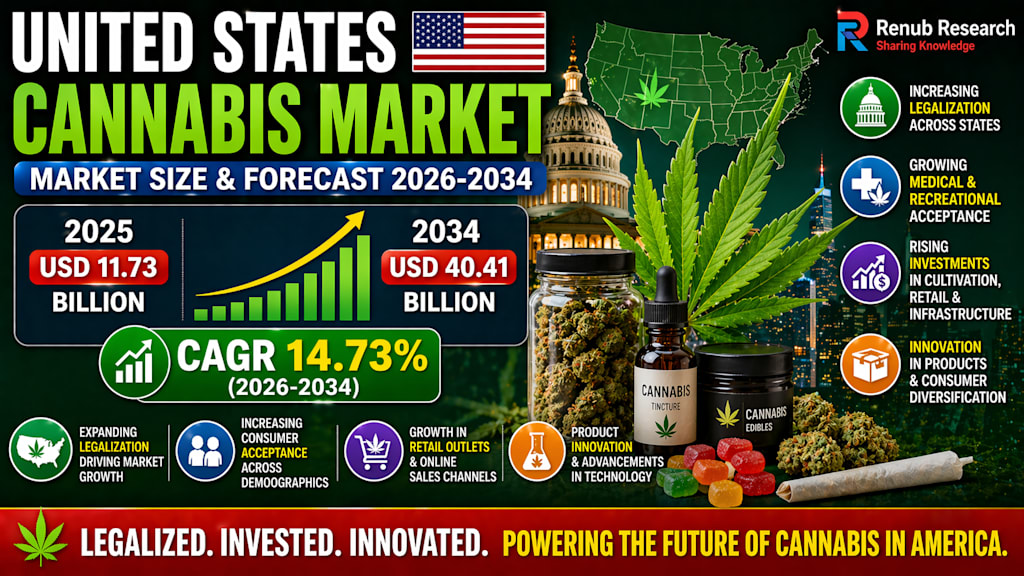
According to Renub Research, the United States Cannabis Market is projected to grow from USD 11.73 Billion in 2025 to USD 40.41 Billion by 2034, expanding at a strong CAGR of 14.73% from 2026 to 2034. This remarkable growth reflects increasing legalization across states, strong investor confidence, product diversification, and rising consumer adoption nationwide.
As regulations continue to shift and innovation accelerates, cannabis is becoming one of the fastest-growing controlled consumer industries in the country.
Understanding the U.S. Cannabis Boom
Cannabis is a plant containing naturally active compounds known as cannabinoids, most notably THC and CBD. These compounds interact with the human body in ways that can create therapeutic or psychoactive effects depending on the dosage and product type.
Today’s cannabis market is no longer limited to dried flower. Consumers can now choose from:
- Edibles
- Vape products
- Oils and tinctures
- Capsules
- Beverages
- Topicals
- Concentrates
- Wellness formulations
This product evolution has dramatically expanded the industry’s appeal, attracting both experienced users and first-time consumers.
Legalization Is the Biggest Growth Engine
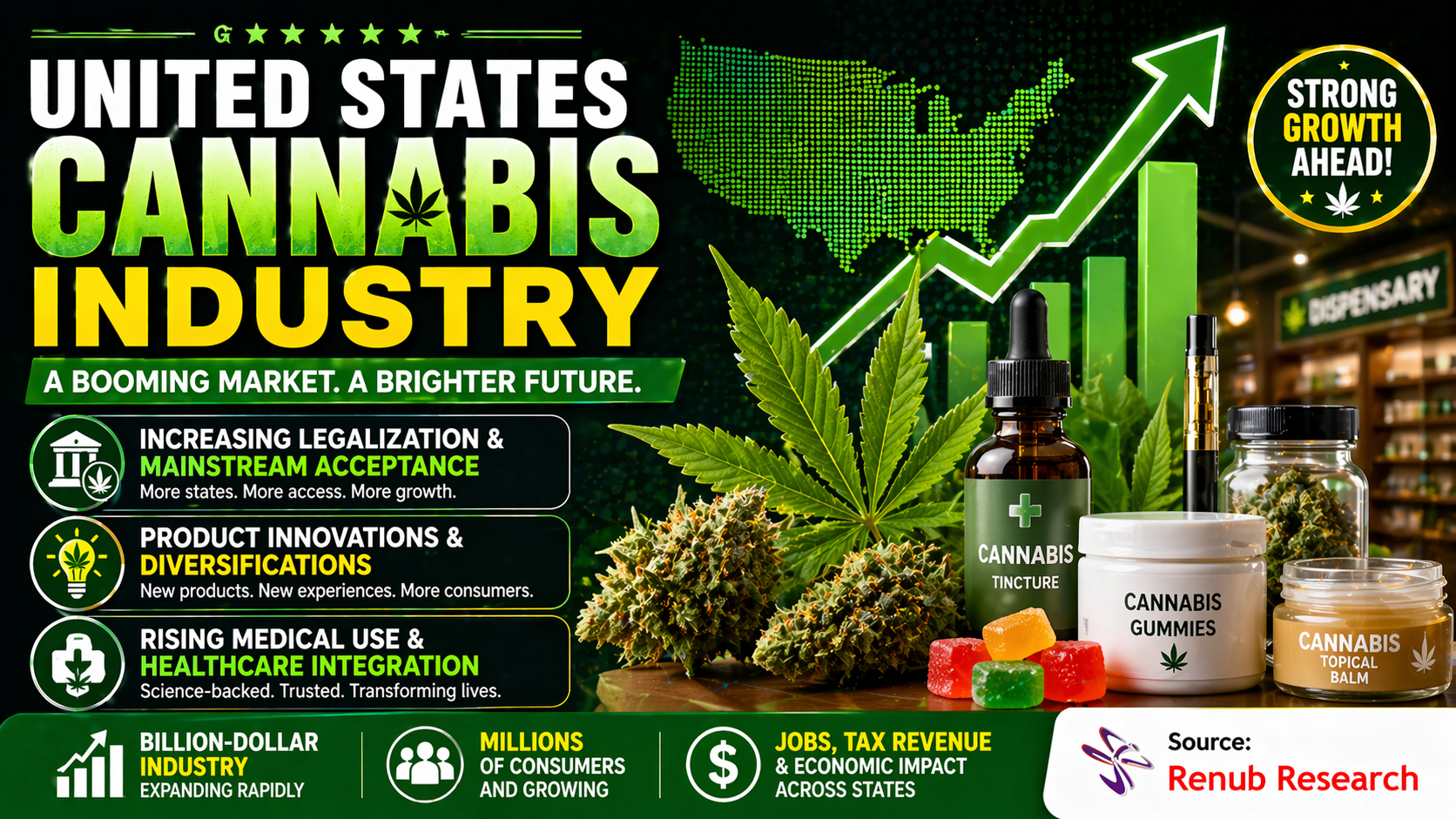
Perhaps the strongest force behind market expansion is legalization at the state level. Over the last decade, numerous states have approved cannabis for medical use, adult recreational use, or both.
Each new legalization wave creates:
- New retail dispensaries
- Tax revenue opportunities
- Agricultural expansion
- Manufacturing jobs
- Tourism potential
- New consumer markets
As access increases, consumer participation rises sharply.
Public sentiment has also changed significantly. Cannabis is now widely viewed by many Americans as comparable to alcohol or wellness supplements rather than a taboo substance. This normalization has encouraged more consumers to explore legal cannabis options through regulated channels.
Product Innovation Is Creating New Customers
The cannabis market is growing not just because more people can buy it—but because companies are reinventing how people use it.
Modern cannabis brands now offer:
- Micro-dosed gummies for beginners
- Fast-acting drinks
- Sleep-support formulas
- Stress relief tinctures
- Luxury pre-rolls
- Flavor-infused edibles
- Low-odor vape pens
- Fitness and recovery CBD products
These innovations are attracting people who previously had no interest in smoking cannabis.
Branding, packaging, flavor development, and convenience now play a major role in purchasing decisions. Cannabis companies increasingly compete like mainstream consumer packaged goods brands.
Medical Cannabis Remains a Powerful Segment
While recreational cannabis often gets media attention, medical cannabis continues to be a vital pillar of the U.S. market.
Patients use cannabis products to manage conditions such as:
- Chronic pain
- Anxiety
- Epilepsy
- Cancer-related symptoms
- Inflammation
- Sleep disorders
- PTSD
Many patients view cannabis as a gentler alternative to traditional pharmaceuticals, especially opioids and strong pain medications.
As doctors become more familiar with cannabinoid therapies and more states refine medical programs, patient participation is expected to grow steadily over the coming years.
The Flower Segment Still Leads Sales
Despite rapid innovation, traditional cannabis flower remains the largest category in the market.
Consumers continue choosing flower because of:
- Lower cost compared to premium products
- Fast effects
- Wide strain variety
- Aroma and terpene profiles
- Natural, minimally processed appeal
Premium indoor flower, craft-grown cannabis, and exotic genetics are helping keep the segment fresh and competitive. Even with edibles and vapes gaining share, flower remains deeply rooted in cannabis culture.
Pre-Rolls Are Becoming a Lifestyle Product
One of the fastest-growing categories is pre-rolls.
Pre-rolls offer convenience, portability, and ease of use. Consumers appreciate not needing to grind flower or roll manually.
Brands are also elevating the segment through:
- Multi-packs
- Infused pre-rolls
- Designer packaging
- Strain collections
- Premium collaborations
For many consumers, pre-rolls now resemble the convenience appeal of ready-to-drink beverages or specialty cigarettes.
Recreational Cannabis Is Driving Revenue Growth
Adult-use cannabis now generates the majority of industry revenue in states where recreational sales are legal.
Consumers purchase cannabis recreationally for:
- Relaxation
- Social experiences
- Creativity
- Stress reduction
- Enjoyment
- Wellness experimentation
As more states transition from medical-only systems to full recreational frameworks, the revenue opportunity becomes significantly larger. Retail experiences, store branding, and product variety are becoming critical to customer loyalty.
Rising Interest in Minor Cannabinoids
The next major trend may come from lesser-known cannabinoids beyond THC and CBD.
These include:
- CBG – often associated with inflammation support
- CBN – linked to sleep products
- THCV – studied for appetite management
- CBC – emerging wellness interest
These ingredients are helping companies launch differentiated wellness products that appeal to consumers seeking specific functional outcomes rather than intoxication alone.
California Remains the Industry Leader
California remains America’s largest and most influential cannabis market.
Its strengths include:
- Massive consumer base
- Strong cannabis culture
- Advanced cultivation expertise
- Product innovation leadership
- Premium flower reputation
Many product trends that later spread nationally begin in California first. Despite taxation and regulatory complexity, it remains the benchmark market for the industry.
New York Is Emerging Fast
New York is rapidly becoming one of the most exciting growth markets.
With a huge population, tourism economy, and strong retail demand, New York has the potential to become a national cannabis powerhouse.
Its focus on social equity licensing and modern retail frameworks may shape how future states design their own legalization programs.
Major Challenges Still Exist
Even with enormous momentum, the industry still faces serious barriers.
1. Federal Legal Uncertainty
Cannabis remains illegal at the federal level in the United States, creating operational complexity.
This affects:
- Banking access
- Interstate commerce
- Tax treatment
- Investment structures
- National expansion strategies
2. High Taxes and Illegal Competition
In some states, heavy taxes make legal cannabis much more expensive than black-market alternatives.
This creates pricing pressure for licensed businesses and slows legal market growth.
What Comes Next?
Over the next decade, the U.S. cannabis market is likely to become more professionalized, branded, and data-driven.
Expect to see:
- National brand consolidation
- More pharmaceutical research
- Wellness product expansion
- Greater retail sophistication
- Improved technology in cultivation
- New cannabinoid discoveries
- Eventual federal reform pressure
Cannabis is shifting from a controversial category into a legitimate economic sector with lasting staying power.
Final Thoughts
The projected jump from USD 11.73 Billion in 2025 to USD 40.41 Billion by 2034 signals more than just rising sales—it represents a complete transformation of consumer behavior, regulation, and modern wellness culture.
For investors, entrepreneurs, policymakers, and consumers, the U.S. cannabis industry is no longer a niche trend. It is a major growth story that is still in its early chapters.
As legalization spreads and innovation continues, America’s cannabis market may become one of the defining consumer industries of the next decade.
About the Creator
Enjoyed the story? Support the Creator.
Subscribe for free to receive all their stories in your feed.
Comments
There are no comments for this story
Be the first to respond and start the conversation.