
United States Breast Reconstruction Market Set to Reach US$ 1.74 Billion by 2033 Amid Rising Breast Cancer Awareness
Growing Acceptance of Reconstructive Procedures and Technological Innovations Are Transforming Post-Mastectomy Care Across America

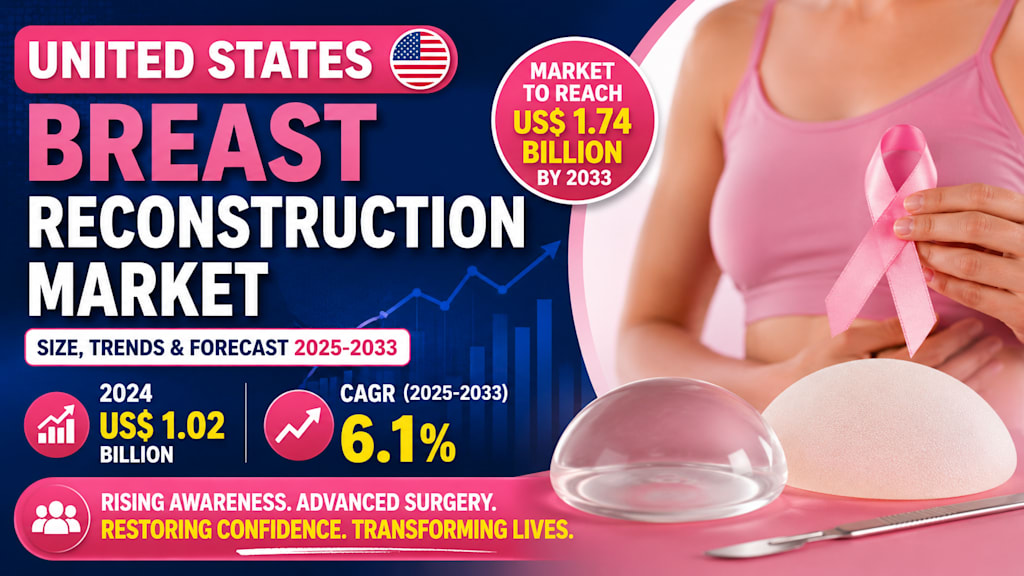
The United States Breast Reconstruction Market is witnessing strong and steady growth as healthcare providers, medical technology companies, and patients increasingly prioritize post-mastectomy recovery and aesthetic restoration. According to recent industry findings, the market is projected to grow from US$ 1.02 billion in 2024 to approximately US$ 1.74 billion by 2033, expanding at a CAGR of 6.1% during the forecast period from 2025 to 2033.
The growing incidence of breast cancer in the United States remains one of the most significant factors driving demand for breast reconstruction procedures. Alongside medical necessity, changing social perceptions, improved insurance coverage, and advancements in reconstructive surgery are contributing to the rapid development of this healthcare segment.
Breast Cancer Cases Continue to Fuel Market Expansion
Breast cancer continues to be one of the most commonly diagnosed cancers among women in the United States. Medical organizations estimate that one in eight women in America may develop invasive breast cancer during their lifetime. As mastectomy procedures increase, so does the demand for effective breast reconstruction solutions.
Breast reconstruction has evolved far beyond cosmetic restoration. Today, it is recognized as an essential part of emotional healing and psychological recovery after breast cancer treatment. Many patients seek reconstruction procedures to restore confidence, improve body image, and regain a sense of normalcy following surgery.
The increasing number of women opting for prophylactic mastectomies due to hereditary cancer risks has also created new opportunities for the market. Women with BRCA gene mutations are increasingly choosing preventive surgeries, which often include immediate or delayed reconstruction procedures.
Technological Advancements Are Changing Surgical Outcomes
Innovation has become one of the defining features of the modern breast reconstruction industry. Surgeons now have access to highly advanced procedures that provide safer surgeries, shorter recovery periods, and more natural-looking results.
One of the most important advancements is the growing use of autologous reconstruction techniques such as the DIEP flap procedure. Unlike traditional implant-based reconstruction, this method uses tissue from the patient’s own body, creating a more natural appearance while reducing long-term implant-related complications.
In addition, medical device manufacturers are introducing technologically advanced implants with improved durability and aesthetics. The use of 3D imaging and surgical planning tools is also improving precision during procedures.
Researchers and manufacturers are even exploring 3D-printed implants and regenerative medicine solutions, which could significantly transform the future of breast reconstruction surgeries in the coming decade.
Psychological Recovery Becomes a Major Healthcare Focus
The emotional impact of breast cancer treatment is now receiving greater attention from healthcare providers across the country. Breast reconstruction is increasingly viewed not only as a physical procedure but also as an important contributor to mental wellness and emotional rehabilitation.
For many women, mastectomy can lead to anxiety, reduced self-esteem, and depression. Reconstruction procedures often help patients regain confidence and improve overall quality of life. As awareness grows regarding these psychological benefits, more women are actively discussing reconstruction options with healthcare professionals.
Hospitals and cancer treatment centers are also incorporating reconstructive consultations earlier in the cancer treatment journey. This integrated care approach is positively influencing procedure adoption rates nationwide.
Insurance Support Continues to Improve Accessibility
One of the strongest pillars supporting the U.S. breast reconstruction market is favorable insurance coverage. The Women’s Health and Cancer Rights Act (WHCRA) requires health insurance providers to cover breast reconstruction procedures following mastectomy.
This legislation has played a major role in improving patient access to reconstructive surgeries. Women who previously considered these procedures financially unreachable can now explore treatment options with greater confidence.
As awareness of insurance rights increases, more patients are pursuing reconstruction procedures after breast cancer surgery. Healthcare advocacy organizations continue to educate patients regarding their legal rights and available reimbursement options.
The availability of reimbursement support has significantly strengthened market growth across hospitals, ambulatory surgery centers, and specialized cosmetology clinics.
Implant-Based Reconstruction Remains Highly Popular
Among product categories, implants continue to dominate the market due to their accessibility, shorter surgical times, and growing technological sophistication.
Silicone implants remain especially popular because they provide a more natural feel and appearance compared to saline alternatives. Manufacturers are focusing on improving implant safety, texture, and longevity while minimizing complication risks.
Tissue expanders also represent an important segment within the market. These devices are commonly used before permanent implant placement and allow gradual stretching of the skin and tissue following mastectomy.
Additionally, acellular dermal matrices are becoming increasingly important in reconstructive surgeries. These biologically derived materials provide support during implant placement and improve surgical outcomes in many patients.
Hospitals Lead End-Use Segment
Hospitals continue to dominate the end-use segment due to the availability of advanced surgical infrastructure, experienced surgeons, and integrated cancer treatment services.
Large healthcare institutions often provide multidisciplinary breast cancer care, combining oncology, plastic surgery, radiology, and psychological support under one system. This integrated approach encourages more patients to undergo reconstructive procedures.
Meanwhile, ambulatory surgery centers are gaining popularity because they offer cost-effective and minimally invasive procedures with shorter recovery times.
Cosmetology clinics and aesthetic surgery centers are also expanding their role in the market as demand for specialized reconstructive and cosmetic expertise continues to rise.
Challenges Still Exist Across the Industry
Despite strong market momentum, the breast reconstruction industry continues to face several challenges.
One of the primary concerns is the lengthy recovery period associated with many reconstructive surgeries. Autologous tissue procedures, while highly effective, often require multiple surgeries and extended healing times.
Many patients may need weeks or even months to fully recover, creating emotional, financial, and physical burdens. Some women may avoid reconstruction entirely because of the anticipated recovery process.
Surgical complications also remain a challenge. Risks such as infection, implant rupture, tissue necrosis, and poor wound healing continue to concern both patients and healthcare providers.
Patients undergoing chemotherapy or radiation therapy may face additional complications that can delay or complicate reconstruction outcomes. As a result, surgeons must carefully evaluate each patient’s overall health condition before recommending specific procedures.
Rising Awareness Campaigns Are Supporting Growth
Awareness campaigns related to breast cancer recovery and women’s health are contributing significantly to market expansion.
Organizations, advocacy groups, and social media campaigns are helping normalize conversations around breast reconstruction. Celebrities and public figures sharing their personal journeys have also increased public awareness regarding reconstructive options.
Educational programs organized by hospitals and cancer centers are helping patients make informed decisions about post-mastectomy care. This shift toward patient-centered education is expected to further strengthen market demand during the forecast period.
Future Outlook Remains Highly Positive
The future of the United States Breast Reconstruction Market appears highly promising. Advancements in biomaterials, surgical robotics, personalized medicine, and tissue engineering are expected to reshape the industry over the next decade.
Medical companies are increasingly investing in research and development activities to create safer, longer-lasting, and more aesthetically pleasing reconstructive solutions.
At the same time, increasing breast cancer survival rates are generating a larger patient population seeking reconstructive procedures. Combined with strong insurance support and growing psychological awareness, these factors are expected to sustain long-term market growth.
As patient expectations continue to evolve, healthcare providers and medical technology companies will likely focus on minimally invasive techniques, faster recovery options, and personalized treatment plans that prioritize both physical restoration and emotional healing.
10 Recent Developments by Major Companies
1. Mentor Worldwide LLC
Mentor expanded its portfolio of silicone breast implants with improved safety technologies and enhanced implant durability for reconstruction patients.
2. AbbVie Inc.
AbbVie strengthened its aesthetics division by focusing on advanced breast reconstruction and cosmetic surgery solutions following its Allergan acquisition.
3. Integra LifeSciences
Integra LifeSciences introduced innovative regenerative tissue technologies to improve healing and surgical outcomes in reconstructive procedures.
4. Sientra, Inc.
Sientra expanded surgeon training programs across the United States to improve awareness and adoption of advanced breast reconstruction implants.
5. Stryker Corp.
Stryker increased investment in surgical navigation and imaging technologies designed to enhance precision during reconstructive surgeries.
6. Establishment Labs
Establishment Labs continued global expansion of its next-generation Motiva breast implant technologies focused on safety and natural aesthetics.
7. RTI Surgical
RTI Surgical advanced biologic implant technologies and tissue repair solutions to support complex reconstructive procedures.
8. TELA Bio, Inc.
TELA Bio introduced reinforced soft tissue reconstruction materials aimed at improving implant support and patient recovery.
9. Mentor Worldwide LLC
The company expanded physician education initiatives to improve surgical expertise in implant-based breast reconstruction procedures.
10. Sientra, Inc.
Sientra focused on digital engagement and patient awareness campaigns to support informed reconstruction decisions among breast cancer survivors.
Final Thoughts
The United States Breast Reconstruction Market is entering a transformative phase driven by medical innovation, increasing breast cancer awareness, and growing emphasis on emotional recovery after mastectomy.
As healthcare systems continue prioritizing patient-centered care, breast reconstruction is becoming a vital component of comprehensive cancer treatment rather than an optional cosmetic procedure. Technological advancements, favorable insurance policies, and increasing social acceptance are expected to sustain long-term market growth through 2033.
With continued investment from leading medical technology companies and rising patient awareness, the industry is positioned to provide safer, more personalized, and emotionally empowering reconstructive solutions for millions of women across the United States.
About the Creator
Enjoyed the story? Support the Creator.
Subscribe for free to receive all their stories in your feed.
Comments
There are no comments for this story
Be the first to respond and start the conversation.