
United States Bicycle Market to Reach US$ 22.01 Billion by 2033 as Cycling Becomes a Lifestyle, Fitness Choice, and Sustainable Transport Solution
Growing health awareness, expanding cycling infrastructure, rising e-bike adoption, and a stronger outdoor recreation culture are driving the future of the U.S. bicycle industry.

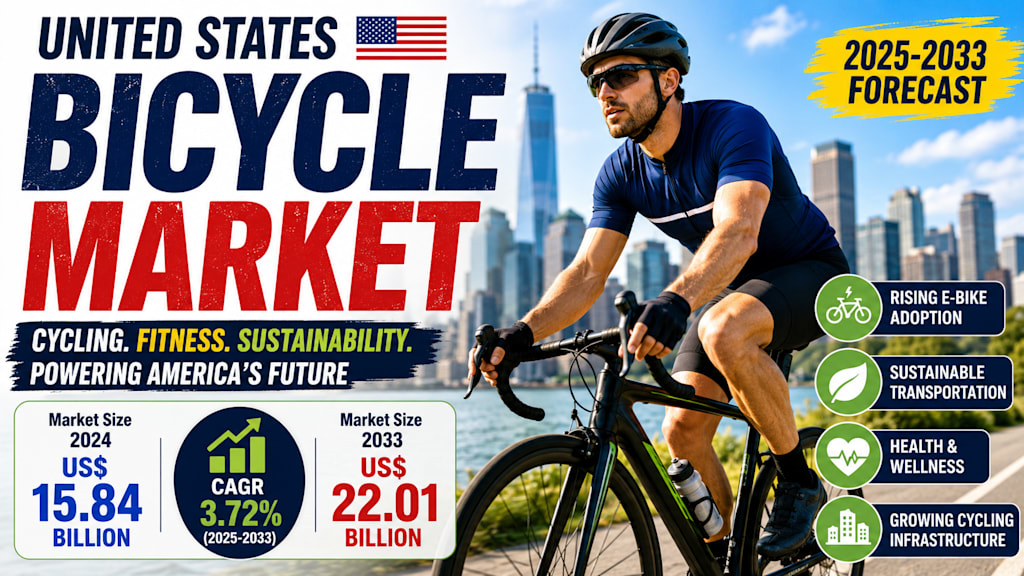
United States Bicycle Market Size & Forecast 2025–2033
The United States bicycle market is entering a new phase of growth as consumers increasingly embrace cycling for transportation, recreation, fitness, and environmental sustainability. Once viewed primarily as a leisure activity, cycling has evolved into a practical mobility solution that aligns with modern lifestyles focused on health, convenience, and eco-conscious living.
According to Renub Research, the United States Bicycle Market was valued at US$ 15.84 billion in 2024 and is projected to reach US$ 22.01 billion by 2033, growing at a CAGR of 3.72% between 2025 and 2033.
The market's growth is being fueled by several interconnected factors, including increased investment in cycling infrastructure, growing concerns about climate change, rising fuel costs, advancements in bicycle technology, and the rapid expansion of the electric bicycle segment. As urban centers continue seeking cleaner transportation alternatives and consumers prioritize active lifestyles, bicycles are becoming an increasingly attractive option across demographic groups.
Cycling's Transformation in the United States
For decades, bicycles have served as an affordable and accessible mode of transportation. However, the modern bicycle market extends far beyond traditional commuting. Today's bicycles incorporate advanced materials, smart technology, electric power assistance, GPS systems, and connectivity features that significantly enhance the riding experience.
American consumers are increasingly viewing bicycles as multi-purpose assets that support daily commuting, fitness goals, outdoor recreation, and even commercial applications such as delivery services. This shift has broadened the customer base and created opportunities across multiple product categories.
Urban planners and local governments are also recognizing bicycles as an important component of sustainable transportation systems. Dedicated bike lanes, cycling-friendly streets, and bike-sharing programs have helped normalize cycling as a practical transportation choice.
Health and Wellness Trends Fuel Market Growth
One of the strongest growth drivers in the United States bicycle market is the growing emphasis on personal health and wellness.
Americans are becoming increasingly aware of the importance of regular physical activity in preventing obesity, cardiovascular disease, diabetes, and mental health challenges. Cycling offers an effective, low-impact exercise that appeals to people of all ages and fitness levels.
Unlike gym memberships or specialized sports equipment, bicycles provide both recreational enjoyment and transportation benefits. This dual-purpose value proposition has made cycling particularly attractive among consumers seeking efficient ways to stay active.
The popularity of fitness tracking devices and health-focused mobile applications has further encouraged cycling participation. Riders can monitor distance, calories burned, speed, and performance metrics, creating a more engaging and measurable fitness experience.
As preventive healthcare gains importance across the country, bicycles are increasingly being viewed as tools that contribute to healthier lifestyles while reducing transportation costs.
Sustainability and Environmental Awareness Drive Adoption
Environmental consciousness continues to reshape consumer behavior across the United States, and the bicycle market is benefiting significantly from this trend.
With transportation representing a major source of greenhouse gas emissions, many consumers are seeking alternatives to automobile dependency. Bicycles offer a zero-emission transportation option that helps reduce environmental impact while promoting cleaner urban environments.
Cities across the nation are investing heavily in cycling infrastructure to support sustainability goals. Protected bike lanes, cycling corridors, greenways, and shared mobility programs are making cycling safer and more accessible than ever before.
Government initiatives have also accelerated adoption. In 2024, the U.S. Department of Transportation awarded funding through programs focused on improving roadway safety and multimodal transportation infrastructure. Such investments continue to enhance cycling accessibility and encourage long-term market growth.
As climate concerns remain a priority for consumers and policymakers alike, bicycles are expected to play an increasingly important role in sustainable urban mobility strategies.
E-Bikes Are Revolutionizing the Industry
Electric bicycles have emerged as one of the most transformative developments within the U.S. bicycle market.
E-bikes combine traditional cycling with battery-powered pedal assistance, enabling riders to travel longer distances with less physical effort. This innovation has expanded the appeal of cycling beyond traditional enthusiasts and attracted a broader consumer audience.
Older adults, daily commuters, delivery workers, and individuals seeking convenient transportation solutions are increasingly turning to e-bikes. The technology makes cycling more accessible by reducing physical barriers that may discourage participation.
Recent advancements in battery technology have significantly improved range, charging efficiency, and overall reliability. Smart features such as GPS navigation, smartphone integration, theft tracking, and AI-powered range optimization are further enhancing the user experience.
The growing popularity of electric cargo bikes has also opened new commercial opportunities. Families, small businesses, and delivery operators are adopting cargo e-bikes as efficient alternatives to cars and vans for short-distance transportation needs.
As technology continues to evolve and consumer awareness grows, e-bikes are expected to remain a major catalyst for market expansion through 2033.
Recreational Cycling and Sports Participation Continue to Expand
Cycling's appeal extends far beyond transportation. Across the United States, recreational cycling has become a major lifestyle activity supported by vibrant communities, organized events, and outdoor tourism.
Road races, mountain biking competitions, charity rides, triathlons, and endurance cycling events attract millions of participants annually. These activities create demand for specialized bicycles designed to meet varying performance requirements.
The pandemic-era surge in outdoor recreation introduced many Americans to cycling for the first time. While other recreational trends have fluctuated, cycling has maintained strong momentum due to its accessibility, social aspects, and health benefits.
Social media platforms have also played a significant role in promoting cycling culture. Online communities provide inspiration, route recommendations, training advice, and equipment reviews that encourage ongoing participation.
As cycling continues evolving into both a recreational activity and lifestyle choice, manufacturers are benefiting from increased demand for bicycles, accessories, apparel, and maintenance services.
Challenges Facing the United States Bicycle Market
Despite its positive outlook, the bicycle industry faces several challenges that could influence future growth.
High Purchase Costs
Premium bicycles and advanced e-bikes often come with substantial price tags. High-performance components, lightweight materials, and sophisticated electronics contribute to elevated costs that may limit accessibility for some consumers.
Economic uncertainty and inflationary pressures can also impact discretionary spending, affecting demand for higher-priced bicycle models.
Infrastructure Gaps and Safety Concerns
Although cycling infrastructure has improved significantly, many communities still lack safe and connected bicycle networks. Riders frequently encounter traffic safety concerns when sharing roads with motor vehicles.
Bicycle theft remains another challenge, particularly in densely populated urban areas. The risk of theft can discourage investment in premium bicycles and e-bikes.
Addressing these challenges through infrastructure improvements, education initiatives, and enhanced security solutions will be critical to sustaining long-term market growth.
Road Bicycles Maintain Strong Demand
Road bicycles continue to represent an important segment within the U.S. market.
Designed for speed, efficiency, and long-distance riding, road bicycles are popular among fitness enthusiasts, competitive athletes, and dedicated cycling hobbyists. Innovations in carbon fiber construction, aerodynamic engineering, and lightweight materials have enhanced performance capabilities while attracting premium consumers.
Although road bicycles generally command higher prices, their appeal among serious cyclists remains strong, supporting steady segment growth.
Hybrid Bicycles Appeal to Everyday Riders
Hybrid bicycles have emerged as a versatile solution for consumers seeking comfort, convenience, and practicality.
Combining features from both road and mountain bikes, hybrid bicycles perform well on paved streets, bike paths, and light trails. Their adaptability makes them particularly attractive for commuting, fitness activities, and recreational family outings.
The balance between affordability, comfort, and performance continues to drive demand for hybrid models across urban and suburban markets.
Offline Retail Stores Remain Essential
While e-commerce continues expanding, physical bicycle stores remain a crucial sales channel.
Purchasing a bicycle often involves considerations related to fit, comfort, handling, and performance. Many consumers prefer visiting specialty retailers where they can test ride products and receive expert guidance.
Offline retailers also provide maintenance services, repairs, customization, and professional fitting assistance that online channels cannot easily replicate.
As a result, brick-and-mortar bicycle stores continue playing a vital role in customer acquisition and retention.
California Leads the U.S. Bicycle Market
California remains the largest and most influential bicycle market in the country.
The state's favorable climate, environmental awareness, outdoor lifestyle culture, and extensive cycling infrastructure support strong bicycle demand. Major metropolitan areas such as Los Angeles, San Diego, and San Francisco continue investing in bike-friendly transportation systems.
California also ranks among the leading markets for e-bike adoption, reflecting consumer openness toward innovative mobility solutions.
New York and Washington Show Strong Growth Potential
New York's dense urban environment and expanding bike lane network have made bicycles an increasingly attractive commuting option. Shared mobility services and growing e-bike usage continue supporting market expansion.
Meanwhile, Washington State benefits from strong environmental values, active outdoor lifestyles, and investments in cycling infrastructure. Cities such as Seattle have successfully integrated cycling into broader transportation planning efforts.
Both states are expected to remain key contributors to overall market growth throughout the forecast period.
Top 10 Recent Developments Among Leading Bicycle Companies
Trek Bicycle Corporation introduced advanced AI-powered navigation capabilities in select premium e-bike models.
Giant Manufacturing expanded its North American distribution network to improve product availability.
Pon Holdings strengthened its electric mobility portfolio through strategic bicycle investments.
Accell Group accelerated development of connected bicycle technologies and smart mobility solutions.
Pedego launched new long-range electric bicycles targeting urban commuters.
Bulls Bikes introduced upgraded battery systems designed to improve riding distance and performance.
Benno Bikes expanded its electric cargo bicycle lineup to serve family and commercial transportation needs.
Hero Cycles increased international market penetration through partnerships and export initiatives.
Ribble Cycles enhanced its direct-to-consumer digital sales platform to improve customer engagement.
Riese & Müller introduced premium e-bike models featuring advanced connectivity and customization options.
Competitive Landscape
The United States bicycle market remains highly competitive and fragmented, featuring established global manufacturers alongside specialized regional brands.
Major companies actively focus on:
Product innovation
Electric bicycle expansion
Smart technology integration
Sustainability initiatives
Direct-to-consumer sales models
Premium product development
Leading players include:
Accell Group NV
Trek Bicycle Corporation
Pon Holdings BV
Giant Manufacturing Co. Ltd
Bulls Bikes
Pedego Inc.
Benno Bikes LLC
Hero Cycles Limited
Ribble Cycles
Riese & Muller GmbH
Final Thoughts
The United States bicycle market is positioned for sustained growth through 2033 as cycling increasingly becomes an integral part of modern American life. Rising health consciousness, environmental awareness, technological innovation, and expanding cycling infrastructure are collectively transforming consumer attitudes toward bicycles.
The rapid rise of e-bikes is opening the market to new demographics while enhancing the practicality of cycling for commuting and everyday transportation. At the same time, recreational riding, fitness-focused cycling, and organized sporting events continue strengthening consumer engagement.
With the market expected to grow from US$ 15.84 billion in 2024 to US$ 22.01 billion by 2033, the bicycle industry is set to remain a vital component of the broader mobility, wellness, and sustainability landscape in the United States. For manufacturers, retailers, policymakers, and consumers alike, the future of cycling in America appears increasingly promising.
About the Creator
Enjoyed the story? Support the Creator.
Subscribe for free to receive all their stories in your feed.
Comments
There are no comments for this story
Be the first to respond and start the conversation.