
United States Alcoholic Beverages Market Set to Reach US$842.65 Billion by 2034 as Premiumization, Craft Innovation, and E-Commerce Transform Consumer Preferences
Growing demand for premium drinks, expansion of online alcohol sales, and rising popularity of ready-to-drink beverages are driving steady growth across the U.S. alcoholic beverages industry.

Introduction: A New Era for America's Alcoholic Beverages Industry
The alcoholic beverages industry in the United States has long been one of the largest and most influential consumer markets in the world. From beer and wine to premium spirits and ready-to-drink cocktails, alcoholic beverages remain deeply embedded in American social culture, celebrations, dining experiences, and entertainment activities.
However, today's market looks very different from the industry of a decade ago. Consumer preferences are shifting rapidly as younger generations seek premium experiences, unique flavors, craft products, and convenient beverage options. At the same time, digital commerce, product innovation, and changing consumption habits are creating new opportunities for manufacturers and retailers.
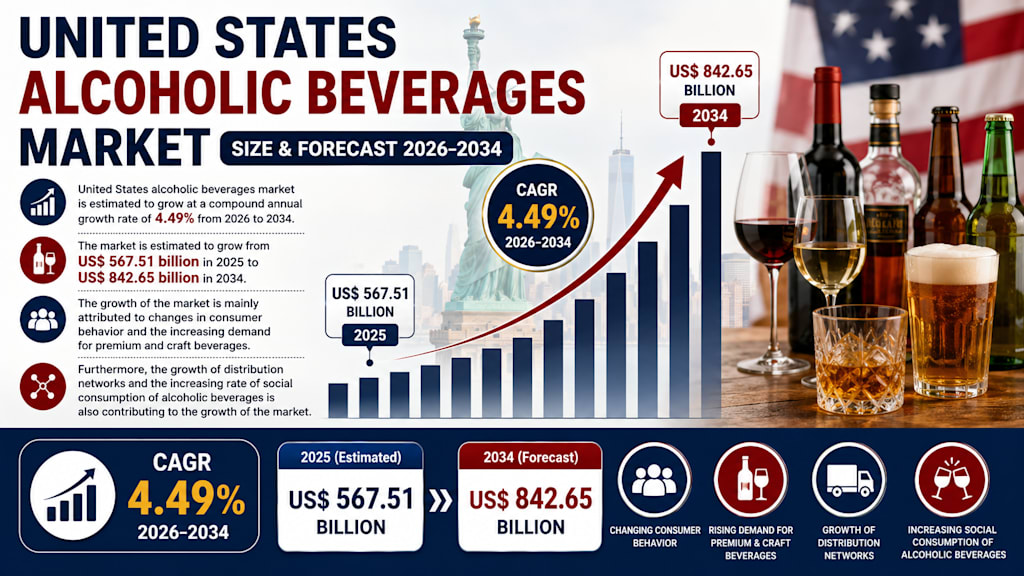
According to Renub Research, the United States Alcoholic Beverages Market is projected to grow from US$ 567.51 billion in 2025 to US$ 842.65 billion by 2034, expanding at a compound annual growth rate (CAGR) of 4.49% from 2026 to 2034. Rising demand for premium and craft beverages, expanding distribution networks, and increasing social consumption are among the primary factors supporting market growth.
As innovation continues reshaping the industry, alcoholic beverage producers are adapting to changing consumer expectations while exploring new product categories and retail channels.
Alcoholic Beverages Remain an Important Part of American Culture
Alcoholic beverages include products containing ethanol produced through fermentation or distillation processes. The major categories include beer, wine, and distilled spirits such as whiskey, vodka, rum, tequila, and gin.
In the United States, alcoholic beverages play a significant role in social gatherings, sporting events, celebrations, dining experiences, and entertainment activities. Consumer demand spans multiple demographic groups and geographic regions, making alcohol one of the country's most established consumer product categories.
While traditional products continue to perform well, changing consumer preferences are driving demand for premium offerings, innovative flavors, and more personalized drinking experiences.
These evolving trends are creating new opportunities for both established brands and emerging producers.
Premium and Craft Beverages Continue to Gain Momentum
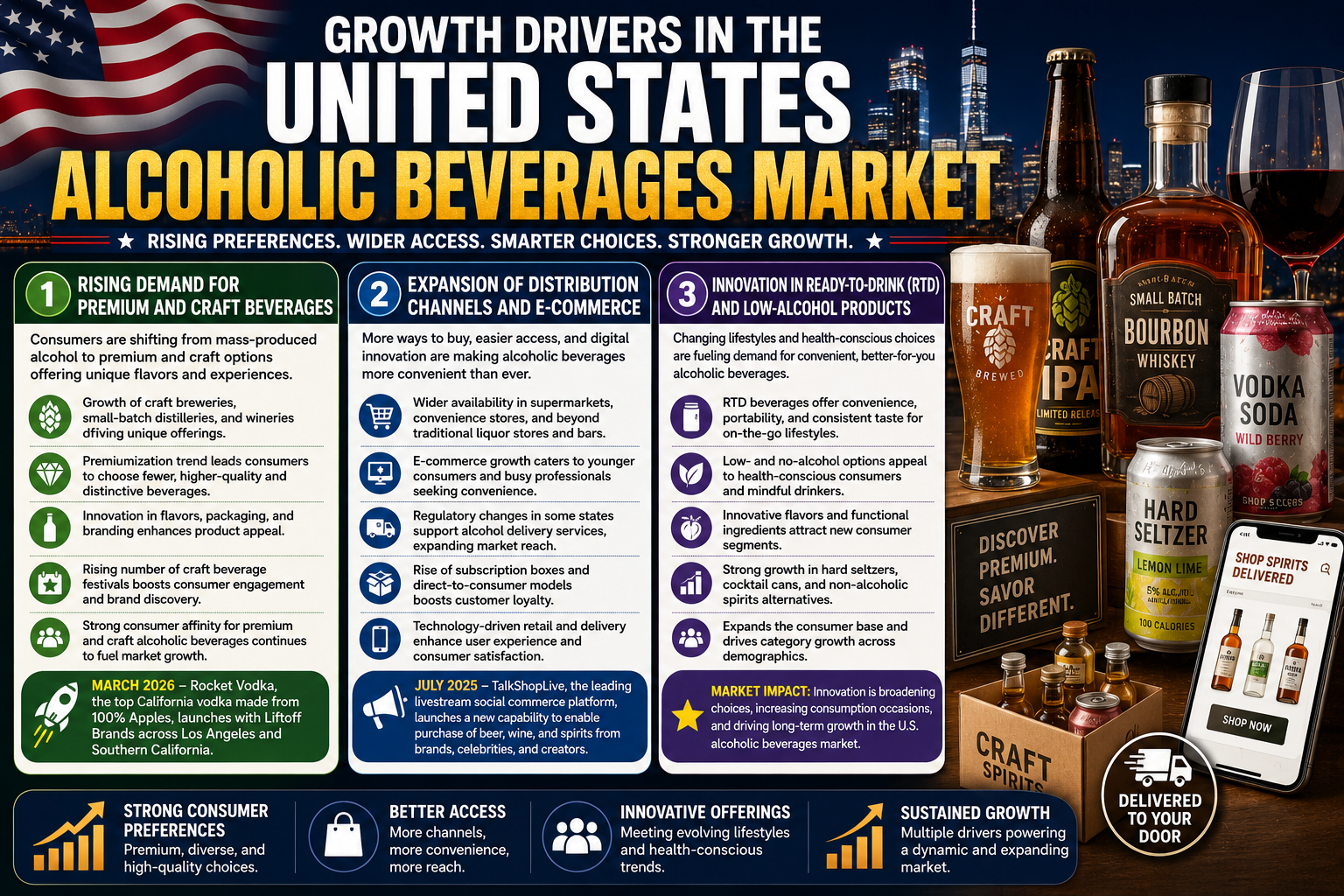
One of the strongest drivers of growth within the U.S. alcoholic beverages market is the increasing popularity of premium and craft products.
Consumers are increasingly moving away from mass-produced beverages and seeking products that offer unique flavors, artisanal craftsmanship, and distinctive brand identities. Craft breweries, boutique wineries, and small-batch distilleries have benefited significantly from this trend.
The concept of premiumization has become particularly influential. Many consumers are choosing to drink less frequently but spend more on higher-quality products.
Manufacturers are responding by introducing premium spirits, limited-edition releases, innovative packaging, and specialty flavors.
The report highlights the launch of Rocket Vodka in California, a premium vodka made entirely from apples, demonstrating how brands continue developing differentiated products to attract modern consumers.
As consumers increasingly prioritize quality over quantity, premium alcoholic beverages are expected to remain a major growth segment.
E-Commerce Is Reshaping Alcohol Retail
The rapid expansion of digital commerce is transforming how Americans purchase alcoholic beverages.
Traditionally, alcohol sales were concentrated within liquor stores, bars, and restaurants. Today, consumers can purchase a wide variety of products through online platforms, delivery services, and direct-to-consumer channels.
The convenience of online shopping has proven particularly appealing to younger consumers and busy professionals.
Digital platforms provide access to broader product selections, customer reviews, educational content, and personalized recommendations.
The report notes that TalkShopLive introduced a platform capability enabling consumers to purchase beer, wine, and spirits directly through livestream shopping experiences, reflecting the growing integration of social commerce and alcohol retail.
As regulatory frameworks continue evolving and online retail adoption grows, e-commerce is expected to play an increasingly important role in market development.
Ready-to-Drink Beverages Are Transforming Consumer Habits
Ready-to-drink (RTD) beverages have become one of the fastest-growing categories within the alcoholic beverages market.
Consumers increasingly prefer convenient, portable drinks that require no preparation and offer consistent taste and quality. Ready-to-drink cocktails, canned mixed drinks, hard seltzers, and flavored alcoholic beverages have gained widespread popularity across multiple demographic groups.
RTD products appeal particularly to younger consumers who value convenience, variety, and innovative flavor profiles.
Manufacturers continue expanding product offerings to include fruit-infused cocktails, sparkling beverages, and premium canned drinks.
The report highlights Suntory Holdings' expansion of its RTD portfolio through the introduction of MARU-HI, a Japanese-inspired sparkling cocktail designed to strengthen the company's position in the growing ready-to-drink segment.
As convenience continues influencing purchasing decisions, RTD beverages are expected to remain a key growth driver.
Low-Alcohol and Better-for-You Products Gain Popularity
Changing attitudes toward health and wellness are influencing alcohol consumption patterns across the United States.
Many consumers are seeking beverages that align with healthier lifestyles, leading to growing interest in low-calorie, low-alcohol, and lower-sugar products. Beverage manufacturers are increasingly introducing products that deliver flavor and enjoyment while addressing evolving consumer preferences.
This trend is particularly evident among younger consumers who often prioritize balance, moderation, and wellness.
As a result, innovation in reduced-alcohol products and lighter beverage options continues accelerating across multiple categories.
The industry's ability to adapt to changing health-conscious behaviors will play an important role in sustaining long-term growth.
Beer Remains the Largest Category
Beer continues to represent one of the largest segments within the U.S. alcoholic beverages market.
The product remains deeply integrated into American culture and is widely consumed during sporting events, social gatherings, concerts, and dining occasions. While traditional beer brands continue maintaining strong market positions, consumer demand is increasingly shifting toward premium, craft, and specialty products.
Craft breweries have introduced diverse flavor profiles and innovative brewing techniques that appeal to consumers seeking unique experiences.
Low-calorie beers, flavored beers, and non-traditional styles are also gaining popularity.
Despite increasing competition from other beverage categories, beer remains a cornerstone of the U.S. alcohol industry.
Wine Market Benefits from Premiumization
The wine industry continues experiencing steady growth as consumers increasingly appreciate quality, variety, and lifestyle-oriented products.
Wine consumption is often associated with dining, celebrations, and social occasions, particularly among urban and affluent consumers. Demand for premium wines, imported labels, and sustainably produced products continues expanding across the market.
Younger consumers are increasingly exploring sparkling wines, flavored wines, and alternative wine styles.
Direct-to-consumer sales and digital retail platforms have also improved accessibility and consumer education.
As wine culture continues gaining popularity throughout the United States, the segment is expected to remain an important contributor to industry growth.
Spirits Continue to Attract Premium Consumers
The spirits category has benefited significantly from premiumization trends.
Consumers increasingly seek high-quality whiskey, tequila, vodka, rum, and gin products that offer distinctive flavors and craftsmanship. Premium spirits often command higher margins and attract consumers looking for elevated drinking experiences.
Craft distilleries continue introducing innovative products and locally inspired brands that appeal to adventurous consumers.
Flavored spirits and cocktail culture have further strengthened demand within the segment.
As consumers continue embracing premium alcoholic experiences, spirits are expected to maintain strong growth momentum.
Tin Packaging Is Gaining Market Share
Packaging innovation is becoming an important factor within the alcoholic beverages industry.
Tin cans have experienced substantial growth due to their convenience, portability, rapid chilling capabilities, and recyclability. Beers, hard seltzers, and ready-to-drink cocktails are increasingly sold in cans because they appeal to consumers participating in outdoor activities and social events.
Modern canning technologies also help preserve product quality while providing attractive branding opportunities.
As sustainability concerns continue growing, recyclable packaging solutions are expected to become increasingly important.
The popularity of canned alcoholic beverages is likely to remain strong throughout the forecast period.
Liquor Stores Continue to Play a Vital Role
Despite the growth of e-commerce and large retail chains, liquor stores remain essential components of the alcohol distribution ecosystem.
These specialized retailers provide extensive product selections, knowledgeable staff, personalized recommendations, and trusted shopping experiences. Many consumers continue relying on liquor stores for premium products, specialty brands, and expert guidance.
Liquor stores are increasingly adopting digital marketing strategies and online ordering capabilities to remain competitive.
Their focus on customer service and curated product offerings continues helping them maintain relevance within a changing retail environment.
Regional Markets Drive Industry Expansion
Texas
Texas remains one of the largest alcoholic beverages markets in the country. Strong population growth, a vibrant hospitality sector, and growing interest in craft beer and premium spirits continue driving demand throughout the state.
California
California represents one of the most dynamic alcohol markets in the United States. The state's world-renowned wine industry, thriving craft beer scene, and strong demand for premium beverages create substantial growth opportunities. Consumers increasingly seek organic, sustainable, and lower-alcohol products.
New Jersey
New Jersey benefits from a dense population, strong retail infrastructure, and proximity to major metropolitan areas. Demand for imported products, premium beverages, and at-home consumption continues supporting market growth.
Arizona
Arizona's growing population, tourism industry, and favorable climate contribute to strong demand for beer, cocktails, hard seltzers, and other refreshing beverages. Local craft breweries and distilleries have also strengthened market development.
Challenges Continue to Affect the Industry
Despite favorable growth prospects, the industry faces several challenges.
One of the most significant obstacles is the complex regulatory environment governing alcohol production, distribution, and sales. Regulations vary considerably between states, creating compliance challenges for manufacturers and distributors. High excise taxes can also impact profitability and pricing strategies.
Another challenge involves changing consumer attitudes toward health and wellness. Growing awareness of alcohol-related health concerns has encouraged some consumers to reduce alcohol consumption or switch to low-alcohol and non-alcoholic alternatives.
The increasing popularity of wellness-focused lifestyles and sober-curious movements may continue influencing market dynamics in the years ahead.
Leading Companies Shaping the Market
The United States alcoholic beverages industry includes several major multinational and domestic companies that continue driving innovation and market expansion.
Key players highlighted in the report include Anheuser-Busch, Altria, Boston Beer Company, Constellation Brands Inc., Diageo, Molson Coors, and Pernod Ricard SA. These organizations continue investing in premium products, ready-to-drink beverages, sustainability initiatives, and digital commerce capabilities to strengthen their competitive positions.
Their ongoing innovations continue shaping the future direction of the alcoholic beverages market.
Final Thoughts
The United States alcoholic beverages market is entering a period of steady growth driven by premiumization, product innovation, and evolving consumer lifestyles.
With the market projected to expand from US$ 567.51 billion in 2025 to US$ 842.65 billion by 2034, opportunities continue emerging across beer, wine, spirits, and ready-to-drink categories. Growing consumer demand for premium products, expanding digital retail channels, and innovation in convenience-focused beverages are reshaping the competitive landscape.
Although regulatory complexities and changing health-conscious behaviors present challenges, the industry's long-term outlook remains positive. As brands continue adapting to consumer preferences through innovation, quality, and convenience, the U.S. alcoholic beverages market is expected to remain one of the world's most influential and dynamic consumer industries.
About the Creator
Enjoyed the story? Support the Creator.
Subscribe for free to receive all their stories in your feed.
Comments
There are no comments for this story
Be the first to respond and start the conversation.