
United States Adult Vaccine Market Forecast 2025–2033: Innovation, Prevention, and Public Health Driving a US$ 11.10 Billion Opportunity
Growing awareness of preventive healthcare, an aging population, expanding immunization programs, and breakthrough vaccine technologies are reshaping the future of adult vaccination across the United States.

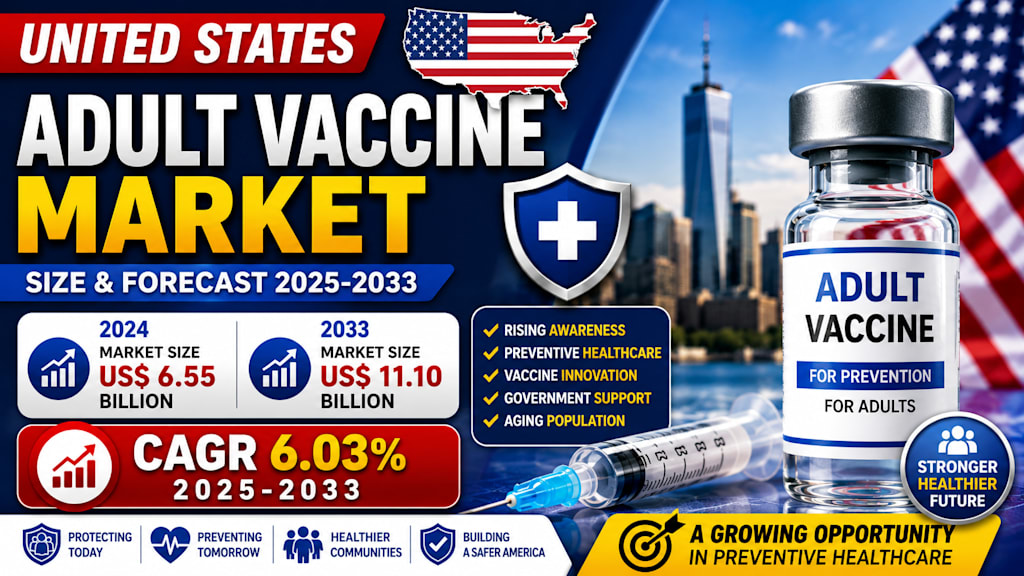
United States Adult Vaccine Market Size and Forecast 2025–2033
The United States Adult Vaccine Market is projected to grow from US$ 6.55 billion in 2024 to US$ 11.10 billion by 2033, expanding at a CAGR of 6.03% during 2025–2033.
The market's growth is being fueled by rising awareness regarding preventive healthcare, increasing cases of infectious diseases, expanding government immunization initiatives, and continuous innovation in vaccine technologies. Adult vaccination is no longer viewed solely as a seasonal healthcare measure but as a critical component of long-term disease prevention and population health management.
As healthcare providers, pharmaceutical companies, and government agencies continue to encourage adult immunization, the market is expected to witness steady growth throughout the forecast period.
Adult Vaccination: A Cornerstone of Preventive Healthcare
Vaccines have historically been associated with childhood immunization programs. However, changing demographics, increasing life expectancy, and evolving disease patterns have elevated the importance of adult vaccination.
Today, adult vaccines protect millions of Americans against diseases such as influenza, shingles, hepatitis, pneumococcal infections, meningococcal disease, and human papillomavirus (HPV).
The importance of adult immunization became particularly evident during recent public health emergencies, which highlighted the value of proactive disease prevention. Healthcare professionals increasingly recommend vaccination as a standard component of adult wellness plans, helping reduce hospitalization rates, healthcare costs, and disease-related complications.
The growing focus on preventive medicine is transforming vaccination from an optional healthcare measure into a mainstream health strategy.
Rising Disease Burden Accelerating Vaccine Demand
One of the most significant drivers of the U.S. adult vaccine market is the increasing prevalence of infectious diseases and chronic health conditions.
Adults with underlying conditions such as diabetes, cardiovascular disorders, obesity, and respiratory illnesses often have weakened immune systems, making them more susceptible to infections. Vaccines provide an effective defense mechanism by reducing disease severity and preventing complications.
According to the Centers for Disease Control and Prevention (CDC), influenza affects approximately 8.8% of adults aged 18–64 in the United States annually. Seasonal influenza alone contributes to substantial healthcare costs and productivity losses, encouraging greater vaccine uptake among working-age adults.
Similarly, growing awareness regarding shingles prevention among older adults has significantly increased demand for zoster vaccines. Rising incidences of hepatitis, pneumococcal disease, and HPV-related conditions are also supporting market expansion.
As Americans become more proactive about their health, adult vaccination rates are expected to continue rising.
Biotechnology Innovations Reshaping the Market
The U.S. vaccine industry is undergoing a technological revolution.
Advanced biotechnology platforms are enabling pharmaceutical companies to develop vaccines that are more effective, safer, and faster to produce than traditional alternatives.
Among the most transformative innovations is messenger RNA (mRNA) technology. The success of mRNA vaccines has demonstrated the potential of this platform beyond infectious diseases, opening opportunities in oncology, autoimmune disorders, and personalized medicine.
Additionally, innovations such as:
Recombinant vaccines
Adjuvanted vaccines
Needle-free delivery systems
Intranasal vaccines
Combination vaccines
are improving patient compliance and expanding vaccine accessibility.
Researchers are also exploring therapeutic vaccines that may help treat chronic diseases and certain cancers, creating entirely new growth avenues for the adult vaccine sector.
The continued integration of biotechnology and artificial intelligence into vaccine development is expected to accelerate future product launches and improve clinical outcomes.
Government Support Strengthening Market Growth
Government initiatives remain a critical pillar supporting adult vaccination in the United States.
Federal and state health agencies continue to promote immunization through public awareness campaigns, vaccination guidelines, funding programs, and insurance coverage policies.
Programs aimed at improving access among vulnerable populations—including older adults, immunocompromised individuals, and underserved communities—have significantly increased vaccination rates.
The Affordable Care Act and various public health initiatives have expanded insurance coverage for recommended vaccines, reducing financial barriers for millions of Americans.
Collaborative efforts involving healthcare providers, pharmacies, employers, insurers, and government organizations have further enhanced vaccine accessibility.
These initiatives not only improve public health outcomes but also reduce long-term healthcare expenditures associated with preventable diseases.
Aging Population Creating Long-Term Demand
America's aging demographic represents one of the strongest growth drivers for the adult vaccine market.
As individuals age, immune system effectiveness naturally declines, increasing susceptibility to infections and disease complications.
The growing population of adults aged 65 years and above has created substantial demand for vaccines targeting:
Influenza
Pneumococcal disease
Shingles
Respiratory infections
Emerging infectious diseases
Older adults increasingly recognize vaccination as an essential preventive healthcare measure that supports healthy aging and reduces hospitalization risks.
This demographic trend is expected to remain a major catalyst for market growth throughout the forecast period.
Key Challenges Facing the Industry
Vaccine Hesitancy and Misinformation
Despite significant advancements in vaccine science, vaccine hesitancy continues to pose a challenge.
Misinformation shared through social media platforms and online communities has created confusion regarding vaccine safety and effectiveness. Concerns about side effects and distrust toward pharmaceutical companies have influenced vaccination decisions among some adults.
Addressing these concerns requires transparent communication, public education campaigns, and strong engagement from healthcare professionals.
Building public confidence remains essential for maximizing vaccination coverage rates.
Cost and Accessibility Concerns
While many vaccines are covered by insurance programs, affordability remains a concern for certain populations.
Individuals without adequate insurance coverage may face substantial out-of-pocket expenses. Geographic disparities also contribute to uneven vaccine access, particularly in rural and underserved communities.
Supply chain disruptions and seasonal demand fluctuations can occasionally impact vaccine availability.
Efforts to improve affordability, strengthen healthcare infrastructure, and expand distribution networks will be crucial for sustaining market growth.
Regional Analysis: Key State Markets
California
California remains one of the largest adult vaccine markets in the country due to its vast population, strong healthcare infrastructure, and leadership in biotechnology innovation.
Robust public health programs and extensive healthcare networks have helped increase vaccine awareness and accessibility across diverse communities.
Texas
Texas continues to witness strong growth in adult vaccination rates.
The state's large population, expanding healthcare investments, and rising awareness of preventive healthcare contribute significantly to vaccine demand. Ongoing efforts to improve access in rural regions are further strengthening the market.
New York
New York's advanced healthcare ecosystem and extensive public health initiatives make it a major contributor to the national adult vaccine market.
Strong participation from healthcare providers and research institutions supports high vaccine adoption rates across the state.
Florida
Florida's large elderly population creates substantial demand for adult vaccines, particularly shingles, influenza, and pneumococcal vaccines.
The state's emphasis on preventive healthcare and active retirement communities further supports market expansion.
Competitive Landscape
The U.S. adult vaccine market is highly competitive and characterized by significant investments in research, development, manufacturing, and commercialization.
Leading companies continue to expand vaccine portfolios, pursue strategic collaborations, and invest heavily in next-generation technologies.
Major industry participants include:
GSK plc
AstraZeneca plc
Sanofi Pasteur
Pfizer Inc.
CSL Limited
Moderna Inc.
Merck & Co., Inc.
These companies continue to shape the future of adult immunization through innovation and strategic expansion.
10 Recent Developments in the U.S. Adult Vaccine Market
1. Moderna Receives FDA Approval for mNEXSPIKE
In May 2025, Moderna secured FDA approval for its mNEXSPIKE COVID-19 vaccine for individuals aged 12–64 years, expanding its next-generation vaccine portfolio.
2. Pfizer Expands mRNA Vaccine Research
Pfizer accelerated development programs targeting influenza and combination respiratory vaccines using advanced mRNA technologies.
3. GSK Strengthens Shingles Vaccine Distribution
GSK increased manufacturing capacity and distribution efforts for its shingles vaccine to meet growing demand among older adults.
4. Sanofi Advances Influenza Vaccine Development
Sanofi expanded clinical programs focused on enhanced influenza vaccine effectiveness for aging populations.
5. Merck Expands Adult HPV Vaccine Awareness Programs
Merck broadened public education initiatives encouraging HPV vaccination among eligible adult populations.
6. CSL Limited Enhances Vaccine Manufacturing Capabilities
CSL invested in advanced production infrastructure to improve vaccine supply resilience and future scalability.
7. AstraZeneca Increases Investment in Respiratory Disease Prevention
AstraZeneca expanded research efforts targeting respiratory infections and next-generation immunization technologies.
8. Expansion of Pharmacy-Based Vaccination Services
Major pharmacy chains across the United States increased adult vaccination availability through walk-in and appointment-based services.
9. Growth of Combination Vaccine Research
Several vaccine manufacturers accelerated development of combination vaccines capable of protecting against multiple respiratory diseases simultaneously.
10. Increased Public-Private Immunization Partnerships
Healthcare systems, pharmaceutical companies, and government agencies expanded collaborative vaccination campaigns to improve adult vaccine coverage nationwide.
Market Segmentation
By Disease
Influenza
Cervical Cancer (HPV)
Zoster (Shingles)
MMR (Measles, Mumps, Rubella)
Pneumococcal
Meningococcal
Hepatitis
TdaP
Travel & Miscellaneous
Varicella
By Number of Vaccinated Adults
Influenza
HPV
Zoster
MMR
Pneumococcal
Meningococcal
Hepatitis
TdaP
Varicella
By State
California
Texas
New York
Florida
Illinois
Pennsylvania
Ohio
Georgia
New Jersey
Washington
North Carolina
Massachusetts
Virginia
Michigan
Maryland
Colorado
Tennessee
Indiana
Arizona
Minnesota
Wisconsin
Missouri
Connecticut
South Carolina
Oregon
Louisiana
Alabama
Kentucky
Rest of United States
Final Thoughts
The United States Adult Vaccine Market is entering a new era defined by innovation, prevention, and public health preparedness. As chronic diseases become more prevalent, populations age, and awareness of preventive healthcare grows, adult vaccination is becoming an increasingly important component of healthcare delivery.
Supported by government initiatives, technological breakthroughs, and expanding healthcare access, the market is forecast to grow from US$ 6.55 billion in 2024 to US$ 11.10 billion by 2033. While challenges such as vaccine hesitancy and accessibility remain, continued investments in education, biotechnology, and healthcare infrastructure are expected to sustain long-term growth.
For pharmaceutical companies, healthcare providers, policymakers, and investors, the U.S. adult vaccine sector represents a compelling opportunity to improve health outcomes while supporting one of the most important pillars of preventive medicine.
About the Creator
Enjoyed the story? Support the Creator.
Subscribe for free to receive all their stories in your feed.
Comments
There are no comments for this story
Be the first to respond and start the conversation.