
United Kingdom Watch Market: Why Are Luxury Timepieces and Smartwatches Driving a New Era of Growth in the UK?
Growing demand for luxury watches, rising smartwatch adoption, strong tourism-driven retail sales, and expanding e-commerce channels are fueling the transformation of the United Kingdom watch market through 2034.

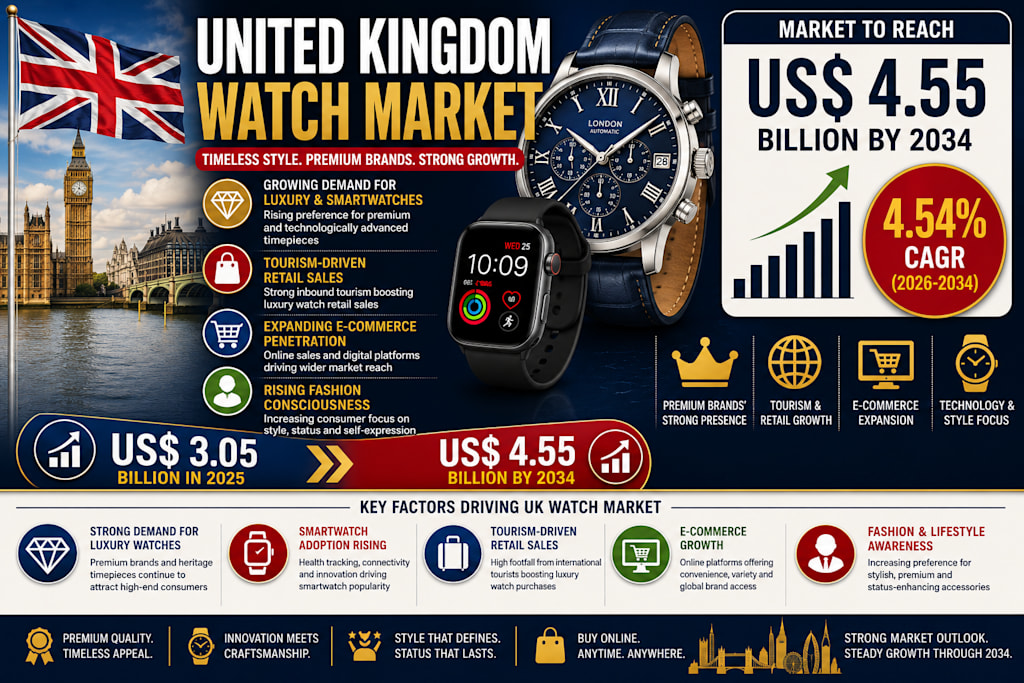
The United Kingdom has long been one of Europe's most influential markets for luxury goods, fashion accessories, and premium consumer products. Watches, in particular, hold a unique place within British culture, combining functionality, craftsmanship, prestige, and personal expression. From luxury Swiss timepieces displayed in London's iconic shopping districts to cutting-edge smartwatches favored by digitally connected consumers, the UK watch industry continues to evolve at a rapid pace.
Today's consumers view watches as much more than devices for telling time. Luxury watches represent status, heritage, and investment value, while smartwatches offer connectivity, health monitoring, and convenience. These parallel trends are creating strong opportunities for manufacturers, retailers, and technology companies operating throughout the market.
According to Renub Research, the United Kingdom Watch Market is expected to grow from US$ 3.05 billion in 2025 to US$ 4.55 billion by 2034, registering a CAGR of 4.54% between 2026 and 2034. Rising demand for luxury and smartwatches, strong tourism-driven retail sales, expanding e-commerce penetration, and increasing fashion consciousness are expected to support continued growth throughout the forecast period.
Watches Continue to Evolve Beyond Traditional Timekeeping
A watch is a portable timekeeping device typically worn on the wrist or carried as an accessory. While traditional watches focused solely on displaying time, modern models incorporate a wide variety of advanced features.
Today's watches may include chronographs, alarms, GPS navigation, health monitoring systems, smartphone connectivity, fitness tracking capabilities, and contactless payment functionality. The market includes mechanical watches, automatic watches, quartz watches, digital models, and sophisticated smartwatches.
In the United Kingdom, watches continue to serve as both practical devices and symbols of personal identity. Luxury watches emphasize craftsmanship, heritage, and engineering excellence, while smartwatches focus on convenience, productivity, and technological integration.
This broad diversity of products enables the industry to appeal to multiple consumer segments and maintain long-term relevance in an increasingly digital world.
Luxury Watch Demand Remains Exceptionally Strong
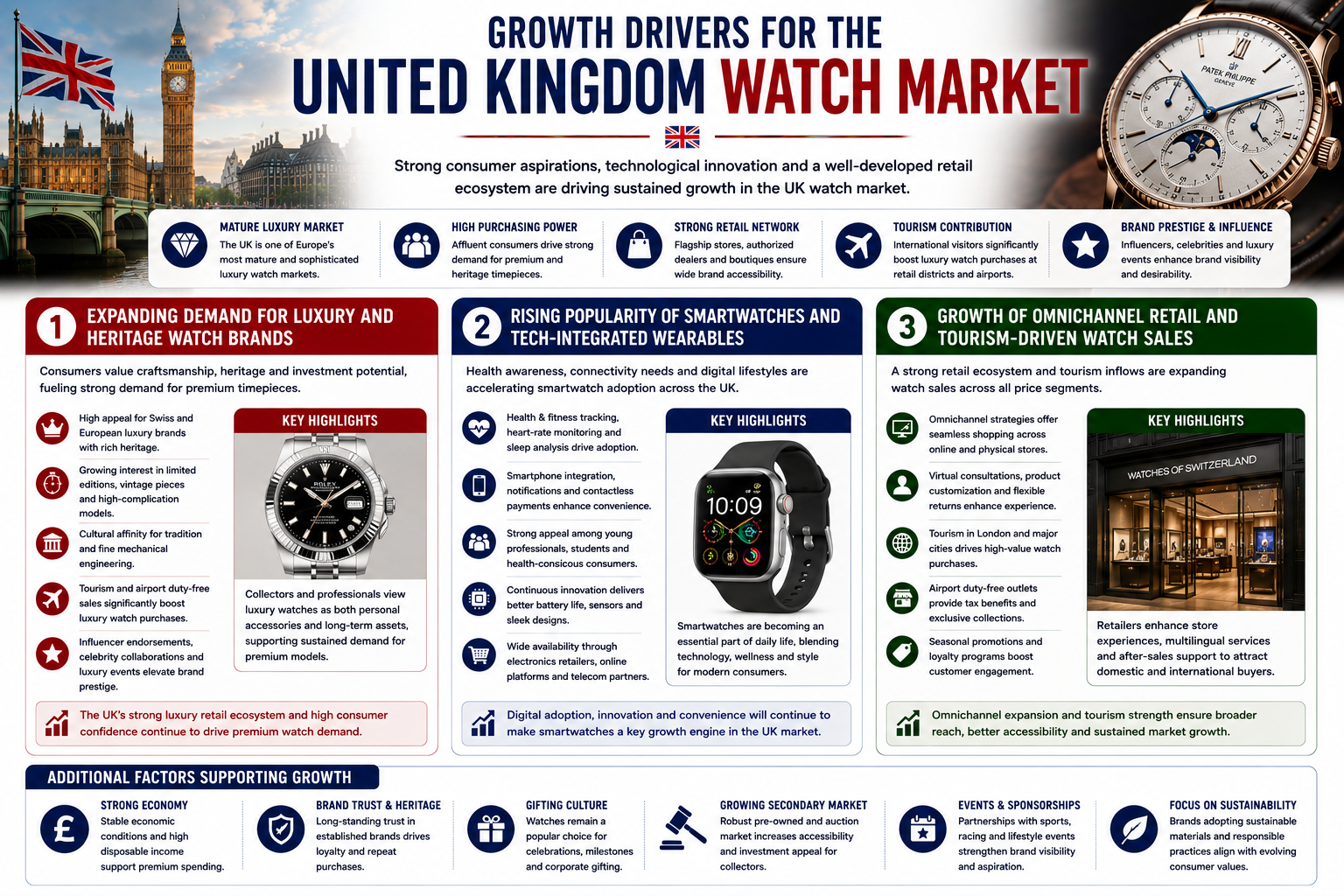
One of the most important growth drivers within the UK watch market is the continued popularity of luxury and heritage watch brands.
The United Kingdom possesses one of Europe's most mature luxury watch markets, supported by affluent consumers who value quality craftsmanship, engineering precision, and long-term investment potential. Luxury watches are often viewed as symbols of success, sophistication, and personal achievement.
High-end Swiss and European watch brands maintain strong visibility through flagship stores, exclusive boutiques, and authorized retailers across major cities.
Collectors increasingly seek limited-edition models, vintage timepieces, and complicated mechanical watches that offer rarity and exclusivity. Many buyers view premium watches as investment assets capable of appreciating in value over time.
The UK's strong luxury retail infrastructure, combined with high purchasing power and appreciation for fine craftsmanship, continues to support robust demand for premium timepieces.
Tourism Significantly Boosts Watch Sales
Tourism remains a major contributor to watch market growth throughout the United Kingdom.
London, in particular, attracts millions of international visitors every year, many of whom purchase luxury watches while visiting the city. High-end shopping districts such as Bond Street, Mayfair, and Knightsbridge have become global destinations for luxury retail.
Airport duty-free shops and premium retail outlets also contribute substantially to sales volumes. International travelers often take advantage of tax benefits, competitive pricing, and access to exclusive collections unavailable in their home markets.
The combination of domestic demand and tourism-driven purchases creates a highly favorable environment for luxury watch retailers.
As global travel continues recovering and expanding, tourism is expected to remain a critical growth driver for the industry.
Smartwatches Continue to Transform Consumer Preferences
While luxury watches dominate the premium segment, smartwatches are rapidly reshaping the broader market.
Consumers increasingly seek wearable devices that provide health monitoring, fitness tracking, smartphone connectivity, GPS navigation, and productivity tools. These features have transformed watches into multifunctional digital companions.
Younger consumers, especially students and professionals, are leading smartwatch adoption due to their active lifestyles and reliance on connected technologies.
Manufacturers continuously introduce models featuring enhanced sensors, improved battery life, sleeker designs, and expanded functionality.
The growing integration of wellness applications, productivity tools, and digital ecosystems further strengthens consumer demand for wearable technology.
As digital transformation accelerates throughout society, smartwatches are expected to remain among the fastest-growing segments within the UK watch market.
Health and Wellness Trends Drive Wearable Adoption
Health consciousness has become a powerful influence on consumer purchasing behavior.
Consumers increasingly seek devices that help monitor physical activity, sleep quality, heart health, stress levels, and overall wellness. Smartwatches provide convenient access to this information while seamlessly integrating into everyday life.
Features such as heart-rate monitoring, GPS-enabled exercise tracking, sleep analysis, and wellness coaching have become particularly valuable to health-conscious consumers.
The growing popularity of fitness applications and preventive healthcare initiatives further contributes to smartwatch demand.
As awareness regarding health management continues expanding, wearable devices are expected to become even more deeply integrated into consumers' daily routines.
Omnichannel Retail Creates Better Shopping Experiences
The UK's highly developed retail infrastructure remains one of the market's greatest strengths.
Retailers increasingly utilize omnichannel strategies that combine online browsing, virtual consultations, personalized recommendations, in-store experiences, and flexible return policies.
Consumers appreciate the ability to research products online while retaining the option to complete purchases through physical stores.
Luxury watch retailers frequently offer appointment-based consultations and exclusive showroom experiences that enhance customer engagement.
The seamless integration of physical and digital retail environments improves accessibility, convenience, and consumer confidence, supporting overall market growth.
E-Commerce Continues Expanding Market Reach
Online shopping has become one of the most important distribution channels within the UK watch industry.
Consumers increasingly purchase watches through digital platforms because of convenience, product variety, competitive pricing, and transparent information.
E-commerce platforms provide access to detailed product specifications, authentication services, customer reviews, and personalized recommendations.
Many retailers now offer financing options, trade-in programs, and flexible payment plans designed to encourage online purchases.
Digital marketing campaigns, influencer partnerships, and social media promotions further enhance consumer awareness and engagement.
The continued expansion of e-commerce is expected to play a major role in supporting future market growth.
Quartz Watches Remain a Stable Market Segment
Despite increasing attention on luxury watches and smartwatches, quartz watches continue to maintain strong demand.
Consumers appreciate quartz watches for their affordability, reliability, and low-maintenance operation. These products appeal to students, professionals, and budget-conscious consumers seeking accurate timekeeping at accessible price points.
Fashion brands and international manufacturers continue introducing new designs and seasonal collections that keep the category fresh and relevant.
The widespread availability of quartz watches through department stores, specialty retailers, and online platforms ensures continued market stability.
Their combination of practicality and affordability makes quartz watches one of the most resilient segments within the broader market.
Electronic Watches Continue to Attract Practical Consumers
Electronic watches remain popular among consumers who prioritize functionality, durability, and affordability.
Features such as LED displays, alarms, stopwatches, timers, and extended battery life make these watches attractive for students, outdoor enthusiasts, and active individuals.
Many consumers view electronic watches as practical alternatives to more expensive smartwatches, particularly when advanced connectivity features are unnecessary.
The category continues benefiting from growing online retail activity and broad product availability.
As demand for durable and affordable accessories persists, electronic watches are expected to maintain a stable market position.
Women's Watch Segment Continues to Expand
The women's watch market is experiencing healthy growth across the United Kingdom.
Consumers increasingly view watches as both functional accessories and important fashion statements. Demand spans luxury, mid-range, and affordable categories.
Popular styles include minimalist designs, jewelry-inspired watches, slim profiles, and rose-gold finishes. Smartwatches and hybrid models are also attracting increasing attention from women seeking connectivity and wellness features.
Social media platforms and influencer marketing play an important role in shaping consumer preferences, particularly among younger buyers.
Growing fashion awareness and expanding product diversity continue strengthening this segment.
Challenges Facing the UK Watch Market
Intense Competition Across Multiple Categories
The UK watch industry faces significant competition from luxury brands, fashion watch companies, mid-range imports, and technology-focused smartwatch manufacturers.
Consumers have access to a vast selection of products across multiple price categories, making brand differentiation increasingly difficult.
Online marketplaces further intensify competition by enabling instant price comparisons and broad product accessibility.
Manufacturers must continually invest in innovation, branding, and customer engagement to remain competitive.
Rapidly Changing Consumer Preferences
Consumer preferences continue evolving rapidly as fashion trends and technological innovations accelerate.
Younger consumers increasingly prioritize convenience, connectivity, and multifunctionality, creating challenges for traditional watchmakers focused on analog products.
Frequent smartwatch updates have also shortened product lifecycles and increased expectations regarding innovation.
Traditional brands must adapt through design evolution, hybrid products, and strategic collaborations while maintaining their heritage and identity.
London Leads the National Market
London remains the most influential watch market in the United Kingdom.
The city's luxury boutiques, flagship stores, and internationally recognized shopping districts generate substantial demand for premium watches.
Affluent residents and international tourists contribute significantly to sales across luxury, designer, and collectible categories.
The city's strong technology ecosystem also supports smartwatch adoption among professionals and digitally connected consumers.
London's combination of wealth, tourism, and global brand presence ensures its continued leadership within the national market.
Manchester Emerges as a Key Growth Hub
Manchester continues strengthening its position as one of the UK's most important regional watch markets.
The city's growing affluent population supports demand for premium watches, while its large student population drives interest in smartwatches and digital wearables.
Modern shopping centers, strong e-commerce adoption, and increasing fashion consciousness contribute to market expansion.
Manchester's dynamic retail environment ensures continued growth across multiple watch categories.
Birmingham Benefits from Diverse Consumer Demand
Birmingham's multicultural population and expanding economy support demand across luxury, mid-range, and smartwatch segments.
Working professionals increasingly adopt smartwatches for productivity and wellness purposes, while affluent consumers continue investing in premium timepieces.
The city's strong retail infrastructure and growing disposable incomes create favorable conditions for long-term market growth.
Leeds Continues to Expand Retail Opportunities
Leeds remains an important regional market characterized by strong consumer spending and expanding retail infrastructure.
The city's young professional population contributes to smartwatch adoption, while traditional designer watches remain popular among working adults.
Retailers continue enhancing customer engagement through promotions, digital services, and experiential shopping initiatives.
These factors position Leeds as an increasingly influential market within the UK watch industry.
Future Outlook
The future of the United Kingdom watch market remains highly promising.
Growing demand for luxury watches, rising adoption of wearable technologies, expanding tourism activity, and continued digital retail innovation are expected to support sustained growth through 2034.
Manufacturers that successfully combine craftsmanship, technology, personalization, and customer experience will be best positioned to capture future opportunities.
As consumers continue seeking products that blend functionality, prestige, and self-expression, watches are expected to remain a vital component of British lifestyle and fashion culture.
Final Thoughts
The United Kingdom watch market is evolving rapidly as traditional luxury craftsmanship meets modern digital innovation. Premium watches continue attracting consumers who value heritage, prestige, and investment potential, while smartwatches are redefining expectations through health monitoring, connectivity, and convenience.
With the market projected to grow from US$ 3.05 billion in 2025 to US$ 4.55 billion by 2034, substantial opportunities exist for luxury brands, technology companies, retailers, and watchmakers. Businesses that successfully balance tradition, innovation, and customer engagement will be best positioned to thrive in the UK's increasingly dynamic watch industry
About the Creator
Enjoyed the story? Support the Creator.
Subscribe for free to receive all their stories in your feed.
Comments
There are no comments for this story
Be the first to respond and start the conversation.