
United Kingdom Meat Snacks Market Set to Reach US$ 557.69 Million by 2033 as Protein-Rich Snacking Reshapes Consumer Preferences
Growing demand for high-protein convenience foods, innovative flavors, and expanding retail distribution channels are accelerating growth across the UK meat snacks industry.

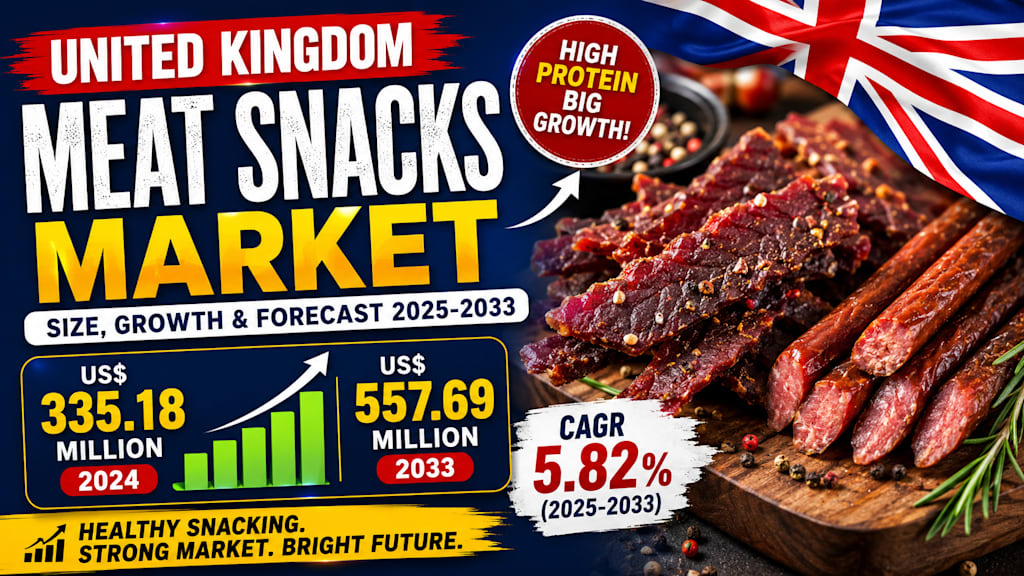
United Kingdom Meat Snacks Market Size and Forecast 2025–2033
The United Kingdom meat snacks market is entering a new phase of growth as consumers increasingly prioritize convenient, protein-rich, and satisfying snack options. According to Renub Research, the United Kingdom Meat Snacks Market was valued at US$ 335.18 million in 2024 and is projected to reach US$ 557.69 million by 2033, expanding at a CAGR of 5.82% between 2025 and 2033.
The transformation of consumer eating habits, increasing focus on health and fitness, and continuous product innovation are creating favorable conditions for market expansion. From traditional pork snacks and jerky to premium meat sticks and protein-packed meatballs, manufacturers are introducing new formats and flavors to meet changing consumer expectations.
As the UK snack industry evolves, meat snacks are no longer viewed as niche products. Instead, they have become mainstream options embraced by fitness enthusiasts, busy professionals, travelers, and consumers seeking healthier alternatives to conventional snacks.
The Growing Popularity of Meat Snacks in the United Kingdom
Meat snacks are portable, ready-to-eat food products typically prepared through drying, curing, smoking, or seasoning methods. Popular categories include jerky, meat sticks, sausage snacks, biltong, meat bites, and pork-based products.
Over the last decade, UK consumers have increasingly shifted toward foods that deliver both convenience and nutritional value. This trend has helped meat snacks secure a stronger position in supermarket aisles, convenience stores, online retail platforms, and foodservice channels.
Unlike traditional snack foods that are often high in sugar or refined carbohydrates, meat snacks offer substantial protein content, making them appealing to consumers who follow active lifestyles, weight-management plans, or low-carbohydrate diets.
The market's appeal also lies in its versatility. Manufacturers continue to launch products with unique flavor profiles, premium ingredients, and innovative packaging formats that align with modern consumption habits.
High-Protein Diet Trends Driving Market Growth
One of the most influential factors supporting the growth of the UK meat snacks market is the rising popularity of high-protein diets.
Consumers are becoming increasingly aware of the role protein plays in muscle development, satiety, energy management, and overall health. As a result, many individuals are replacing traditional snack options with protein-rich alternatives.
Fitness-conscious millennials, gym-goers, athletes, and health-focused professionals are among the leading consumer groups fueling demand. Social media influencers, nutrition experts, and wellness campaigns have further reinforced the importance of protein consumption.
Products such as jerky, biltong, meat sticks, and ready-to-eat meatballs provide consumers with convenient access to protein without requiring preparation or refrigeration.
A notable example occurred in October 2024 when The Compleat Food Group introduced Meateors, a new range of naturally high-protein ready-to-eat meatballs. The launch reflected growing consumer interest in expanding protein snack choices beyond traditional jerky products.
As more consumers seek nutrient-dense foods that support busy lifestyles, demand for meat snacks is expected to continue rising.
Flavor Innovation Is Transforming Consumer Interest
Product innovation has become a major growth engine within the meat snacks industry.
Today's consumers are increasingly adventurous and willing to experiment with bold, global flavors. Manufacturers are responding by introducing exciting varieties that extend beyond conventional smoked or salted offerings.
Popular flavor innovations include:
Sweet and Tangy BBQ
Peri-Peri
Teriyaki
Chili Lime
Honey Mustard
Garlic Herb
Smoky Chipotle
In addition to flavor innovation, producers are exploring alternative meat sources such as turkey, venison, and specialty meats to differentiate their products.
Packaging innovation is also helping drive category growth. Resealable pouches, portion-controlled packs, meat bites, and snack-sized formats improve convenience while reducing food waste.
October 2024 saw another significant development when Pork Farms launched the Meateors meat snack brand, offering protein-rich pork meatballs designed to introduce greater variety and excitement into the category.
These innovations are attracting new consumers while encouraging repeat purchases among existing customers.
Retail Expansion Supporting Market Accessibility
The expansion of distribution channels has significantly increased consumer access to meat snack products throughout the United Kingdom.
Historically, meat snacks were primarily available in specialty stores and limited retail locations. Today, they are widely stocked across:
Supermarkets
Hypermarkets
Convenience stores
Petrol stations
Online retail platforms
Restaurants and pubs
Major retailers continue allocating additional shelf space to protein-rich snacks as consumer demand grows.
The rise of e-commerce has been particularly influential. Online marketplaces enable both established brands and smaller producers to reach national audiences without relying solely on physical retail networks.
Subscription-based snack services have also emerged as an effective sales channel, allowing consumers to receive curated selections of meat snacks regularly.
In January 2025, Jack Link's partnered with Doritos to launch a new range of Sweet & Tangy BBQ flavored meat snacks. The collaboration combined the recognizable seasoning profile of Doritos with the protein-rich appeal of beef jerky and meat sticks, demonstrating how strategic partnerships can attract broader consumer audiences.
Challenges Facing the UK Meat Snacks Industry
Despite strong growth prospects, several challenges continue to affect market participants.
Health Concerns Around Processed Meat
Public health organizations continue to highlight concerns regarding excessive consumption of processed meat products.
Issues related to sodium content, preservatives, saturated fats, and long-term health implications have encouraged some consumers to moderate meat intake.
To address these concerns, manufacturers are introducing:
Reduced-sodium products
Lean meat formulations
Natural ingredient labels
Clean-label products
Low-sugar recipes
Brands that successfully balance taste and nutrition are likely to gain competitive advantages in the years ahead.
Sustainability and Environmental Pressure
Environmental awareness is becoming increasingly important among UK consumers.
Many consumers are examining the environmental impact of meat production and considering alternative protein sources. This trend has accelerated demand for plant-based snacks and hybrid protein products.
To maintain market relevance, meat snack manufacturers are investing in:
Sustainable sourcing
Animal welfare initiatives
Carbon reduction programs
Recyclable packaging
Supply chain transparency
Companies that effectively communicate their sustainability commitments may strengthen consumer trust and brand loyalty.
Jerky Remains a Market Leader
Jerky continues to represent one of the most established segments within the UK meat snacks market.
Originally popularized in North America, jerky has gained widespread acceptance among British consumers thanks to its:
High protein content
Long shelf life
Portability
Strong flavor variety
Manufacturers are adapting products to local preferences by offering lower-sugar formulations, reduced-salt options, and premium ingredient selections.
Jerky appeals particularly to fitness enthusiasts, travelers, office workers, and outdoor consumers seeking convenient nutrition.
Although premium jerky products often command higher prices than traditional snack foods, growing health awareness continues to support category expansion.
Ham Sausages Emerging as a Fast-Growing Segment
Ham sausage snacks are rapidly gaining popularity across the UK market.
Available in mini sausage formats, meat sticks, and snack-sized portions, these products offer consumers a combination of convenience, indulgence, and familiar taste.
Flavor diversification has broadened their appeal significantly. Popular variants include:
Smoked ham
Herb-seasoned sausage
Spicy sausage snacks
Barbecue-flavored options
Manufacturers are increasingly developing lower-fat and reduced-salt alternatives to attract health-conscious consumers.
The category's strong cultural familiarity and convenience positioning are expected to support continued growth through 2033.
Conventional Meat Snacks Continue to Dominate
While premium and organic products are growing, conventional meat snacks still account for the largest share of market sales.
Products such as traditional cured meats, pork scratchings, and standard jerky remain highly popular among consumers seeking affordability and familiarity.
Their widespread availability in pubs, supermarkets, and convenience stores helps maintain strong demand.
However, younger consumers increasingly favor healthier and more innovative alternatives. To remain competitive, manufacturers are reformulating products and introducing portion-controlled packaging to align with evolving consumer expectations.
Convenience Stores Play a Vital Distribution Role
Convenience stores remain one of the most important sales channels for meat snacks across the UK.
Busy lifestyles continue to drive demand for grab-and-go food options, making meat snacks particularly attractive for:
Commuters
Students
Office workers
Travelers
Retailers frequently position meat snacks near checkout counters, encouraging impulse purchases.
Although convenience store pricing may be slightly higher than supermarket pricing, accessibility and convenience continue to drive strong sales performance.
Online Retail Accelerating Category Growth
Digital commerce is becoming a powerful force within the UK meat snacks market.
Consumers increasingly value the ability to browse a broader selection of products online, including premium, artisanal, and specialty meat snacks that may not be available in local stores.
Online platforms also allow brands to educate consumers regarding:
Protein content
Nutritional benefits
Sustainability practices
Ingredient sourcing
Direct-to-consumer models and subscription services are expected to become increasingly important growth channels throughout the forecast period.
England Leads Regional Market Performance
England represents the largest regional market for meat snacks within the United Kingdom.
Large urban populations, extensive retail infrastructure, and strong consumer purchasing power contribute to England's dominant position.
Cities such as London, Manchester, Birmingham, and Leeds continue to drive demand for premium protein snacks and innovative flavor offerings.
England also serves as the primary testing ground for new product launches, making it a key influence on nationwide market trends.
Meanwhile, Wales and Northern Ireland continue to present attractive opportunities, particularly for artisanal producers emphasizing local sourcing and regional heritage.
10 Recent Developments Among Key Industry Players
Nestlé S.A. expanded its protein-focused snack portfolio through continued investment in healthier snacking categories.
Hormel Foods strengthened international distribution of protein snack brands to support global market expansion.
Conagra Brands increased focus on premium snack innovations targeting health-conscious consumers.
Bridgford Foods introduced enhanced packaging solutions designed to improve shelf life and convenience.
The Hershey Company continued diversifying its snack portfolio through investments in protein-based food categories.
Associated British Foods plc expanded strategic initiatives across convenience food and snacking segments.
Tyson Foods, Inc. accelerated product innovation efforts emphasizing high-protein consumer trends.
Danish Crown invested in sustainable meat production and supply chain optimization programs.
Kerry Group plc expanded flavor technology solutions supporting next-generation meat snack development.
Jack Link's partnered with Doritos in January 2025 to launch Sweet & Tangy BBQ flavored beef jerky and meat sticks, creating one of the industry's most notable recent collaborations.
Competitive Landscape
The UK meat snacks market remains highly competitive, featuring multinational food companies, regional manufacturers, and emerging specialty brands.
Leading companies are focusing on:
Product innovation
Flavor diversification
Sustainable sourcing
Premium positioning
E-commerce expansion
Strategic partnerships
Key companies analyzed include:
Nestlé S.A.
Hormel Foods
Conagra Brands
Bridgford Foods
Hershey
Associated British Foods plc
Tyson Foods, Inc.
Danish Crown
Kerry Group plc
These organizations are leveraging brand recognition, distribution networks, and innovation capabilities to strengthen their market positions.
Final Thoughts
The United Kingdom Meat Snacks Market is poised for sustained expansion over the next decade, driven by changing consumer lifestyles, increasing demand for protein-rich foods, and continuous innovation across flavors, formats, and retail channels.
With the market projected to grow from US$ 335.18 million in 2024 to US$ 557.69 million by 2033, meat snacks are becoming a central component of modern British snacking habits. While challenges surrounding health perceptions and sustainability remain, ongoing product reformulation, responsible sourcing practices, and digital retail growth are helping manufacturers adapt to evolving consumer expectations.
As convenience, nutrition, and flavor continue to shape purchasing decisions, the UK meat snacks industry is well-positioned to capitalize on one of the fastest-growing segments within the broader food and beverage market.
About the Creator
Enjoyed the story? Support the Creator.
Subscribe for free to receive all their stories in your feed.
Comments
There are no comments for this story
Be the first to respond and start the conversation.