
United Arab Emirates Quick Service Restaurant Market: Why Is the UAE Becoming One of the Fastest-Growing QSR Markets in the World?
Rapid urbanization, booming food delivery platforms, a growing expatriate population, and evolving consumer lifestyles are driving exceptional growth in the United Arab Emirates quick service restaurant market through 2034.

The United Arab Emirates has transformed into one of the world's most dynamic foodservice markets. Driven by rapid urbanization, rising disposable incomes, an expanding expatriate population, and thriving tourism, the country's restaurant industry has experienced remarkable growth over the past decade. Among the most successful segments within this ecosystem is the quick service restaurant (QSR) market.
Consumers across the UAE increasingly seek dining options that combine speed, convenience, affordability, and quality. As work schedules become more demanding and lifestyles more fast-paced, quick service restaurants have become an integral part of everyday life. Whether ordering through mobile apps, dining in shopping malls, or grabbing meals while commuting, consumers are embracing QSR offerings at unprecedented levels.
The market has evolved far beyond traditional fast food. Today's QSR brands focus on menu innovation, digital engagement, healthier alternatives, and personalized customer experiences. These developments are creating significant opportunities for local operators, international franchises, and emerging foodservice concepts.
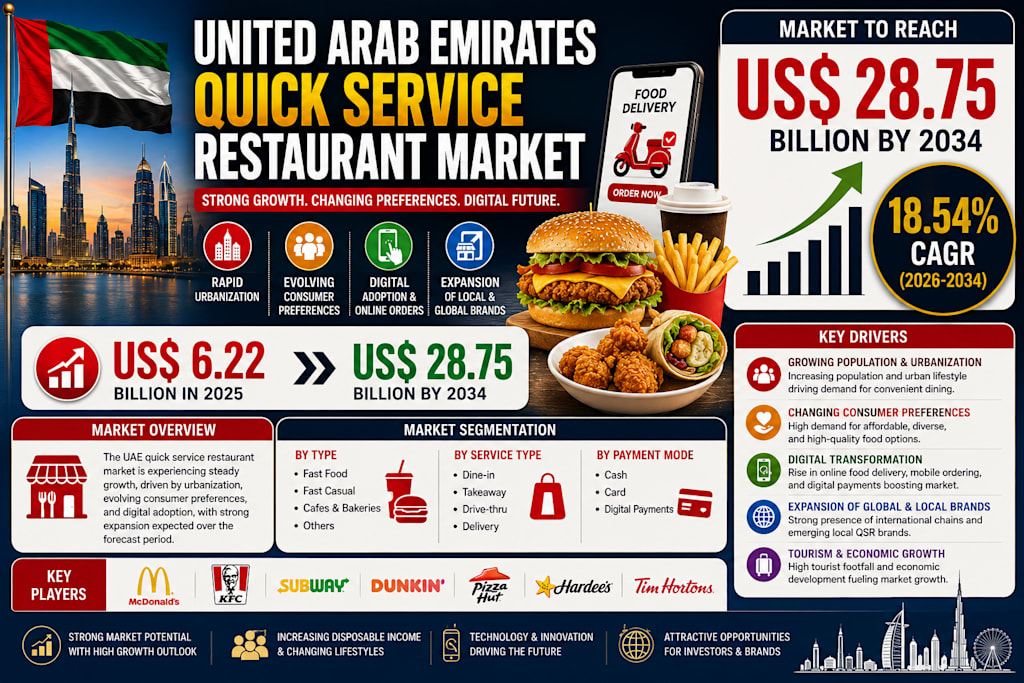
According to Renub Research, the United Arab Emirates Quick Service Restaurant Market is expected to grow from US$ 6.22 billion in 2025 to US$ 28.75 billion by 2034, registering an impressive CAGR of 18.54% between 2026 and 2034. Urbanization, digital adoption, tourism growth, and evolving consumer preferences are expected to fuel substantial expansion throughout the forecast period.

Understanding the UAE Quick Service Restaurant Industry
Quick service restaurants are foodservice establishments designed to provide fast, convenient, and affordable meals with minimal waiting times.
Unlike full-service restaurants, QSRs focus on operational efficiency, streamlined menus, quick preparation, and standardized service. Popular categories include burgers, pizza, fried chicken, bakery products, ice cream, meat-based cuisines, and various regional specialties.
The UAE QSR market includes both international chains and regional brands serving a multicultural consumer base. The country's diverse population creates demand for a wide variety of cuisines, including American, Middle Eastern, Asian, Indian, and fusion food concepts.
Consumers increasingly value convenience, speed, and consistency, making QSRs a preferred dining option across multiple demographic groups.
Urbanization Continues to Fuel Market Expansion
One of the most important growth drivers within the UAE QSR market is rapid urbanization.
Cities such as Dubai, Abu Dhabi, and Sharjah continue attracting residents, businesses, and investors from around the world. Urban lifestyles are increasingly characterized by long working hours, busy schedules, and greater demand for convenience-oriented services.
As consumers spend more time commuting and working, the need for quick dining solutions has grown substantially. QSRs effectively address this need by offering fast service, standardized menus, and accessible locations.
The increasing number of working professionals and dual-income households has further strengthened reliance on restaurant meals and takeaway options.
Urban growth remains a powerful catalyst supporting continued expansion throughout the UAE foodservice sector.
Online Food Delivery Has Revolutionized Consumer Behavior
The rise of online food delivery platforms represents one of the most transformative developments within the industry.
Consumers increasingly prefer ordering meals through mobile applications and digital platforms rather than visiting restaurants in person. Convenience, speed, promotional discounts, and seamless payment systems have contributed significantly to this shift.
Food delivery services enable QSR operators to reach customers far beyond traditional physical locations. Partnerships with third-party delivery providers have reduced logistical challenges while improving operational efficiency.
Features such as real-time order tracking, personalized recommendations, and loyalty rewards have enhanced customer satisfaction and retention.
As smartphone penetration and digital adoption continue increasing, online ordering is expected to remain a critical growth driver for the UAE QSR market.
Cloud Kitchens Create New Business Opportunities
The expansion of online ordering has accelerated the growth of cloud kitchens and virtual restaurant models.
Cloud kitchens operate without traditional dine-in facilities, focusing exclusively on delivery-based operations. This approach significantly reduces rental, staffing, and operational expenses while maximizing geographic reach.
Many QSR operators are leveraging cloud kitchens to enter new markets, test menu concepts, and improve profitability.
The model is particularly attractive within densely populated urban environments where delivery demand remains strong.
As digital ordering continues growing, cloud kitchens are expected to play an increasingly important role within the UAE foodservice ecosystem.
Tourism Continues to Drive Demand
Tourism remains one of the strongest contributors to the UAE's QSR industry.
The UAE attracts millions of visitors annually through its luxury tourism offerings, business events, exhibitions, shopping destinations, and cultural attractions. Tourists frequently seek convenient, familiar, and affordable dining options during their travels.
Quick service restaurants are strategically located in airports, shopping malls, tourist attractions, hotels, and commercial districts to capture this demand.
International visitors often prefer globally recognized brands because of familiarity and consistency. At the same time, regional chains benefit from tourists seeking local culinary experiences.
Major exhibitions, sporting events, festivals, and business conferences further increase foot traffic and restaurant sales throughout the year.
Expatriate Population Supports Diverse Cuisine Demand
The UAE's large expatriate population creates a unique and highly diverse consumer base.
Residents from Asia, Europe, the Middle East, Africa, and North America bring varied culinary preferences that influence restaurant offerings. This multicultural environment encourages QSR operators to provide diverse menus catering to different tastes and dietary requirements.
Consumers increasingly seek international cuisines ranging from burgers and pizzas to Indian, Lebanese, Chinese, and fusion dishes.
The diversity of the population provides operators with continuous opportunities for menu innovation and brand differentiation.
This multicultural dynamic remains one of the defining characteristics of the UAE QSR market.
Technology Is Enhancing Customer Experiences
Technology continues transforming the way consumers interact with quick service restaurants.
Many operators have introduced self-service kiosks, mobile ordering applications, contactless payment systems, AI-driven ordering platforms, and digital loyalty programs.
These innovations improve convenience, reduce waiting times, and streamline operations while enhancing customer satisfaction.
Data analytics and artificial intelligence also help brands personalize promotions, optimize menus, and improve inventory management.
As consumer expectations continue evolving, technology adoption will remain a critical competitive advantage for QSR operators.
Menu Innovation Remains Essential
The highly competitive nature of the UAE QSR market requires constant innovation.
Brands regularly introduce limited-time offerings, regional specialties, premium ingredients, and unique flavor combinations to attract consumer attention.
In June 2025, Papa John's launched a croissant pizza in the UAE, combining traditional pizza toppings with a buttery, flaky pastry-style crust. Such innovations highlight the industry's focus on differentiation and customer engagement.
Similarly, in February 2025, Haldiram's expanded its UAE presence with a restaurant in Bur Dubai focused on authentic Indian flavors, while Al Safadi launched Oventine, a fast-casual concept featuring Levantine-inspired cuisine.
These developments demonstrate how innovation continues driving market competitiveness and consumer interest.
Health-Conscious Consumers Are Reshaping Menus
Health awareness is becoming an increasingly important factor influencing dining choices.
Consumers are more conscious of nutrition, calorie intake, and ingredient quality than ever before. As a result, many QSR operators are expanding menu offerings to include healthier alternatives.
Popular additions include salads, grilled proteins, low-calorie meals, vegetarian dishes, plant-based alternatives, and nutrient-rich ingredients.
While traditional fast-food products remain popular, health-focused menu innovation helps brands appeal to broader consumer segments.
Balancing convenience, taste, affordability, and nutritional value has become an important strategic priority for many operators.
Sustainability Gains Importance
Sustainability is emerging as another key trend within the UAE QSR industry.
Consumers increasingly expect brands to demonstrate environmental responsibility through sustainable packaging, waste reduction initiatives, and ethical sourcing practices.
Many restaurant chains are investing in recyclable packaging materials, reducing plastic usage, and improving supply chain transparency.
These initiatives not only support environmental goals but also strengthen brand reputation among socially conscious consumers.
Sustainability is expected to become an increasingly important differentiator within the competitive QSR landscape.
Chained Outlets Continue to Lead the Market
Chained outlets represent the dominant segment within the UAE QSR market.
International franchises and regional chains benefit from strong brand recognition, standardized operations, extensive marketing resources, and established supply chains.
Consumers often prefer recognized brands because they provide consistent quality, familiar menu offerings, and reliable customer experiences.
The expansion of franchise networks continues driving market penetration across multiple cities and consumer segments.
Large operators also possess greater resources to invest in technology, delivery infrastructure, and menu innovation.
Challenges Facing the UAE Quick Service Restaurant Market
Intense Market Competition
One of the most significant challenges facing the industry is intense competition.
The UAE market includes numerous international franchises, regional chains, independent restaurants, cloud kitchens, and emerging foodservice concepts competing for consumer attention.
This competitive environment creates pricing pressures and reduces profit margins. Operators must continually invest in marketing, technology, menu development, and customer engagement initiatives to remain relevant.
New entrants often face substantial challenges establishing brand recognition within a crowded marketplace.
Growing Health Awareness
While health-conscious consumption creates opportunities, it also presents challenges for traditional QSR operators.
Consumers increasingly scrutinize nutritional content, ingredient quality, and calorie levels. Products perceived as unhealthy may experience declining demand.
Restaurants must adapt by introducing healthier alternatives without compromising taste, affordability, or operational efficiency.
Maintaining this balance remains an ongoing challenge throughout the industry.
Dubai Leads the National Market
Dubai remains the largest and most influential QSR market in the UAE.
Its large population, thriving tourism industry, world-class retail infrastructure, and strong economic activity create exceptional opportunities for restaurant operators.
Shopping malls, business districts, airports, and tourist attractions generate substantial customer traffic throughout the year.
Dubai's multicultural population further supports demand for diverse cuisines and innovative dining concepts.
Abu Dhabi Continues Expanding
Abu Dhabi represents another major growth center within the UAE QSR market.
Rising population levels, economic diversification, and continued infrastructure development support increasing demand for convenient dining solutions.
The city's expanding retail and hospitality sectors create favorable conditions for both international and regional QSR brands.
Sharjah Emerges as a Strong Growth Market
Sharjah is experiencing steady growth driven by urban expansion and rising consumer spending.
The city's growing residential communities and commercial developments are creating new opportunities for QSR operators seeking market expansion.
Increasing adoption of online food delivery services further supports growth throughout the region.
Future Outlook
The future of the UAE quick service restaurant market appears exceptionally promising.
Urbanization, digital transformation, tourism growth, expanding delivery ecosystems, and changing consumer lifestyles are expected to continue driving strong market expansion through 2034.
Operators that successfully combine convenience, innovation, technology, health-conscious offerings, and customer-centric experiences will be best positioned to capture future opportunities.
As the UAE continues evolving into a global hub for business, tourism, and innovation, the QSR industry is expected to remain one of the fastest-growing segments within the broader foodservice market.
Final Thoughts
The UAE quick service restaurant market has transformed into a highly dynamic and competitive industry fueled by urban lifestyles, digital adoption, and consumer demand for convenience. From mobile ordering and cloud kitchens to healthier menu options and multicultural cuisines, the market continues evolving rapidly.
With the industry projected to grow from US$ 6.22 billion in 2025 to US$ 28.75 billion by 2034, significant opportunities exist for restaurant operators, franchise brands, technology providers, and foodservice investors. Companies that prioritize innovation, operational efficiency, customer experience, and adaptability will be best positioned to thrive in the UAE’s rapidly expanding QSR landscape
About the Creator
Enjoyed the story? Support the Creator.
Subscribe for free to receive all their stories in your feed.
Comments
There are no comments for this story
Be the first to respond and start the conversation.