
UAE Halal Cosmetics Market to Surpass US$ 5.31 Billion by 2033 as Ethical Beauty Trends Reshape Consumer Preferences
Rising Demand for Clean, Ethical, and Faith-Based Beauty Products Drives Strong Growth Across the UAE
The beauty and personal care industry in the United Arab Emirates is undergoing a significant transformation as consumers increasingly seek products that align with their ethical values, religious beliefs, and wellness priorities. Among the fastest-growing segments is the halal cosmetics market, which has evolved from a niche category into a mainstream beauty movement.
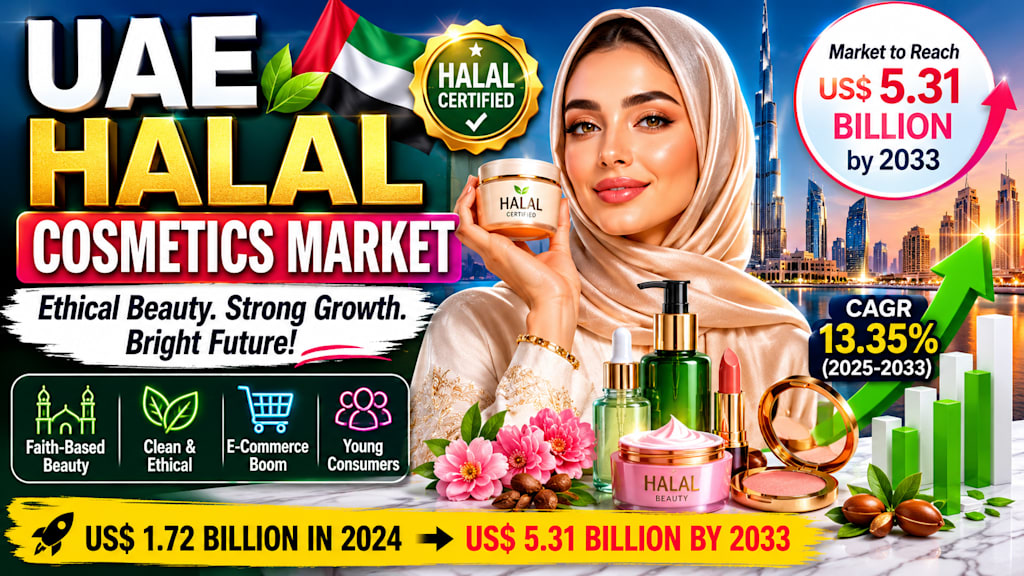
According to Renub Research, the UAE Halal Cosmetics Market is projected to grow from US$ 1.72 billion in 2024 to US$ 5.31 billion by 2033, expanding at a CAGR of 13.35% during 2025–2033. The impressive growth trajectory reflects rising consumer awareness regarding ingredient transparency, increasing demand for clean beauty products, and strong support for halal-certified consumer goods throughout the region.
As beauty consumers become more conscious of what they apply to their skin, halal cosmetics are emerging as a preferred choice not only among Muslim consumers but also among those seeking cruelty-free, ethical, and environmentally responsible beauty alternatives.
Understanding the Growing Appeal of Halal Cosmetics
Halal cosmetics are products manufactured according to Islamic principles. These products exclude ingredients derived from prohibited sources such as pork derivatives and alcohol while ensuring ethical production practices throughout the supply chain.
However, the appeal of halal cosmetics extends beyond religious compliance. Many consumers view halal-certified products as cleaner, safer, and more transparent than conventional alternatives. The emphasis on ingredient integrity, animal welfare, and ethical sourcing aligns perfectly with global clean beauty trends that continue to gain momentum worldwide.
In the UAE, where cultural traditions intersect with modern consumer lifestyles, halal cosmetics represent a natural evolution of the beauty industry. Consumers increasingly seek products that combine performance, luxury, and ethical responsibility without compromise.
UAE's Position as a Regional Beauty Hub
The United Arab Emirates has established itself as one of the Middle East's leading beauty and personal care markets. With a diverse population, strong retail infrastructure, and high purchasing power, the country offers ideal conditions for halal beauty brands to flourish.
Dubai and Abu Dhabi serve as major retail and distribution centers, attracting both international beauty companies and regional innovators. The country's strategic location also enables brands to reach broader Middle Eastern, African, and Asian markets efficiently.
Government initiatives supporting the halal economy have further strengthened the UAE's position as a global hub for halal-certified products. Regulatory frameworks and certification programs help build consumer confidence while encouraging innovation across the beauty sector.
As a result, both local and international manufacturers continue to introduce new halal-certified product lines tailored to evolving consumer expectations.
Religious and Cultural Values Continue to Drive Demand
One of the strongest growth drivers in the UAE halal cosmetics market remains adherence to religious and cultural values.
For Muslim consumers, halal-certified beauty products provide assurance that ingredients and manufacturing processes comply with Islamic guidelines. This certification eliminates uncertainty regarding product suitability and enhances consumer trust.
The growing emphasis on maintaining cultural identity while embracing modern beauty standards has further accelerated adoption. Today's consumers no longer view halal cosmetics as limited alternatives; instead, they expect premium formulations that deliver exceptional results while respecting their beliefs.
Brands that successfully combine innovation, luxury, and halal compliance are increasingly gaining customer loyalty across multiple demographic groups.
Clean Beauty Movement Expands Market Opportunities
The global clean beauty movement has significantly influenced consumer purchasing decisions in the UAE.
Modern consumers are becoming more knowledgeable about cosmetic ingredients and their potential impact on health and the environment. Concerns surrounding synthetic chemicals, allergens, and animal testing have encouraged shoppers to seek safer alternatives.
Halal cosmetics naturally fit within this trend because many products emphasize:
Ethical ingredient sourcing
Cruelty-free manufacturing
Natural formulations
Transparency in labeling
Sustainable production practices
As awareness continues to increase, halal-certified products are attracting a broader customer base beyond religious consumers. Health-conscious and environmentally aware shoppers increasingly recognize halal beauty as a trusted indicator of quality and ethical responsibility.
Young Consumers Shape the Future of Beauty
The UAE's youthful demographic profile is another key factor supporting market expansion.
Millennials and Generation Z consumers are highly engaged with beauty trends and actively seek brands that reflect their personal values. Social media platforms have become powerful channels for product discovery, influencing purchasing decisions across the region.
Young consumers appreciate authenticity, transparency, and inclusivity. They expect brands to communicate clearly about ingredients, sustainability initiatives, and ethical commitments.
Halal beauty products align closely with these expectations, making them particularly attractive to younger audiences. Rising disposable incomes among young professionals further support demand for premium skincare, makeup, and personal care products carrying halal certification.
This demographic shift is expected to remain a major growth catalyst throughout the forecast period.
E-Commerce Revolution Enhances Product Accessibility
Digital transformation has dramatically expanded the reach of halal cosmetics throughout the UAE.
Online shopping platforms now allow consumers to explore a wide variety of local and international halal-certified beauty products from the comfort of their homes. E-commerce has removed geographical limitations and improved product accessibility across the country.
Several factors are contributing to online sales growth:
Increased smartphone penetration
Convenient home delivery services
Enhanced digital payment solutions
Greater product variety online
Influencer-driven marketing campaigns
Beauty brands are increasingly investing in digital storefronts, social commerce, and personalized online experiences to capture consumer attention.
As online retail continues to evolve, e-commerce will remain one of the most influential distribution channels supporting halal cosmetics market growth.
Social Media Influencers Boost Consumer Awareness
Influencer marketing has become one of the most powerful promotional tools within the UAE beauty industry.
Beauty bloggers, skincare experts, makeup artists, and social media personalities regularly showcase halal-certified products to highly engaged audiences. Their recommendations help educate consumers about product benefits while building credibility and trust.
Platforms such as Instagram, TikTok, Snapchat, and YouTube have become essential channels for product launches and brand storytelling.
Consumers increasingly rely on authentic reviews and user-generated content before making purchasing decisions. As a result, influencer partnerships are playing a crucial role in expanding awareness of halal beauty products among both Muslim and non-Muslim audiences.
Premiumization Creates New Growth Opportunities
Consumers in the UAE are increasingly willing to spend more on premium personal care products that offer superior quality, safety, and ethical assurance.
This trend has encouraged manufacturers to develop luxury halal beauty products that compete directly with established global cosmetic brands.
Premium halal offerings now include:
Advanced skincare treatments
Organic beauty products
High-performance makeup
Luxury fragrances
Specialized hair care solutions
Innovation in formulations, packaging, and product performance is helping halal beauty brands position themselves within the premium segment of the market.
This shift toward premiumization is expected to create substantial revenue opportunities for manufacturers throughout the forecast period.
Challenges Facing the UAE Halal Cosmetics Market
Despite strong growth prospects, several challenges continue to affect market development.
Lack of Universal Certification Standards
One of the most significant obstacles is the absence of a globally standardized halal certification framework.
Different certification organizations often apply varying criteria, creating confusion among consumers regarding product authenticity and compliance.
Inconsistent standards can weaken consumer trust and create opportunities for misleading marketing practices. Industry stakeholders continue to advocate for greater harmonization of halal certification requirements to improve transparency and strengthen market credibility.
Higher Production Costs
Producing halal-certified cosmetics involves strict sourcing requirements, specialized manufacturing procedures, and ongoing compliance audits.
Manufacturers must ensure that ingredients, facilities, and supply chains meet halal standards, resulting in higher operational costs compared to conventional cosmetics.
These additional expenses can lead to higher retail prices, potentially limiting accessibility for price-sensitive consumers. Smaller companies may face particular challenges in balancing compliance costs with profitability.
Nevertheless, growing consumer demand continues to encourage investment despite these financial barriers.
Market Segmentation Highlights
The UAE halal cosmetics market encompasses a broad range of product categories and applications.
By Product Type
Personal Care Products
Color Cosmetics
Fragrances
By Application
Hair Care
Skin Care
Face Care
Beauty Care
By Distribution Channel
Hypermarkets and Supermarkets
Online Stores
Convenience Stores
Specialty Stores
Others
Among these segments, skincare and personal care products continue to generate significant demand as consumers increasingly prioritize wellness-focused beauty routines.
10 Recent Developments from Leading Halal Cosmetics Companies
1. Estee Lauder
Expanded investments in ingredient transparency initiatives and clean beauty innovation across global skincare portfolios.
2. L'Oréal
Continued strengthening sustainability goals while increasing focus on ethical sourcing and environmentally responsible product development.
3. S&J International Enterprises
Enhanced halal-certified product offerings to address rising consumer demand in Middle Eastern markets.
4. Kao Corporation
Accelerated research into skin-friendly formulations emphasizing safety, quality, and consumer wellness.
5. Clara International Beauty Group
Expanded regional distribution channels to improve accessibility of halal-certified beauty products.
6. INIKA Organic
Introduced additional vegan and cruelty-free cosmetic products aligned with clean beauty preferences.
7. AMARA Cosmetics
Focused on expanding product portfolios designed specifically for halal-conscious beauty consumers.
8. Wardah Cosmetics
Strengthened digital marketing strategies and influencer collaborations throughout key Middle Eastern markets.
9. Sampure Minerals
Increased emphasis on mineral-based beauty formulations supporting natural cosmetic trends.
10. Halal Cosmetics Company
Expanded awareness campaigns highlighting halal certification, ethical sourcing, and product authenticity.
Final Thoughts
The UAE halal cosmetics market is entering a dynamic period of sustained expansion, driven by a powerful combination of religious values, ethical consumerism, clean beauty trends, and digital transformation.
With market value projected to reach US$ 5.31 billion by 2033, halal cosmetics are no longer viewed solely as religiously compliant products. They have become symbols of transparency, quality, sustainability, and responsible consumption.
As consumer awareness continues to grow and brands invest in innovation, certification, and premium product development, the UAE is well-positioned to remain one of the world's most influential halal beauty markets. Companies that successfully balance performance, authenticity, and ethical standards will likely emerge as long-term leaders in this rapidly evolving industry.
About the Creator
Enjoyed the story? Support the Creator.
Subscribe for free to receive all their stories in your feed.
Comments
There are no comments for this story
Be the first to respond and start the conversation.