
U.S. Yogurt Market Size Growth Share Industry Demand & Forecast 2034
The U.S. yogurt market reached USD 33,139.8 million in 2025 and is projected to grow to USD 49,910.3 million by 2034, registering a CAGR of 4.52%.

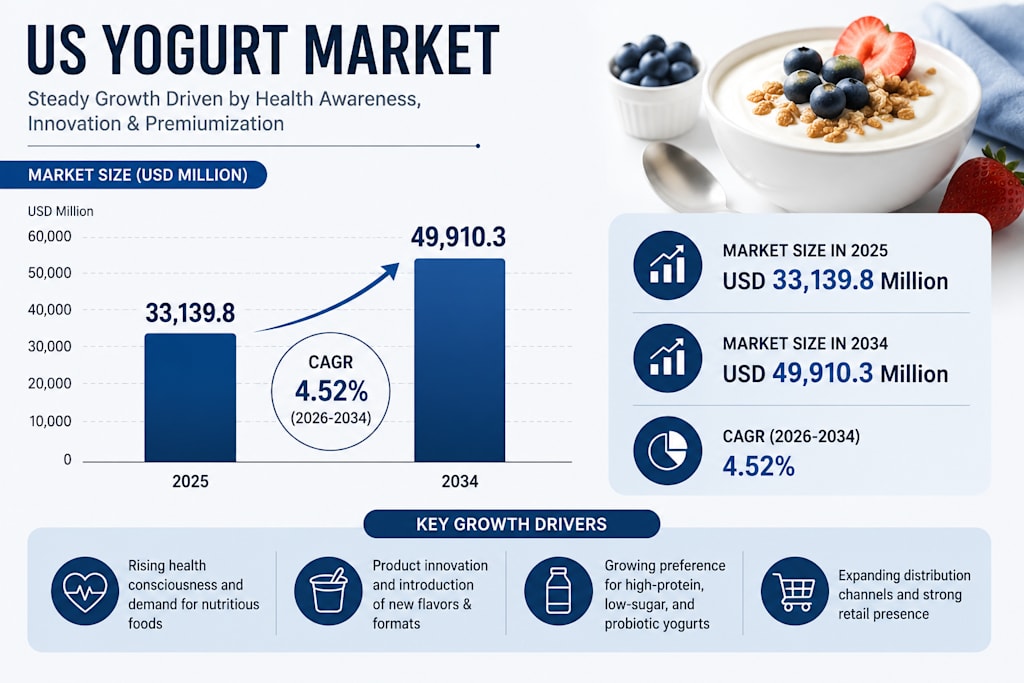
U.S. Yogurt Market Size, Share, and Forecast (2026–2034)
The U.S. yogurt market continues to show steady growth as changing dietary habits and consumer interest in health-focused food products support demand across multiple categories. The market reached USD 33,139.8 million in 2025 and is projected to grow to USD 49,910.3 million by 2034, registering a CAGR of 4.52% during 2026–2034.
Growth in the market is being supported by increasing demand for protein-rich snacks, digestive health products, and convenient meal options. Yogurt has evolved from a traditional dairy product into a broader health and wellness category that includes functional, plant-based, organic, and premium offerings.
Request the Latest Market Report with 2026–2034 Forecast Insights
Key Trends Shaping the U.S. Yogurt Market
One of the most notable trends in the U.S. yogurt market is the growing demand for functional and health-oriented products. Consumers are increasingly looking for yogurt products that support digestive health, immunity, and overall wellness. This has increased interest in probiotic-rich and high-protein yogurt varieties.
Another important trend is the rise of plant-based yogurt alternatives. Products made from almond, oat, soy, and coconut milk are gaining traction among consumers seeking dairy-free and vegan options. This shift is encouraging traditional dairy companies to diversify product offerings.
Premiumization is also influencing the market. Consumers are showing interest in artisanal flavors, organic ingredients, and clean-label products with minimal additives. In response, brands are focusing on transparency, ingredient quality, and differentiated positioning.
Convenience remains a major factor as well. Single-serve packaging and on-the-go snack formats continue to perform well, especially among working professionals and younger consumers.
Growth Drivers in the U.S. Yogurt Industry
Several factors are contributing to the expansion of the yogurt industry in the United States. Increasing awareness about nutrition and preventive healthcare is encouraging consumers to include yogurt in daily diets due to its perceived health benefits.
The growing popularity of high-protein diets is another major driver. Greek yogurt and other protein-enriched products have gained strong consumer acceptance, particularly among fitness-conscious individuals.
Product innovation is also supporting market growth. Companies are introducing new flavors, reduced-sugar variants, and fortified products to address evolving consumer preferences. These innovations are helping brands differentiate themselves in a competitive environment.
Additionally, rising demand for convenient and ready-to-eat food products is benefiting the yogurt segment. Consumers are increasingly choosing products that combine nutrition, portability, and ease of consumption.
Distribution Channel Trends in the U.S. Yogurt Market: Retail, Convenience Stores, and E-Commerce
Distribution strategies in the U.S. yogurt market are evolving as consumer shopping habits continue to change. Supermarkets and hypermarkets remain the dominant sales channels due to their extensive product variety and strong consumer reach.
Convenience stores are also playing a growing role, particularly for single-serve and snack-oriented yogurt products. Consumers looking for quick meal replacements and healthy snacks are driving sales through these outlets.
E-commerce is becoming increasingly important in the dairy and packaged food industry. Online grocery platforms and direct-to-consumer channels are enabling brands to expand customer reach and improve product accessibility. Subscription-based grocery services and digital promotions are also supporting online sales growth.
For manufacturers, maintaining a strong omnichannel presence is becoming essential to remain competitive and improve market penetration.
Challenges in the U.S. Yogurt Industry: Pricing, Competition, and Supply Chain Pressures
Despite positive growth prospects, the yogurt industry faces several operational challenges. Pricing pressure remains a major concern due to fluctuations in raw material costs, packaging expenses, and transportation charges.
Competition within the market is also intensifying. Traditional dairy brands, private-label products, and plant-based alternatives are competing for shelf space and consumer attention. This is increasing pressure on companies to invest in innovation and marketing strategies.
Supply chain disruptions continue to affect product availability and operational efficiency. Cold chain logistics, ingredient sourcing, and inventory management are critical factors in maintaining product quality and freshness.
In addition, changing consumer preferences require continuous product adaptation. Companies that fail to align with trends related to health, sustainability, and clean-label products may face challenges in maintaining market share.
Investment Opportunities in the U.S. Yogurt Market
The U.S. yogurt market presents attractive investment opportunities across both traditional and emerging product segments. One key area of growth is functional yogurt products that focus on digestive health, protein enrichment, and nutritional benefits.
Plant-based yogurt alternatives also represent a significant opportunity as consumer demand for dairy-free products continues to expand. Companies investing in innovative formulations and sustainable ingredients are likely to benefit from changing consumption patterns.
Digital retail and direct-to-consumer strategies are creating additional opportunities for market participants. Brands that strengthen online distribution capabilities and consumer engagement strategies can improve long-term growth potential.
There is also increasing interest in premium and organic yogurt products. Consumers are willing to pay higher prices for products perceived as healthier, natural, or ethically sourced, creating opportunities for value-added offerings.
Competitive Landscape and Key Players in the U.S. Yogurt Industry
The competitive landscape of the U.S. yogurt market includes multinational dairy companies, regional brands, and emerging plant-based product manufacturers. Competition is driven by product innovation, pricing strategies, distribution strength, and brand positioning.
Leading companies are focusing on expanding product portfolios with functional, high-protein, and plant-based yogurt options to address changing consumer preferences. Strategic partnerships with retailers and investments in digital marketing are also shaping competitive strategies.
In addition, companies are investing in sustainable packaging, ingredient transparency, and clean-label positioning to strengthen brand value. As the market evolves, businesses that combine innovation with operational efficiency are expected to maintain a competitive advantage in the industry.
About the Creator
Kim Soo hyun
My name is Kim Soo hyun, and I am a research analyst at IMARC Group, specializing in market trends and data analysis to provide insights and support strategic decision-making.
Enjoyed the story? Support the Creator.
Subscribe for free to receive all their stories in your feed.
Comments
There are no comments for this story
Be the first to respond and start the conversation.