
U.S. Plywood Market Trends, Demand and Forecast 2026-2034
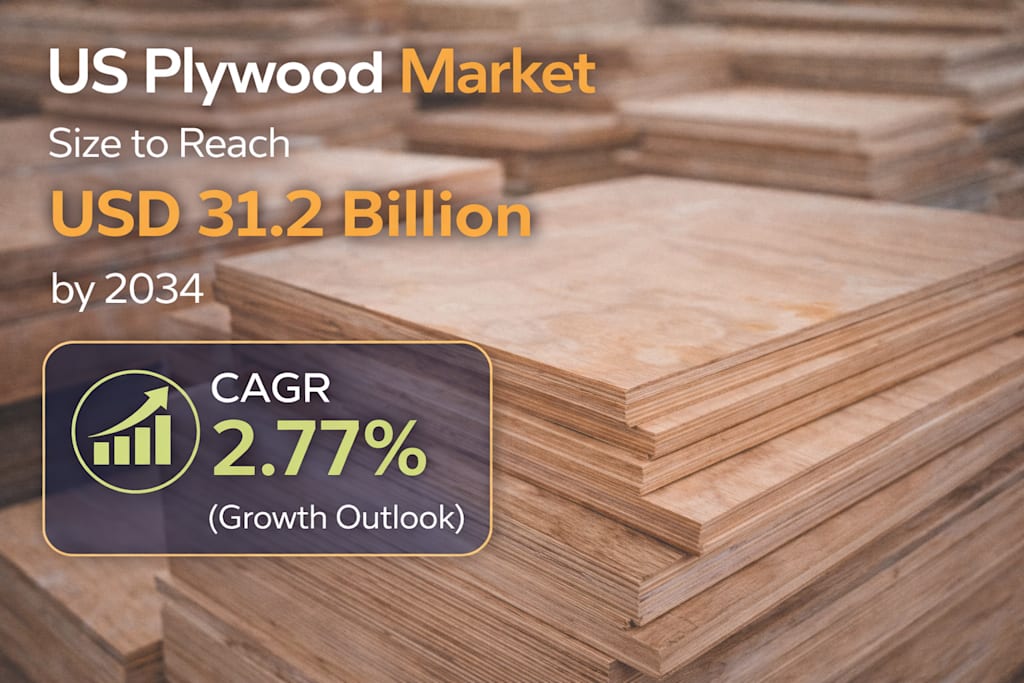
The US plywood market size reached USD 24.2 Billion in 2025. Looking forward, IMARC Group expects the market to reach USD 31.2 Billion by 2034, exhibiting a growth rate (CAGR) of 2.77% during 2026-2034.

U.S. Plywood Market Size, Growth, and Forecast (2026–2034)
The U.S. plywood market is experiencing steady development as demand for construction materials continues across residential, commercial, and infrastructure projects. In 2026, the market reflects ongoing activity in housing, renovation, and industrial applications.
The market reached a value of USD 24.2 Billion in 2025 and is projected to grow to USD 31.2 Billion by 2034, expanding at a compound annual growth rate (CAGR) of 2.77% during 2026–2034. This moderate growth highlights the essential role plywood plays in construction and manufacturing.
Plywood is a widely used engineered wood product made from thin layers of wood veneer. It is valued for its strength, durability, and versatility across applications such as flooring, roofing, furniture, and packaging.
Request a Sample Report with Latest 2026 Data & Forecasts:
Key Trends Shaping the U.S. Plywood Market
Several important trends are influencing the development of the plywood industry:
• Increasing demand for sustainable and eco-friendly building materials
• Rising use of engineered wood products in construction
• Growth in residential renovation and remodeling projects
• Expansion of prefabricated and modular construction methods
• Increasing focus on durability and cost-effective materials
These trends reflect a shift toward efficient and environmentally conscious construction practices.
Major Growth Drivers in the U.S. Plywood Industry
The growth of the market is supported by several key factors.
One of the primary drivers is the continued demand from the construction sector. Plywood is a key material used in both new construction and renovation projects.
Another important factor is the growth in housing development and infrastructure projects, which increases the need for reliable building materials.
The rising focus on sustainability is also contributing to market growth. Plywood is often considered a more environmentally friendly option compared to certain alternative materials.
Additionally, the versatility of plywood across various applications makes it a preferred choice for manufacturers and builders.
Role of Innovation in the Plywood Market
Innovation plays a key role in shaping the plywood industry.
Manufacturers are developing improved production techniques to enhance strength, durability, and resistance to moisture and pests.
Advancements in adhesives and bonding technologies are improving product quality and performance.
Sustainable sourcing practices and certifications are becoming increasingly important, ensuring responsible use of forest resources.
These innovations are helping the market adapt to modern construction requirements.
Investment Opportunities in the U.S. Plywood Market
The steady growth of the market is creating various investment opportunities.
Companies are investing in advanced manufacturing technologies, sustainable sourcing, and product innovation to remain competitive. There is also growing interest in engineered wood and eco-friendly materials.
Investments in construction and infrastructure projects are indirectly supporting plywood demand.
Collaborations between manufacturers and construction firms are further driving market expansion.
With consistent growth expected through 2034, the market offers stable long-term opportunities.
Challenges Impacting the U.S. Plywood Industry
Despite steady growth, the market faces several challenges.
One of the key issues is fluctuating raw material costs, particularly for timber.
Another challenge is competition from alternative materials, such as metal and plastic composites.
Environmental regulations and sustainability requirements can also impact production processes.
Additionally, supply chain disruptions may affect product availability.
Future Outlook (2026–2034)
Looking ahead, the U.S. plywood market is expected to continue its steady growth as construction activity and sustainability trends evolve.
Between 2026 and 2034, the demand for durable, cost-effective, and eco-friendly building materials is likely to increase. Plywood will remain a key component in construction and manufacturing.
Technological advancements will further shape the market. The development of high-performance plywood and sustainable production methods will enhance product value.
The growth of modular construction and green building practices will also support demand.
Overall, the market is poised for stable expansion, driven by construction demand, innovation, and sustainability trends.
Conclusion
The U.S. plywood market is evolving steadily, supported by ongoing construction activity, technological advancements, and increasing focus on sustainability. With projected growth from 2026 to 2034, the market is expected to remain an essential part of the building materials industry.
While challenges such as cost fluctuations and competition persist, continued innovation and investment are likely to support long-term growth. As the construction sector continues to evolve, plywood will remain a reliable and widely used material.
About the Creator
Jackson Watson
I'm a market research analyst at Imarc group company delivering data-driven insights, industry analysis, and customized research solutions. We support businesses with market sizing, competitive analysis, and strategic decision-making.
Enjoyed the story? Support the Creator.
Subscribe for free to receive all their stories in your feed.
Comments
There are no comments for this story
Be the first to respond and start the conversation.