
U.S. Oil and Gas Market Size Growth Share Industry Demand & Forecast 2034
U.S. Oil and Gas Market Size Trends, Growth Demand & Forecast 2026-2034

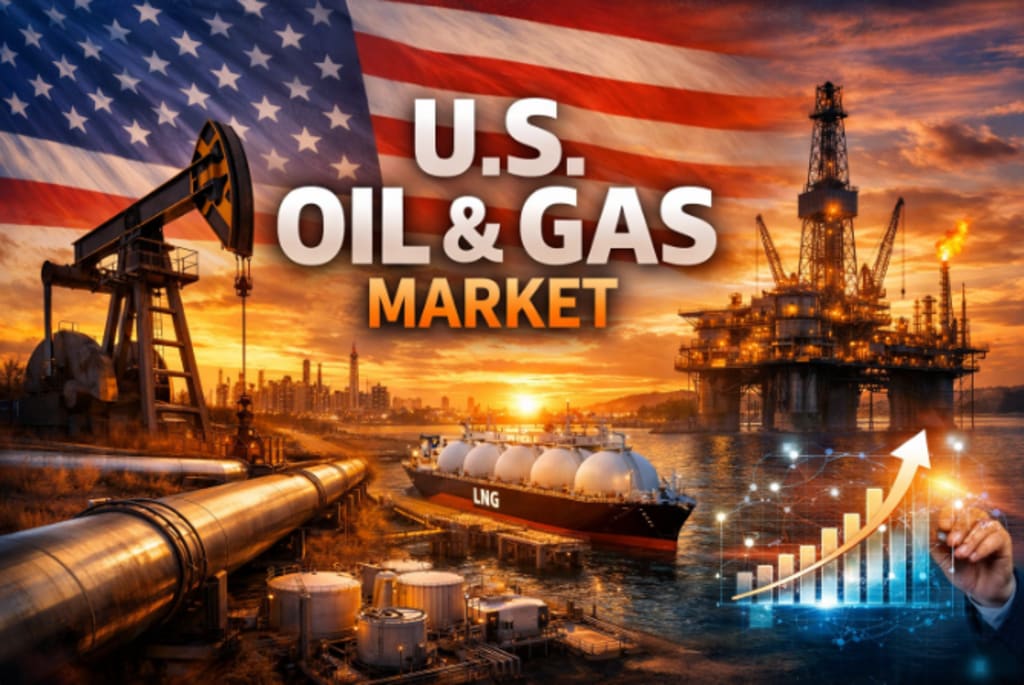
U.S. Oil and Gas Market Size, Share, and Forecast (2026–2034)
The U.S. oil and gas market remains one of the most important sectors within the country’s industrial economy. The market was valued at USD 260.8 billion in 2025 and is expected to reach USD 350.1 billion by 2034, growing at a CAGR of 3.19% during 2026–2034.
Industry growth is being supported by technological improvements in extraction and production activities, rising liquefied natural gas (LNG) exports, and increasing investments in operational efficiency. The market is also adapting to changing energy requirements through the integration of digital tools and sustainability-focused practices.
The United States continues to play a major role in global energy production due to its extensive shale reserves, advanced infrastructure, and ongoing investment across upstream, midstream, and downstream operations.
Request the Latest Market Report with 2026–2034 Forecast Insights
Key Trends Shaping the U.S. Oil and Gas Market
• Growing use of digital technologies: Companies are adopting automation, data analytics, and remote monitoring systems to improve operational efficiency.
• Improved production management: Digital solutions are helping reduce operational downtime and optimize oil and gas production activities.
• Expansion of LNG infrastructure: Rising global demand for natural gas is driving investments in LNG export terminals and storage facilities.
• Growth in transportation and pipeline networks: Companies are expanding infrastructure to strengthen energy supply and export capabilities.
• Increasing focus on sustainability initiatives: Oil and gas firms are investing in emission reduction technologies and cleaner production methods.
• Adoption of carbon management systems: Businesses are implementing solutions to address environmental concerns and regulatory requirements.
• Integration of renewable energy projects: Traditional energy companies are increasingly investing in low-carbon and diversified energy strategies.
• Rising investment in long-term energy transition plans: Companies are focusing on balancing operational growth with sustainability goals.
Growth Drivers in the U.S. Oil and Gas Industry
Technological advancement remains one of the primary growth drivers in the U.S. oil and gas market. Improved hydraulic fracturing and horizontal drilling techniques are helping companies increase production efficiency and access previously difficult reserves.
Rising global energy demand is also supporting market expansion. Industrial activity, transportation, and manufacturing sectors continue to require stable oil and gas supplies, creating long-term demand for production and distribution infrastructure.
The growth of LNG exports is another major factor contributing to industry development. The United States has become an important supplier of natural gas to international markets, increasing investment in export facilities and pipeline networks.
Infrastructure development is also supporting market growth. Expansion of storage systems, pipelines, and processing facilities is improving supply chain efficiency and transportation capabilities.
In addition, digital transformation across the industry is improving safety standards, maintenance planning, and operational performance. Companies are increasingly adopting advanced monitoring systems to optimize production activities and reduce risks.
Challenges in the U.S. Oil and Gas Industry: Regulations, Costs, and Sustainability Pressure
Despite stable growth prospects, the U.S. oil and gas industry faces several challenges. One of the major concerns is regulatory pressure related to environmental standards and emissions management. Companies are required to comply with evolving regulations that may increase operational costs.
Price volatility also remains a challenge for producers and investors. Fluctuations in crude oil and natural gas prices can affect profitability, project planning, and capital investment decisions.
Operational costs continue to rise due to increasing expenses related to labor, equipment, and infrastructure maintenance. Supply chain disruptions may also impact project timelines and material availability.
Sustainability pressure is becoming more significant across the industry. Investors, regulators, and consumers are placing greater focus on environmental performance and carbon reduction efforts. Companies are therefore balancing production growth with sustainability goals.
In addition, geopolitical uncertainties and global economic conditions may influence energy demand and trade flows, creating additional market risks.
Investment Opportunities in the U.S. Oil and Gas Market
The U.S. oil and gas market continues to present opportunities across exploration, production, transportation, and export infrastructure. LNG infrastructure remains one of the strongest investment areas due to increasing global natural gas demand.
Pipeline and storage expansion projects are also attracting investment as companies work to strengthen energy transportation networks and improve operational efficiency.
Digital technologies are creating additional opportunities within the industry. Businesses investing in automation, predictive maintenance systems, and operational analytics are improving productivity and reducing long-term costs.
Carbon management and emission reduction technologies are emerging as important investment areas as companies seek to improve environmental performance while maintaining operational competitiveness.
The market is also seeing investment in integrated energy strategies that combine traditional oil and gas operations with renewable and low-carbon energy initiatives.
Competitive Landscape and Key Players in the U.S. Oil and Gas Industry
The U.S. oil and gas market includes large integrated energy companies, independent producers, pipeline operators, and refining businesses competing across multiple industry segments.
Companies are focusing on operational efficiency, production expansion, infrastructure development, and sustainability initiatives to strengthen market position. Strategic partnerships and technology investments are also becoming increasingly important within the industry.
Many market participants are investing in digital transformation to improve production monitoring, reduce downtime, and optimize resource management. Others are expanding LNG export capabilities and pipeline infrastructure to meet growing domestic and international demand.
Competition within the market is influenced by production capacity, geographic presence, infrastructure access, and long-term energy strategies.
Recent Developments and Industry Updates in the U.S. Oil and Gas Market
Recent developments in the U.S. oil and gas market highlight continued investment in LNG infrastructure and production efficiency improvements. Companies are expanding export facilities to support rising international demand for natural gas.
The industry is also seeing increased adoption of digital technologies designed to improve operational monitoring and safety management. Automation and data-driven decision-making are becoming more common across exploration and production activities.
Sustainability-related investments are continuing to grow as companies focus on emission reduction and cleaner energy operations. Carbon capture projects and energy efficiency initiatives are gaining greater industry attention.
In addition, infrastructure modernization projects involving pipelines, storage facilities, and processing systems continue to support long-term market development across the United States.
About the Creator
Kim Soo hyun
My name is Kim Soo hyun, and I am a research analyst at IMARC Group, specializing in market trends and data analysis to provide insights and support strategic decision-making.
Enjoyed the story? Support the Creator.
Subscribe for free to receive all their stories in your feed.
Comments
There are no comments for this story
Be the first to respond and start the conversation.