
U.S. Luxury Car Market Size Growth Share Trends Demand & Forecast 2034
The U.S. luxury car market was valued at USD 111 billion in 2025 and is projected to reach USD 124 billion by 2034, expanding at a CAGR of 1.2% during 2026–2034.

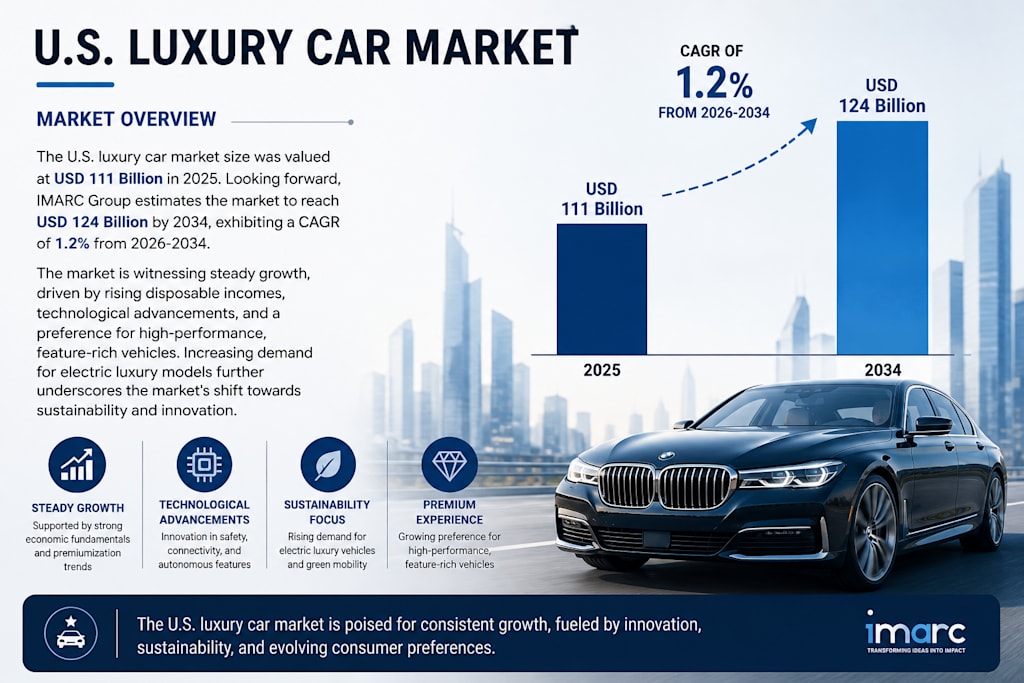
U.S. Luxury Car Market Size, Share, and Growth Forecast (2026–2034)
The U.S. luxury car market continues to represent a high-value segment within the broader automotive industry, characterized by strong brand equity, premium pricing, and evolving consumer expectations. The market was valued at USD 111 billion in 2025 and is projected to reach USD 124 billion by 2034, expanding at a CAGR of 1.2% during 2026–2034.
Although growth is relatively moderate, the segment remains resilient due to consistent demand from high-income consumers and ongoing product innovation. For automakers and dealers, the focus is less on volume expansion and more on value creation through advanced features, personalization, and customer experience. The transition toward electric and connected vehicles is also redefining the competitive landscape, encouraging manufacturers to rethink product strategies and long-term investments.
Request a Sample Report with Latest 2026 Data & Forecasts:
Key Growth Drivers in the U.S. Luxury Car Market: High-Income Demand and Premium Mobility Trends
Demand in the luxury car market is largely supported by high-income households seeking performance, comfort, and exclusivity. As disposable incomes remain strong in key urban markets, consumers are willing to invest in premium vehicles that offer superior quality and advanced features.
Another important driver is the growing preference for premium mobility solutions. Luxury vehicles are no longer defined only by brand prestige; they are increasingly associated with innovation, sustainability, and enhanced driving experiences. This shift is encouraging automakers to invest in new technologies and design improvements.
Corporate demand is also contributing to growth, particularly in executive fleets and business mobility solutions. Companies are using luxury vehicles to enhance brand image and provide comfort for senior management and clients, creating an additional revenue stream for manufacturers and dealers.
Consumer Buying Behavior in the U.S. Luxury Car Market: Personalization, Brand Value, and Experience
Consumer expectations in the luxury segment are evolving beyond traditional factors such as performance and design. Buyers are increasingly looking for personalized experiences, both in terms of vehicle configuration and the purchasing process.
Customization options, including interior materials, technology packages, and performance upgrades, are becoming key differentiators. Customers expect brands to offer tailored solutions that reflect their preferences and lifestyle.
Brand value continues to play a significant role, but it is now closely linked to overall experience. From showroom interactions to after-sales services, every touchpoint influences purchasing decisions. Digital engagement is also becoming important, as buyers research and compare options online before making a purchase.
For businesses, understanding these behavioral shifts is essential for improving customer acquisition and retention strategies.
Technology Trends in Luxury Cars: Electric Vehicles, Connectivity, and Autonomous Features
Technology is a central factor shaping the future of the U.S. luxury car market. Electric vehicles (EVs) are gaining traction, driven by regulatory pressures, environmental concerns, and advancements in battery technology. Luxury automakers are leading this transition by introducing high-performance electric models that combine sustainability with premium features.
Connectivity is another key trend. Modern luxury vehicles are equipped with advanced infotainment systems, real-time navigation, and integrated digital services. These features enhance convenience and create a more engaging driving experience.
Autonomous driving technologies are also progressing, with features such as adaptive cruise control, lane-keeping assistance, and automated parking becoming standard in many models. While fully autonomous vehicles are still in development, incremental advancements are already influencing purchasing decisions.
Distribution and Sales Strategies in the U.S. Luxury Car Market: Dealerships, Online Sales, and Direct-to-Consumer Models
The distribution landscape in the luxury car market is undergoing gradual transformation. Traditional dealerships remain important, particularly for high-value purchases where customers prefer physical interaction and test drives.
However, online sales channels are gaining importance as digital adoption increases. Consumers are increasingly comfortable exploring vehicle options, comparing prices, and even completing purchases online. This shift is encouraging automakers to invest in digital platforms and virtual showrooms.
Direct-to-consumer models are also emerging, allowing manufacturers to establish closer relationships with buyers. These models provide better control over pricing, branding, and customer experience, although they require significant investment in infrastructure and logistics.
For dealers, adapting to this multi-channel environment is critical to maintaining competitiveness.
Pricing, Financing, and Competitive Challenges in the U.S. Luxury Car Industry
Pricing strategies in the luxury car market are influenced by brand positioning, technology integration, and competitive dynamics. While premium pricing remains a defining characteristic, companies must balance price with perceived value to attract and retain customers.
Financing options play a crucial role in supporting sales. Leasing programs, flexible payment plans, and subscription models are becoming more common, making luxury vehicles accessible to a broader audience.
At the same time, the market faces several challenges. Rising production costs, supply chain disruptions, and increasing competition from new entrants—particularly in the electric vehicle segment—are putting pressure on margins. Established players must continuously innovate to maintain their market position.
Investment Opportunities in the U.S. Luxury Car Market for Automakers and Dealers
The U.S. luxury car market presents targeted investment opportunities, particularly in areas aligned with long-term industry trends. Electric vehicle development remains a key focus, with significant capital being allocated to battery technology, charging infrastructure, and new model launches.
Digital transformation is another area of opportunity. Investments in online sales platforms, customer data analytics, and connected vehicle services can enhance customer engagement and create new revenue streams.
There is also potential in after-sales services, including maintenance packages, software updates, and extended warranties. These services not only improve customer satisfaction but also provide recurring revenue opportunities.
Partnerships across the value chain are becoming increasingly important. Collaborations between automakers, technology providers, and mobility platforms are enabling innovation and reducing time-to-market for new solutions.
For investors and industry participants, success in this market depends on aligning with evolving consumer expectations, adopting new technologies, and maintaining operational efficiency in a competitive environment.
About the Creator
Kim Soo hyun
My name is Kim Soo hyun, and I am a research analyst at IMARC Group, specializing in market trends and data analysis to provide insights and support strategic decision-making.
Enjoyed the story? Support the Creator.
Subscribe for free to receive all their stories in your feed.
Comments
There are no comments for this story
Be the first to respond and start the conversation.