
Translucent Concrete Market Set for Explosive Growth as Sustainable Architecture Embraces Innovative Building Materials
Rising demand for energy-efficient buildings, modern architectural designs, and sustainable construction practices is accelerating the adoption of translucent concrete worldwide.

The construction industry is undergoing a remarkable transformation as architects, engineers, and developers seek materials that combine functionality, sustainability, and aesthetic appeal. Traditional building materials are no longer evaluated solely on their strength and durability. Today, environmental performance, energy efficiency, and design flexibility have become equally important considerations in modern construction projects.
Among the most innovative materials emerging in the global construction landscape is translucent concrete. This advanced building material has attracted significant attention for its ability to combine the structural strength of conventional concrete with the unique capability of transmitting light. By incorporating optical fibers into concrete mixtures, translucent concrete allows natural and artificial light to pass through walls, facades, floors, and other structural elements without compromising durability.
As governments promote sustainable construction practices and developers increasingly focus on energy-efficient buildings, translucent concrete is becoming an attractive solution for modern architecture. Its ability to reduce dependence on artificial lighting while creating visually striking structures positions it as one of the most exciting innovations in contemporary building design.
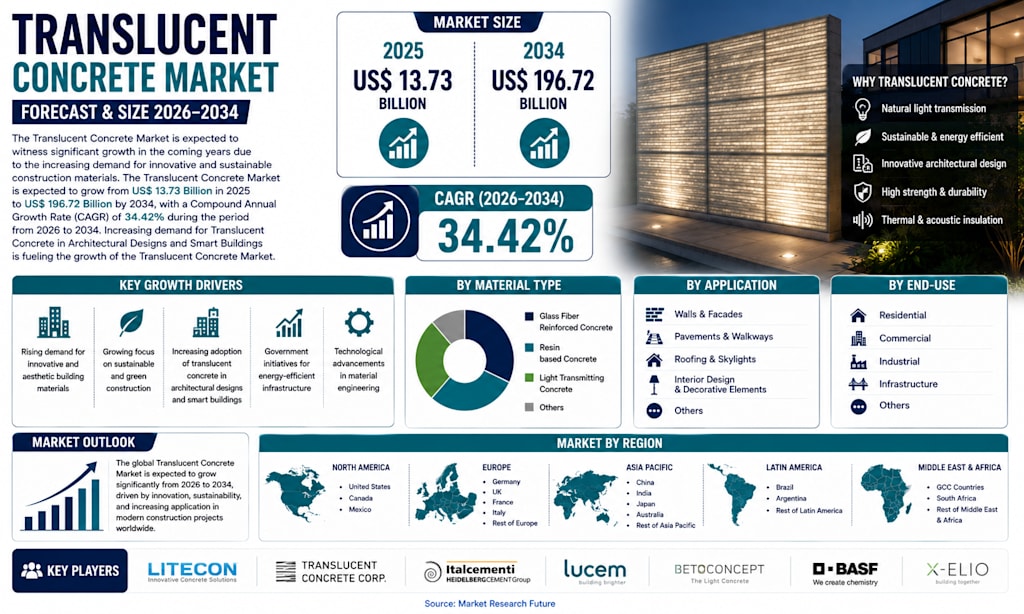
According to Renub Research, the global translucent concrete market is projected to expand from US$ 13.73 billion in 2025 to US$ 196.72 billion by 2034, growing at an impressive compound annual growth rate (CAGR) of 34.42% during the forecast period from 2026 to 2034. The extraordinary growth forecast reflects increasing demand for innovative construction materials that support both sustainability goals and architectural creativity.
Understanding the Science Behind Translucent Concrete
Translucent concrete represents a significant advancement in construction technology. Unlike traditional concrete, which completely blocks light, translucent concrete incorporates thousands of optical fibers embedded within a fine concrete matrix. These fibers allow light to travel through the material from one side to the other while maintaining the structural properties required for construction applications.
The result is a material that appears solid and durable while simultaneously allowing light transmission. Depending on the design and placement of the optical fibers, translucent concrete can create unique visual effects that change throughout the day as lighting conditions vary.
This combination of strength and illumination has opened new possibilities for architects and designers. Buildings can now incorporate natural lighting in innovative ways, creating visually appealing environments while reducing energy consumption.
As the technology becomes more refined and awareness grows, translucent concrete is increasingly being viewed as a practical solution for both decorative and functional construction applications.
Why Architects Are Embracing Innovative Building Materials
Modern architecture is driven by a desire to create structures that are not only functional but also visually distinctive. Architects constantly seek materials that allow them to push design boundaries while meeting structural and environmental requirements.
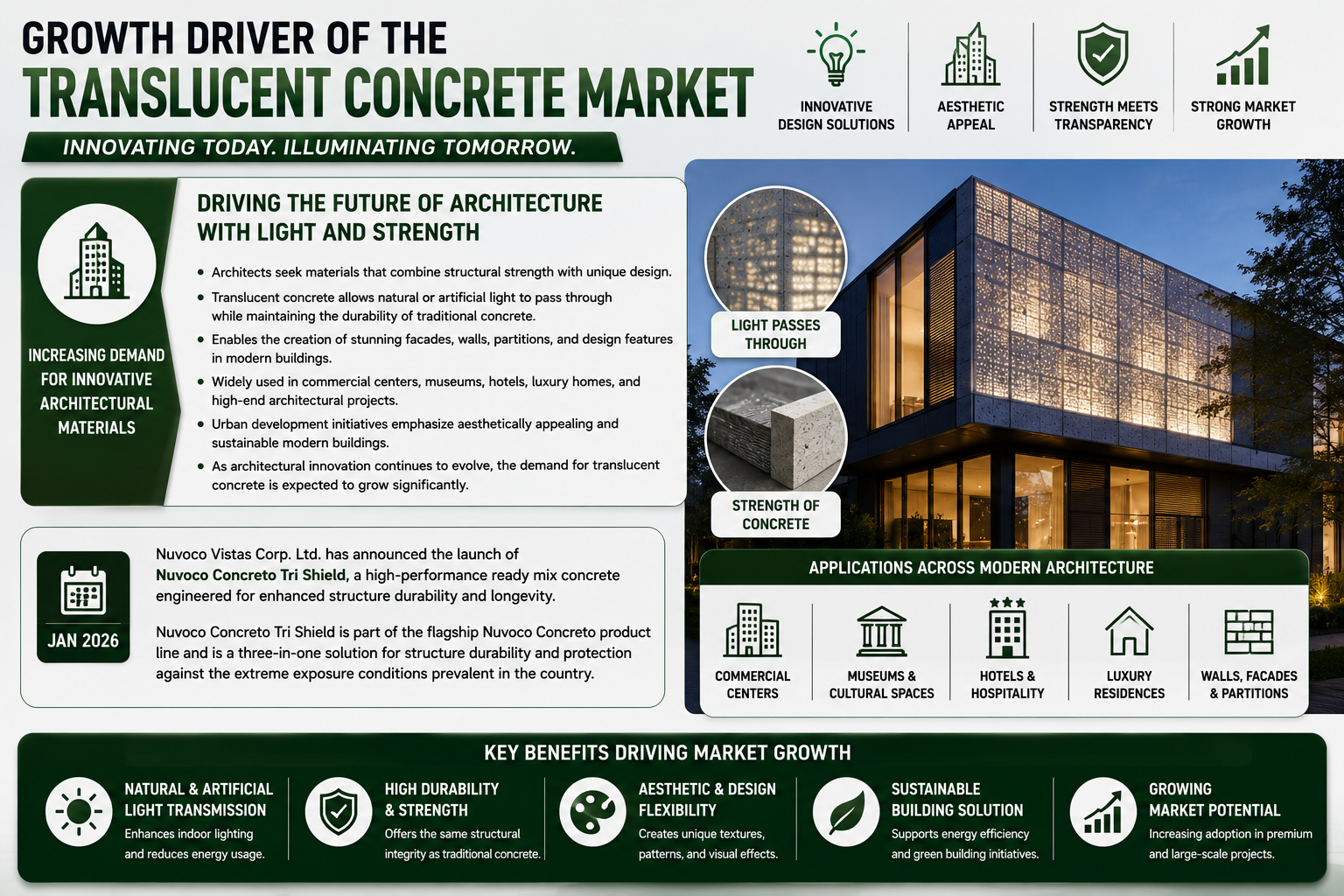
Translucent concrete offers a unique advantage because it enables designers to create buildings that interact with light in ways that traditional materials cannot achieve. Facades can glow naturally during daylight hours, interior walls can transmit soft illumination, and public spaces can incorporate visually dynamic features that enhance user experiences.
Museums, luxury hotels, commercial centers, cultural institutions, and high-end residential developments are increasingly incorporating translucent concrete into their designs. These projects often prioritize innovation and aesthetic appeal, making translucent concrete an attractive option.
Urban development initiatives around the world are also encouraging the use of advanced materials that contribute to modern architectural identities. As cities compete to create iconic structures and sustainable urban environments, demand for innovative materials continues to rise.
This growing emphasis on design creativity is expected to remain a major driver of market growth throughout the coming decade.
Sustainability Is Becoming a Major Growth Driver
Environmental sustainability has become one of the most influential trends shaping the global construction industry.
Buildings account for a substantial share of global energy consumption and carbon emissions. Governments, developers, and environmental organizations are increasingly focused on reducing the environmental impact of construction activities through the adoption of energy-efficient materials and sustainable design practices.
Translucent concrete contributes to these goals by allowing natural light to penetrate building interiors. This reduces the need for artificial lighting during daylight hours, lowering electricity consumption and improving overall energy efficiency.
The material aligns closely with green building certification programs that reward energy-saving design features. Developers seeking certifications and sustainability credentials are increasingly exploring materials that support environmental objectives while maintaining architectural appeal.
As awareness of climate change and resource conservation continues to grow, the demand for construction materials that contribute to sustainability goals is expected to increase significantly.
Smart Buildings Are Creating New Opportunities
The rise of smart buildings is creating additional opportunities for translucent concrete adoption.
Smart buildings integrate advanced technologies to improve energy management, occupant comfort, operational efficiency, and environmental performance. Natural lighting plays an important role within these systems because it contributes to both energy savings and occupant well-being.
Translucent concrete complements smart building strategies by enabling better utilization of daylight without sacrificing privacy or structural integrity. Architects can incorporate illuminated walls, partitions, and facades that enhance building performance while creating visually appealing environments.
Many modern office complexes, commercial centers, transportation hubs, and mixed-use developments are adopting smart building concepts that prioritize sustainability and innovation. These projects often seek advanced materials capable of supporting ambitious design objectives.
As smart city initiatives expand globally, the integration of translucent concrete into intelligent urban infrastructure is expected to increase.
Urbanization and Infrastructure Development Are Accelerating Demand
Rapid urbanization remains one of the most significant factors influencing the construction industry worldwide.
Growing populations are creating demand for new residential developments, office buildings, transportation networks, public facilities, and commercial spaces. Governments and private developers are investing heavily in infrastructure projects designed to accommodate expanding urban populations.
These investments create opportunities for innovative building materials that offer both functionality and visual appeal. Translucent concrete is increasingly being used in public spaces, walkways, transportation hubs, and architectural facades where aesthetics and performance are equally important.
Many countries are pursuing smart city initiatives that emphasize sustainable development, efficient resource utilization, and modern urban design. These projects often encourage the adoption of advanced construction materials capable of supporting long-term environmental objectives.
As infrastructure investment continues to increase globally, translucent concrete is likely to become an increasingly important component of modern construction projects.
Roofing Applications Are Gaining Popularity
One of the fastest-growing applications for translucent concrete is roofing.
Traditional roofing materials often block natural light, increasing dependence on artificial illumination within buildings. Translucent concrete offers an alternative by allowing daylight to enter interior spaces while maintaining structural strength and durability.
This capability is particularly valuable in commercial buildings, shopping centers, exhibition halls, airports, and office complexes where lighting requirements are substantial. By incorporating translucent concrete roofing elements, developers can create brighter indoor environments while reducing energy consumption.
The combination of functionality, sustainability, and visual appeal makes translucent roofing an attractive option for modern architectural projects.
As green building practices become more widespread, demand for energy-efficient roofing solutions is expected to support continued market growth.
Flooring Applications Enhance Interior Design
Translucent concrete flooring is becoming increasingly popular among architects and interior designers seeking innovative ways to enhance interior spaces.
By embedding optical fibers within flooring systems, designers can create surfaces that interact with light in visually striking ways. Floors can appear illuminated, create dynamic lighting effects, and contribute to unique interior atmospheres.
These applications are particularly popular in museums, luxury hotels, retail environments, cultural institutions, and premium residential projects where design differentiation is important.
Beyond aesthetics, translucent concrete flooring retains the durability and load-bearing capabilities associated with traditional concrete, making it suitable for high-traffic environments.
The growing demand for distinctive interior designs is expected to drive further adoption of translucent flooring solutions.
Optical Fiber Technology Remains Central to Innovation
The success of translucent concrete depends heavily on advances in optical fiber technology.
Optical fibers serve as the medium through which light travels within the concrete structure. Improvements in fiber manufacturing, durability, and performance are enhancing the quality and functionality of translucent concrete products.
Manufacturers continue investing in research and development to optimize light transmission, improve structural performance, and reduce production costs. These innovations are making translucent concrete more practical for a wider range of applications.
As optical fiber technology advances, architects and engineers will gain greater flexibility in designing structures that integrate natural illumination with architectural creativity.
This ongoing innovation is expected to support long-term market expansion.
Challenges Facing the Industry
Despite its strong growth potential, the translucent concrete market faces several challenges.
One of the most significant barriers is cost. Producing translucent concrete requires specialized materials, advanced manufacturing processes, and skilled labor. These factors contribute to higher production costs compared to conventional concrete.
Installation can also be more complex because optical fibers must be positioned accurately to ensure effective light transmission. This often requires specialized expertise that may not be readily available in all markets.
Limited awareness represents another challenge. Although architects and designers are becoming more familiar with the material, many builders, contractors, and developers remain unfamiliar with its capabilities and applications.
Increasing education, training, and industry awareness will be essential for accelerating broader adoption.
Regional Markets Present Significant Opportunities
United States
The United States market is benefiting from growing interest in sustainable architecture, energy-efficient construction, and innovative design concepts. Strong investment in commercial development and advanced building technologies is supporting adoption.
United Kingdom
The United Kingdom's focus on environmental sustainability and modern architecture is creating favorable conditions for translucent concrete. Green building initiatives and renovation projects are contributing to market growth.
India
India's rapidly expanding construction industry, increasing urbanization, and growing awareness of sustainable building materials are creating new opportunities for translucent concrete manufacturers.
Saudi Arabia
Saudi Arabia's ambitious infrastructure projects, smart city developments, and investment in iconic architectural designs are expected to drive significant demand for innovative construction materials such as translucent concrete.
Market Forecast: Exceptional Growth Through 2034
According to Renub Research, the global translucent concrete market is forecast to grow from US$ 13.73 billion in 2025 to US$ 196.72 billion by 2034, representing a remarkable CAGR of 34.42% during the period from 2026 to 2034. Growth will be fueled by rising demand for sustainable construction materials, increased adoption of smart building technologies, expanding infrastructure development, and growing interest in innovative architectural designs.
The market's rapid expansion reflects the broader transformation occurring within the global construction industry as stakeholders increasingly prioritize efficiency, sustainability, and creativity.
Final Thoughts
The translucent concrete market represents one of the most exciting developments in modern construction technology. By combining the structural reliability of concrete with the unique ability to transmit light, this innovative material offers architects and developers new opportunities to create sustainable, energy-efficient, and visually impressive structures.
With Renub Research forecasting market growth from US$ 13.73 billion in 2025 to US$ 196.72 billion by 2034, the industry is positioned for extraordinary expansion. As urbanization continues, smart city projects multiply, and environmental concerns influence construction decisions, translucent concrete is expected to play an increasingly important role in shaping the future of architecture and infrastructure.
For builders, designers, and investors alike, the rise of translucent concrete signals a new era in construction—one where innovation, sustainability, and aesthetics work together to redefine how buildings are designed and experienced.
About the Creator
Enjoyed the story? Support the Creator.
Subscribe for free to receive all their stories in your feed.
Comments
There are no comments for this story
Be the first to respond and start the conversation.