
Transcatheter Heart Valve Replacement Market to Reach US$24.07 Billion by 2034 as Minimally Invasive Cardiac Procedures Transform Heart Valve Treatment
Growing prevalence of heart valve diseases, rapid adoption of minimally invasive cardiac procedures, technological innovations in transcatheter valves, and expanding aging populations are driving remarkable growth in the global transcatheter heart valve replacement market.

Transcatheter Heart Valve Replacement Is Revolutionizing Cardiac Care
Cardiovascular disease remains one of the leading causes of death worldwide, and heart valve disorders continue to place a growing burden on healthcare systems as populations age. Conditions such as aortic stenosis, mitral regurgitation, and pulmonary valve disease often require timely intervention to restore normal heart function and improve patient survival. Traditionally, these conditions were treated through open-heart surgery, which can be challenging for elderly or high-risk patients.
Transcatheter Heart Valve Replacement (THVR) has transformed this treatment landscape by offering a minimally invasive alternative that significantly reduces surgical trauma while delivering excellent clinical outcomes. Through catheter-based procedures such as Transcatheter Aortic Valve Replacement (TAVR), physicians can replace damaged heart valves without performing conventional open-heart surgery.
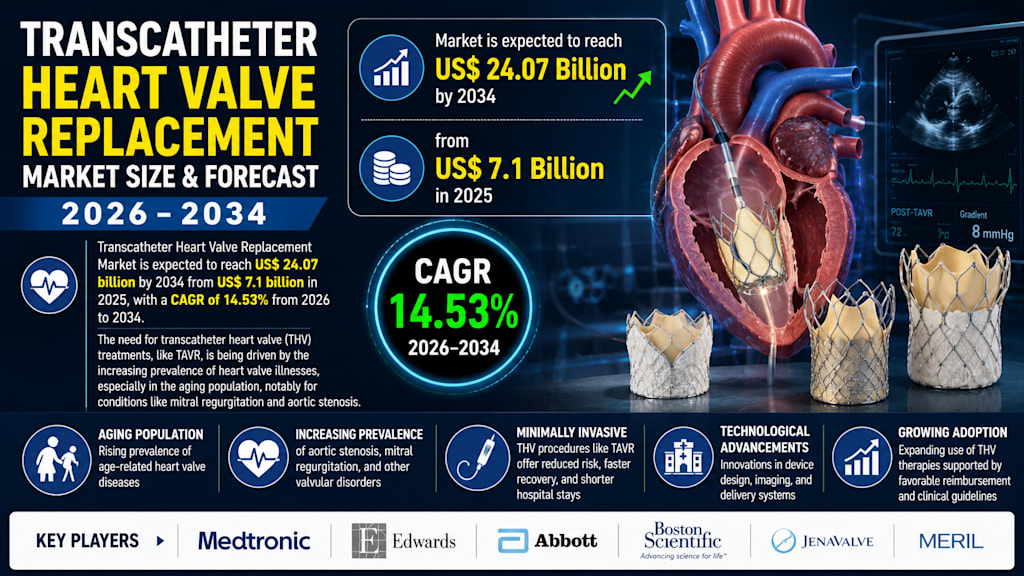
According to the latest market outlook, the Global Transcatheter Heart Valve Replacement Market is projected to grow from US$7.10 billion in 2025 to US$24.07 billion by 2034, registering an impressive compound annual growth rate (CAGR) of 14.53% during 2026–2034. Rising heart valve disease prevalence, continuous technological innovation, expanding physician expertise, and increasing preference for minimally invasive treatment continue supporting long-term market growth.
Transcatheter Heart Valve Replacement Is Transforming Cardiac Treatment
Transcatheter Heart Valve Replacement is a minimally invasive procedure that replaces diseased heart valves using catheter-based delivery systems rather than traditional surgical techniques.
The procedure is most commonly performed for patients suffering from severe aortic stenosis, although transcatheter therapies are increasingly expanding into mitral and pulmonary valve interventions.
Compared with conventional surgery, THVR offers shorter recovery periods, reduced postoperative pain, lower infection risk, smaller incisions, and shorter hospital stays.
These clinical advantages make transcatheter procedures especially valuable for elderly patients and individuals considered unsuitable for open-heart surgery.
Rising Heart Valve Disease Continues Driving Market Growth
One of the strongest contributors to market expansion is the increasing prevalence of heart valve disorders worldwide.
Population aging, longer life expectancy, hypertension, obesity, diabetes, and other cardiovascular risk factors continue increasing the number of patients diagnosed with aortic stenosis, mitral regurgitation, and related structural heart diseases.
As awareness improves and diagnostic technologies become more accessible, physicians are identifying larger numbers of patients who may benefit from transcatheter valve replacement procedures.
Growing disease prevalence continues expanding the eligible patient population for advanced minimally invasive cardiac therapies.
Minimally Invasive Procedures Gain Strong Acceptance
Healthcare providers increasingly favor minimally invasive cardiovascular procedures because they reduce complications while improving patient recovery.
Transcatheter heart valve replacement eliminates many of the risks associated with open-heart surgery, including prolonged hospitalization and extended rehabilitation.
Patients typically experience faster recovery, lower postoperative discomfort, and earlier return to daily activities.
The growing preference for catheter-based interventions among physicians and patients continues accelerating worldwide adoption of THVR technologies.
Technological Innovation Strengthens Clinical Outcomes
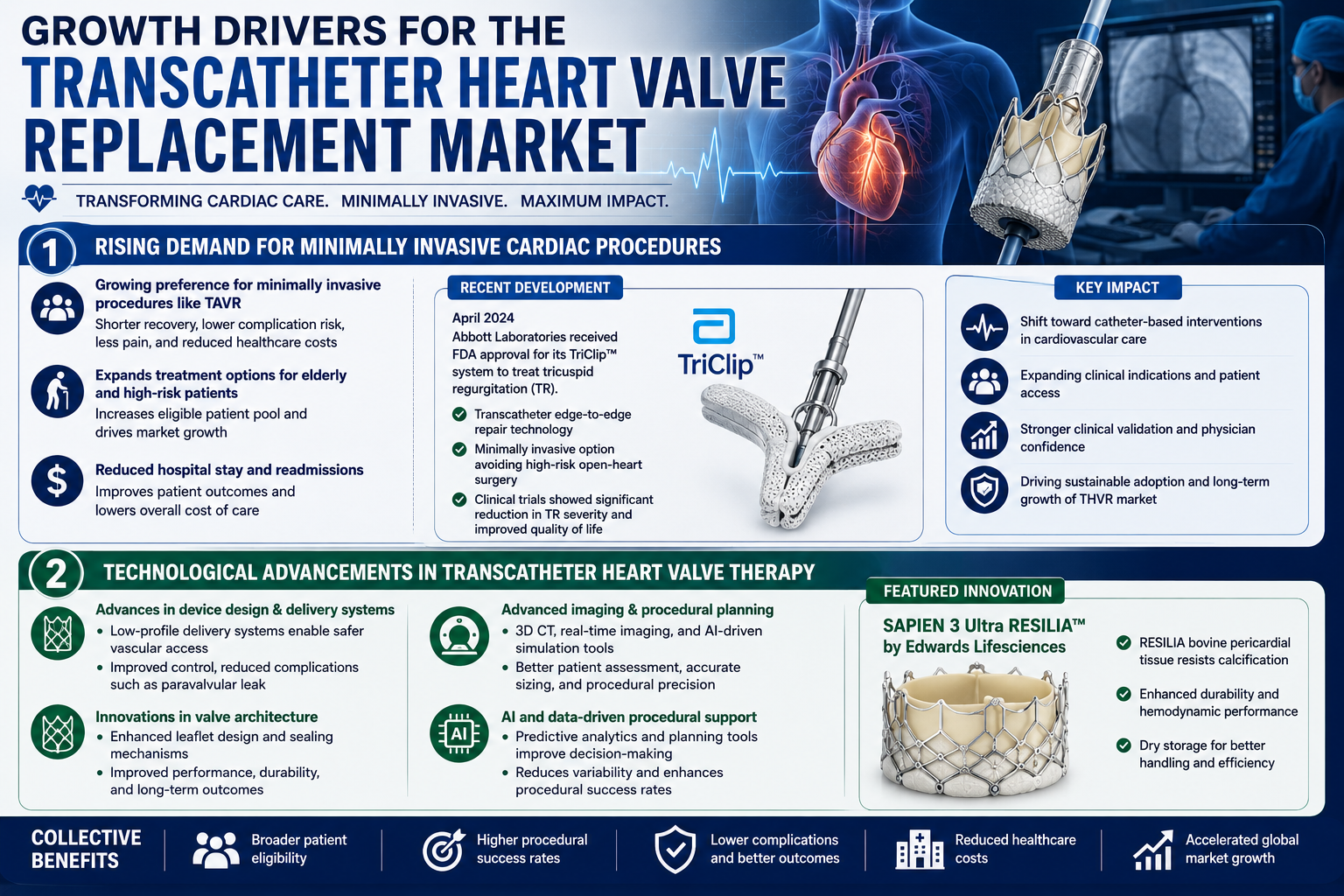
Continuous technological advancement remains one of the industry's most important growth drivers.
Manufacturers continue developing next-generation heart valves featuring improved durability, enhanced sealing mechanisms, refined delivery systems, and lower-profile catheter technologies.
Modern imaging solutions including three-dimensional computed tomography, real-time imaging guidance, and artificial intelligence-assisted procedural planning significantly improve procedural precision.
Advanced valve materials also enhance long-term durability while reducing complications such as paravalvular leakage.
These innovations continue strengthening physician confidence and expanding clinical indications.
Aging Populations Increase Treatment Demand
The global increase in elderly populations is creating sustained demand for transcatheter heart valve therapies.
Older adults are significantly more likely to develop degenerative heart valve disorders, particularly severe aortic stenosis.
Many elderly patients also present multiple health conditions that increase surgical risk, making minimally invasive treatment especially attractive.
As life expectancy continues rising worldwide, demand for safer and less invasive valve replacement procedures is expected to grow substantially.
Transcatheter Aortic Valve Replacement Leads the Market
Transcatheter Aortic Valve Replacement remains the largest segment within the THVR market.
TAVR has become an established treatment option for severe aortic stenosis across patients with varying levels of surgical risk.
Numerous clinical studies have demonstrated excellent procedural success, durable valve performance, and improved quality of life following treatment.
Ongoing expansion of clinical guidelines continues broadening patient eligibility for TAVR procedures worldwide.
Biological Valves Continue Dominating
Biological heart valves represent the most widely used valve type within the transcatheter market.
Constructed primarily from treated animal tissue, these valves offer excellent hemodynamic performance while reducing the need for lifelong anticoagulation therapy.
Continuous advances in tissue preservation technologies have significantly improved valve durability and resistance to calcification.
Manufacturers continue introducing next-generation biological valves that extend product lifespan while enhancing clinical outcomes.
Hospitals Remain the Primary End Users
Hospitals continue representing the largest end-user segment within the global THVR market.
These procedures require advanced catheterization laboratories, hybrid operating rooms, high-resolution imaging systems, and multidisciplinary heart teams consisting of interventional cardiologists, cardiac surgeons, anesthesiologists, and imaging specialists.
Large tertiary healthcare centers also conduct physician training and clinical research that further accelerate technology adoption.
Growing investment in structural heart disease programs continues strengthening hospital demand for advanced transcatheter technologies.
Artificial Intelligence Improves Procedural Planning
Artificial intelligence is increasingly supporting transcatheter heart valve replacement procedures.
AI-assisted imaging platforms help physicians analyze patient anatomy, determine optimal valve sizing, simulate procedures, and identify potential procedural risks before intervention.
Machine learning algorithms also improve procedural efficiency while reducing complications through enhanced treatment planning.
Digital technologies continue improving procedural precision while supporting personalized cardiovascular care.
High Procedure Costs Remain a Challenge
Despite strong clinical benefits, transcatheter heart valve replacement procedures remain relatively expensive.
Advanced valve systems, specialized catheter equipment, sophisticated imaging technologies, and multidisciplinary clinical teams contribute to substantial treatment costs.
Inconsistent reimbursement policies within some healthcare systems may restrict patient access, particularly across emerging economies.
Improving affordability remains an important objective for healthcare providers and manufacturers.
Regulatory Approval and Training Requirements Continue
Strict regulatory requirements remain another important market challenge.
Manufacturers must complete extensive clinical trials demonstrating long-term safety, effectiveness, and durability before receiving regulatory approval.
Healthcare providers also require specialized training to safely perform complex catheter-based valve replacement procedures.
The need for experienced interventional teams and advanced hospital infrastructure may slow adoption in smaller healthcare facilities.
Regional Markets Continue Driving Growth
The United States remains the world's largest transcatheter heart valve replacement market due to its advanced cardiovascular care infrastructure, strong clinical research, widespread TAVR adoption, and high prevalence of heart valve disease.
Germany continues leading the European market through its advanced cardiac centers, favorable reimbursement policies, aging population, and strong physician acceptance of minimally invasive structural heart interventions.
China has emerged as one of the fastest-growing markets because of expanding healthcare infrastructure, increasing cardiovascular disease burden, rising physician expertise, and growing availability of both domestic and international transcatheter valve technologies.
Saudi Arabia continues strengthening market demand through healthcare modernization, growing investment in advanced cardiac care, increasing adoption of minimally invasive procedures, and expansion of specialized cardiovascular treatment centers.
Together, these regional markets continue shaping the future of the global THVR industry.
Innovation Will Shape the Future of Structural Heart Care
The future of transcatheter heart valve replacement will be driven by next-generation valve technologies, artificial intelligence, robotic-assisted interventions, advanced imaging, and personalized cardiovascular medicine.
Manufacturers continue developing smaller delivery systems, longer-lasting valve materials, AI-assisted procedural planning tools, and expanded treatment options for multiple structural heart diseases.
Future innovations are expected to improve procedural safety while expanding eligibility to larger patient populations.
As minimally invasive cardiovascular treatment continues advancing, transcatheter heart valve replacement is expected to become an increasingly important standard of care.
Final Thoughts
The global transcatheter heart valve replacement market continues experiencing exceptional growth as healthcare systems increasingly embrace minimally invasive cardiovascular therapies capable of improving patient outcomes while reducing surgical risks.
The projected expansion from US$7.10 billion in 2025 to US$24.07 billion by 2034, supported by a 14.53% CAGR, reflects rising heart valve disease prevalence, technological innovation, expanding physician expertise, and growing demand for less invasive treatment options.
Although high procedure costs, reimbursement limitations, and regulatory complexity remain important challenges, continuous advances in valve technology, imaging systems, artificial intelligence, and catheter-based interventions position the transcatheter heart valve replacement industry for sustained long-term growth. As cardiovascular medicine continues shifting toward minimally invasive solutions, THVR will remain one of the most transformative innovations in structural heart disease treatment.
About the Creator
Enjoyed the story? Support the Creator.
Subscribe for free to receive all their stories in your feed.
Comments
There are no comments for this story
Be the first to respond and start the conversation.