
Transcatheter Heart Valve Replacement Market Expected to Reach US$24.07 Billion by 2034 as Minimally Invasive Cardiac Procedures Gain Global Momentum
Rising cases of heart valve disease, an aging global population, and continuous advancements in transcatheter valve technology are driving rapid expansion across the transcatheter heart valve replacement industry.

Cardiovascular disease remains one of the world's leading health challenges, affecting hundreds of millions of people annually and placing significant pressure on healthcare systems. Among the many cardiovascular conditions impacting patients globally, heart valve diseases such as aortic stenosis and mitral regurgitation have become increasingly common, particularly among older adults.
Traditionally, severe valve disorders required open-heart surgery, a procedure that often involved lengthy recovery periods and elevated risks for elderly or medically complex patients. However, advances in minimally invasive technologies have transformed treatment options, allowing physicians to replace damaged heart valves without major surgery.
Transcatheter Heart Valve Replacement (THVR) has emerged as one of the most important innovations in modern cardiovascular medicine. By enabling valve replacement through catheter-based techniques, THVR procedures offer patients faster recovery, reduced surgical trauma, and improved clinical outcomes.
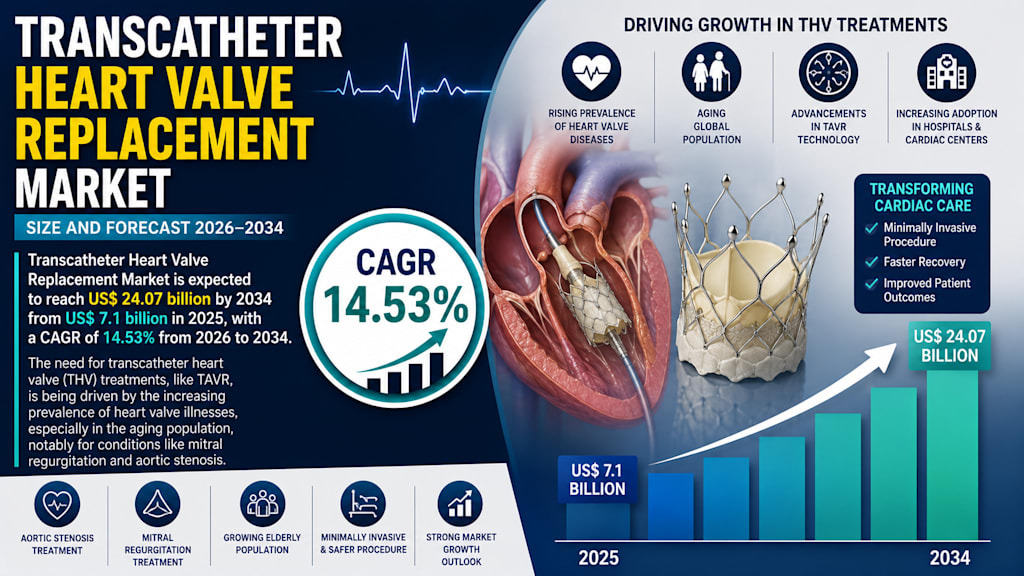
According to Renub Research, the global Transcatheter Heart Valve Replacement Market is projected to grow from US$7.1 billion in 2025 to US$24.07 billion by 2034, expanding at an impressive compound annual growth rate (CAGR) of 14.53% between 2026 and 2034. Growing demand for minimally invasive cardiac therapies and the increasing prevalence of heart valve diseases are expected to fuel this remarkable growth.
Understanding Transcatheter Heart Valve Replacement
Transcatheter Heart Valve Replacement is a minimally invasive procedure used to replace diseased or damaged heart valves without requiring traditional open-heart surgery.
During the procedure, physicians guide a replacement valve through a catheter inserted into a blood vessel, typically through the leg or chest, and position it inside the diseased valve. Once deployed, the new valve begins functioning immediately, restoring normal blood flow through the heart.
The most widely performed transcatheter procedure is Transcatheter Aortic Valve Replacement (TAVR), which is commonly used to treat severe aortic stenosis. However, advancements in technology have expanded treatment options to include transcatheter therapies for mitral and pulmonary valve disorders as well.
Because these procedures require smaller incisions and less invasive techniques, patients often experience shorter hospital stays, faster recovery times, and lower risks of complications compared to conventional surgical approaches.
Why the Market Is Growing Rapidly
Several powerful factors are contributing to the strong expansion of the global THVR industry.
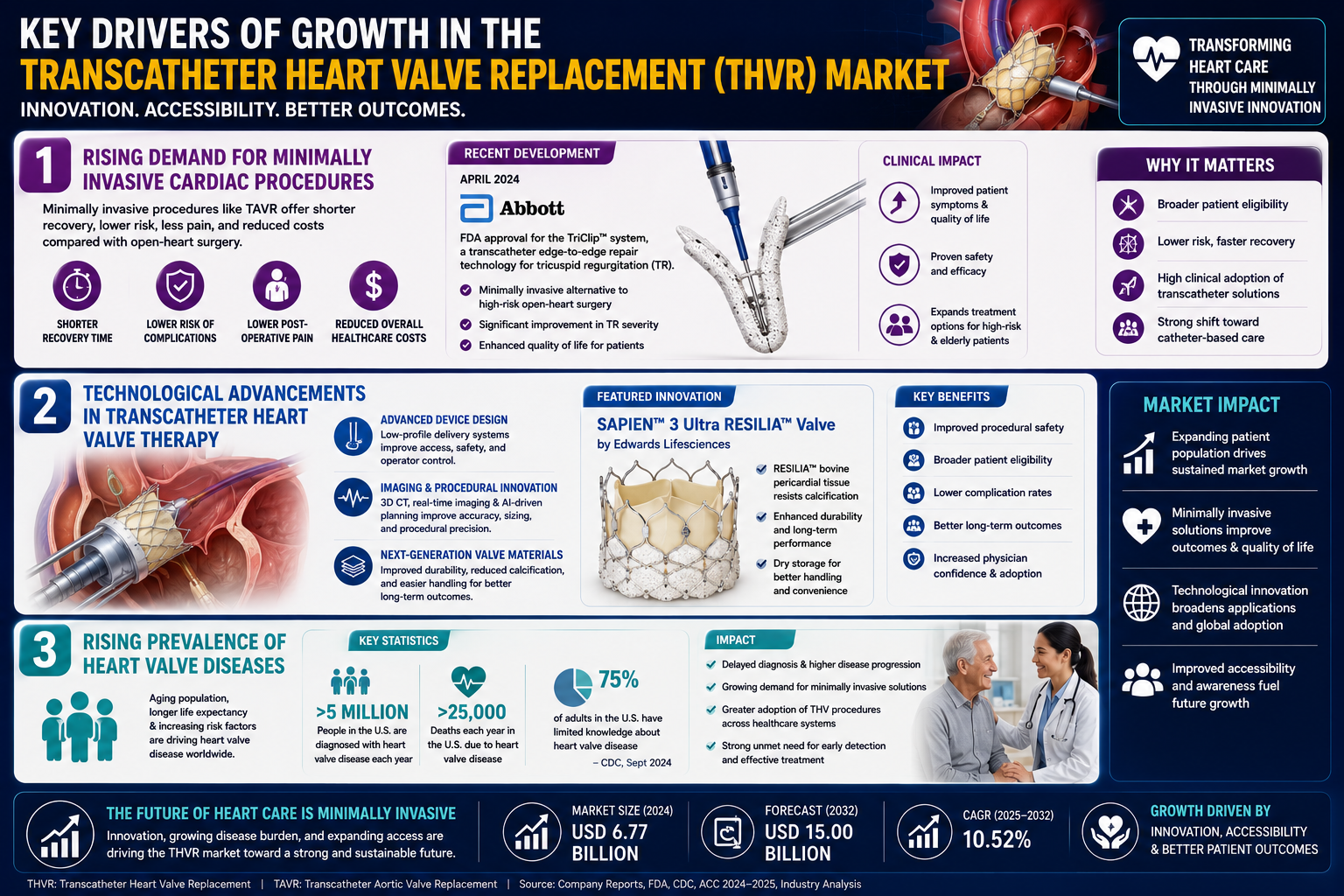
Rising Prevalence of Heart Valve Diseases
One of the most important drivers of market growth is the increasing incidence of heart valve disorders worldwide.
According to data referenced in the report, approximately 640 million people globally were living with heart and circulatory diseases in 2022. In addition, the World Health Organization estimated that nearly 9 million people worldwide were affected by calcific aortic valve stenosis, one of the primary conditions treated through transcatheter valve replacement.
Population aging is significantly contributing to this trend. As people live longer, age-related degeneration of heart valves becomes more common, increasing the number of patients requiring advanced treatment options.
The growing prevalence of hypertension, obesity, diabetes, and other cardiovascular risk factors is also contributing to the rising burden of valve disease, creating sustained demand for innovative therapies.
Growing Preference for Minimally Invasive Procedures
Healthcare providers and patients increasingly favor minimally invasive procedures over traditional surgery whenever possible.
Transcatheter heart valve replacement offers several important advantages, including reduced surgical trauma, shorter hospitalization periods, faster recovery, and lower risks of post-operative complications. These benefits are particularly valuable for elderly patients and individuals considered high-risk surgical candidates.
As clinical evidence supporting transcatheter therapies continues to grow, physicians are expanding their use across broader patient populations. This shift is significantly accelerating market adoption worldwide.
Expanding Treatment Eligibility
Initially, transcatheter valve replacement was primarily reserved for patients who were unable to undergo conventional surgery.
However, advances in clinical research and device performance have expanded eligibility criteria to include intermediate-risk and even lower-risk patients in many healthcare markets.
This broader patient pool is dramatically increasing procedure volumes and creating new growth opportunities for manufacturers and healthcare providers alike.
Technology Is Revolutionizing Heart Valve Therapy
Continuous innovation remains one of the strongest forces driving the THVR market forward.
Improved Valve Design
Modern transcatheter valves are significantly more advanced than earlier generations.
Manufacturers have introduced enhanced valve architectures designed to improve durability, reduce leakage, and optimize long-term performance. Innovations in delivery systems also allow physicians to perform procedures with greater precision and control.
These improvements are increasing physician confidence while improving patient outcomes and procedural success rates.
Advanced Imaging and Procedural Planning
The integration of sophisticated imaging technologies is transforming how transcatheter procedures are planned and performed.
Advanced three-dimensional computed tomography imaging, real-time procedural guidance systems, and artificial intelligence-assisted planning tools help physicians evaluate patient anatomy with exceptional accuracy.
These technologies improve device sizing, procedural precision, and overall treatment outcomes while reducing the likelihood of complications.
Next-Generation Valve Materials
Material science innovations are also contributing to market growth.
New valve technologies are designed to resist calcification, improve durability, and enhance long-term performance. These advancements are particularly important as transcatheter therapies are increasingly offered to younger patient populations who may require valves that function effectively for many years.
Improved material performance is expected to support broader adoption of transcatheter therapies in the future.
Growing Awareness of Heart Valve Disease
Public awareness regarding heart valve disorders remains relatively limited despite the growing burden of disease.
Delayed Diagnosis Remains Common
Many individuals are unaware of the symptoms associated with heart valve disease, including fatigue, shortness of breath, chest discomfort, and dizziness.
According to data cited in the report, approximately 75% of adults in the United States have limited knowledge of heart valve disease, including individuals in high-risk age groups. More than 5 million Americans are diagnosed with heart valve disease annually, resulting in over 25,000 deaths each year.
As awareness campaigns expand and screening efforts improve, earlier diagnosis is expected to increase the number of patients receiving treatment.
Increased Focus on Preventive Cardiology
Healthcare systems are placing greater emphasis on early detection and preventive cardiovascular care.
Routine cardiac evaluations, advanced imaging techniques, and improved diagnostic protocols are helping physicians identify valve disorders earlier in disease progression. This trend supports increased utilization of transcatheter interventions and improves long-term patient outcomes.
Key Market Segments Driving Growth
Several product categories and treatment applications are contributing to overall market expansion.
Transcatheter Aortic Valve Replacement (TAVR)
TAVR represents the largest and most established segment within the THVR market.
The procedure has become a preferred treatment option for severe aortic stenosis due to its proven safety profile and clinical effectiveness. Growing physician experience and favorable patient outcomes continue to support widespread adoption.
As eligibility criteria expand, TAVR is expected to remain the dominant market segment throughout the forecast period.
Transcatheter Mitral Valve Replacement (TMVR)
Mitral valve disease represents a significant unmet clinical need globally.
Advances in transcatheter mitral valve technologies are enabling treatment for patients who may not qualify for traditional surgery. Ongoing clinical trials and technological improvements are expected to drive substantial growth within this segment over the coming years.
Biological Valves
Biological valves continue to dominate the market due to their favorable clinical performance and reduced need for long-term anticoagulation therapy.
Ongoing innovations in tissue engineering and valve durability are strengthening demand for biological valve technologies across multiple patient populations.
Challenges Facing the Industry
Despite strong growth prospects, several challenges continue to affect market development.
High Procedure Costs
One of the most significant barriers to adoption is the high cost associated with transcatheter valve procedures.
Advanced devices, sophisticated imaging equipment, specialized catheter systems, and highly trained clinical teams contribute to substantial treatment expenses. These costs can limit accessibility, particularly in developing healthcare markets.
Inconsistent reimbursement policies in certain regions further complicate patient access to treatment.
Complex Regulatory Requirements
Transcatheter heart valve devices must undergo extensive clinical testing and regulatory review before receiving approval.
Manufacturers face lengthy development timelines and substantial investment requirements to demonstrate safety, effectiveness, and long-term durability. These regulatory challenges can delay product launches and increase commercialization costs.
Specialized Training Requirements
THVR procedures require highly skilled physicians, advanced imaging infrastructure, and multidisciplinary cardiac teams.
Healthcare facilities must invest significantly in training programs and specialized equipment to perform these procedures safely and effectively. This complexity can limit adoption in smaller hospitals and developing healthcare systems.
Regional Market Outlook
United States
The United States remains one of the largest markets for transcatheter heart valve replacement technologies.
According to the Centers for Disease Control and Prevention, approximately 805,000 Americans experience heart attacks annually, while nearly 47% of the population has at least one major cardiovascular risk factor, including high blood pressure, high cholesterol, or smoking. These trends continue to support strong demand for advanced cardiovascular interventions.
Germany
Germany is one of Europe's leading adopters of transcatheter valve procedures.
Strong healthcare infrastructure, favorable reimbursement policies, and widespread access to advanced cardiac care have supported substantial growth in TAVR and related interventions. Germany continues to play a critical role in the European THVR market.
China
China represents one of the fastest-growing markets globally.
Rapid population aging, rising cardiovascular disease prevalence, expanding healthcare infrastructure, and increasing physician training programs are accelerating adoption of transcatheter valve therapies throughout the country.
Saudi Arabia
Saudi Arabia continues investing heavily in cardiovascular care as part of broader healthcare modernization efforts.
Government support for advanced medical technologies and growing access to specialized cardiac treatment centers are contributing to increased adoption of transcatheter valve replacement procedures across the country.
Competitive Landscape
The global THVR market is highly competitive, with leading medical technology companies investing heavily in product innovation, clinical research, and geographic expansion.
Major market participants include Edwards Lifesciences, Abbott Laboratories, Medtronic Plc, LivaNova PLC, Boston Scientific Corporation, Artivion, Inc., MicroPort Scientific Corporation, and Venus Medtech (Hangzhou) Inc.. These companies continue developing next-generation valve systems designed to improve procedural outcomes, durability, and patient quality of life.
Final Thoughts
Transcatheter Heart Valve Replacement has fundamentally changed the treatment landscape for patients suffering from severe heart valve disease. By offering a less invasive alternative to open-heart surgery, these procedures have expanded treatment access while improving patient outcomes and recovery experiences.
The combination of an aging population, rising cardiovascular disease prevalence, technological innovation, and growing physician confidence continues to create strong momentum across the industry.
With the global Transcatheter Heart Valve Replacement Market projected to grow from US$7.1 billion in 2025 to US$24.07 billion by 2034, the sector is poised for exceptional expansion. As healthcare systems increasingly embrace minimally invasive cardiovascular therapies, transcatheter heart valve technologies are expected to play an even more important role in the future of cardiac care.
About the Creator
Enjoyed the story? Support the Creator.
Subscribe for free to receive all their stories in your feed.
Comments
There are no comments for this story
Be the first to respond and start the conversation.