
Tomato Seeds Market Outlook 2026–2034: How Hybrid Innovation and Protected Farming Are Transforming Global Tomato Production
Growing demand for fresh and processed tomatoes, rising adoption of hybrid seeds, and expansion of greenhouse cultivation are fueling strong growth in the global tomato seeds market.

Agriculture is experiencing a technological revolution as growers increasingly adopt advanced seeds, precision farming techniques, and controlled-environment cultivation systems to improve productivity and profitability. Among horticultural crops, tomatoes remain one of the most widely cultivated and consumed vegetables worldwide, creating substantial demand for high-performance seed varieties.
From fresh salads and sandwiches to ketchup, sauces, soups, and processed foods, tomatoes play a central role in global food consumption. As demand continues rising, farmers are under pressure to maximize yields, improve crop quality, and reduce losses caused by pests, diseases, and climate variability.
These challenges have accelerated the adoption of improved tomato seeds, particularly hybrid varieties that offer higher productivity, stronger disease resistance, and greater adaptability to diverse growing conditions.
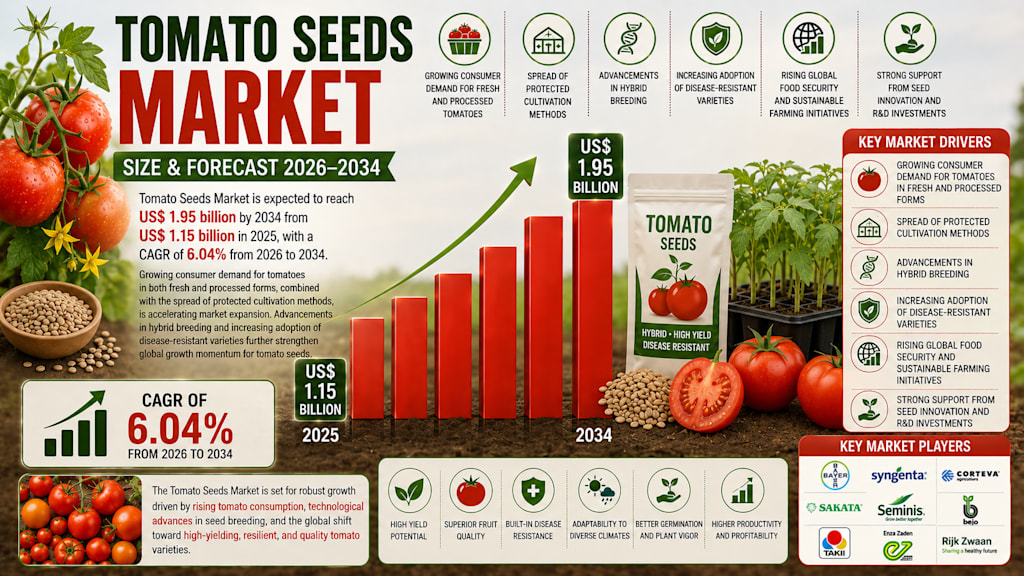
According to Renub Research, the global Tomato Seeds Market is projected to grow from US$ 1.15 billion in 2025 to US$ 1.95 billion by 2034, registering a compound annual growth rate (CAGR) of 6.04% between 2026 and 2034. Rising demand for tomatoes in fresh and processed forms, expansion of protected cultivation systems, and continuous innovation in hybrid breeding are among the primary factors driving market growth.
As agricultural producers seek more resilient and productive crop solutions, tomato seeds are expected to remain at the forefront of horticultural innovation worldwide.
Understanding the Importance of Tomato Seeds
Tomato seeds are the mature reproductive structures found within tomato fruits and serve as the foundation for tomato cultivation across commercial farms, greenhouses, and home gardens.
Before planting, seeds are typically extracted, cleaned, dried, and sometimes treated to improve germination rates and protect against soil-borne diseases.
Farmers can choose from several seed categories, including hybrid seeds, open-pollinated varieties, and heirloom tomatoes, each offering unique advantages in terms of flavor, productivity, adaptability, and disease resistance.
The quality of tomato seeds directly influences crop performance, fruit quality, yield potential, and market value.
Modern agriculture increasingly relies on advanced seed technologies to ensure consistent production and meet growing global demand for tomatoes.
As farming systems become more sophisticated, the role of high-quality tomato seeds continues expanding across both traditional and modern cultivation environments.
Rising Demand for Tomatoes Is Driving Market Expansion
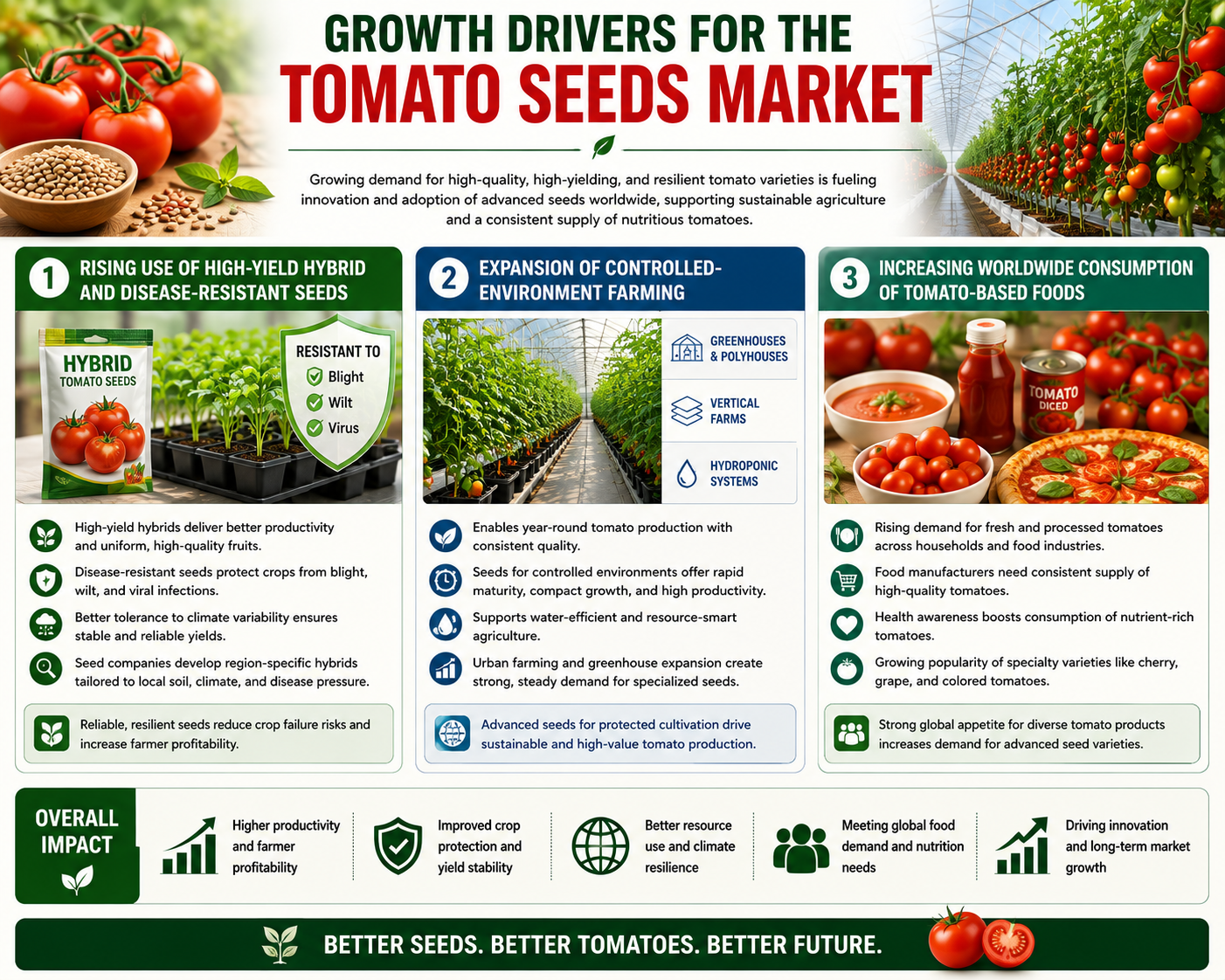
One of the strongest growth drivers for the tomato seeds market is the increasing global consumption of tomatoes and tomato-based products.
Tomatoes are among the most versatile agricultural commodities and are used extensively in fresh produce markets, restaurants, packaged foods, and industrial food processing.
Consumer demand for tomato sauces, ketchup, canned tomatoes, soups, ready-to-cook meals, and processed foods continues rising as urbanization and changing lifestyles reshape dietary habits worldwide.
Food manufacturers require a reliable supply of high-quality tomatoes with consistent size, texture, color, and shelf life.
This growing demand encourages farmers to adopt improved seed varieties capable of delivering stable yields and superior fruit quality.
Health-conscious consumers are also increasingly attracted to tomatoes because of their nutritional value, including vitamins, minerals, and antioxidants such as lycopene.
As global tomato consumption continues increasing, demand for advanced tomato seed varieties is expected to grow correspondingly.
Hybrid Seeds Are Transforming Modern Tomato Farming
The growing preference for hybrid tomato seeds has become one of the most influential trends shaping the market.
Hybrid varieties are specifically bred to combine desirable traits such as higher productivity, disease resistance, environmental adaptability, and uniform fruit quality.
Commercial growers increasingly favor hybrid seeds because they help reduce production risks while maximizing profitability.
These varieties are particularly valuable in regions facing unpredictable weather conditions, pest outbreaks, and disease pressures.
Hybrid seeds often demonstrate greater resilience against threats such as blight, wilt diseases, and viral infections that can significantly impact yields.
Seed companies continue investing heavily in breeding programs designed to develop region-specific hybrids optimized for local growing conditions.
As farmers increasingly prioritize reliability and productivity, hybrid tomato seeds are expected to remain a major driver of market growth.
Disease Resistance Is Becoming a Critical Priority
Plant diseases continue representing one of the greatest threats to tomato production worldwide.
Crop losses caused by fungal infections, bacterial diseases, and viral outbreaks can significantly reduce productivity and profitability for growers.
As a result, disease-resistant seed varieties have become increasingly important within modern agriculture.
Breeding programs focus on developing tomato varieties capable of withstanding common diseases while maintaining strong yield performance and fruit quality.
The emergence of new pathogens has further accelerated innovation in disease-resistant seed development.
In September 2025, NRGene introduced commercial tomato varieties featuring resistance to Tomato Brown Rugose Fruit Virus (ToBRFV), one of the most damaging viral threats affecting tomato production globally. The development represents a significant advancement in crop protection and productivity enhancement.
As disease management becomes increasingly important, demand for resistant seed varieties is expected to continue growing.
Protected Cultivation Is Creating New Opportunities
The expansion of controlled-environment agriculture has become a major catalyst for tomato seed market growth.
Greenhouses, polyhouses, hydroponic systems, vertical farms, and other protected cultivation methods enable farmers to produce tomatoes throughout the year while minimizing environmental risks.
These systems offer advantages such as improved water efficiency, climate control, reduced pest exposure, and enhanced crop management.
Tomato varieties developed specifically for protected environments often feature rapid growth cycles, compact plant structures, and high productivity.
Urban farming initiatives and commercial greenhouse clusters are creating consistent demand for specialized seed varieties optimized for controlled growing conditions.
The shift toward resource-efficient agriculture is also encouraging growers to adopt seeds that perform effectively within precision farming systems.
As protected cultivation continues expanding worldwide, demand for greenhouse-optimized tomato seeds is expected to increase significantly.
Precision Agriculture Is Supporting Seed Innovation
Modern farming increasingly relies on technology-driven approaches designed to improve productivity and resource efficiency.
Precision agriculture integrates data analytics, automated irrigation systems, climate monitoring tools, and advanced nutrient management techniques to optimize crop performance.
High-performance tomato seeds play an essential role within these systems because they must respond consistently to carefully controlled growing environments.
Seed companies are developing varieties specifically designed to maximize performance under precision farming conditions.
Farmers benefit from improved yields, reduced input costs, and greater predictability throughout the production cycle.
The integration of advanced genetics with precision agriculture technologies is creating new opportunities for innovation within the tomato seed industry.
As digital agriculture adoption continues accelerating, seed development will remain closely linked to technological advancement.
Cherry Tomatoes Are Becoming Increasingly Popular
Consumer preferences are evolving, creating demand for a broader range of tomato varieties.
Cherry tomatoes have become particularly popular due to their sweetness, convenience, attractive appearance, and versatility.
These smaller tomatoes are widely used in salads, snacks, gourmet dishes, and food-service applications.
Growing interest in healthy eating habits and premium produce is encouraging retailers and growers to expand cherry tomato production.
Seed companies are responding by developing improved cherry tomato varieties featuring enhanced flavor, disease resistance, and shelf life.
Specialty tomato segments such as grape tomatoes, colored varieties, and heirloom-inspired products are also gaining traction among consumers seeking differentiated food experiences.
As demand for specialty produce continues growing, premium tomato seed categories are expected to experience strong expansion.
Greenhouse Cultivation Is Becoming a Major Application Segment
Greenhouse farming represents one of the fastest-growing application areas within the tomato seeds market.
Greenhouses provide highly controlled growing environments that support year-round production and consistent crop quality.
Farmers increasingly invest in greenhouse systems because they allow greater control over temperature, humidity, irrigation, and nutrient delivery.
Tomato seeds developed for greenhouse cultivation typically offer characteristics such as compact growth habits, rapid maturation, and high fruit productivity.
Growing concerns regarding climate variability and water scarcity are encouraging more producers to adopt greenhouse farming techniques.
The increasing commercialization of greenhouse agriculture continues generating strong demand for specialized seed varieties designed specifically for protected environments.
Open-Pollinated Varieties Continue Serving Important Markets
Although hybrids dominate commercial production, open-pollinated tomato varieties remain an important segment within the market.
These varieties are particularly valued by small-scale farmers, organic producers, and home gardeners who wish to save seeds for future planting seasons.
Open-pollinated tomatoes often offer unique flavor profiles, genetic diversity, and adaptability to local growing conditions.
The organic agriculture movement has contributed to sustained demand for non-GMO and traditional tomato varieties.
Consumers increasingly interested in heirloom produce and locally adapted crops continue supporting demand for these seed categories.
While hybrid seeds dominate large-scale commercial operations, open-pollinated varieties maintain a strong presence within specialty and sustainable agriculture markets.
Climate Change Is Creating New Challenges
Despite strong growth prospects, climate variability remains one of the most significant challenges facing the tomato seeds market.
Rising temperatures, irregular rainfall patterns, drought conditions, and extreme weather events can negatively affect germination, flowering, fruit development, and overall crop performance.
Even advanced hybrid varieties may struggle under severe environmental stress conditions.
Climate change is also contributing to the emergence of new pests and diseases, increasing pressure on seed developers to create increasingly resilient varieties.
Developing seeds capable of performing across multiple environmental conditions requires substantial investment in research and breeding programs.
As climate risks continue increasing, seed innovation will remain essential for maintaining agricultural productivity and food security.
High Seed Costs Can Limit Adoption
The cost of advanced hybrid seeds remains another important challenge for market growth.
Although these varieties offer significant productivity benefits, they often require substantial upfront investment.
Many growers must also invest in complementary technologies such as drip irrigation systems, fertilizers, crop protection products, and greenhouse infrastructure to fully realize the benefits of hybrid seeds.
Smallholder farmers in developing regions may face financial barriers that limit adoption.
Limited access to agricultural credit and financing can further restrict the use of advanced seed technologies.
Addressing affordability challenges while maintaining innovation will remain a key objective for industry participants moving forward.
Regional Market Insights
The United States remains a major tomato seed market supported by advanced agricultural infrastructure, large-scale commercial farming operations, and strong demand from food processing industries. The popularity of organic, specialty, and greenhouse-grown tomatoes continues creating opportunities for premium seed varieties.
Germany benefits from a highly developed greenhouse sector and strong consumer demand for locally grown, sustainable produce. Advanced horticultural technologies and hydroponic systems continue driving demand for specialized tomato seeds optimized for controlled environments.
China represents one of the most dynamic markets globally due to large-scale agricultural production, rising tomato consumption, and substantial government investment in modern farming infrastructure. The country remains a major producer of both fresh tomatoes and industrial tomato products.
Saudi Arabia continues expanding greenhouse and hydroponic cultivation systems to support domestic food security objectives. Strong demand for heat-tolerant and water-efficient tomato varieties is driving adoption of advanced hybrid seeds throughout the country.
Competitive Landscape
Competition within the tomato seeds market remains intense as companies focus on breeding innovation, disease resistance, climate adaptability, and productivity enhancement.
Major industry participants include BASF SE, Sakata Seed Corporation, Bayer Crop Science SE, Syngenta AG, Gansu Dunhuang Seed Co., Ltd., UPL Ltd., Groupe Limagrain Holding, and Rijk Zwaan Zaadteelt en Zaadhandel B.V.
These organizations continue investing heavily in research and development to create advanced seed varieties capable of meeting the evolving needs of commercial growers worldwide.
In July 2025, DENSO completed its acquisition of Axia Vegetable Seeds, a Netherlands-based company specializing in greenhouse tomato varieties. The move is expected to strengthen the integration of artificial intelligence, robotics, and controlled-environment agriculture technologies within tomato production systems.
Additionally, in May 2025, Sakata Seed Corporation launched a new research facility in Antalya, Türkiye, dedicated to advancing tomato and pepper breeding programs for international markets.
Final Thoughts
The global tomato seeds market is entering a period of sustained growth driven by rising food demand, advances in hybrid breeding, expansion of greenhouse agriculture, and increasing adoption of precision farming technologies. As growers face mounting challenges related to climate variability, disease pressure, and resource efficiency, high-performance seed varieties are becoming more important than ever.
Hybrid innovation, protected cultivation, and disease-resistant genetics are helping farmers achieve higher productivity while meeting growing consumer demand for quality tomatoes in both fresh and processed forms.
With the market projected to grow from US$ 1.15 billion in 2025 to US$ 1.95 billion by 2034, tomato seeds will continue serving as a critical foundation of global horticultural production. As technology and agricultural science advance, the industry is expected to deliver increasingly resilient and productive seed solutions capable of supporting future food security and sustainable farming goals.
About the Creator
Enjoyed the story? Support the Creator.
Subscribe for free to receive all their stories in your feed.
Comments
There are no comments for this story
Be the first to respond and start the conversation.