
The Hidden Technology Powering Modern Industry: Why Water-Soluble Polymers Are Becoming Essential Worldwide
From clean water and pharmaceuticals to food production and sustainable materials, water-soluble polymers are quietly transforming industries across the globe.

When people think about the technologies shaping the future, they often focus on artificial intelligence, renewable energy, or electric vehicles. Yet behind many of the world's most important industries lies a less visible but equally critical innovation: water-soluble polymers.
These versatile materials play a crucial role in water treatment facilities, pharmaceutical products, personal care formulations, food processing, oil and gas operations, agriculture, and countless industrial applications. Their ability to dissolve, disperse, or swell in water makes them indispensable for improving efficiency, enhancing product performance, and supporting sustainability goals.
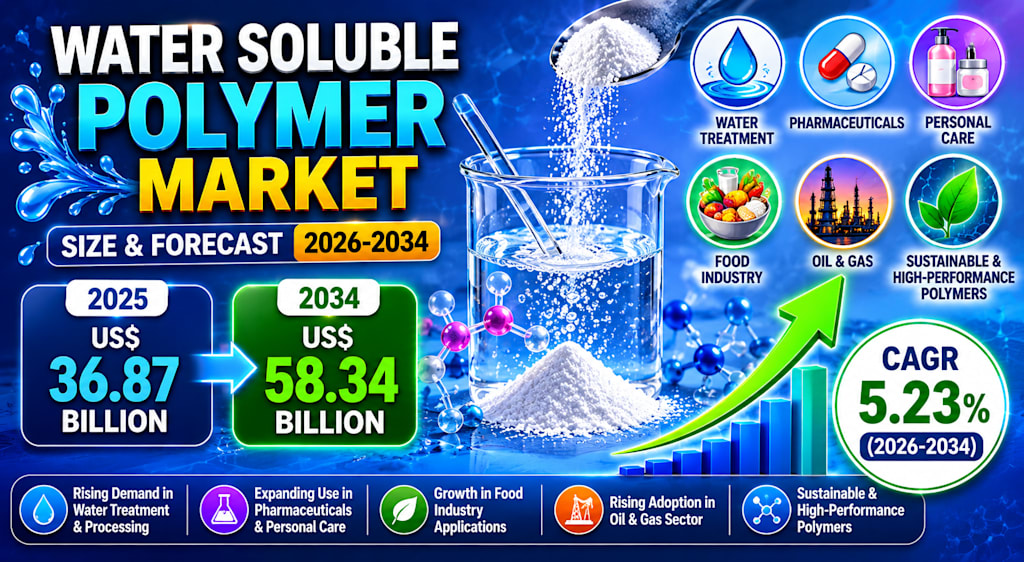
As industries face increasing pressure to reduce environmental impact while maintaining productivity, water-soluble polymers are gaining unprecedented importance. According to Renub Research, the global Water Soluble Polymer Market is projected to grow from US$36.87 billion in 2025 to US$58.34 billion by 2034, expanding at a compound annual growth rate (CAGR) of 5.23% between 2026 and 2034. This growth reflects rising demand for advanced water treatment solutions, sustainable materials, and high-performance industrial additives across multiple sectors.
Although most consumers rarely encounter these materials directly, water-soluble polymers have become vital components of modern industrial and environmental infrastructure.
Understanding Water-Soluble Polymers
Water-soluble polymers are materials that dissolve, disperse, or swell when exposed to water while maintaining specific functional properties. They may be synthetic, naturally derived, or semi-synthetic, depending on their intended application.
What makes these polymers particularly valuable is their ability to modify viscosity, improve stability, enhance flow characteristics, and facilitate separation processes. These properties make them highly adaptable across a broad range of industries.
Water-soluble polymers are commonly found in water treatment facilities, pharmaceutical formulations, food products, cosmetics, detergents, textiles, agricultural products, and industrial manufacturing processes. Their versatility has allowed them to become one of the most widely utilized specialty materials in the global economy.
As industries increasingly prioritize efficiency and sustainability, the role of these polymers continues expanding.
Water Treatment Is Driving Market Growth
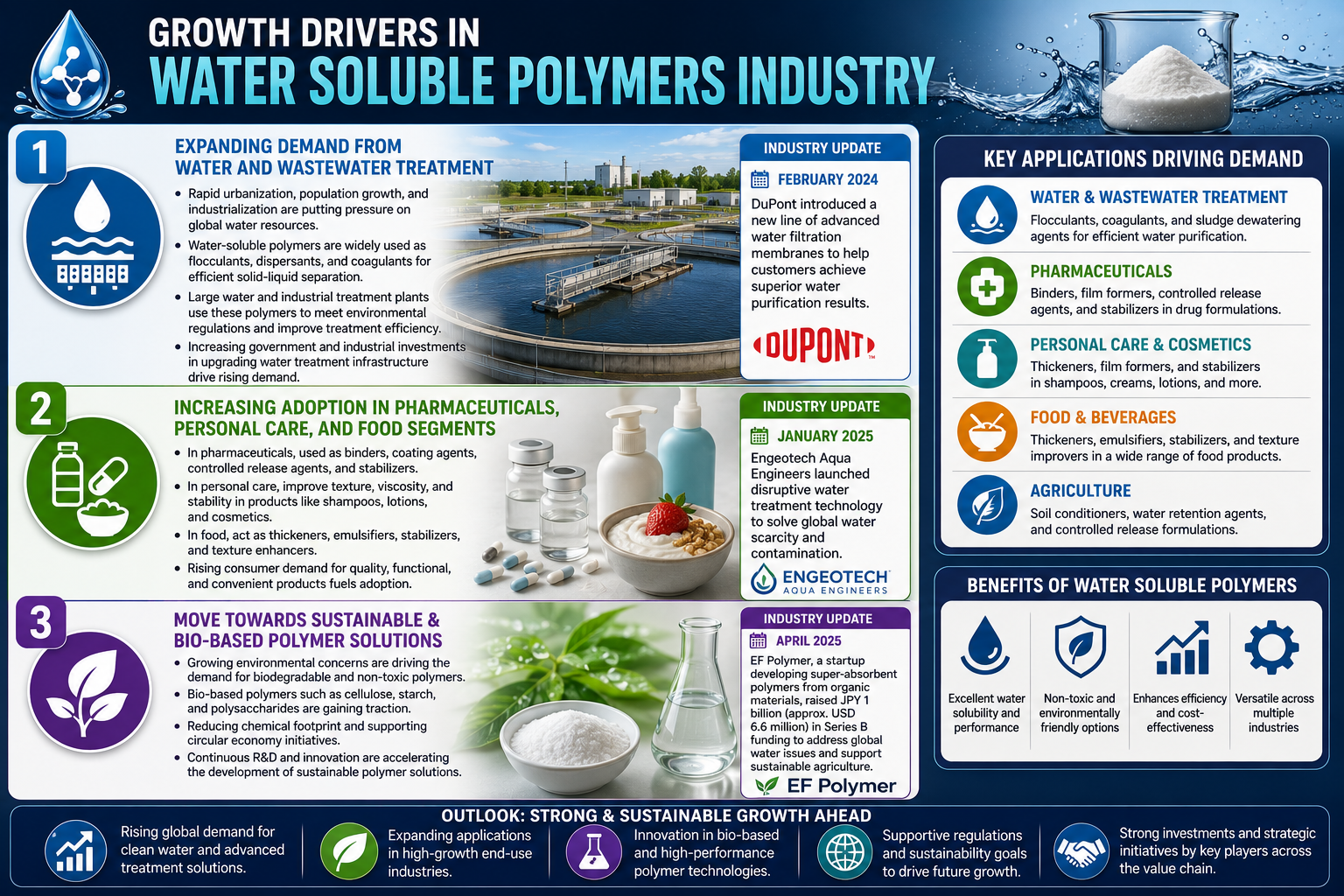
One of the largest applications for water-soluble polymers is water and wastewater treatment.
Rapid urbanization, population growth, and industrial development are placing enormous pressure on global water resources. Governments and industries are investing heavily in advanced treatment technologies capable of providing safe drinking water while meeting increasingly strict environmental regulations.
Water-soluble polymers serve as flocculants, coagulants, dispersants, and separation agents within treatment systems. They help remove suspended particles, improve filtration efficiency, and enhance sludge dewatering processes.
Municipal water treatment plants and industrial wastewater facilities rely heavily on these materials to achieve regulatory compliance and operational efficiency. As concerns regarding water scarcity continue growing, demand for effective treatment technologies is expected to increase significantly.
The importance of water-soluble polymers within this sector cannot be overstated. They help make modern water treatment systems more effective, sustainable, and cost-efficient.
Sustainability Is Reshaping the Industry
Environmental concerns are becoming one of the most influential factors shaping the future of the water-soluble polymer market.
Consumers, regulators, and businesses increasingly seek materials that reduce environmental impact while maintaining high performance standards. This shift has accelerated demand for biodegradable, bio-based, and environmentally friendly polymer solutions.
Natural polymers derived from cellulose, polysaccharides, and other renewable resources are gaining popularity across multiple industries. These materials offer many of the functional benefits associated with traditional synthetic polymers while supporting sustainability objectives.
Manufacturers are investing heavily in research and development to create greener alternatives capable of meeting evolving market expectations. The growing emphasis on circular economy principles and sustainable production methods continues driving innovation throughout the industry.
As environmental regulations become more stringent, demand for sustainable polymer technologies is expected to rise further.
Pharmaceuticals Depend on Water-Soluble Polymers
The pharmaceutical industry represents another important growth area for water-soluble polymers.
These materials play essential roles in drug formulation, controlled-release systems, coatings, binders, and stabilizers. Their biocompatibility and functional versatility make them highly valuable in modern medicine.
Water-soluble polymers help improve drug delivery, enhance product stability, and optimize therapeutic effectiveness. Many medications rely on polymer technologies to control how active ingredients are released within the body.
The pharmaceutical sector's ongoing focus on innovation, patient convenience, and treatment effectiveness continues driving demand for advanced polymer materials.
As healthcare systems expand globally and pharmaceutical research advances, water-soluble polymers will remain critical components of modern drug development and manufacturing.
Personal Care Products Rely on Advanced Polymer Technology
Consumers encounter water-soluble polymers more frequently than they may realize.
Many shampoos, lotions, cosmetics, skin care products, and personal hygiene formulations contain water-soluble polymers that improve texture, stability, viscosity, and performance.
These materials help create smooth application experiences, enhance product consistency, and improve shelf life. Their safety and versatility make them attractive ingredients within a wide range of personal care formulations.
As consumer demand for premium beauty and wellness products continues increasing, manufacturers are investing in advanced ingredients that enhance product performance while supporting sustainability goals.
The personal care sector remains an important contributor to long-term market growth.
Food Manufacturers Are Expanding Usage
The food industry also depends heavily on water-soluble polymers.
These materials function as thickeners, stabilizers, emulsifiers, and texture enhancers in numerous food products. They help improve consistency, appearance, and shelf life while supporting product quality.
Consumers increasingly seek convenient, high-quality food products that maintain freshness and appealing textures. Water-soluble polymers play a critical role in meeting these expectations.
Growing demand for plant-based foods, clean-label ingredients, and innovative food formulations is creating additional opportunities for polymer manufacturers.
As food processing technologies continue evolving, functional ingredients such as water-soluble polymers will remain essential for product development and quality assurance.
Polyacrylamide Remains a Market Leader
Among the various types of water-soluble polymers, polyacrylamide continues to hold a dominant position.
Its effectiveness as a flocculant and coagulant has made it one of the most widely used materials in water treatment and wastewater management applications. Polyacrylamide enhances separation processes, improves sludge handling, and supports efficient treatment operations.
The material also finds applications in agriculture, mining, oil and gas production, and industrial processing.
Despite growing interest in bio-based alternatives, polyacrylamide remains a critical component of large-scale industrial systems due to its performance characteristics and cost-effectiveness.
Its continued importance highlights the diverse range of technologies supporting modern water management infrastructure.
Oil and Gas Applications Continue Supporting Demand
The oil and gas industry represents another significant market for water-soluble polymers.
These materials are used in enhanced oil recovery operations, drilling fluids, hydraulic fracturing processes, and water management systems. Their ability to modify fluid behavior and improve operational efficiency makes them valuable within energy production environments.
Although the global energy sector is undergoing significant transformation, demand for efficient extraction and processing technologies remains strong.
Water-soluble polymers help operators improve productivity while managing increasingly complex operational challenges.
As energy companies continue focusing on efficiency and environmental performance, polymer technologies will remain important components of industrial operations.
Challenges Facing the Industry
Despite positive growth prospects, the water-soluble polymer market faces several challenges.
One of the most significant concerns involves raw material price volatility. Many polymers rely on petrochemical feedstocks whose costs are influenced by fluctuations in global oil markets. These variations can impact manufacturing costs and profit margins.
Supply chain disruptions and limited availability of certain bio-based raw materials can also create production challenges.
Environmental regulations present another important consideration. Some synthetic polymers face scrutiny regarding biodegradability and environmental persistence. Manufacturers must continuously adapt formulations and production processes to comply with evolving regulations.
Balancing performance, affordability, and sustainability remains a central challenge for industry participants.
Regional Markets Continue Expanding
Several countries are playing important roles in driving global market growth.
The United States remains one of the largest markets due to strong demand from water treatment, pharmaceuticals, personal care products, agriculture, and industrial manufacturing. Advanced research capabilities and established infrastructure support continued innovation.
Germany benefits from a strong industrial base and stringent environmental regulations that encourage adoption of advanced polymer technologies. Sustainability remains a major focus within the country's manufacturing sector.
India is emerging as one of the fastest-growing markets due to rapid urbanization, infrastructure development, water treatment investments, and expanding pharmaceutical production. Cost-effective solutions remain particularly important within this market.
Saudi Arabia continues investing in water treatment and desalination technologies, creating strong demand for polymers used in industrial water management applications.
These regional developments highlight the global significance of water-soluble polymers across diverse economic sectors.
The Future of Water-Soluble Polymers
The future of the industry appears highly promising.
Growing investments in water infrastructure, increasing demand for sustainable materials, advances in pharmaceutical technology, and rising environmental awareness will continue supporting market expansion.
Research efforts focused on biodegradable polymers, renewable raw materials, and advanced performance characteristics are expected to unlock new opportunities across multiple industries.
As governments and businesses prioritize sustainability, water-soluble polymers will increasingly serve as enabling technologies for cleaner production processes, improved resource management, and enhanced environmental performance.
Innovation will remain the key driver shaping the industry's next phase of growth.
Final Thoughts
Water-soluble polymers may not receive the same attention as many emerging technologies, but their impact on modern society is profound. From providing cleaner water and improving pharmaceutical treatments to supporting food production and industrial efficiency, these materials play a vital role in countless aspects of everyday life.
With the global market projected to grow from US$36.87 billion in 2025 to US$58.34 billion by 2034, water-soluble polymers are positioned to become even more important as industries pursue sustainability, efficiency, and innovation. Their versatility, functionality, and adaptability make them indispensable across a wide range of applications.
As environmental challenges and resource constraints continue shaping industrial priorities, water-soluble polymers will remain essential tools for building a more sustainable and technologically advanced future. The materials may be invisible to most consumers, but their influence can be found almost everywhere.
About the Creator
Enjoyed the story? Support the Creator.
Subscribe for free to receive all their stories in your feed.
Comments
There are no comments for this story
Be the first to respond and start the conversation.