
The Hidden Engine of Modern Medicine: Why America's API Industry Is Entering a New Era of Growth
From life-saving cancer treatments to affordable generic medicines, active pharmaceutical ingredients are powering the future of healthcare while reshaping the U.S. pharmaceutical landscape.

Most people recognize the names of medications they take, but few understand the critical component that makes those medicines work. Behind every tablet, capsule, injectable therapy, and biologic treatment lies an essential ingredient responsible for delivering therapeutic benefits: the Active Pharmaceutical Ingredient, commonly known as an API.
APIs form the foundation of modern medicine. Whether treating chronic conditions such as diabetes and cardiovascular disease or developing advanced cancer therapies, these biologically active substances play a vital role in healthcare delivery. As medical innovation accelerates and healthcare demands continue to grow, the importance of the API industry has never been greater.
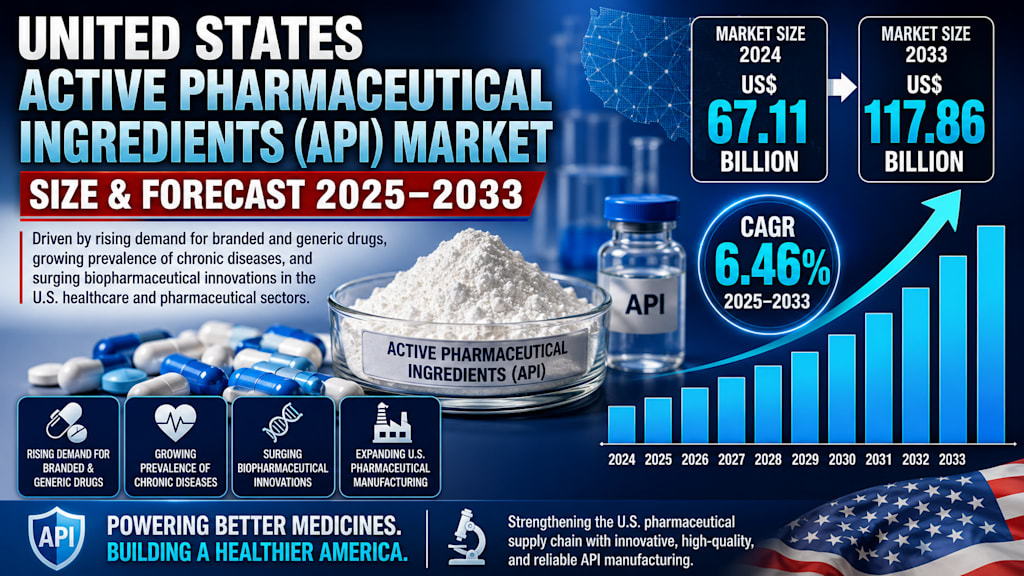
This growing significance is reflected in the market's strong outlook. According to Renub Research, the United States Active Pharmaceutical Ingredients Market is projected to expand from US$ 67.11 billion in 2024 to US$ 117.86 billion by 2033, growing at a compound annual growth rate (CAGR) of 6.46% during the forecast period from 2025 to 2033. The expansion is being driven by increasing demand for branded and generic medications, rising prevalence of chronic diseases, and continued innovation across the pharmaceutical and biotechnology sectors.
As the United States seeks to strengthen healthcare resilience and pharmaceutical innovation, APIs are emerging as one of the most strategically important segments of the healthcare industry.
Understanding the Role of Active Pharmaceutical Ingredients
Every medicine contains multiple components, but the API is the element responsible for producing the intended therapeutic effect.
Whether a medication lowers blood pressure, reduces inflammation, fights infection, or treats cancer, the API is the active substance that delivers the desired clinical outcome. These ingredients are typically manufactured through chemical synthesis, biotechnology processes, or fermentation techniques before being combined with inactive ingredients known as excipients.
In the United States, APIs serve as the backbone of both branded and generic drug production. They support the development of treatments across virtually every therapeutic category, including cardiovascular disease, diabetes, oncology, neurology, respiratory disorders, and rare diseases.
The continued expansion of healthcare services, growing patient populations, and rising demand for innovative treatments have significantly increased the need for reliable API manufacturing capabilities.
Chronic Diseases Are Fueling Market Expansion
One of the strongest growth drivers for the U.S. API market is the rising prevalence of chronic diseases.
Conditions such as diabetes, cancer, cardiovascular disease, kidney disorders, and neurological illnesses continue to affect millions of Americans. These diseases often require long-term medication management, creating sustained demand for pharmaceutical products and the APIs used to manufacture them.
As life expectancy increases and populations age, healthcare systems face growing pressure to provide effective treatments for chronic conditions. Lifestyle-related factors including poor nutrition, physical inactivity, smoking, and obesity further contribute to rising disease incidence.
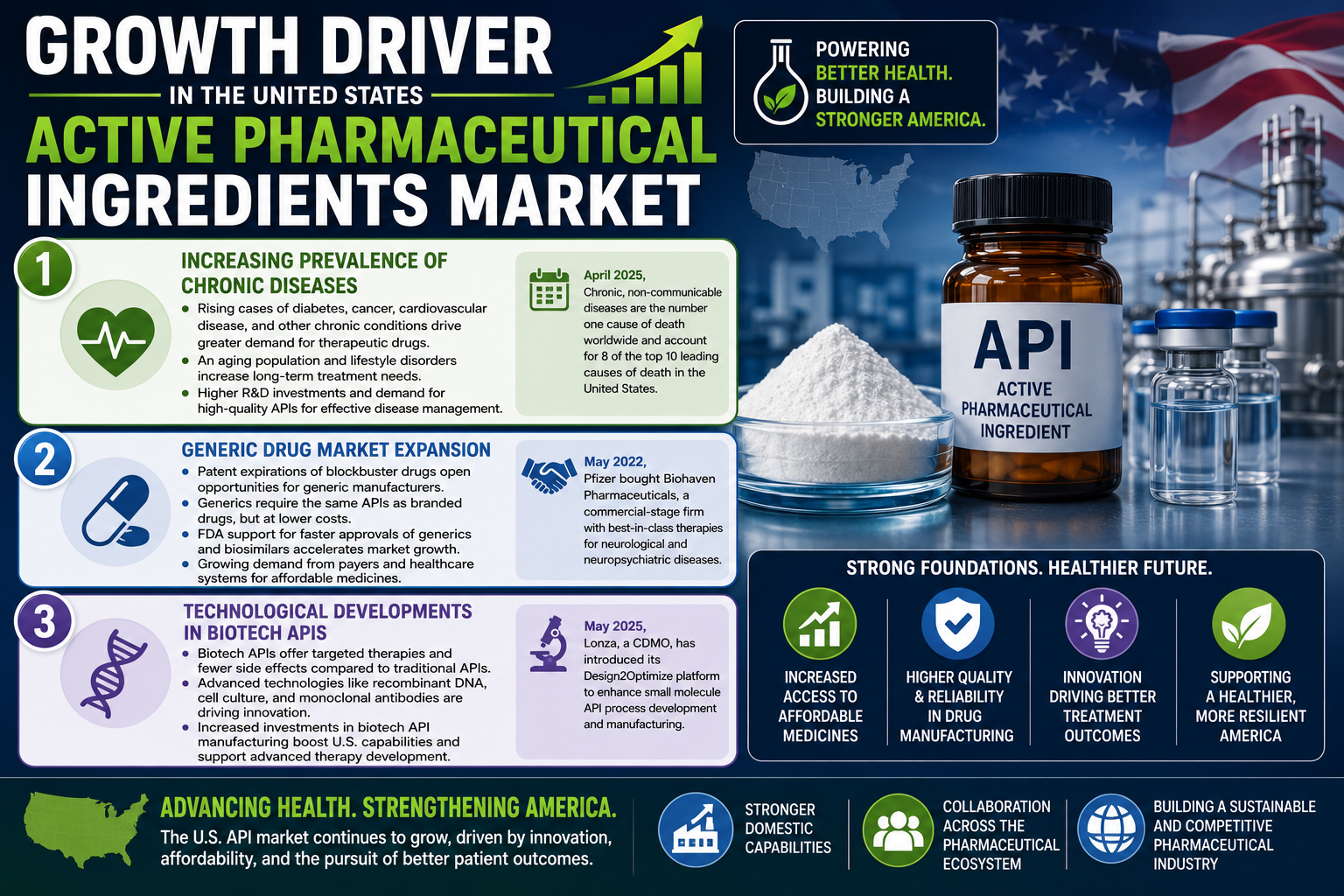
According to data highlighted in the market report, chronic non-communicable diseases account for eight of the ten leading causes of death in the United States. This reality continues to drive pharmaceutical research, drug development, and API production.
The growing burden of chronic illness ensures that demand for pharmaceutical ingredients will remain strong for years to come.
Generic Medicines Are Creating New Opportunities
Another major factor contributing to API market growth is the expanding generic drug industry.
As patents expire on blockbuster medications, pharmaceutical companies gain opportunities to develop lower-cost generic alternatives. These medicines use the same active pharmaceutical ingredients as their branded counterparts while offering more affordable treatment options for patients and healthcare systems.
The increasing adoption of generic medicines benefits both consumers and insurers by reducing healthcare costs without compromising therapeutic effectiveness.
Regulatory support has further accelerated this trend. The U.S. Food and Drug Administration continues to encourage faster approval pathways for generic drugs and biosimilars, helping expand patient access to affordable treatments.
As healthcare spending rises across the country, the demand for cost-effective therapies is expected to strengthen further, creating significant opportunities for API manufacturers serving the generic pharmaceutical sector.
Biotechnology Is Transforming the API Landscape
Perhaps the most exciting development within the API industry is the rapid rise of biotechnology-based pharmaceutical ingredients.
Unlike traditional synthetic APIs produced through chemical reactions, biotech APIs are derived from living organisms using advanced biological processes. Technologies such as recombinant DNA, monoclonal antibodies, gene engineering, and cell culture techniques have revolutionized modern drug development.
These advanced therapies offer highly targeted treatment approaches that can improve effectiveness while reducing unwanted side effects.
Biotech APIs have become especially important in treating cancer, autoimmune diseases, rare genetic disorders, and other complex medical conditions.
Pharmaceutical companies are investing heavily in biologic drug development and expanding manufacturing capacity to support growing demand. As personalized medicine becomes increasingly common, biotech APIs are expected to play an even larger role in future healthcare innovations.
Recent developments highlight this momentum. In May 2025, Lonza introduced its Design2Optimize platform to enhance small-molecule API process development and manufacturing, reflecting the industry's continued focus on innovation and efficiency.
The Growing Importance of Domestic Manufacturing
While the United States remains one of the world's largest pharmaceutical markets, it continues to rely significantly on imported APIs.
Many active pharmaceutical ingredients are sourced from manufacturing hubs in countries such as India and China. While globalization has helped reduce costs, it has also exposed vulnerabilities within pharmaceutical supply chains.
The COVID-19 pandemic highlighted these challenges, revealing how disruptions in global logistics can impact drug availability and healthcare delivery.
As a result, policymakers, healthcare leaders, and pharmaceutical companies are increasingly emphasizing domestic manufacturing capabilities.
Expanding U.S.-based API production can improve supply chain resilience, strengthen national healthcare security, and reduce dependence on international suppliers.
Government initiatives encouraging pharmaceutical manufacturing investment are expected to play an important role in supporting future industry growth.
Regulatory Standards Continue to Shape the Industry
The API industry operates within one of the most highly regulated environments in the world.
The U.S. Food and Drug Administration enforces rigorous standards governing quality, safety, manufacturing practices, and product consistency. These regulations help ensure that medications meet strict performance and safety requirements before reaching patients.
Compliance with Good Manufacturing Practices (GMP) requires substantial investments in quality systems, documentation procedures, facility upgrades, and ongoing inspections.
While these regulations protect public health and maintain consumer confidence, they also create operational challenges for manufacturers.
Smaller companies often face difficulties meeting complex compliance requirements, which can limit market participation and increase industry consolidation.
Nevertheless, regulatory oversight remains essential for maintaining the integrity and reliability of pharmaceutical products.
Captive Manufacturing vs. Merchant Manufacturing
The U.S. API market includes two primary business models: captive manufacturing and merchant manufacturing.
Captive API production occurs when pharmaceutical companies manufacture ingredients internally for use in their own products. This approach provides greater control over quality, intellectual property protection, and supply chain reliability.
Large pharmaceutical companies often prefer captive manufacturing for high-value products and proprietary therapies.
Merchant API manufacturing, by contrast, involves third-party companies producing APIs for multiple customers. This model allows pharmaceutical firms to access specialized expertise and scale production without investing heavily in manufacturing infrastructure.
Contract Development and Manufacturing Organizations (CDMOs) play an increasingly important role in this segment by offering flexible, cost-effective solutions for pharmaceutical companies of all sizes.
Both models are expected to remain essential components of the evolving pharmaceutical ecosystem.
Oncology APIs Are Becoming a Major Growth Segment
Cancer remains one of the most challenging healthcare issues worldwide, creating substantial demand for innovative pharmaceutical treatments.
As oncology therapies become more sophisticated, the need for specialized APIs continues to grow rapidly.
Pharmaceutical companies are investing heavily in high-potency active pharmaceutical ingredients (HPAPIs) used in targeted cancer therapies and immunotherapies. These advanced compounds require specialized manufacturing environments and strict safety controls.
The rise of precision medicine is further accelerating innovation within oncology APIs. Researchers increasingly develop treatments tailored to specific genetic profiles, creating opportunities for highly specialized pharmaceutical ingredients.
Given the ongoing demand for improved cancer treatments, oncology APIs are expected to remain one of the fastest-growing segments of the market.
Cardiovascular and Nephrology Applications Remain Critical
Cardiovascular disease continues to represent one of the leading causes of mortality in the United States.
As a result, there is consistent demand for APIs used in blood pressure medications, cholesterol-lowering drugs, anticoagulants, and heart disease treatments.
Manufacturers are continuously developing new compounds that improve efficacy, safety, and patient outcomes.
Similarly, nephrology APIs are experiencing growing demand due to rising rates of chronic kidney disease and end-stage renal disease.
Improved awareness, earlier diagnosis, and advances in treatment options are driving continued growth in this important therapeutic category.
Together, cardiovascular and nephrology applications contribute significantly to the long-term expansion of the API market.
Innovation Is Driving the Future of Pharmaceutical Manufacturing
The pharmaceutical industry is entering an era defined by innovation.
Artificial intelligence, automation, advanced analytics, continuous manufacturing, and biotechnology are reshaping how APIs are developed and produced.
Manufacturers are increasingly investing in sustainable production methods that reduce environmental impact while improving operational efficiency.
Advanced digital technologies are also helping companies optimize quality control, accelerate research and development, and enhance supply chain visibility.
These innovations not only improve productivity but also support faster delivery of life-saving therapies to patients.
As healthcare needs continue evolving, technological advancement will remain a central driver of API market growth.
Challenges That Cannot Be Ignored
Despite strong growth opportunities, several challenges remain.
Supply chain disruptions continue to pose risks, particularly given the industry's reliance on imported raw materials and APIs. Geopolitical tensions, transportation bottlenecks, and regulatory differences can all impact production timelines and product availability.
Compliance costs also remain a significant concern. Meeting stringent FDA requirements requires continuous investment in facilities, personnel, and quality systems.
Additionally, increasing competition within both generic and innovative pharmaceutical sectors places pressure on manufacturers to improve efficiency while maintaining profitability.
Addressing these challenges will be essential for sustaining long-term growth and competitiveness.
Final Thoughts
The United States Active Pharmaceutical Ingredients Market sits at the center of modern healthcare innovation. Every breakthrough therapy, affordable generic medicine, and life-saving biologic treatment depends on the quality and availability of active pharmaceutical ingredients.
As chronic disease rates rise, biotechnology advances accelerate, and healthcare systems seek more effective treatment solutions, demand for APIs will continue growing across multiple therapeutic categories.
With the market projected to expand from US$ 67.11 billion in 2024 to US$ 117.86 billion by 2033, the industry's future appears exceptionally strong. Continued investments in research, domestic manufacturing, biotechnology, and supply chain resilience are expected to create new opportunities throughout the pharmaceutical ecosystem.
While APIs may remain largely invisible to the average patient, their importance cannot be overstated. They are the essential building blocks behind nearly every medicine used today and will remain critical to shaping the future of healthcare in the United States for decades to come.
About the Creator
Enjoyed the story? Support the Creator.
Subscribe for free to receive all their stories in your feed.
Comments
There are no comments for this story
Be the first to respond and start the conversation.