
The Growing Importance of Baby Oral Care: Why Parents Are Investing in Infant Dental Health Earlier Than Ever
From finger brushes to fluoride-free toothpaste, the baby oral care products market is evolving as parents prioritize preventive healthcare and lifelong dental wellness.

The Tiny Teeth Revolution: A Growing Focus on Baby Oral Care
For generations, many parents believed oral care could wait until a child developed a full set of baby teeth. Today, that perception is rapidly changing.
Healthcare professionals, pediatric dentists, and parenting experts increasingly emphasize that oral hygiene should begin long before a child loses their first tooth. In fact, many experts now recommend oral care practices even before teeth emerge, helping establish healthy habits and reducing the risk of future dental problems.
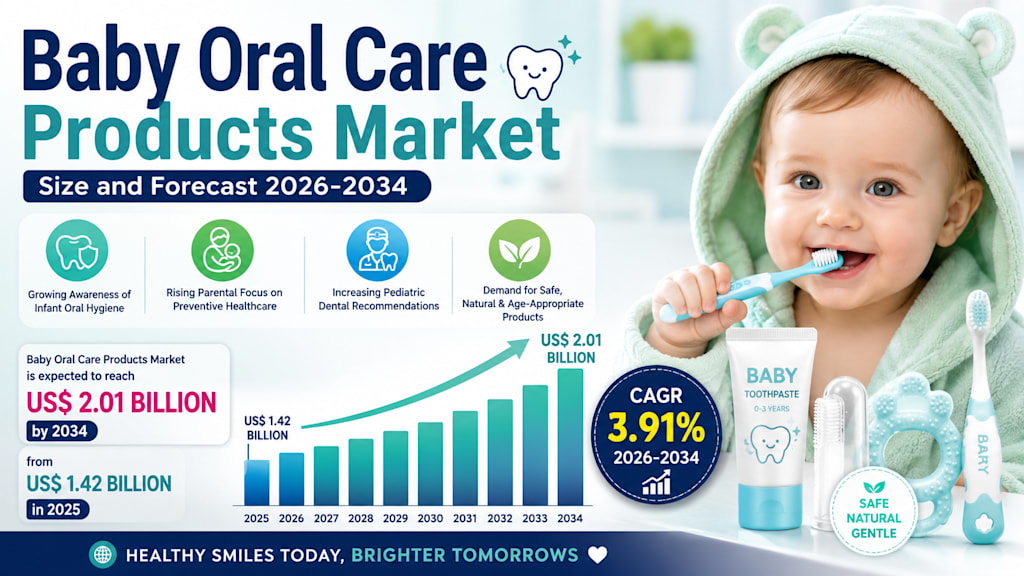
This shift in awareness is transforming consumer behavior and creating new opportunities within the baby care industry. According to Renub Research, the global Baby Oral Care Products Market is projected to grow from US$ 1.42 billion in 2025 to US$ 2.01 billion by 2034, expanding at a CAGR of 3.91% between 2026 and 2034.
The numbers reflect more than just market growth. They represent a broader cultural movement toward preventive healthcare, informed parenting, and greater attention to children's long-term well-being.
Why Early Oral Hygiene Matters
Many parents are surprised to learn that oral care should begin before a baby's first tooth appears.
Bacteria can accumulate on an infant's gums, and establishing proper oral hygiene habits early can significantly reduce the risk of cavities, gum issues, and future dental complications. Pediatric dentists frequently stress that healthy baby teeth are essential not only for eating but also for speech development and proper alignment of permanent teeth.
As scientific understanding of oral health continues to improve, parents are becoming more proactive. Rather than waiting for dental issues to arise, families are increasingly adopting preventive measures from infancy.
This growing awareness has created demand for specialized products designed specifically for babies and toddlers, including toothbrushes, toothpaste, teething gels, oral wipes, finger brushes, and gum cleaners. These products are carefully designed to address the unique needs of developing mouths while ensuring safety and comfort.
The Rise of Conscious Parenting
One of the most influential trends shaping the baby oral care industry is the rise of conscious parenting.
Modern parents have access to an unprecedented amount of information through online communities, healthcare websites, parenting blogs, and social media platforms. As a result, purchasing decisions are increasingly driven by research rather than habit.
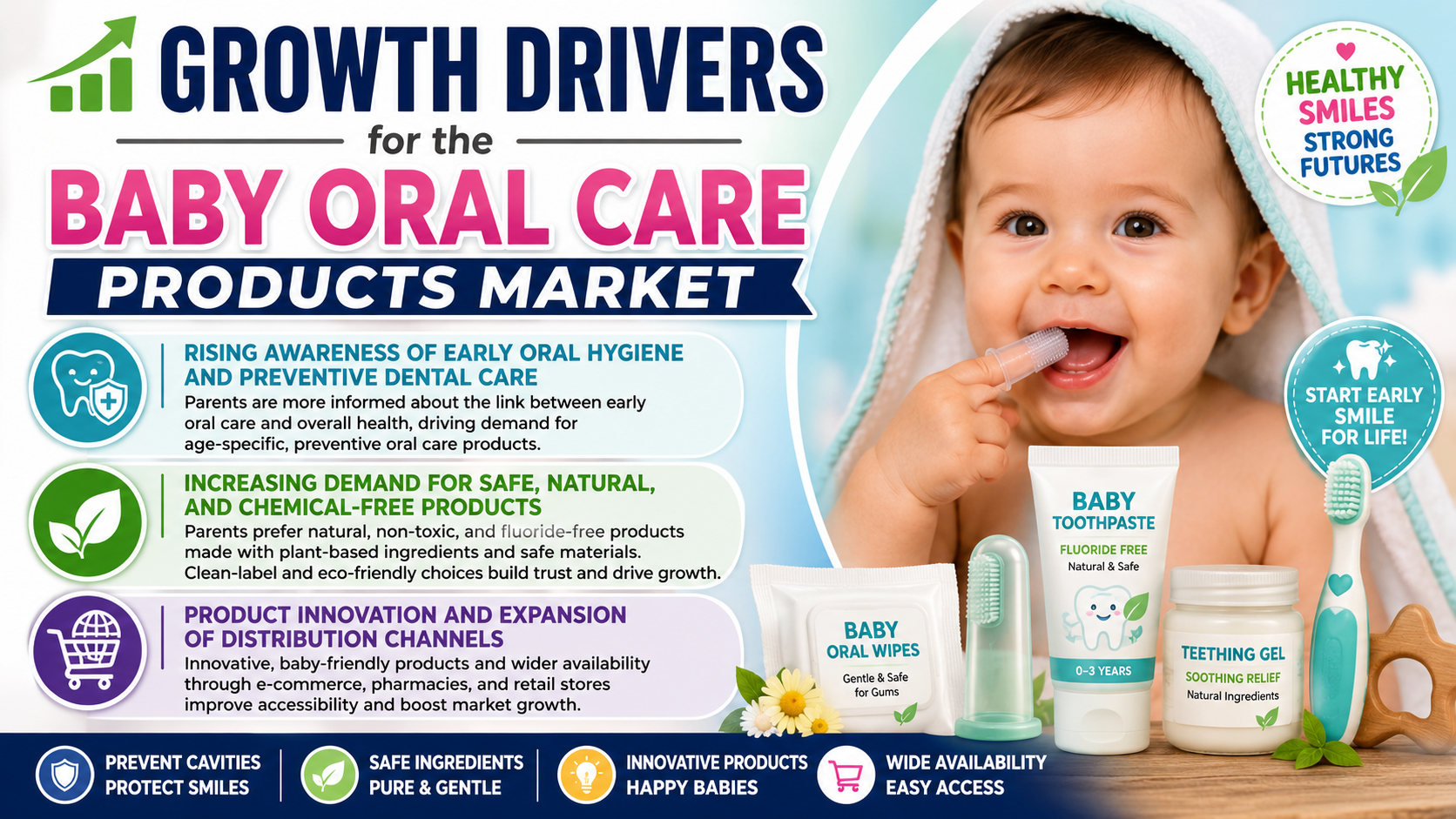
Parents today want products that are safe if accidentally swallowed, free from harsh chemicals, made with natural ingredients, gentle on sensitive gums, and backed by healthcare recommendations.
This demand for transparency is pushing manufacturers to rethink traditional formulations and prioritize ingredient safety.
The trend mirrors broader movements within the baby care industry, where consumers increasingly seek clean-label products and environmentally responsible manufacturing practices.
Natural and Organic Products Gain Momentum
The demand for natural baby products is no longer a niche trend.
Across multiple consumer categories, parents are carefully reading labels and scrutinizing ingredients. Baby oral care products are no exception.
Many families express concerns regarding artificial flavors, preservatives, sweeteners, and chemical additives. In response, manufacturers are introducing products formulated with plant-based ingredients and naturally derived components.
Fluoride-free toothpaste options, herbal oral care solutions, and chemical-free teething products are becoming increasingly popular. Eco-friendly packaging and sustainable production practices further enhance product appeal among environmentally conscious consumers.
For brands, this trend presents an opportunity to differentiate themselves in an increasingly competitive marketplace. For consumers, it provides greater confidence that the products they choose align with their values and health priorities.
Innovation Is Reshaping the Industry
Innovation remains one of the strongest drivers of growth in the baby oral care products market.
Manufacturers are moving beyond traditional toothbrushes and introducing solutions specifically designed to make infant oral care easier and more effective.
Today's products feature ergonomic designs that improve handling, silicone finger brushes that allow parents to gently clean gums and emerging teeth, mild flavor formulations that encourage acceptance without excessive sweetness, and teething relief solutions that combine oral care benefits with soothing ingredients.
The result is a category that continuously evolves to meet the practical needs of both parents and children.
E-Commerce Is Expanding Market Reach
Digital commerce has dramatically changed how parents discover and purchase baby care products.
Unlike previous generations, modern parents often begin their product research online. Reviews, parenting forums, social media recommendations, and healthcare influencer content all play significant roles in purchasing decisions.
Online retail platforms offer several advantages, including greater product variety, convenient home delivery, easy comparison shopping, access to educational resources, and subscription purchasing options.
As e-commerce continues to grow globally, baby oral care brands can reach consumers more effectively than ever before.
This digital transformation is particularly important in emerging markets, where online channels help overcome limitations associated with traditional retail distribution.
Emerging Markets Present Major Opportunities
While North America and Europe remain mature markets for baby oral care products, some of the most exciting growth opportunities are emerging elsewhere.
Countries such as India are experiencing rising demand driven by increasing birth rates, growing disposable incomes, urbanization, expanding healthcare awareness, and greater internet penetration.
Young parents in developing economies are becoming more informed about preventive healthcare and early childhood wellness. Access to digital information is accelerating awareness of oral hygiene practices that were previously less common.
Government initiatives focused on maternal and child health also contribute to greater awareness and adoption of oral care routines.
As these trends continue, emerging markets are expected to become increasingly important contributors to global industry growth.
Challenges Still Remain
Despite promising growth prospects, the baby oral care industry faces several challenges.
One major challenge is awareness. In many regions, parents still believe oral care should begin only after multiple teeth have erupted. This misconception limits product adoption and delays preventive care practices recommended by healthcare professionals.
Another challenge is affordability. Many households prioritize essential baby products such as diapers, formula, and clothing over oral care products. Manufacturers therefore face the challenge of balancing product quality and affordability.
Consumer trust also remains critical. Parents are understandably cautious when selecting products for infants. Any concerns related to safety, ingredient transparency, or product effectiveness can quickly influence purchasing behavior. Companies must maintain high quality standards and communicate clearly to build long-term trust.
Regional Markets Driving Growth
The United States remains one of the most established markets for baby oral care products. Strong pediatric dental awareness, advanced healthcare infrastructure, and high consumer spending continue to support demand.
The United Kingdom is also witnessing steady growth, supported by public healthcare guidance and increasing parental awareness regarding early oral hygiene.
India represents one of the most promising growth markets. Rising incomes, increasing healthcare awareness, and expanding access to digital parenting resources are encouraging greater adoption of baby oral care products. Demand for herbal and naturally derived solutions is especially strong among Indian consumers.
Meanwhile, the United Arab Emirates benefits from strong purchasing power, advanced healthcare systems, and growing demand for premium baby care products. Many parents actively seek internationally certified brands and high-quality oral care solutions.
Recent Industry Developments Signal Continued Innovation
Several recent developments highlight the industry's commitment to innovation and expansion.
In December 2024, Pepsodent introduced a toothpaste specifically developed for infants, featuring child-friendly flavors and a formulation designed to support oral health.
In November 2024, Marico Bangladesh launched a fluoride-free gel toothpaste under its Parachute Just for Baby brand, demonstrating the growing demand for gentle and safe infant oral care solutions.
Industry consolidation is also shaping the market. In 2023, Edgewell Personal Care acquired Mamamoo Baby, expanding its presence within the natural baby care segment and strengthening its portfolio of infant hygiene products.
At the same time, manufacturers continue introducing innovative toothbrush designs intended to improve cleaning performance while maintaining safety and comfort for young children.
What the Future Holds
The future of the baby oral care market appears increasingly promising.
Several long-term trends are expected to support continued growth, including greater emphasis on preventive healthcare, increased parental education, expansion of natural product offerings, continued product innovation, growth of e-commerce distribution, and rising healthcare awareness in emerging economies.
As healthcare professionals continue promoting early oral hygiene, more parents are likely to view baby oral care products as essential rather than optional.
This shift represents a fundamental change in how families approach childhood wellness.
Instead of treating oral care as a response to problems, parents are increasingly embracing it as an investment in their children's future health.
Final Thoughts
The baby oral care products market is about far more than toothbrushes and toothpaste.
It reflects a broader transformation in parenting priorities, healthcare awareness, and preventive wellness practices. As parents become increasingly informed about the importance of early oral hygiene, demand for specialized baby oral care solutions continues to rise. Manufacturers are responding through innovation, safer formulations, natural ingredients, and improved accessibility.
With the market expected to grow from US$ 1.42 billion in 2025 to US$ 2.01 billion by 2034, the industry is poised for steady expansion in the years ahead.
Ultimately, the growing focus on infant oral health signals a positive shift toward proactive healthcare—one that could help millions of children enjoy healthier smiles and better overall well-being throughout their lives.
About the Creator
Enjoyed the story? Support the Creator.
Subscribe for free to receive all their stories in your feed.
Comments
There are no comments for this story
Be the first to respond and start the conversation.