
The Green Gold of America: Why the United States Asparagus Market Is Set for Strong Growth Through 2034
Fresh, Healthy, and Rising in Demand Across the Nation

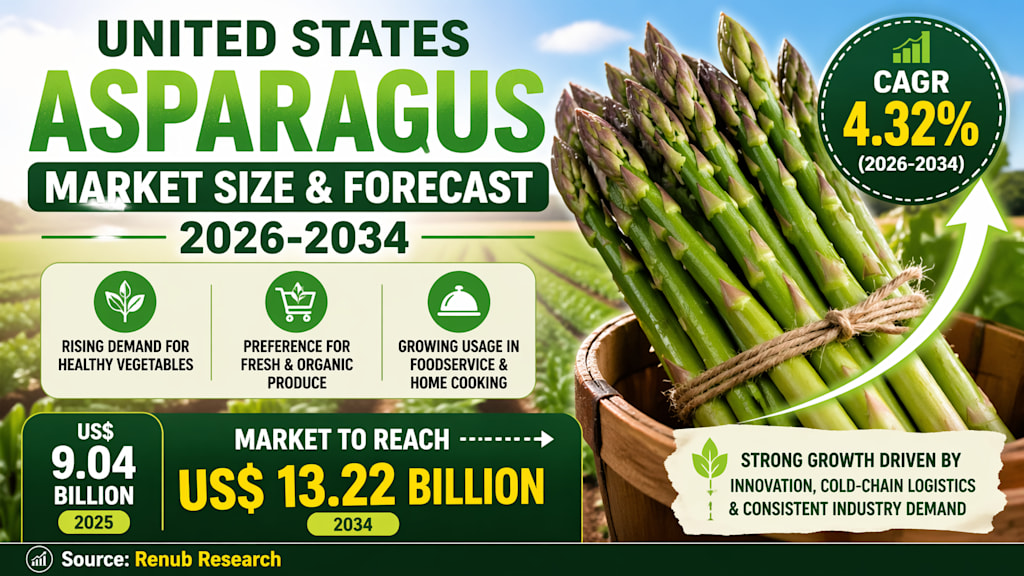
The United States asparagus market is entering a promising growth phase as consumers increasingly prioritize healthy eating, fresh vegetables, and nutrient-rich foods. According to Renub Research, the U.S. asparagus market is projected to grow from US$ 9.04 Billion in 2025 to US$ 13.22 Billion by 2034, expanding at a CAGR of 4.32% from 2026 to 2034. This steady rise reflects changing consumer lifestyles, rising awareness of wellness, and expanding demand from both households and foodservice channels.
Asparagus, once viewed as a seasonal specialty vegetable, is now becoming a year-round staple in American kitchens, restaurants, and grocery stores. With strong demand for organic produce, premium vegetables, and convenient meal solutions, the future of the asparagus industry looks bright.
Why Americans Love Asparagus
Asparagus has developed a loyal following in the United States because it combines flavor, nutrition, and versatility. It can be steamed, roasted, grilled, sautéed, or added to pasta, soups, salads, and stir-fries. Whether prepared in gourmet restaurants or simple home meals, asparagus remains a premium vegetable choice.
Nutritionally, asparagus offers major benefits. It contains:
- Vitamins A, C, E, and K
- Folate
- Fiber
- Antioxidants
- Low calories
- Essential minerals
This makes it highly attractive to consumers following plant-based diets, weight management plans, heart-healthy routines, and clean-label eating habits.
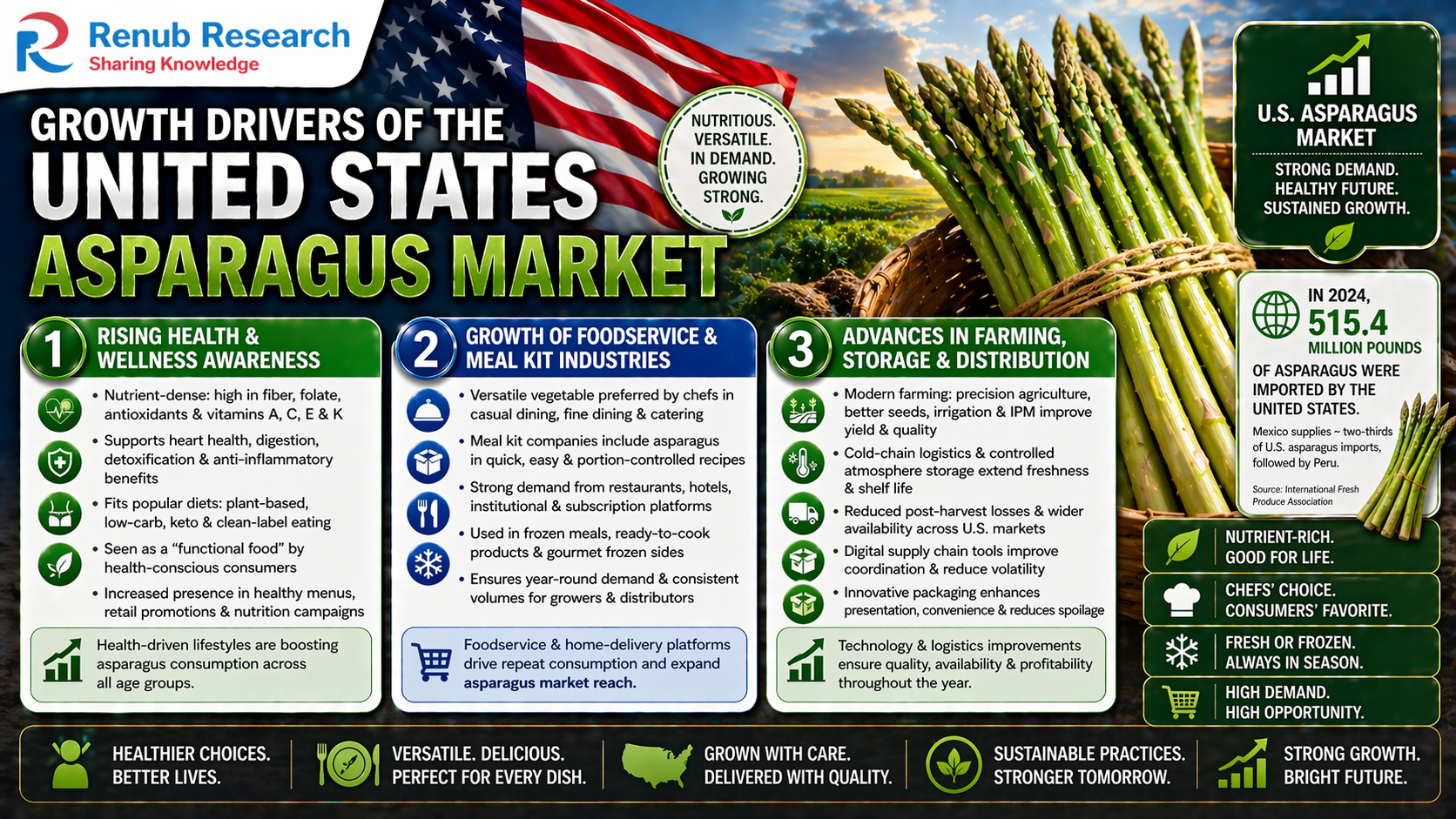
Market Growth Driven by Health Awareness
One of the biggest reasons for asparagus market growth is America’s continued focus on health and wellness.
Modern shoppers are paying closer attention to what they eat. Fresh vegetables are no longer optional—they are becoming central to everyday diets. Asparagus fits perfectly into this trend because it is:
- Nutrient-dense
- Low in carbohydrates
- Naturally gluten-free
- Ideal for keto and low-calorie diets
- Rich in digestive-supporting fiber
Consumers increasingly see asparagus as a “functional food,” meaning it provides benefits beyond simple nutrition. This perception is helping boost repeat purchases nationwide.
Restaurants and Meal Kits Fuel Demand
The rise of foodservice businesses, meal kits, and ready-to-cook meal platforms is another major growth engine.
Restaurants value asparagus because it pairs well with:
- Steak
- Chicken
- Seafood
- Vegan dishes
- Gourmet sides
Meal kit companies also prefer asparagus because it cooks quickly, portions easily, and has wide consumer acceptance.
As more Americans rely on convenient meal solutions, asparagus demand continues expanding outside traditional grocery channels. Frozen prepared meals and premium side dishes also increasingly include asparagus as a featured ingredient.
Imports Keep Shelves Full Year-Round
Domestic asparagus production alone does not meet total U.S. demand. Imports play a major role in maintaining year-round availability.
In 2024, the United States imported 515.4 million pounds of asparagus. Mexico remains the largest supplier, while Peru also plays an important role due to favorable growing conditions and strong export capacity.
These imports help retailers offer consistent pricing and reliable inventory even when domestic harvest seasons are limited.
Technology Is Modernizing the Industry
Agricultural innovation is helping the asparagus market become more efficient and profitable.
Key improvements include:
- Precision irrigation systems
- Better seed genetics
- Pest management tools
- Cold-chain logistics
- Controlled atmosphere storage
- Smart packaging solutions
These advancements reduce spoilage, improve freshness, and help asparagus travel longer distances while maintaining quality.
Supply chain modernization is especially important because asparagus is highly perishable. Faster logistics and better refrigeration directly support market growth.
Challenges Facing the Industry
Despite positive momentum, the market faces real obstacles.
1. High Labor Costs
Asparagus harvesting is labor-intensive and often done by hand to prevent crop damage. Rising wages and worker shortages increase production costs for growers.
2. Import Competition
Imported asparagus often arrives at lower prices, creating pricing pressure for domestic farms.
3. Price Volatility
Weather changes, transportation disruptions, and seasonal supply shifts can create sudden retail price changes.
These issues may challenge growers, but continued demand growth should help support long-term expansion.
Fresh Asparagus Dominates the Market
Fresh asparagus remains the largest and most preferred segment in the United States.
Consumers associate fresh asparagus with:
- Better taste
- Stronger nutrition
- Premium quality
- Better cooking performance
Spring promotions in grocery stores often drive strong seasonal sales, while farmers markets and local produce programs further strengthen demand.
Although frozen and canned products exist, fresh asparagus continues leading in value and consumer preference.
Frozen Asparagus Gains Momentum
Frozen asparagus is increasingly popular among busy households.
Benefits include:
- Longer shelf life
- Less food waste
- Easy storage
- Convenient cooking
- Stable pricing
As modern lifestyles become faster and convenience-driven, frozen asparagus is expected to enjoy steady growth in coming years.
Green Asparagus Leads the Variety Segment
Among product types, green asparagus dominates the U.S. market.
Its leadership comes from:
- Strong consumer familiarity
- High agricultural yields
- Affordable pricing
- Versatile flavor profile
- Broad retail availability
Green asparagus is used across homes, restaurants, and food processing operations, making it the backbone of the national market.
Specialty Varieties Create Premium Opportunities
Purple Asparagus
Purple asparagus is gaining attention among chefs and premium shoppers for its sweeter taste and attractive color.
White Asparagus
White asparagus remains niche but valuable, especially among gourmet buyers and consumers influenced by European cuisine.
Though smaller in volume, these specialty varieties create profitable premium segments.
California Remains the Powerhouse
California continues to lead U.S. asparagus production thanks to:
- Favorable climate
- Fertile soil
- Strong agricultural infrastructure
- Long growing season
- Efficient logistics access
Despite water and labor cost pressures, California remains the backbone of domestic asparagus supply.
Key Consumption Markets Expanding
Beyond production hubs, major consumption states include:
- Texas
- New York
- Arizona
- Florida
- Illinois
Urban populations, restaurant demand, and growing health awareness are supporting strong asparagus sales in these regions.
What the Future Looks Like
The next decade should be highly favorable for the U.S. asparagus industry. Several trends are expected to sustain growth:
- Health-conscious grocery shopping
- Expansion of premium produce sections
- Rising demand for organic vegetables
- Growth in meal delivery services
- Strong restaurant recovery
- Better agricultural efficiency
- Increased frozen vegetable adoption
As consumers seek foods that are healthy, flavorful, and easy to prepare, asparagus is positioned as a winner.
Final Thoughts
The United States asparagus market is no longer a niche seasonal category—it is becoming a powerful part of the country’s modern food economy. With Renub Research forecasting growth from US$ 9.04 Billion in 2025 to US$ 13.22 Billion by 2034, the vegetable’s future looks strong.
Driven by nutrition trends, culinary versatility, retail expansion, and foodservice demand, asparagus is proving that even a simple vegetable can become big business.
About the Creator
Enjoyed the story? Support the Creator.
Subscribe for free to receive all their stories in your feed.
Comments
There are no comments for this story
Be the first to respond and start the conversation.