
The Global Protein Ingredients Market Is Growing Fast as Consumers Prioritize Health, Wellness, and Sustainable Nutrition
From Sports Nutrition to Plant-Based Innovation, Protein Ingredients Are Reshaping the Future of Food and Beverage Products Worldwide

Walk through any supermarket aisle today and one trend becomes immediately obvious: protein is everywhere. From ready-to-drink shakes and energy bars to dairy alternatives, breakfast cereals, baked goods, and even snacks, protein has evolved from a nutrient primarily associated with athletes into a mainstream health priority.
Consumers around the world are paying closer attention to what they eat, seeking products that support muscle health, weight management, energy levels, and overall wellness. As a result, food manufacturers are racing to develop innovative products enriched with high-quality protein ingredients that deliver both nutritional value and convenience.
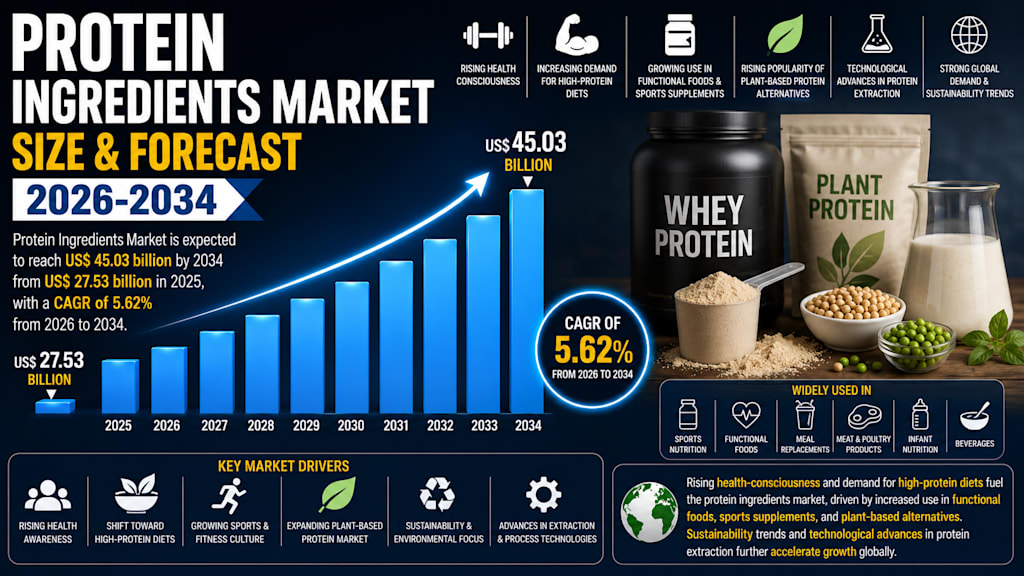
This shift in consumer behavior is creating significant opportunities across the global food and beverage industry. According to Renub Research, the Protein Ingredients Market is expected to grow from US$ 27.53 billion in 2025 to US$ 45.03 billion by 2034, expanding at a compound annual growth rate (CAGR) of 5.62% between 2026 and 2034. The growth reflects not only rising demand for protein-rich products but also broader changes in how consumers approach health, nutrition, and sustainability.

Why Protein Has Become a Global Nutrition Priority
Protein has long been recognized as one of the essential building blocks of human health. It supports muscle growth and repair, helps regulate bodily functions, contributes to satiety, and plays an important role in overall well-being.
What has changed in recent years is the growing awareness among consumers regarding protein's broader health benefits. People are increasingly incorporating higher levels of protein into their diets not only for athletic performance but also for weight management, healthy aging, and everyday wellness.
As lifestyles become busier, consumers are looking for convenient ways to meet their nutritional goals. Protein-fortified foods and beverages provide an effective solution by allowing individuals to increase protein intake without dramatically changing their eating habits.
This growing demand has encouraged manufacturers to innovate across multiple product categories, creating a diverse range of protein-enriched options that appeal to different lifestyles and dietary preferences.
Understanding Protein Ingredients
Protein ingredients are concentrated or isolated protein sources that are added to food and beverage products to improve nutritional value, texture, and functionality. These ingredients can be derived from both animal and plant sources.
Animal-based proteins include whey, casein, egg protein, fish protein, and gelatin protein. These sources are often valued for their complete amino acid profiles and high bioavailability.
Plant-based proteins, meanwhile, are derived from ingredients such as soy, peas, wheat, rice, and other legumes. These alternatives have gained popularity among consumers seeking vegan, vegetarian, allergen-friendly, and environmentally conscious dietary options.
Advancements in extraction and processing technologies have significantly improved the quality, taste, and functionality of protein ingredients, enabling their use in an increasingly wide range of products.
Functional Foods Are Driving Market Expansion
One of the strongest drivers of growth in the protein ingredients market is the rising popularity of functional foods and beverages. Consumers no longer view food solely as a source of calories; they increasingly expect products to provide specific health benefits.
Protein-enriched snacks, meal replacements, dairy alternatives, and beverages have become especially popular among individuals seeking convenient nutrition solutions. These products offer a practical way to support fitness goals, maintain energy levels, and improve dietary balance.
Manufacturers are responding by introducing products that combine high protein content with appealing flavors, clean-label ingredients, and convenient formats. Energy bars, ready-to-drink shakes, fortified yogurts, breakfast products, and protein-enhanced bakery items are now common features in supermarkets worldwide.
As consumers continue to prioritize health and wellness, the demand for functional foods containing protein ingredients is expected to remain strong for years to come.
The Sports Nutrition Industry Continues to Thrive
The sports nutrition sector remains one of the most important markets for protein ingredients. Athletes, fitness enthusiasts, and active individuals rely on protein-rich products to support muscle recovery, improve performance, and maintain physical fitness.
What makes today's market different is that sports nutrition products are increasingly attracting mainstream consumers. Many people now consume protein shakes, nutrition bars, and fortified beverages as part of their everyday routines, regardless of whether they participate in organized sports.
This broader consumer base has encouraged manufacturers to create products that appeal to a wider audience. Modern protein products often emphasize taste, convenience, digestive comfort, and clean-label formulations alongside traditional performance benefits.
As awareness of fitness and preventive healthcare continues to grow globally, sports nutrition is expected to remain a major contributor to protein ingredient demand.
Plant-Based Protein Is Reshaping the Industry
Perhaps the most transformative trend in the protein ingredients market is the rapid rise of plant-based proteins.
Consumers are increasingly choosing plant-derived protein sources due to environmental concerns, ethical considerations, dietary preferences, and interest in sustainable food systems. This shift has created substantial opportunities for innovation across the food industry.
Pea protein, soy protein, wheat protein, and other plant-derived ingredients are being incorporated into dairy alternatives, protein beverages, meat substitutes, nutrition bars, and numerous other products.
Advancements in food technology have significantly improved the taste, texture, and functionality of plant-based proteins. Manufacturers are now able to create products that closely mimic the performance characteristics of traditional animal-derived proteins.
In July 2024, Ingredion introduced VITESSENCE Pea 100 HD, a high-protein pea ingredient containing 84% protein on a dry basis. Designed for cold-pressed bars and protein fortification applications, the innovation reflects growing industry efforts to meet consumer demand for sustainable, plant-based nutrition solutions.
Innovation Is Creating New Protein Opportunities
Technological innovation continues to drive the evolution of protein ingredients. Food scientists and manufacturers are investing heavily in research and development to create products with improved nutritional profiles, enhanced functionality, and better consumer appeal.
One notable example occurred in August 2025 when Burcon NutraScience launched FavaPro, a high-purity fava protein isolate containing at least 90% protein. The ingredient was specifically designed for applications such as dairy alternatives and sports nutrition products, offering manufacturers additional flexibility in product development.
High-purity protein isolates are particularly valuable because they enable manufacturers to deliver greater nutritional benefits while maintaining desirable taste and texture characteristics.
As technology advances, consumers can expect to see increasingly sophisticated protein solutions that address evolving dietary needs and preferences.
Sustainability Is Influencing Consumer Choices
Sustainability has become a major factor influencing purchasing decisions across the food and beverage sector. Consumers are increasingly evaluating products based not only on nutritional value but also on environmental impact.
Plant-based proteins generally require fewer natural resources than many animal-based protein sources, making them attractive options for environmentally conscious consumers. This perception has accelerated demand for sustainable protein ingredients and encouraged manufacturers to invest in alternative protein technologies.
Food companies are also focusing on responsible sourcing, transparent supply chains, and environmentally friendly production practices. These efforts help build consumer trust while supporting broader sustainability goals.
As awareness of environmental issues continues to increase, sustainability is likely to remain a significant growth driver for the protein ingredients market.
Challenges Facing the Market
Despite strong growth prospects, the protein ingredients industry faces several challenges that could influence future development.
One major concern is the volatility of raw material supplies. Ingredients such as soybeans, peas, and fava beans are subject to fluctuations caused by weather conditions, agricultural disruptions, trade policies, and global supply chain challenges.
Variations in availability and pricing can impact production costs and profit margins while potentially affecting product affordability for consumers. To address these risks, manufacturers are increasingly diversifying sourcing strategies and strengthening supplier relationships.
Regulatory compliance also presents challenges. Different countries maintain unique requirements related to labeling, safety standards, quality certifications, and ingredient approvals. Companies must navigate these complex regulatory environments while ensuring transparency and maintaining consumer confidence.
In addition, some consumers remain skeptical about highly processed protein ingredients, genetically modified organisms, and emerging plant-based protein technologies. Effective education and communication will be essential for addressing these concerns and supporting long-term market acceptance.
Regional Markets Continue to Expand
The United States remains one of the largest and most influential markets for protein ingredients. Strong consumer awareness, widespread interest in sports nutrition, and growing demand for functional foods continue to support market expansion. Plant-based proteins are also gaining significant momentum as consumers seek cleaner and more sustainable nutrition options.
Germany has emerged as a leading European market, driven by health-conscious consumers and strong interest in sustainability. Plant-based proteins are widely used in functional foods, dairy alternatives, and protein-rich snacks, reflecting changing dietary preferences throughout the country.
China represents another important growth opportunity. Rising incomes, urbanization, and increasing health awareness are fueling demand for protein-enriched products across multiple categories, including beverages, snack bars, and functional foods.
Meanwhile, Saudi Arabia is experiencing growing demand for nutrient-rich foods and functional nutrition products. Increased consumer spending, urbanization, and wellness-focused lifestyles are supporting the adoption of protein ingredients across retail and foodservice sectors.
Looking Toward the Future
The future of the protein ingredients market appears highly promising. Continued innovation, expanding consumer awareness, growing interest in plant-based nutrition, and rising demand for functional foods are expected to create significant opportunities for industry participants.
Recent developments, including Arla Foods Ingredients' specialized protein solutions and Tetra Pak's introduction of sunflower protein ingredients, demonstrate the industry's commitment to innovation and product diversification. Companies are actively exploring new protein sources and developing technologies that improve performance, nutrition, and sustainability.
As consumers continue seeking healthier and more sustainable dietary options, protein ingredients will remain at the center of food innovation worldwide.
Final Thoughts
The global protein ingredients market is experiencing a period of remarkable transformation. Driven by health-conscious consumers, advances in food technology, growing interest in sports nutrition, and the rapid expansion of plant-based alternatives, the industry is creating new opportunities across the food and beverage landscape.
With the market projected to reach US$ 45.03 billion by 2034, protein ingredients are set to play an increasingly important role in shaping how people eat, exercise, and approach overall wellness. Whether sourced from traditional dairy proteins or innovative plant-based alternatives, protein is no longer just a nutrient—it has become one of the defining trends influencing the future of global nutrition.
About the Creator
Enjoyed the story? Support the Creator.
Subscribe for free to receive all their stories in your feed.
Comments
There are no comments for this story
Be the first to respond and start the conversation.