
The Global Leather Goods Market: How Luxury, Sustainability, and Digital Innovation Are Driving Growth
From handbags and shoes to luggage and premium accessories, leather goods are evolving to meet the demands of modern consumers.

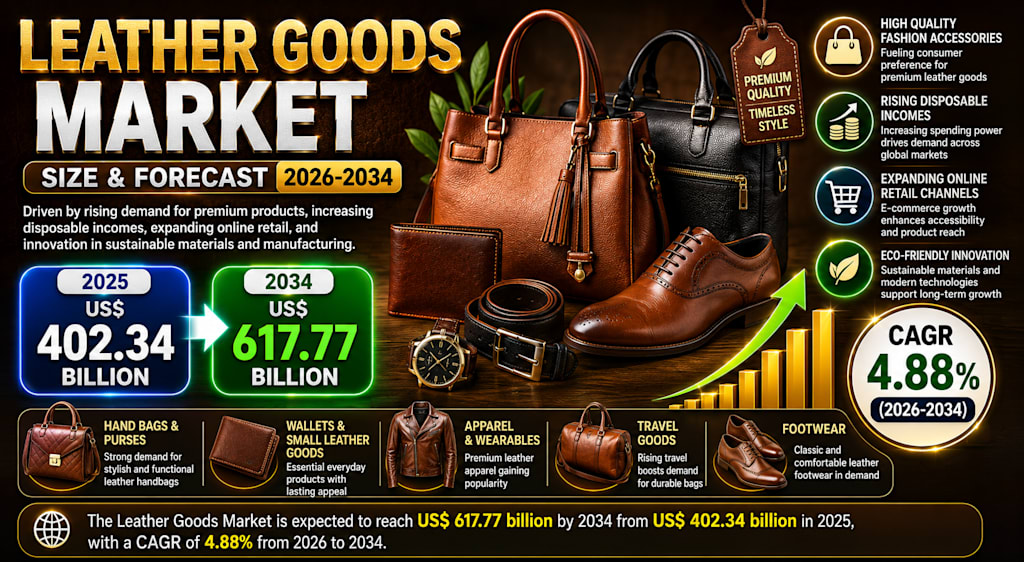
The global leather goods market has emerged as a major sector within the luxury and premium consumer landscape. With demand spanning handbags, shoes, wallets, belts, luggage, and apparel, leather products are prized for their combination of style, durability, and craftsmanship. While traditional leather remains a symbol of quality and sophistication, innovations in eco-friendly materials and manufacturing techniques are reshaping the market for the 21st century.
According to Renub Research, the Leather Goods Market is expected to grow from US$402.34 billion in 2025 to US$617.77 billion by 2034, reflecting a compound annual growth rate (CAGR) of 4.88% between 2026 and 2034. Growth is being fueled by rising disposable incomes, the popularity of luxury and premium fashion accessories, expanding e-commerce and omnichannel retail channels, and innovation in sustainable and vegan materials.
This expansion demonstrates how consumer preferences, digital innovation, and sustainability considerations are shaping the leather goods industry worldwide.
Market Overview
Leather goods are defined as items crafted from natural hides or synthetic substitutes designed for durability, long-term use, and aesthetic appeal. These products include handbags, shoes, wallets, belts, luggage, clothing, and specialty accessories. While conventional leather is processed using tanning methods that enhance strength and texture, emerging bio-based materials aim to reduce environmental impact while maintaining quality and style.
The market has expanded due to rising fashion awareness, increasing consumer purchasing power, and growing demand for premium, long-lasting accessories. E-commerce and digital retail platforms allow consumers to access diverse brands, styles, and customizations with ease. Innovations in tanning technology and material development—including plant-based and recycled leather—have contributed to lighter, stronger, and more sustainable products.
Key Growth Drivers
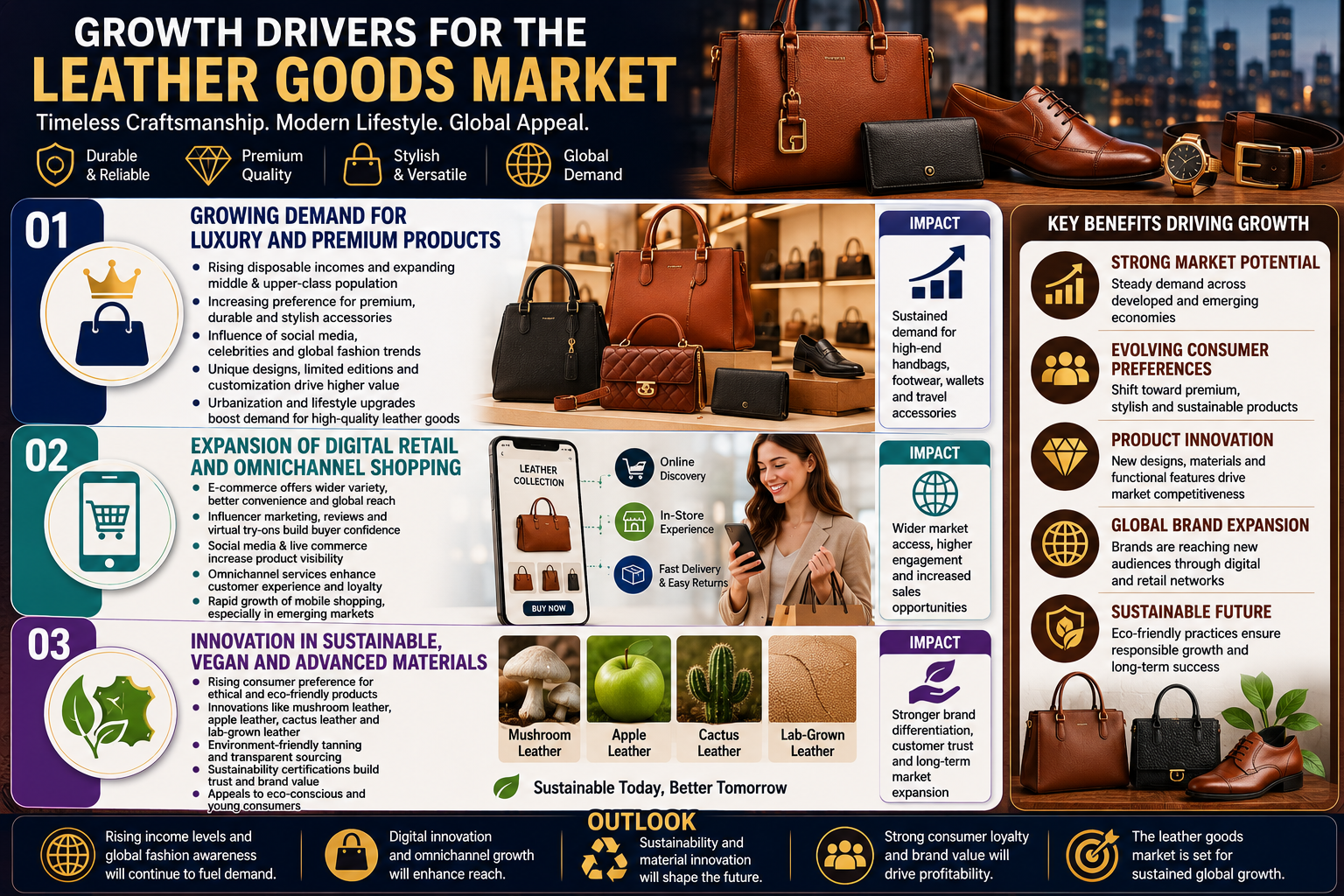
Luxury and Premium Demand: Consumers are increasingly prioritizing high-quality, well-crafted leather goods that convey status and personal style. Social media, celebrity endorsements, and lifestyle trends reinforce demand for luxury handbags, footwear, wallets, and travel accessories. Brands invest in limited collections, unique designs, and customizable options to strengthen engagement and justify premium pricing.
Digital Retail Expansion: E-commerce platforms and omnichannel strategies have transformed purchasing behavior. High-quality visuals, virtual try-ons, customer reviews, influencer promotions, and social media marketplaces enhance brand visibility and encourage confident purchases. Seamless integration of online and offline shopping—including click-and-collect, same-day delivery, and returns—supports higher customer satisfaction and loyalty.
Sustainable Materials Innovation: Environmental awareness drives demand for sustainable and ethically produced leather goods. Innovations include mushroom, apple, cactus, and lab-grown leather alternatives, which minimize chemical usage and reduce waste. Brands adopting green processes and transparent supply chains gain consumer trust and regulatory approval, positioning themselves competitively within a market increasingly defined by sustainability.
Market Challenges
Environmental and Regulatory Pressures: Traditional leather production involves chemicals that can harm ecosystems. Growing scrutiny of animal welfare and stricter regulations on emissions, waste disposal, and water usage increase operational costs. Transitioning to sustainable practices requires investment and adaptation, posing challenges for smaller producers.
Raw Material and Supply Chain Risks: Leather production relies on consistent access to hides and chemicals, which are susceptible to price fluctuations, livestock availability, disease outbreaks, and trade restrictions. Logistics challenges, including port delays and labor shortages, can disrupt production. Maintaining consistent quality is crucial in a fast-moving fashion industry where consumer expectations are high.
Regional Insights
United States: The U.S. market is one of the largest globally, driven by strong brand loyalty, high disposable income, and a vibrant fashion culture. Premium handbags, footwear, wallets, and travel goods are particularly popular. E-commerce, social media, influencer collaborations, and sustainability considerations heavily influence consumer behavior.
Germany: German consumers prioritize precision, durability, and understated design. Demand is strong for premium footwear, structured handbags, briefcases, and small accessories. Sustainability and ethical production are important, and retailers offer extensive options through both brick-and-mortar and e-commerce channels.
China: Rapid urbanization, rising incomes, and fashion consciousness drive demand in China, especially among younger consumers. Digital retail dominates, with platforms such as Tmall, JD.com, and Douyin enabling livestream shopping, social media discovery, and personalized purchasing. Domestic brands are growing alongside international luxury labels, often emphasizing sustainable materials.
Saudi Arabia: Expanding disposable incomes, increased fashion awareness, and Vision 2030 economic diversification fuel market growth. Women’s rising participation in the workforce drives demand for luxury handbags, footwear, and business accessories. High-end malls and e-commerce channels facilitate access to international brands, with sustainability gradually gaining importance.
Recent Developments
Tapestry Inc. (January 2025): Collaboration with Adobe integrates generative AI into design workflows, accelerating product prototyping and customization.
Kering S.A. (November 2024): Introduced conservation commitments focused on land restoration and freshwater sustainability, reinforcing leadership in responsible leather sourcing.
LVMH (May 2024): Partnership with Alibaba incorporates AI solutions into retail and clienteling in China, enhancing personalized engagement and operational efficiency.
Market Segmentation
Products: Footwear, Luggage, Accessories
Materials: Genuine Leather, Synthetic Leather
Price Categories: Premium Products, Mass Products
Distribution Channels: Clothing and Sportswear Retailers, Department Stores, Supermarkets and Hypermarkets, Online Stores, Others
Future Outlook
The global leather goods market is poised for continued growth, driven by the convergence of luxury consumer demand, digital retail expansion, and sustainable material innovation. Brands that embrace omnichannel strategies, eco-conscious production, and cutting-edge design technology are expected to thrive in an increasingly competitive environment.
With the market projected to reach US$617.77 billion by 2034, leather goods remain a cornerstone of the luxury fashion sector, appealing to consumers seeking durability, style, and responsibility in their purchasing choices. Sustainability, personalization, and digital innovation will continue shaping the industry over the next decade, solidifying leather goods as a global benchmark for premium lifestyle products.a
About the Creator
Enjoyed the story? Support the Creator.
Subscribe for free to receive all their stories in your feed.
Comments
There are no comments for this story
Be the first to respond and start the conversation.