
The Global Knee Replacement Market Is Growing as Technology and Aging Populations Drive Demand
Rising cases of osteoarthritis, advancements in robotic-assisted surgery, and increasing demand for active aging are transforming the future of knee replacement procedures worldwide.

Mobility plays a crucial role in maintaining independence, quality of life, and overall well-being. Yet for millions of people worldwide, chronic knee pain caused by arthritis, injuries, and joint degeneration can make even simple daily activities difficult. Walking, climbing stairs, exercising, and performing routine tasks often become painful challenges that gradually reduce a person's quality of life.
Fortunately, advances in orthopedic medicine have made knee replacement surgery one of the most successful and widely performed procedures in modern healthcare. What was once considered a treatment reserved primarily for elderly patients has evolved into a highly effective solution for individuals seeking long-term pain relief and restored mobility.
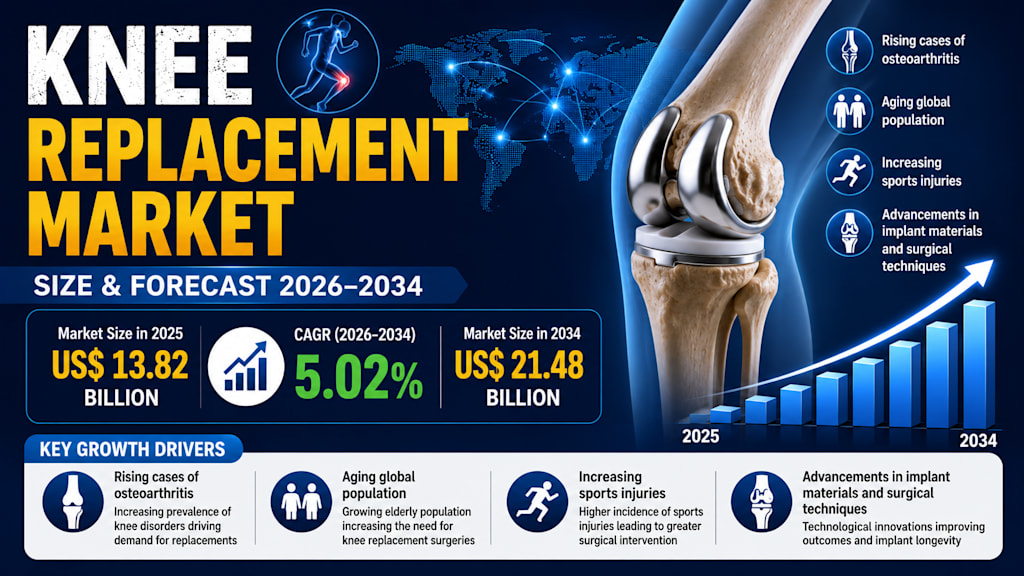
According to Renub Research, the Global Knee Replacement Market is expected to grow from US$ 13.82 billion in 2025 to US$ 21.48 billion by 2034, registering a compound annual growth rate (CAGR) of 5.02% between 2026 and 2034. This growth is being driven by a combination of demographic trends, technological innovation, and increasing patient expectations for healthier and more active lifestyles.
As populations age and healthcare systems continue to adopt advanced surgical technologies, knee replacement procedures are becoming increasingly important in addressing one of the world's most common musculoskeletal challenges.
Understanding Knee Replacement Surgery
Knee replacement, also known as knee arthroplasty, is a surgical procedure designed to replace damaged portions of the knee joint with artificial implants. These implants are typically made from durable materials such as metal alloys, medical-grade plastics, and ceramics.
The primary goal of knee replacement surgery is to relieve chronic pain, restore mobility, and improve overall joint function. The procedure is most commonly performed on patients suffering from osteoarthritis, rheumatoid arthritis, severe knee injuries, or other degenerative joint conditions that no longer respond to conservative treatments.
Depending on the extent of joint damage, surgeons may perform either a partial knee replacement or a total knee replacement. Partial procedures replace only the damaged portion of the joint, while total knee replacements involve resurfacing the entire knee structure.
Modern advancements in implant design and surgical techniques have dramatically improved outcomes, allowing patients to return to active lifestyles with reduced pain and enhanced mobility.
Osteoarthritis Is Driving Global Demand
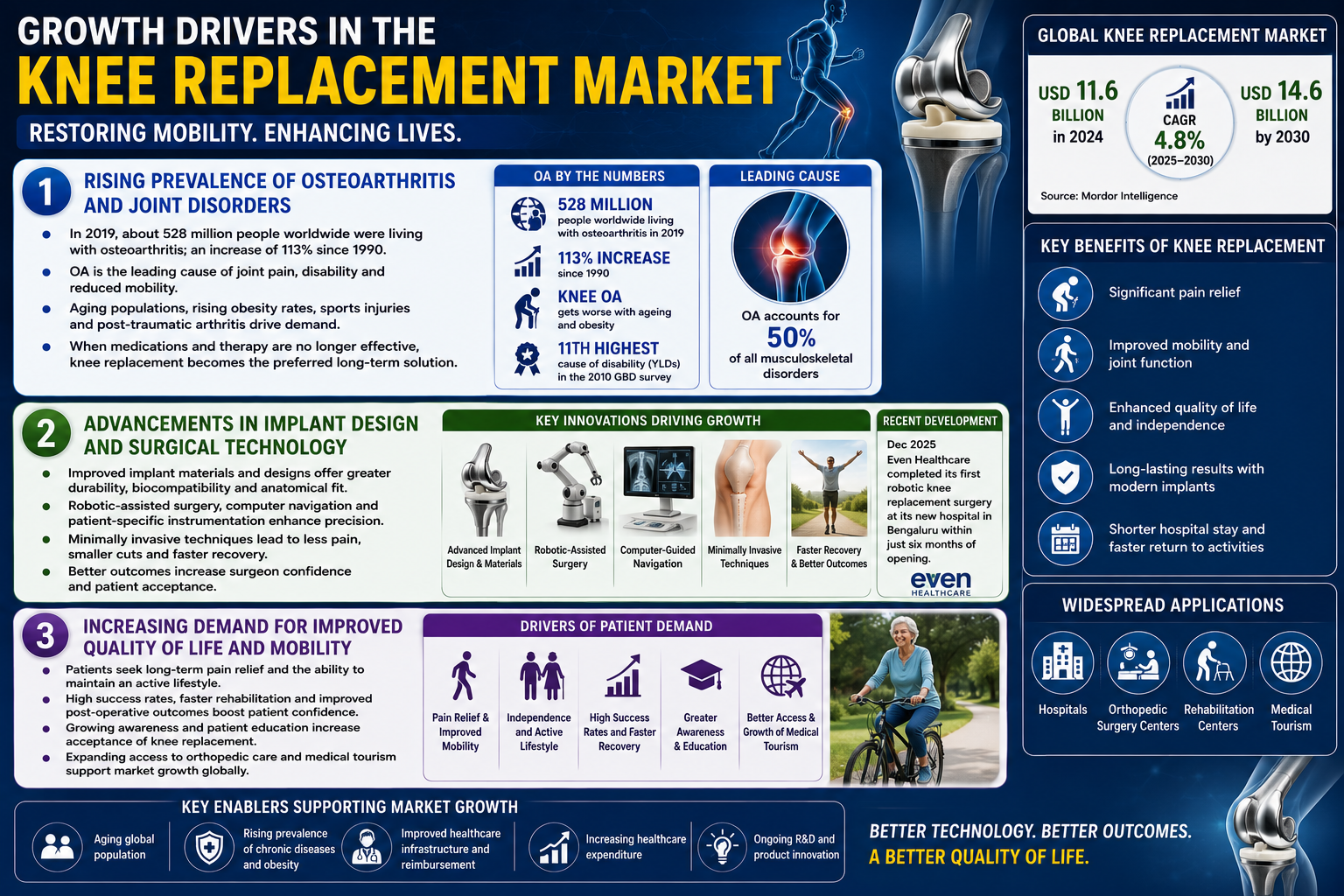
One of the most significant factors fueling market growth is the rising prevalence of osteoarthritis.
Osteoarthritis is the most common form of arthritis and occurs when the protective cartilage cushioning the ends of bones gradually wears away. As cartilage deteriorates, joints become painful, stiff, and inflamed, significantly limiting mobility.
The condition affects hundreds of millions of people worldwide and has become one of the leading causes of disability among older adults.
Several factors contribute to the growing incidence of osteoarthritis. Aging remains the most important driver, as cartilage naturally deteriorates over time. However, increasing obesity rates, sedentary lifestyles, and sports-related injuries are also contributing to rising case numbers.
As osteoarthritis progresses, many patients eventually reach a stage where medications, physical therapy, and lifestyle modifications are no longer sufficient. For these individuals, knee replacement surgery often becomes the most effective long-term solution.
The growing burden of osteoarthritis is expected to remain one of the strongest drivers of market expansion throughout the coming decade.
Aging Populations Are Reshaping Healthcare Needs
Population aging is transforming healthcare systems around the world.
People are living longer than ever before, creating new challenges related to chronic diseases and age-related conditions. While increased life expectancy is a positive development, it also means that more individuals are experiencing joint degeneration and mobility limitations.
Older adults increasingly want to maintain active lifestyles well into retirement. Many continue participating in recreational activities, travel, exercise programs, and social engagements that require strong physical mobility.
This shift in expectations is influencing treatment decisions. Rather than simply managing symptoms, patients increasingly seek solutions that restore function and independence.
Knee replacement surgery aligns perfectly with these goals by offering long-term pain relief and improved quality of life.
As the global population continues to age, demand for orthopedic procedures is expected to rise steadily.
Obesity and Lifestyle Factors Contribute to Joint Damage
Beyond aging, lifestyle-related factors are significantly contributing to the growth of the knee replacement market.
Obesity places substantial stress on knee joints, accelerating cartilage wear and increasing the risk of osteoarthritis. Even modest increases in body weight can create considerable pressure on weight-bearing joints over time.
At the same time, sports injuries and physical trauma continue to affect younger populations. High-impact activities, accidents, and repetitive stress injuries can cause long-term joint damage that eventually requires surgical intervention.
These trends have broadened the patient population for knee replacement procedures, extending demand beyond traditional elderly demographics.
Healthcare providers are increasingly seeing younger and more active patients seeking treatment to restore mobility and maintain quality of life.
Technology Is Transforming Orthopedic Surgery
Technological innovation has become one of the most exciting aspects of the knee replacement industry.
Modern surgical procedures are significantly different from those performed just a decade ago. Advances in implant materials, surgical planning software, robotics, and navigation systems have transformed patient outcomes.
Today's implants are designed to better mimic natural joint movement while offering greater durability and longevity. Improved biocompatibility reduces complications and enhances long-term performance.
At the same time, computer-assisted navigation systems allow surgeons to achieve greater precision during procedures. Accurate implant positioning is critical because even minor alignment errors can affect function and longevity.
Robotic-assisted surgery has emerged as one of the most important innovations in orthopedic care. These systems provide real-time guidance, helping surgeons perform procedures with exceptional accuracy.
As hospitals continue investing in advanced technologies, patients are benefiting from safer procedures and improved outcomes.
Minimally Invasive Approaches Improve Recovery
One of the major reasons knee replacement surgery has become increasingly attractive is the evolution of minimally invasive techniques.
Traditional knee replacement procedures often involved larger incisions and extended recovery periods. While effective, recovery could be lengthy and physically demanding.
Modern surgical approaches focus on minimizing tissue disruption whenever possible.
Smaller incisions, advanced surgical instruments, and refined techniques help reduce blood loss, postoperative pain, and hospital stays. Many patients now experience faster rehabilitation and earlier returns to daily activities.
Enhanced recovery programs have also improved the overall patient experience by combining optimized surgical methods, pain management strategies, and rehabilitation protocols.
As recovery outcomes continue to improve, more patients are willing to consider surgical intervention earlier in the progression of joint disease.
Partial Knee Replacement Gains Popularity
Partial knee replacement has become an increasingly attractive option for selected patients.
Unlike total knee replacement, which replaces the entire joint, partial procedures target only the damaged compartment of the knee. This allows surgeons to preserve healthy bone, cartilage, and ligaments whenever possible.
Patients undergoing partial knee replacement often experience shorter hospital stays, reduced postoperative discomfort, and quicker recovery times.
Many also report that the knee feels more natural following surgery because a larger portion of the original joint structure remains intact.
Advances in imaging technologies and robotic-assisted surgery have improved the precision of partial procedures, expanding their suitability for a wider range of patients.
As demand for less invasive treatments continues to grow, partial knee replacement is expected to remain an important market segment.
Revision Procedures Create a Growing Opportunity
While modern implants are highly durable, they do not last forever.
As the number of primary knee replacement surgeries increases globally, the need for revision procedures is also growing. Revision surgery involves replacing or repairing an existing implant due to wear, loosening, infection, or mechanical failure.
These procedures are generally more complex than primary surgeries and require specialized implants and surgical expertise.
Longer life expectancy means many patients are living long enough to require revision procedures later in life. This trend is creating a significant opportunity for manufacturers specializing in advanced orthopedic solutions.
Improved implant materials and surgical techniques are helping reduce revision rates, but demand for these procedures is expected to increase as overall surgery volumes rise.
Hospitals Remain the Largest Treatment Centers
Hospitals continue to dominate the knee replacement market due to their comprehensive capabilities and access to advanced medical technologies.
Large hospitals often perform high volumes of orthopedic procedures and maintain specialized surgical teams, imaging facilities, and rehabilitation programs.
Many institutions are also adopting robotic-assisted systems and computer-guided navigation platforms that support improved surgical precision.
Strong reimbursement structures and patient trust further reinforce the role of hospitals as primary treatment providers.
However, the healthcare landscape is evolving.
Orthopedic Clinics Are Expanding Their Role
Specialized orthopedic clinics are emerging as important providers of knee replacement procedures.
These facilities often focus exclusively on musculoskeletal care and can offer shorter waiting times, personalized treatment plans, and streamlined patient experiences.
Advances in outpatient surgery and enhanced recovery protocols have enabled certain knee replacement procedures to be performed safely outside traditional hospital settings.
Patients increasingly appreciate the convenience and specialized expertise offered by orthopedic clinics.
As healthcare systems emphasize efficiency and patient-centered care, orthopedic clinics are expected to play an increasingly important role in the market.
Regional Markets Continue to Expand
United States
The United States remains the largest and most technologically advanced knee replacement market globally. High rates of osteoarthritis, obesity, and sports injuries contribute to strong procedure volumes.
Rapid adoption of robotic-assisted surgery and patient-specific implants continues to support market growth.
United Kingdom
The UK benefits from a well-established healthcare system and growing demand for orthopedic treatments among aging populations.
While public healthcare services provide widespread access, private providers are increasingly supporting market expansion by addressing long waiting lists.
China
China is one of the fastest-growing markets due to its large population, aging demographics, healthcare reforms, and expanding access to advanced surgical care.
Domestic and international manufacturers are actively investing in the country's orthopedic sector.
Brazil and UAE
Emerging markets such as Brazil and the United Arab Emirates are witnessing increasing demand as healthcare infrastructure improves and patient awareness grows.
Medical tourism and investments in specialized orthopedic facilities are further supporting growth.
The Future of Knee Replacement Surgery
The future of knee replacement surgery is likely to be shaped by continued innovation.
Artificial intelligence, robotic-assisted platforms, personalized implants, and advanced biomaterials are expected to improve surgical precision and patient outcomes even further.
Researchers are also exploring smart implants capable of monitoring performance and providing real-time data to healthcare providers.
Advancements in regenerative medicine may eventually complement traditional replacement procedures by helping preserve natural joint function for longer periods.
As technology continues to evolve, patients can expect safer surgeries, faster recovery times, and increasingly personalized treatment options.
Final Thoughts
The global knee replacement market is entering a period of steady and sustainable growth driven by demographic shifts, rising rates of osteoarthritis, and ongoing technological innovation.
With the market projected to expand from US$ 13.82 billion in 2025 to US$ 21.48 billion by 2034, knee replacement procedures will continue to play a vital role in improving mobility and quality of life for millions of people worldwide.
While challenges such as surgical costs, accessibility barriers, and postoperative complications remain, advancements in implant design, robotic-assisted surgery, and minimally invasive techniques are helping address these concerns.
For patients seeking relief from chronic joint pain and healthcare providers focused on improving outcomes, the future of knee replacement surgery appears increasingly promising. As medical technology advances and access to orthopedic care expands, more individuals will have the opportunity to regain mobility, independence, and a better quality of life.
About the Creator
Enjoyed the story? Support the Creator.
Subscribe for free to receive all their stories in your feed.
Comments
There are no comments for this story
Be the first to respond and start the conversation.