
The Global E-Cigarette and Vape Market Is Entering a New Era of Growth as Consumers Seek Alternatives to Traditional Smoking
Rising demand for smokeless nicotine products, technological innovation, and changing consumer preferences are expected to propel the global e-cigarette and vape market to nearly US$ 278 billion by 2033.

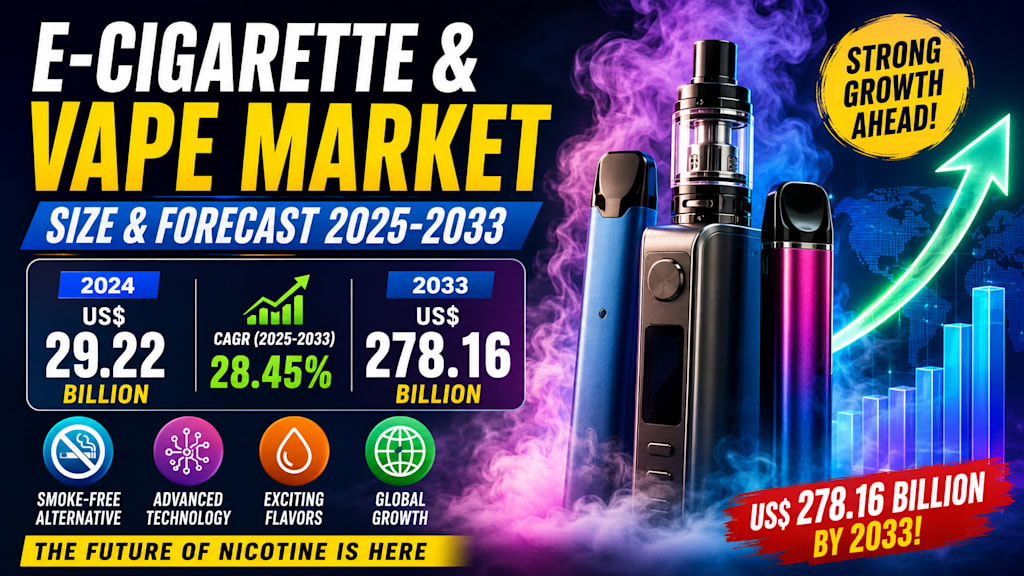
Global E-Cigarette and Vape Market Size and Forecast 2025–2033
The global e-cigarette and vape market is undergoing a remarkable transformation as consumers increasingly shift away from traditional tobacco products in favor of modern nicotine delivery systems. According to Renub Research, the global e-cigarette and vape market is projected to grow from US$ 29.22 billion in 2024 to US$ 278.16 billion by 2033, expanding at an impressive CAGR of 28.45% during 2025–2033
This exceptional growth reflects changing consumer attitudes toward smoking, rising awareness about harm reduction strategies, and continuous technological advancements within the vaping industry. As governments, healthcare professionals, and consumers continue debating the role of vaping products in public health, the market remains one of the fastest-growing segments within the broader nicotine and tobacco alternatives industry.
Understanding the E-Cigarette and Vape Industry
E-cigarettes and vape devices are battery-powered electronic products designed to heat and vaporize a liquid solution commonly known as e-liquid or vape juice. Unlike traditional cigarettes, these devices do not burn tobacco. Instead, they generate an aerosol that users inhale, delivering nicotine, flavorings, and other ingredients without combustion.
Most vaping devices consist of three primary components:
A rechargeable or disposable battery
A heating element or coil
A cartridge, pod, or tank containing e-liquid
The absence of tobacco combustion significantly reduces exposure to many harmful chemicals typically associated with conventional cigarette smoke. As a result, many adult smokers view vaping products as a potentially less harmful alternative.
Over the past decade, vaping has evolved from a niche category into a mainstream global industry. Markets across North America and Europe have led adoption rates, while emerging economies in Asia-Pacific and the Middle East are increasingly contributing to market expansion.
Rising Demand for Smoking Alternatives Drives Growth
One of the strongest factors fueling market growth is the increasing demand for alternatives to traditional smoking.
Health-conscious consumers are becoming more aware of the risks associated with combustible tobacco products. Many smokers seeking to reduce tobacco consumption or quit entirely are turning toward vaping devices as part of their transition strategy.
Public discussions surrounding tobacco harm reduction have further strengthened interest in e-cigarettes. While scientific opinions regarding long-term effects continue to evolve, many adult consumers perceive vaping as a cleaner and less disruptive option compared to smoking conventional cigarettes.
The launch of innovative smoking cessation alternatives in countries such as the United Kingdom demonstrates how manufacturers are positioning vaping products within broader harm reduction initiatives. As healthcare systems continue emphasizing reduced tobacco consumption, demand for smoke-free nicotine products is expected to remain strong.
Product Innovation Continues to Reshape Consumer Preferences
Innovation remains at the heart of the e-cigarette and vape market.
Manufacturers are investing heavily in research and development to create devices that offer enhanced performance, improved safety features, longer battery life, and superior user experiences. Today's vape products are significantly more sophisticated than earlier generations.
Several trends are influencing purchasing behavior:
Compact and portable device designs
Extended battery performance
Enhanced vapor production
Adjustable nicotine strengths
Smart device connectivity
Leak-resistant pod systems
Flavor innovation has become another major growth catalyst. Consumers can choose from a vast selection of flavor profiles ranging from traditional tobacco and menthol to fruit, dessert, beverage, and exotic combinations.
In 2025, several manufacturers introduced new premium flavor portfolios targeting adult consumers seeking personalized vaping experiences. These developments highlight the industry's commitment to product differentiation and customer retention.
Growing Social Acceptance Supports Market Expansion
The social perception of vaping has changed considerably in many parts of the world.
For a growing number of consumers, vaping is viewed as a modern lifestyle choice rather than simply a smoking substitute. Reduced odor, greater convenience, and sleek device aesthetics have improved public acceptance compared with traditional cigarettes.
Distribution channels have also expanded significantly. Consumers can now purchase vaping products through:
Convenience stores
Online retail platforms
Specialty vape shops
Tobacconist stores
Selected pharmacies and drug stores
Greater accessibility has helped manufacturers reach broader customer bases and strengthen brand awareness.
In the United States, e-cigarettes remain one of the most widely used nicotine products among adult consumers. Although concerns regarding youth vaping persist, adult demand continues to support market growth.
Regulatory Challenges Remain a Major Industry Concern
Despite strong growth prospects, regulatory uncertainty continues to pose challenges for manufacturers and distributors.
Governments worldwide are implementing stricter rules concerning:
Product approvals
Advertising restrictions
Flavor limitations
Packaging requirements
Age verification systems
Import and export regulations
Several countries have introduced partial or complete restrictions on vaping products due to concerns surrounding youth nicotine consumption and public health implications.
The regulatory landscape varies considerably between regions, creating operational complexity for multinational companies. Businesses must continuously adapt to evolving legal requirements while maintaining product compliance and market competitiveness.
Ongoing Health Concerns Influence Consumer Confidence
Another challenge facing the industry is ongoing debate regarding long-term health effects.
Although many studies suggest vaping may expose users to fewer harmful substances than combustible tobacco products, healthcare organizations continue emphasizing the need for additional long-term research.
Media coverage surrounding vaping-related illnesses and nicotine addiction has also influenced public perception. Consumer education and transparent scientific communication will play a critical role in sustaining long-term market growth.
Manufacturers increasingly recognize the importance of quality control, ingredient transparency, and product safety standards to maintain consumer trust.
Disposable Vape Segment Gains Significant Popularity
Disposable vape devices have become one of the fastest-growing product categories globally.
Their popularity stems from several advantages:
Easy to use
No maintenance requirements
Affordable pricing
Wide flavor selection
Portable design
These devices are particularly attractive to first-time users and occasional vapers.
However, environmental concerns related to single-use electronics have prompted discussions regarding sustainability. Regulators and manufacturers are exploring recycling initiatives and environmentally responsible alternatives to address waste management challenges.
Rechargeable Devices Appeal to Long-Term Users
Rechargeable vaping systems continue attracting experienced consumers seeking better performance and long-term cost savings.
Unlike disposable devices, rechargeable products offer:
Refillable tanks and pods
Replaceable coils
Adjustable power settings
Enhanced battery life
Reduced environmental impact
As sustainability becomes increasingly important to consumers, rechargeable systems are expected to capture a larger share of future market growth.
Open-System and Closed-System Devices Serve Different Consumer Needs
The market is divided between open and closed vaping systems.
Open-system devices allow users to refill e-liquids manually and customize their vaping experience. These products appeal primarily to experienced users who prefer flexibility regarding flavors, nicotine concentrations, and device modifications.
Closed-system devices use pre-filled cartridges or pods and emphasize simplicity and convenience. Their user-friendly design makes them especially attractive to beginners and former smokers transitioning to vaping.
The success of pod-based systems has demonstrated strong consumer demand for hassle-free nicotine delivery solutions.
Distribution Channels Continue Expanding Globally
Retail distribution plays a critical role in market development.
Convenience stores remain an important sales channel due to their accessibility and strong consumer foot traffic. These outlets often drive impulse purchases and improve product visibility.
Tobacconist stores continue serving consumers seeking premium brands and expert product guidance. Their specialized knowledge helps customers navigate an increasingly complex product landscape.
Drug stores and pharmacies have also emerged as influential distribution channels in several countries. Products sold through these outlets often benefit from enhanced consumer trust and perceived legitimacy.
Online retail platforms continue expanding rapidly, offering consumers broader product selections, competitive pricing, and convenient purchasing experiences.
Regional Market Analysis
United States
The United States remains one of the world's largest vaping markets. Strong consumer demand, product innovation, and growing interest in tobacco alternatives support continued growth. Regulatory oversight from federal agencies remains strict, but adult adoption continues to drive industry expansion.
Germany
Germany represents one of Europe's most established vaping markets. Consumers increasingly favor refillable systems and nicotine-free options. Strong regulatory frameworks and growing wellness trends continue supporting market development.
India
India's market remains constrained due to the national ban on e-cigarette production, import, and sales introduced in 2019. Although unofficial demand persists, regulatory barriers significantly limit legal market opportunities.
Brazil
Brazil maintains restrictive regulations prohibiting the sale and promotion of vaping products. While underground demand exists, the country's regulatory environment remains one of the most challenging globally.
Saudi Arabia
Saudi Arabia has emerged as a promising growth market following the legalization of vaping products under regulated conditions. Rising consumer awareness and changing social attitudes are supporting increased adoption across the country.
Competitive Landscape
Competition within the e-cigarette and vape industry remains intense as established tobacco companies, independent vaping brands, and technology-focused manufacturers compete for market share.
Major companies continue investing in product innovation, regulatory compliance, strategic acquisitions, and geographic expansion to strengthen their positions.
Key players include:
Reynolds American Inc.
Imperial Brands
JUUL Labs, Inc.
Altria Group, Inc.
Japan Tobacco Inc.
Philip Morris International
International Vapor Group
British American Tobacco
Nicquid
Shenzhen IVPS Technology Co., Ltd.
10 Recent Industry Developments
1. Philip Morris International
Expanded smoke-free product investments and accelerated global rollout of reduced-risk nicotine portfolios.
2. British American Tobacco
Enhanced its Vuse vaping platform through new product launches and digital engagement initiatives.
3. Japan Tobacco Inc.
Strengthened international distribution networks for next-generation nicotine products.
4. Altria Group
Continued strategic investments focused on alternative nicotine technologies and adult consumer segments.
5. Imperial Brands
Expanded blu vaping products across multiple international markets while improving device technology.
6. JUUL Labs
Focused on regulatory compliance initiatives and product portfolio optimization in key markets.
7. Reynolds American
Advanced innovation programs designed to support smoke-free product growth strategies.
8. Shenzhen IVPS Technology (SMOK)
Introduced next-generation vaping devices featuring improved battery performance and customization options.
9. International Vapor Group
Expanded product availability through specialty retail partnerships and online channels.
10. Nicquid
Introduced new premium e-liquid formulations responding to changing consumer flavor preferences.
Future Outlook
The future of the global e-cigarette and vape market appears highly promising despite regulatory and public health challenges. Consumer demand for smoke-free alternatives, advancements in vaping technology, expanding retail distribution, and increasing acceptance of harm reduction strategies will continue shaping industry growth.
Manufacturers that prioritize innovation, compliance, sustainability, and consumer education are likely to emerge as long-term winners in this rapidly evolving marketplace.
With the market projected to approach US$ 278.16 billion by 2033, the vaping industry is expected to remain a major force within the global nicotine and consumer wellness landscape for years to come.
Final Thoughts
The global e-cigarette and vape market stands at a pivotal moment. While regulators and health experts continue evaluating the long-term implications of vaping, consumers are increasingly embracing smoke-free alternatives that offer convenience, customization, and potentially reduced harm compared with traditional cigarettes.
As technology evolves and market participants adapt to changing regulations, the sector is positioned for extraordinary growth through 2033. Companies that successfully balance innovation with responsibility will shape the next chapter of this rapidly expanding global industry.
About the Creator
Enjoyed the story? Support the Creator.
Subscribe for free to receive all their stories in your feed.
Comments
There are no comments for this story
Be the first to respond and start the conversation.