
The Global Alcoholic Beverage Market Is Evolving Through Premiumization and Consumer Innovation
Rising Demand for Premium Drinks, Expanding Social Culture, and Product Innovation Are Reshaping the Future of the Alcohol Industry

Alcoholic beverages have been part of human culture for thousands of years. From celebratory toasts and festive gatherings to fine dining experiences and social occasions, alcoholic drinks continue to play an important role in societies across the globe. Today, however, the industry is undergoing a significant transformation driven by changing consumer preferences, premiumization, innovation, and evolving lifestyles.
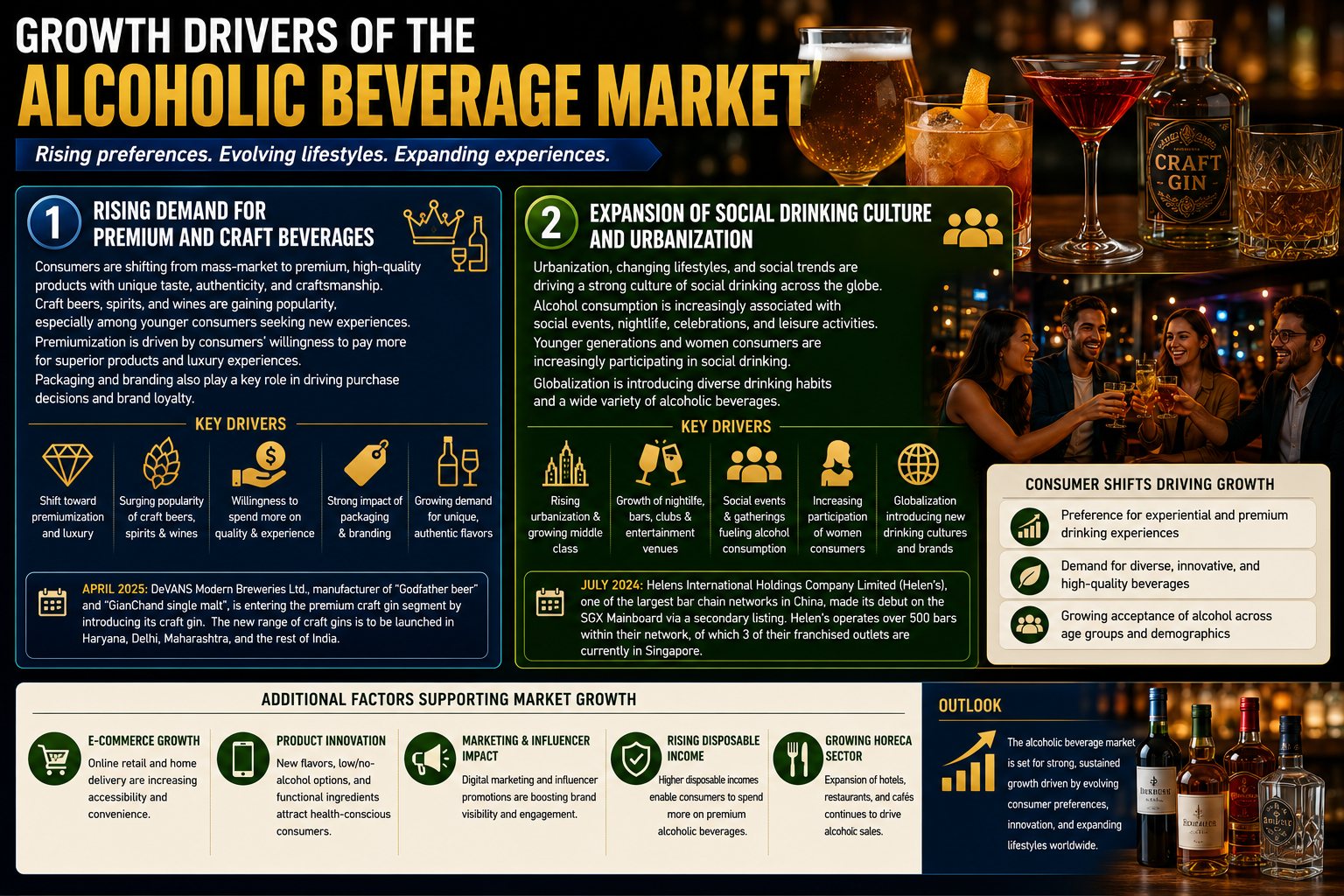
Consumers are no longer simply purchasing alcoholic beverages based on availability or tradition. Instead, they are increasingly seeking unique flavors, premium experiences, authentic craftsmanship, and products that align with their personal preferences. This shift is encouraging manufacturers to innovate rapidly while expanding product portfolios to meet the demands of a diverse and evolving customer base.
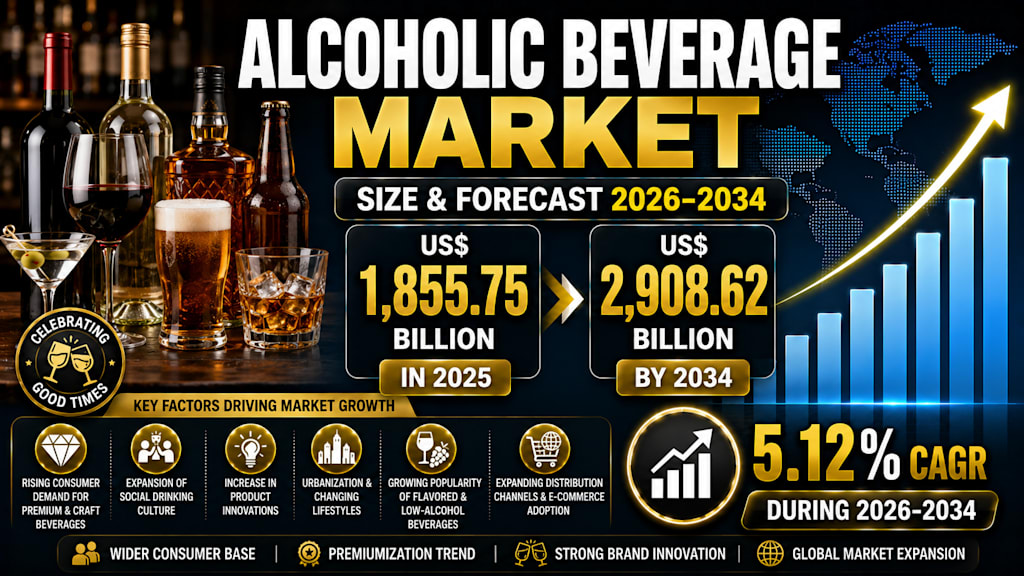
According to Renub Research, the Alcoholic Beverage Market is expected to grow from US$ 1,855.75 billion in 2025 to US$ 2,908.62 billion by 2034, expanding at a compound annual growth rate (CAGR) of 5.12% from 2026 to 2034. Rising demand for premium and craft beverages, expanding social drinking culture, urbanization, and continuous product innovation are among the key factors driving market growth worldwide.
As consumers continue seeking new experiences and brands adapt to changing expectations, the alcoholic beverage industry is entering one of its most dynamic periods of growth and transformation.
Alcoholic Beverages Continue to Hold a Unique Place in Society
Alcoholic beverages include products such as beer, wine, whiskey, vodka, rum, gin, tequila, and numerous other fermented or distilled drinks that contain ethanol.
These beverages are deeply connected to social traditions, celebrations, cultural events, hospitality experiences, and recreational activities around the world.
While consumption patterns vary significantly between countries and cultures, alcoholic beverages remain an important part of the global food and beverage sector.
Their popularity stems from more than taste alone. For many consumers, alcoholic beverages are associated with relaxation, social interaction, entertainment, and memorable experiences.
As global lifestyles continue evolving, the industry has adapted by introducing products that cater to changing tastes, demographics, and consumption habits.
This flexibility has helped the market remain resilient while creating new opportunities for growth.
Premiumization Is Transforming Consumer Spending
One of the most significant trends shaping the alcoholic beverage industry is premiumization.
Consumers are increasingly moving away from mass-market products and seeking higher-quality beverages that offer superior taste, craftsmanship, and exclusivity.
Premium beers, aged whiskies, small-batch spirits, luxury wines, and artisanal cocktails are experiencing growing demand across multiple regions.
Younger consumers, particularly millennials and Generation Z adults of legal drinking age, often prioritize experiences over quantity. Rather than consuming larger volumes of alcohol, many prefer premium products that offer unique flavor profiles and stronger brand identities.
Manufacturers are responding by investing heavily in premium product development, packaging innovation, and storytelling that emphasizes authenticity and heritage.
This trend is helping increase profit margins while driving overall market value growth.
As disposable incomes continue rising globally, premiumization is expected to remain one of the industry's strongest growth drivers.
Craft Beverages Are Gaining Popularity
The craft beverage movement has significantly reshaped the global alcoholic beverage landscape.
Consumers increasingly seek products that stand out from traditional offerings and provide distinctive experiences.
Craft breweries, boutique distilleries, and small-scale wineries have successfully capitalized on this demand by introducing innovative products with unique ingredients, production techniques, and local character.
Craft beer remains one of the most influential segments within this movement.
Independent brewers continue experimenting with new flavors, brewing styles, and ingredients that appeal to adventurous consumers.
Similarly, craft spirits such as artisanal gin, small-batch whiskey, and handcrafted vodka are gaining popularity among consumers seeking premium alternatives.
The growing appreciation for authenticity, creativity, and local production continues supporting expansion within the craft segment.
Social Drinking Culture Continues to Expand
Social interaction remains a fundamental driver of alcoholic beverage consumption.
Bars, restaurants, clubs, festivals, sporting events, weddings, and celebrations all contribute significantly to market demand.
Urbanization has played a major role in strengthening social drinking culture.
As cities continue growing, consumers gain greater access to hospitality venues and entertainment experiences that incorporate alcoholic beverages.
The expansion of nightlife industries across many regions has further increased opportunities for beverage consumption.
Globalization has also introduced consumers to new drinking traditions, international brands, and diverse beverage categories.
These influences continue shaping consumer preferences and encouraging experimentation with different products.
As urban populations expand and social experiences evolve, social drinking culture is expected to remain an important contributor to market growth.
Product Innovation Is Driving Industry Transformation
Innovation has become essential for maintaining competitiveness within the alcoholic beverage market.
Manufacturers continuously introduce new products, flavors, packaging formats, and consumption experiences to attract consumers and differentiate themselves from competitors.
Flavored alcoholic beverages, ready-to-drink cocktails, canned spirits, hard seltzers, and low-calorie alternatives are examples of categories that have gained significant popularity in recent years.
Packaging innovation is also playing a critical role.
Manufacturers are increasingly utilizing sustainable materials, lightweight packaging, and convenient single-serve formats that align with consumer expectations.
Advances in consumer analytics and market research allow companies to better understand emerging trends and develop products tailored to specific audience segments.
As consumer preferences continue evolving, innovation will remain a crucial driver of industry growth.
Beer Remains the Largest Segment
Beer continues to represent one of the largest categories within the alcoholic beverage market.
Its widespread popularity stems from affordability, accessibility, diverse flavor options, and relatively moderate alcohol content.
Consumers can choose from a broad variety of beer styles, including lagers, ales, stouts, wheat beers, IPAs, and craft offerings.
The emergence of craft breweries has revitalized the beer market by introducing innovative products and attracting younger consumers interested in experimentation.
Flavored beers and low-alcohol varieties are also gaining traction among health-conscious consumers seeking balanced drinking experiences.
The continued expansion of pubs, bars, and social venues further supports beer consumption worldwide.
As product diversity increases, the beer segment is expected to maintain its dominant position.
Distilled Spirits Are Experiencing Strong Growth
The distilled spirits category has become one of the fastest-growing segments within the alcoholic beverage industry.
Whiskey, vodka, gin, rum, tequila, and other premium spirits continue attracting consumers seeking sophisticated drinking experiences.
The popularity of cocktail culture has played a major role in driving spirits consumption.
Consumers increasingly enjoy craft cocktails at bars, restaurants, and social events, creating strong demand for high-quality spirits.
Home bartending has also emerged as a significant trend, encouraging consumers to purchase premium spirits for personal use.
Manufacturers continue introducing flavored, organic, and limited-edition products designed to appeal to evolving consumer tastes.
The premiumization trend is particularly strong within the spirits category, supporting long-term growth opportunities.
Low- and No-Alcohol Alternatives Are Reshaping the Industry
While traditional alcoholic beverages remain highly popular, health-conscious consumers are increasingly exploring alternatives.
Low-alcohol and non-alcoholic beverages have become one of the fastest-growing categories within the broader beverage industry.
Consumers seeking moderation, wellness, and balanced lifestyles are driving demand for these products.
Manufacturers are responding by developing sophisticated non-alcoholic beers, wines, spirits, and ready-to-drink beverages that replicate traditional flavor profiles.
These products appeal not only to abstainers but also to consumers who occasionally choose alcohol-free options.
The growth of wellness culture suggests that this category will continue expanding throughout the forecast period.
Glass Bottles Continue to Dominate Premium Packaging
Packaging plays an important role in consumer purchasing decisions.
Glass bottles remain the preferred packaging format for premium wines, spirits, and specialty beers because they preserve product quality and convey a sense of sophistication.
Consumers often associate glass packaging with authenticity, craftsmanship, and premium experiences.
Additionally, glass is highly recyclable and aligns with growing sustainability initiatives.
Manufacturers continue introducing innovative bottle designs that enhance brand recognition and visual appeal.
Despite higher production and transportation costs, glass packaging remains highly valued across premium beverage categories.
Online Retail Is Changing Consumer Purchasing Habits
Digital commerce is transforming how consumers purchase alcoholic beverages.
Online platforms provide convenient access to a wide range of products, allowing consumers to compare brands, read reviews, and discover new offerings.
Home delivery services have become increasingly popular, particularly among urban consumers.
The adoption of digital retail channels accelerated significantly in recent years and continues to influence purchasing behavior.
Manufacturers and retailers are investing heavily in e-commerce capabilities to capture growing online demand.
As digital shopping becomes more widespread, online retail will continue playing an increasingly important role in beverage distribution.
Challenges Facing the Industry
Despite strong growth prospects, the alcoholic beverage market faces several challenges.
Regulatory Restrictions
Governments worldwide maintain strict regulations governing alcohol production, marketing, distribution, and consumption.
Excise taxes, advertising restrictions, licensing requirements, and age-verification rules can significantly impact market dynamics.
International companies must navigate complex regulatory environments across multiple jurisdictions.
Growing Health Awareness
Consumers are becoming increasingly aware of the potential health risks associated with excessive alcohol consumption.
Concerns regarding obesity, liver disease, mental health, and overall wellness are encouraging some consumers to reduce alcohol intake.
This trend has contributed to growing demand for low-alcohol and non-alcoholic alternatives.
Manufacturers must balance traditional product offerings with evolving consumer health preferences.
Regional Markets Continue to Drive Growth
United States
The United States remains one of the largest alcoholic beverage markets globally, supported by strong consumer spending, premiumization trends, and innovation in ready-to-drink products.
United Kingdom
The UK market benefits from strong pub culture, growing interest in premium beverages, and increasing demand for low- and no-alcohol alternatives.
India
India represents one of the fastest-growing alcoholic beverage markets due to urbanization, rising disposable incomes, changing social attitudes, and a rapidly expanding middle class.
Saudi Arabia
Although traditional alcoholic beverages remain restricted, demand for premium non-alcoholic alternatives continues growing as consumers seek sophisticated beverage experiences within legal frameworks.
Final Thoughts
The alcoholic beverage industry is undergoing a period of significant evolution. Premiumization, product innovation, changing lifestyles, and expanding global consumer demand are creating new opportunities across virtually every segment of the market.
According to Renub Research, the Alcoholic Beverage Market is projected to grow from US$ 1,855.75 billion in 2025 to US$ 2,908.62 billion by 2034, highlighting the industry's strong long-term potential.
As consumers continue seeking authenticity, quality, convenience, and personalized experiences, manufacturers will need to innovate continuously to remain competitive.
The future of alcoholic beverages is no longer defined solely by tradition. It is increasingly shaped by creativity, premium experiences, sustainability, and evolving consumer expectations that continue to redefine the global beverage landscape.
About the Creator
Enjoyed the story? Support the Creator.
Subscribe for free to receive all their stories in your feed.
Comments
There are no comments for this story
Be the first to respond and start the conversation.