
The Future of Online Payments: Why the Global E-Commerce Payment Market Is Entering a New Era
From Digital Wallets to Buy Now, Pay Later, the Way the World Pays Online Is Changing Faster Than Ever

Online shopping has transformed from a convenience into a fundamental part of everyday life. Whether consumers are ordering groceries, streaming entertainment, purchasing electronics, or booking travel experiences, digital commerce has become deeply integrated into the modern economy. Yet behind every successful online purchase lies an often-overlooked component: the payment system.
Today, the global e-commerce payment industry is undergoing one of the most significant transformations in its history. Advances in mobile technology, changing consumer expectations, rising internet penetration, and innovations in financial technology are reshaping how transactions occur across the world.
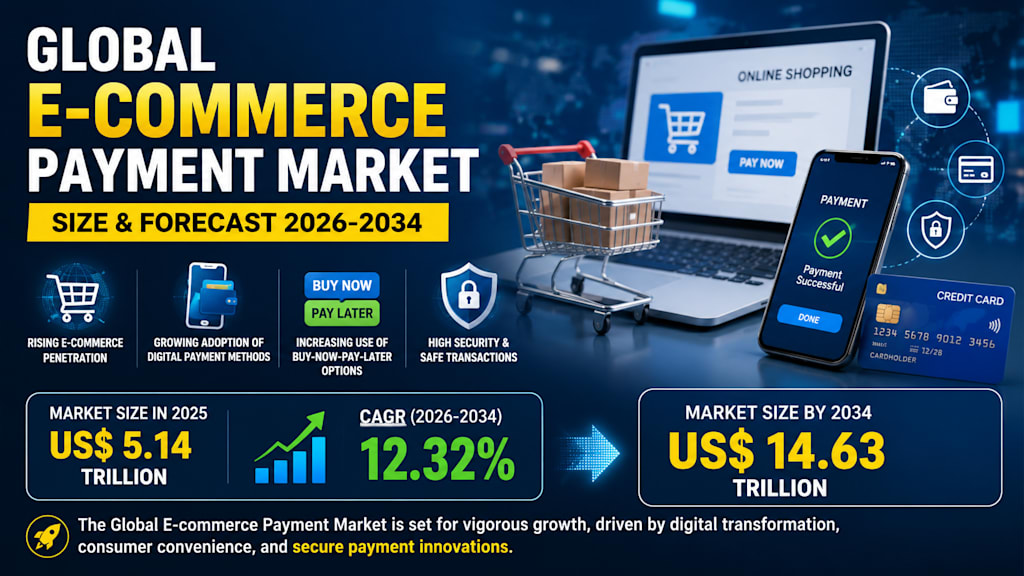
According to Renub Research, the Global E-commerce Payment Market is expected to grow from approximately US$5.14 trillion in 2025 to an impressive US$14.63 trillion by 2034, representing a compound annual growth rate (CAGR) of 12.32%. These numbers highlight not only the rapid growth of online commerce but also the increasing importance of secure, seamless, and intelligent payment solutions in the digital economy.
The story behind this growth is about far more than money changing hands. It is a story of technology, trust, convenience, and evolving consumer behavior.
Why Online Payments Have Become Essential
Not long ago, online shopping often involved lengthy checkout forms, concerns about fraud, and limited payment choices. Today, consumers expect transactions to be completed in seconds.
Modern e-commerce payment systems enable customers to pay for goods and services through digital wallets, credit and debit cards, bank transfers, buy-now-pay-later solutions, and real-time payment networks. These systems rely on advanced technologies such as encryption, tokenization, biometric authentication, and artificial intelligence to make transactions both secure and convenient.
As consumers become increasingly comfortable with digital transactions, businesses are investing heavily in payment technologies that reduce friction and improve customer experiences. A smoother checkout process often translates directly into higher conversion rates and increased revenue.
In many ways, payment systems have evolved from being simple transaction tools into strategic business assets.
The Smartphone Revolution Continues to Drive Growth
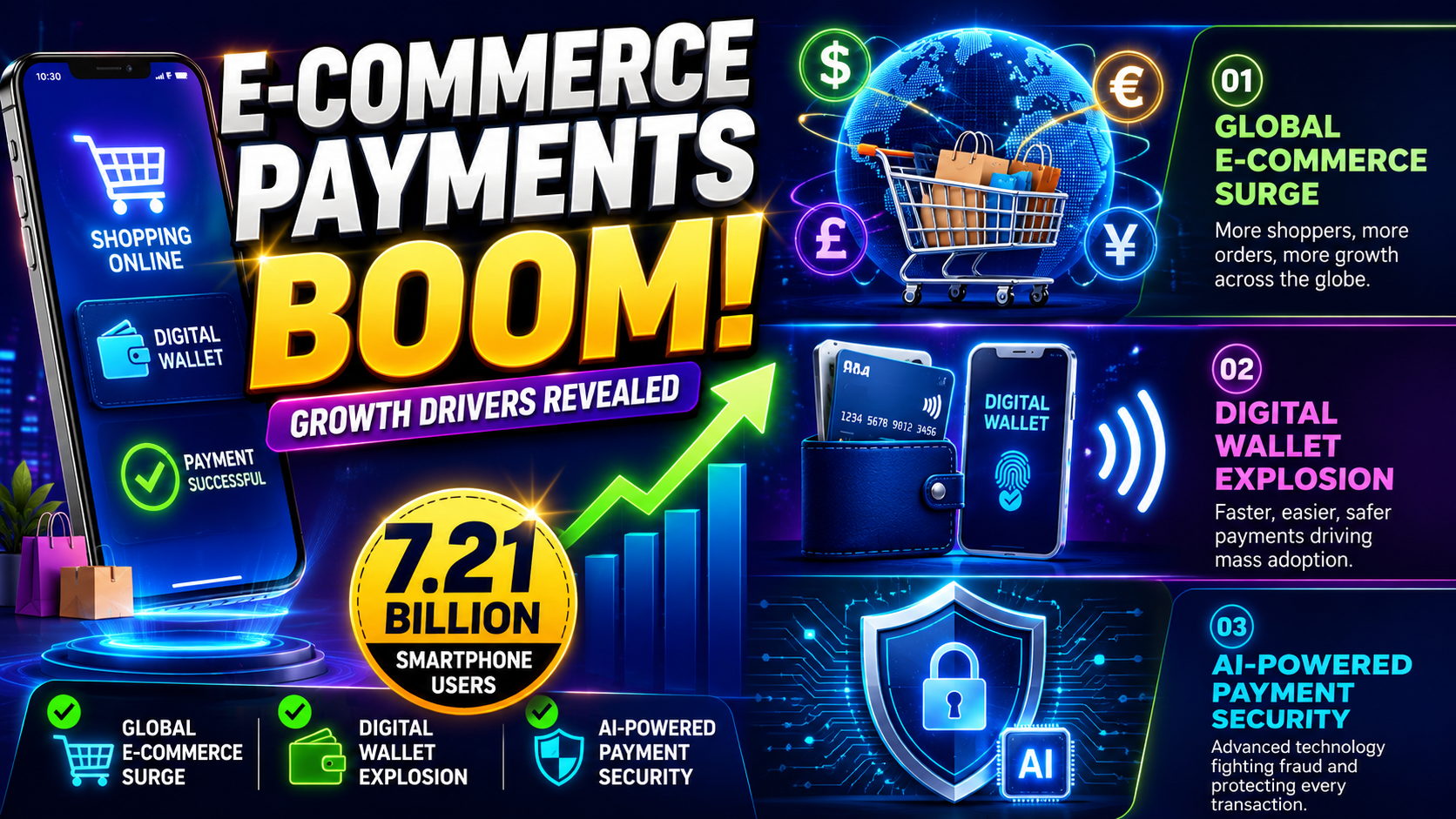
One of the most influential factors behind the growth of e-commerce payments is the widespread adoption of smartphones.
Today, billions of people carry powerful digital devices capable of shopping, banking, and making payments from virtually anywhere. This unprecedented level of connectivity has created an environment where consumers expect instant access to products and services.
Mobile commerce has grown dramatically over the past decade, and with it, the demand for payment methods designed specifically for smartphones. Consumers increasingly prefer payment experiences that require only a fingerprint, facial recognition scan, or a single tap on a screen.
As mobile devices become the primary gateway to online shopping in many regions, payment providers are focusing on optimizing mobile-first experiences. The result is a faster, more intuitive payment ecosystem that supports everything from everyday purchases to high-value transactions.
Digital Wallets Are Becoming the Preferred Choice
Among the many payment methods available today, digital wallets have emerged as one of the fastest-growing categories.
Consumers appreciate the convenience of storing payment information securely in one place and completing purchases without repeatedly entering card details. Digital wallets also provide additional features such as loyalty rewards, instant refunds, and integration with mobile applications.
The popularity of digital wallets reflects a broader shift toward convenience-driven consumer behavior. Shoppers increasingly expect payment experiences that are effortless, secure, and personalized.
Businesses benefit as well. Digital wallets often reduce checkout abandonment rates because they eliminate unnecessary steps during the payment process. For retailers competing in crowded online markets, even small improvements in checkout efficiency can significantly impact sales performance.
As financial institutions and technology companies continue expanding wallet ecosystems, digital wallets are expected to play an even larger role in global commerce over the coming decade.
Buy Now, Pay Later Is Changing Consumer Spending Habits
Another trend reshaping the payment landscape is the rise of Buy Now, Pay Later (BNPL) services.
BNPL solutions allow consumers to divide purchases into smaller installments rather than paying the full amount upfront. This flexibility has become particularly attractive among younger consumers who value budgeting options and financial control.
For merchants, BNPL can increase average order values and improve conversion rates. Customers who may hesitate to make a large purchase often feel more comfortable when given installment payment options.
The rapid adoption of BNPL demonstrates how payment innovation can influence consumer purchasing decisions. Payment methods are no longer passive transaction tools; they actively shape shopping behavior.
As competition among BNPL providers intensifies, consumers can expect even more personalized financing options integrated directly into the checkout experience.
Security Remains the Industry's Greatest Priority
While growth opportunities are substantial, the e-commerce payment market faces ongoing challenges.
Cybersecurity threats remain one of the industry's most pressing concerns. As digital transactions increase, so do attempts by cybercriminals to exploit vulnerabilities through phishing attacks, account takeovers, identity theft, and payment fraud.
Maintaining consumer trust requires continuous investment in security infrastructure. Payment providers are increasingly relying on artificial intelligence and machine learning systems capable of identifying suspicious activity in real time.
Technologies such as tokenization replace sensitive card information with secure digital identifiers, reducing the risk of data exposure. Biometric authentication methods add another layer of protection while also improving convenience.
The challenge for businesses is balancing security with user experience. Excessive verification requirements can frustrate customers and increase cart abandonment rates. The most successful payment solutions are those that provide strong protection without creating unnecessary obstacles.
Artificial Intelligence Is Transforming Payments
Artificial intelligence is becoming a critical force within the payment industry.
Modern AI systems can analyze massive volumes of transaction data within seconds, identifying unusual patterns that may indicate fraud. This capability enables payment providers to prevent fraudulent transactions before they occur.
Beyond security, AI is improving customer experiences through personalized recommendations, predictive analytics, and intelligent payment routing.
For example, AI can determine the most efficient payment pathway for a transaction, increasing approval rates and reducing processing delays. These improvements help businesses maximize revenue while ensuring a seamless experience for customers.
As AI technology continues advancing, its influence on payment systems will likely expand into nearly every aspect of digital commerce.
Cross-Border Commerce Creates New Opportunities
The growth of international online shopping is opening significant opportunities for payment providers.
Consumers today can purchase products from sellers located thousands of miles away with just a few clicks. However, cross-border commerce introduces complexities related to currency conversion, regulatory compliance, taxation, and local payment preferences.
Successful payment platforms must accommodate multiple currencies, languages, and payment methods while ensuring regulatory compliance across various jurisdictions.
Businesses that can simplify international transactions are positioned to benefit from the continued globalization of e-commerce. As digital commerce becomes increasingly borderless, flexible payment infrastructure will become a competitive necessity.
Regional Markets Are Driving Innovation
Different regions are contributing to payment innovation in unique ways.
The United States remains a leader in payment technology, driven by advanced financial infrastructure and widespread adoption of digital commerce. Companies continue exploring emerging payment methods, including stablecoins and blockchain-based solutions.
The United Kingdom has established itself as a highly digitized market where consumers embrace contactless payments, digital wallets, and recurring subscription services. Strong consumer protection standards have helped build trust in online transactions.
China represents one of the world's most advanced mobile payment ecosystems. Digital payments are deeply integrated into everyday life, with consumers regularly using mobile apps for shopping, communication, and financial services.
Brazil is experiencing rapid growth in digital payments as internet access expands and consumers increasingly embrace mobile commerce. Flexible installment-based purchasing options remain especially popular.
Meanwhile, Saudi Arabia is undergoing a significant digital transformation, supported by government initiatives designed to accelerate cashless payments and strengthen digital infrastructure.
These regional developments illustrate how local preferences continue influencing the evolution of global payment systems.
Industry-Specific Payment Trends
Different industries have distinct payment requirements.
In electronics and media, consumers often seek flexible payment options for high-value purchases such as smartphones, laptops, and subscription services. Installment plans and digital financing solutions are particularly important.
Fashion retailers prioritize fast checkouts and streamlined refund processes. Since impulse purchases are common, reducing payment friction can significantly improve sales outcomes.
Food and personal care sectors depend heavily on speed and reliability. Customers ordering everyday essentials expect payment systems that function instantly and consistently.
As e-commerce expands into new sectors, payment providers are increasingly tailoring solutions to meet industry-specific needs.
What the Next Decade Could Look Like
Looking ahead, the future of e-commerce payments appears remarkably dynamic.
Consumers will likely experience faster transactions, stronger security protections, and greater personalization. Emerging technologies such as embedded finance, real-time payments, open banking, and blockchain-based systems could further reshape the payment landscape.
Businesses that invest in payment innovation will be better positioned to attract customers, expand internationally, and compete in increasingly digital markets.
At the same time, regulators will continue balancing innovation with consumer protection, creating frameworks that encourage growth while maintaining trust.
The winners in this evolving ecosystem will be the companies that successfully combine convenience, security, and adaptability.
Final Thoughts
The global e-commerce payment market is no longer simply supporting online shopping—it is actively shaping the future of commerce itself.
As consumers demand faster, safer, and more convenient ways to pay, businesses and payment providers are responding with unprecedented innovation. Digital wallets, mobile payments, AI-powered security systems, and flexible financing solutions are redefining how transactions occur across the globe.
With the market projected to nearly triple in value over the coming decade, the importance of payment technology will only continue to grow. The next phase of digital commerce will not be determined solely by what people buy online, but by how seamlessly and securely they can pay for it.
In a world increasingly driven by digital experiences, the future of payments may very well be the future of commerce itself.
About the Creator
Enjoyed the story? Support the Creator.
Subscribe for free to receive all their stories in your feed.
Comments
There are no comments for this story
Be the first to respond and start the conversation.