
The Future of Home Décor in America: How Technology, Sustainability, and Lifestyle Shifts Are Reshaping a $212 Billion Industry
From AI-powered room design to eco-friendly furniture, the U.S. home décor market is entering a new era of innovation and personalization.

Walk into any modern American home today and you'll quickly notice something different. Homes are no longer just places to live—they have become personal sanctuaries, creative expressions, workplaces, entertainment hubs, and wellness spaces all rolled into one. This transformation is fundamentally changing how Americans think about decorating and furnishing their living environments.
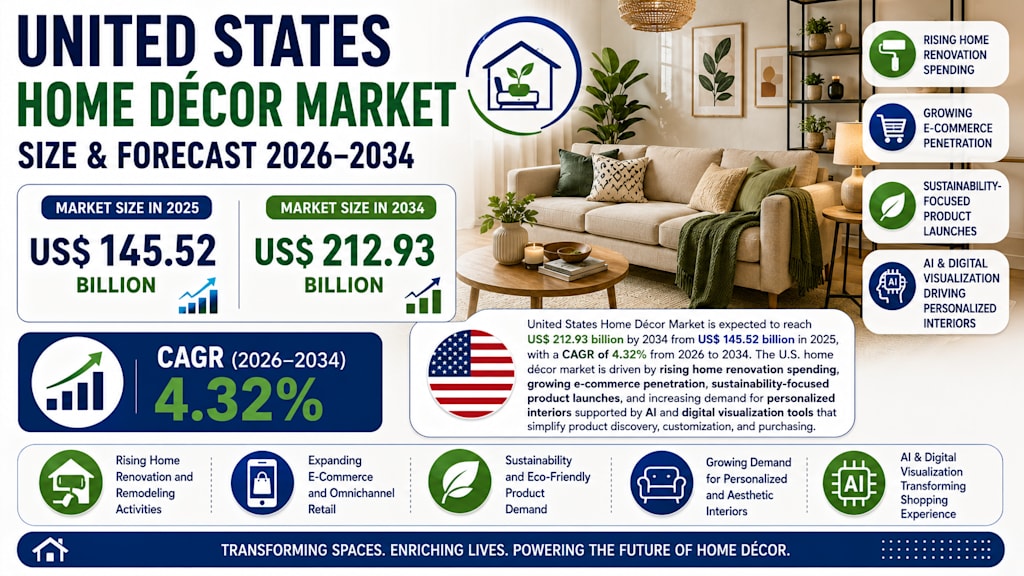
The U.S. home décor industry is experiencing a remarkable evolution fueled by technology, changing lifestyles, sustainability concerns, and a growing desire for personalized spaces. According to Renub Research, the United States Home Décor Market is projected to grow from US$145.52 billion in 2025 to US$212.93 billion by 2034, expanding at a compound annual growth rate (CAGR) of 4.32% between 2026 and 2034. These numbers reflect more than just economic growth—they reveal a profound shift in consumer behavior and the way Americans interact with their homes.
As homeowners continue investing in renovations, upgrades, and personalized interiors, the home décor market has become one of the most dynamic sectors within the broader retail landscape. The combination of digital innovation, sustainability initiatives, and lifestyle-driven spending is creating opportunities for retailers, manufacturers, designers, and consumers alike.
Why Americans Are Investing More in Their Homes
Over the past several years, the home has taken on greater importance than ever before. Remote work, hybrid employment models, and increased time spent indoors have encouraged people to rethink their living spaces.
Rather than viewing décor as a luxury purchase, many consumers now see it as an investment in comfort, productivity, and well-being. Home offices require ergonomic furniture. Living rooms are becoming multifunctional entertainment areas. Outdoor patios are being transformed into extensions of indoor living spaces.
This shift has driven strong demand across nearly every category of home décor, from furniture and textiles to lighting and wall accents. Consumers are increasingly willing to spend money on products that improve both the appearance and functionality of their homes.
Social media has also played a major role. Platforms such as Pinterest, Instagram, and TikTok expose consumers to countless design trends and home makeover ideas. Interior design inspiration is available at the touch of a screen, encouraging homeowners to refresh and upgrade their spaces more frequently than in previous generations.
The result is a market where aesthetics, practicality, and personal identity intersect.
Artificial Intelligence Is Revolutionizing Home Design
One of the most fascinating developments in the industry is the rapid adoption of artificial intelligence and visualization technology.
For decades, purchasing home décor involved uncertainty. Consumers often wondered whether a sofa would fit properly in their living room or whether a particular color palette would complement existing furnishings. Today's technology is removing much of that guesswork.
Advanced digital tools now allow shoppers to visualize products within virtual versions of their homes before making a purchase. Augmented reality applications, virtual room planners, and AI-powered design assistants are changing the customer experience from beginning to end.
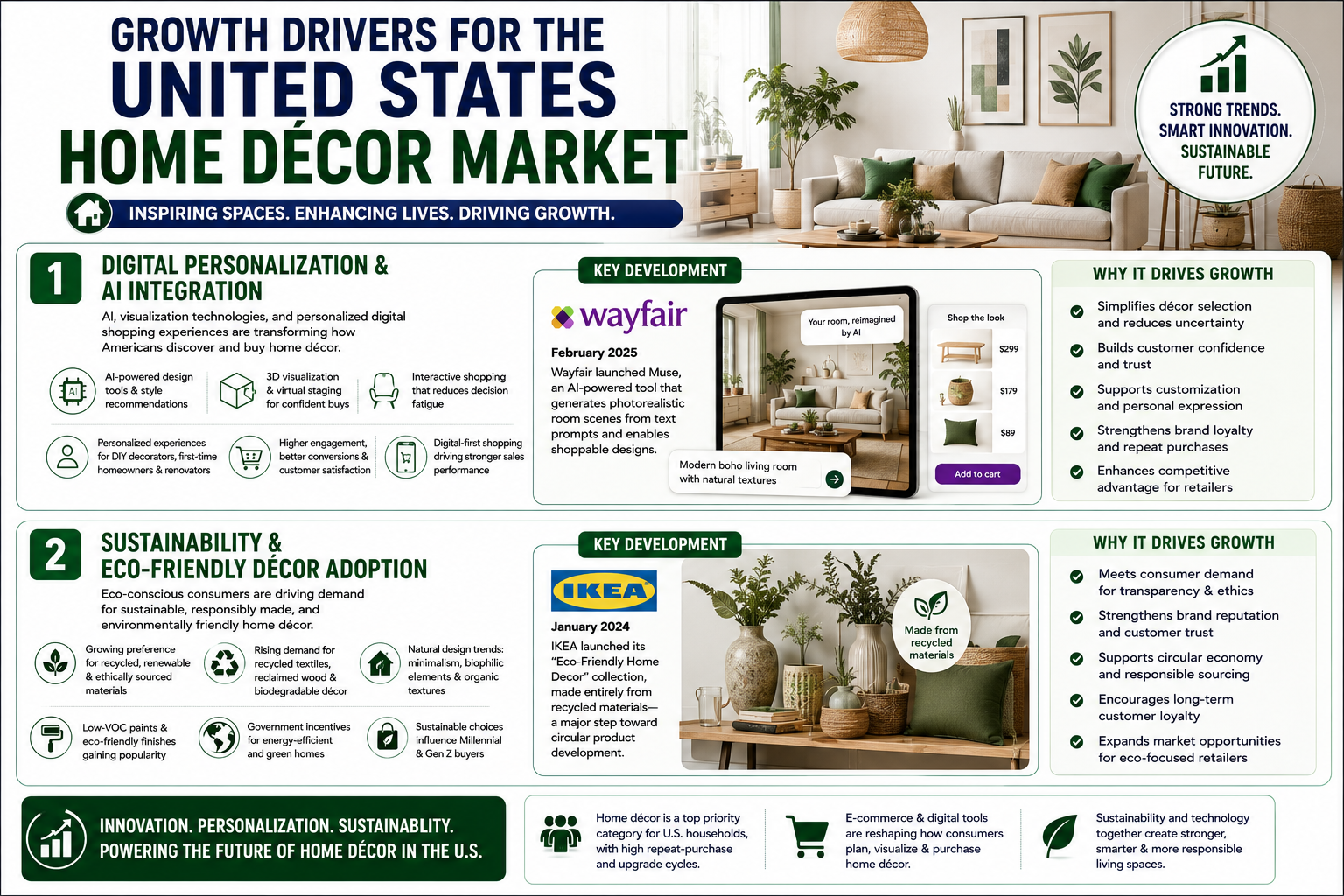
A notable example is Wayfair's launch of "Muse" in early 2025, an AI-driven platform capable of generating photorealistic room designs from text prompts while connecting users directly to products they can purchase. Instead of browsing endless product catalogs, consumers can simply describe the style they want and instantly receive tailored design recommendations.
These innovations are especially attractive to younger generations who prioritize convenience, customization, and digital experiences. AI is not replacing interior designers, but it is democratizing design by making sophisticated planning tools accessible to everyday consumers.
As technology continues to improve, personalized shopping experiences will likely become the industry standard rather than a competitive advantage.
Sustainability Is No Longer Optional
Another powerful force shaping the home décor market is sustainability.
Modern consumers are increasingly concerned about where products come from, how they are manufactured, and what environmental impact they create. This growing awareness has encouraged retailers and manufacturers to rethink traditional production methods.
Eco-friendly furniture, recycled textiles, reclaimed wood, and ethically sourced materials are becoming mainstream rather than niche offerings. Many shoppers now actively seek products that align with their environmental values.
Large companies have responded by introducing sustainability-focused collections and implementing greener supply chain practices. IKEA's launch of a home décor collection made entirely from recycled materials reflects a broader industry trend toward circular design principles.
Minimalist aesthetics and biophilic design have further accelerated this movement. Consumers are embracing natural materials, earthy textures, indoor plants, and designs that create stronger connections with nature.
This trend is particularly influential among Millennials and Generation Z, who consistently rank environmental responsibility as an important factor in purchasing decisions.
Sustainability is no longer a marketing strategy—it has become a core expectation.
The E-Commerce Boom Continues
Online shopping has transformed virtually every retail category, and home décor is no exception.
Historically, consumers preferred purchasing furniture and decorative products in physical stores where they could examine quality and comfort firsthand. Advances in technology have significantly reduced this barrier.
High-resolution product images, customer reviews, virtual visualization tools, and flexible return policies have made online shopping more appealing than ever. Consumers can compare styles, prices, dimensions, and materials from multiple retailers without leaving their homes.
The growth of e-commerce has also expanded access to niche brands and independent designers. Smaller companies can now compete with established retailers by reaching customers nationwide through digital platforms.
Omnichannel retail strategies have emerged as a key success factor. Consumers increasingly expect seamless integration between online and offline experiences, including virtual consultations, in-store pickups, and personalized recommendations.
The line between digital and physical retail continues to blur, creating new opportunities for businesses willing to innovate.
Furniture Remains the Market's Cornerstone
Among all product categories, furniture continues to represent one of the strongest segments of the home décor industry.
Consumer demand for multifunctional, space-saving, and aesthetically pleasing furniture remains high. This trend is particularly evident in urban areas where smaller living spaces require flexible solutions.
The rise of remote work has further boosted sales of home office furniture, including ergonomic chairs, adjustable desks, and modular workstations. Consumers are prioritizing products that support productivity while maintaining visual appeal.
Premium furniture brands are benefiting from demand for high-quality craftsmanship and long-lasting durability. At the same time, budget-conscious shoppers continue seeking affordable options that deliver both style and functionality.
This diversity of consumer preferences has created opportunities across multiple price points, allowing both luxury and value-focused brands to thrive.
Flooring Trends Reflect Changing Consumer Priorities
Floor coverings have become increasingly important as homeowners undertake remodeling projects and seek long-term improvements.
Luxury vinyl tile, engineered wood flooring, and waterproof materials are gaining popularity due to their durability, affordability, and ease of installation. These products offer consumers practical benefits without sacrificing aesthetic appeal.
Traditional hardwood flooring continues to hold strong appeal among homeowners seeking premium finishes and long-term value. Meanwhile, eco-conscious consumers are showing growing interest in sustainable alternatives such as bamboo, cork, and recycled materials.
Technological advancements have also improved flooring performance. Scratch-resistant surfaces, enhanced water protection, and digitally printed designs provide consumers with greater flexibility than ever before.
As homeowners prioritize both style and resilience, flooring remains a key component of overall interior design investments.
Regional Design Preferences Shape Demand
The United States is a diverse market where regional preferences significantly influence purchasing behavior.
In California, homeowners often gravitate toward eco-friendly, contemporary, and indoor-outdoor living concepts. Sustainability and wellness-focused design are particularly influential throughout the state.
Texas consumers frequently favor warm, welcoming interiors that blend traditional influences with modern functionality. Larger homes and open-concept layouts create demand for substantial furniture and statement décor pieces.
New York presents a unique landscape where space efficiency plays a critical role. Urban consumers prioritize multifunctional furniture, smart storage solutions, and sophisticated aesthetics that maximize limited square footage.
These regional distinctions highlight the importance of localized product offerings and targeted marketing strategies.
Challenges Facing the Industry
Despite its promising outlook, the home décor market is not without challenges.
Inflation remains a significant concern. Rising costs for raw materials, manufacturing, transportation, and labor can increase product prices and affect consumer spending patterns. Because many décor purchases are discretionary, economic uncertainty can lead consumers to postpone upgrades or seek lower-cost alternatives.
The industry also faces intense competition. Thousands of brands, retailers, online marketplaces, and specialty stores compete for consumer attention. Product differentiation can be difficult when styles, materials, and price points overlap.
Customer loyalty is increasingly fragile. Consumers frequently switch brands based on convenience, pricing, reviews, and emerging design trends. Businesses must continuously innovate to remain relevant in a crowded marketplace.
Success requires a balance between affordability, quality, sustainability, and customer experience.
Looking Ahead: A More Personalized Home Décor Future
The future of the U.S. home décor market appears bright. Consumer interest in creating beautiful, comfortable, and personalized living environments shows no signs of slowing down.
Artificial intelligence will continue enhancing the shopping journey. Sustainability initiatives will become increasingly sophisticated. E-commerce platforms will further streamline purchasing experiences. And homeowners will remain eager to invest in spaces that reflect their lifestyles and values.
The industry's evolution reflects broader societal changes. Homes are becoming more than places of residence—they are extensions of identity, wellness, creativity, and daily life.
As technology and consumer expectations continue to evolve, the companies that succeed will be those capable of delivering personalized experiences, sustainable solutions, and meaningful design inspiration.
The next decade promises to be one of the most transformative periods in the history of home décor, with innovation shaping every room of the American home.
Final Thoughts
The U.S. home décor industry is entering a defining chapter. With market value expected to surpass US$212 billion by 2034, growth is being fueled by more than economic trends alone. Technology, sustainability, lifestyle shifts, and personalization are collectively reshaping consumer expectations and redefining what home means in modern America.
For homeowners, the future offers greater choice, convenience, and creativity. For businesses, it presents both opportunities and challenges in an increasingly competitive landscape. One thing is clear: the home décor market is no longer just about decorating spaces—it is about designing experiences that enrich everyday life.
About the Creator
Enjoyed the story? Support the Creator.
Subscribe for free to receive all their stories in your feed.
Comments
There are no comments for this story
Be the first to respond and start the conversation.