
The Future of Diabetes Care in the Netherlands: How Smart Technology Is Transforming Disease Management
Continuous glucose monitoring, smart insulin devices, and digital healthcare solutions are helping Dutch patients manage diabetes more effectively than ever before.

Diabetes continues to be one of the most significant chronic health conditions affecting populations worldwide, and the Netherlands is no exception. As healthcare systems increasingly focus on prevention, early diagnosis, and long-term disease management, advanced diabetes devices are becoming essential tools for improving patient outcomes and quality of life.
Over the past decade, diabetes management has evolved far beyond traditional blood glucose testing and insulin injections. Today's patients have access to sophisticated technologies that provide real-time monitoring, automated insulin delivery, smartphone connectivity, and personalized health insights. These innovations are helping individuals gain greater control over their condition while reducing the daily burden associated with diabetes management.
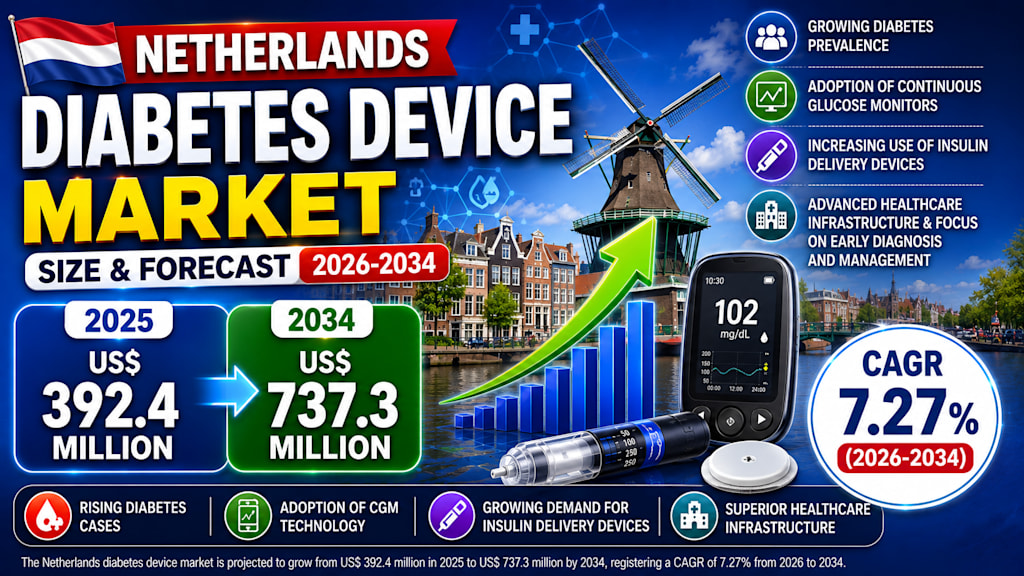
According to Renub Research, the Netherlands Diabetes Device Market is projected to grow from US$392.4 million in 2025 to US$737.3 million by 2034, expanding at a compound annual growth rate (CAGR) of 7.27% between 2026 and 2034. The market's growth is being driven by increasing diabetes prevalence, widespread adoption of continuous glucose monitoring systems, strong healthcare infrastructure, supportive reimbursement policies, and the country's commitment to preventive healthcare.
As healthcare becomes increasingly digital and patient-centered, the Netherlands is emerging as one of Europe's most progressive markets for diabetes management technologies.
A Healthcare System Focused on Prevention
One of the defining characteristics of the Dutch healthcare system is its emphasis on preventive care and disease management.
Rather than focusing solely on treatment after complications occur, healthcare providers encourage patients to actively monitor and manage chronic conditions such as diabetes. This approach has helped create strong demand for devices that support self-management and continuous monitoring.
Patients are encouraged to take a proactive role in their healthcare by regularly tracking blood glucose levels, monitoring treatment effectiveness, and making informed lifestyle decisions. Diabetes devices have become valuable tools in supporting these goals.
The focus on prevention not only improves patient outcomes but also helps reduce long-term healthcare costs associated with diabetes-related complications. As a result, monitoring technologies have become deeply integrated into routine diabetes care across the Netherlands.
Diabetes Cases Continue to Rise
The growing number of people living with diabetes remains one of the strongest drivers of market growth.
Lifestyle changes, aging populations, and increasing rates of obesity have contributed to rising diabetes diagnoses throughout the Netherlands. Both Type 1 and Type 2 diabetes require ongoing management, creating sustained demand for monitoring and treatment solutions.
Healthcare professionals increasingly stress the importance of maintaining stable glucose levels to reduce the risk of complications such as cardiovascular disease, kidney damage, nerve disorders, and vision problems.
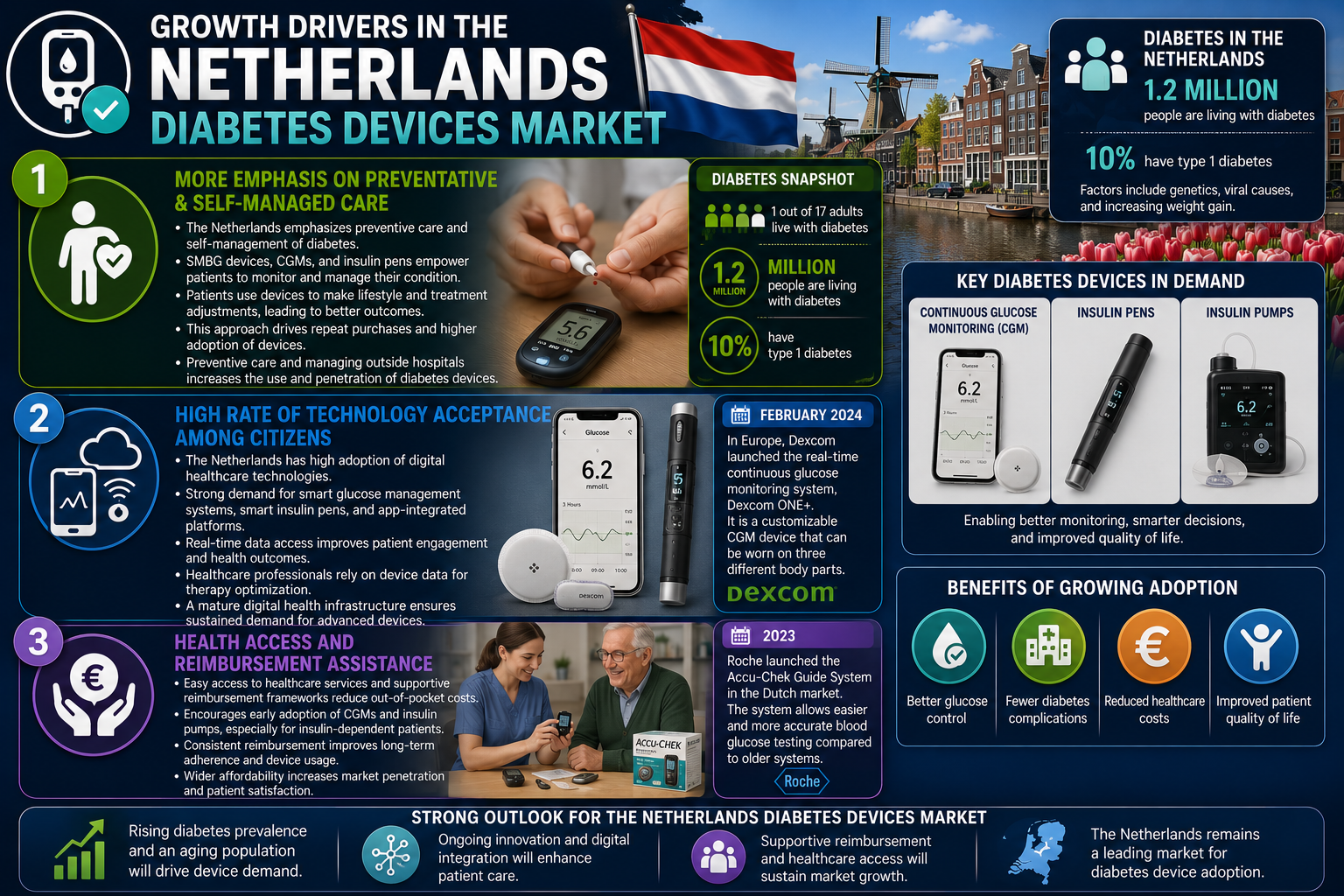
With an estimated 1.2 million individuals living with diabetes in the Netherlands, healthcare providers continue seeking innovative tools that support effective long-term disease management.
As the diabetic population grows, advanced devices are becoming increasingly important for helping patients manage their condition independently and effectively.
Continuous Glucose Monitoring Is Transforming Care
Among the most important innovations in modern diabetes care is continuous glucose monitoring, commonly referred to as CGM.
Unlike traditional blood glucose testing methods that require finger-prick measurements several times each day, CGM devices continuously monitor glucose levels around the clock. Wearable sensors provide real-time information that helps patients better understand how their glucose levels respond to food, exercise, medications, stress, and daily activities.
The benefits extend beyond convenience. Continuous monitoring allows patients to identify trends, avoid dangerous glucose fluctuations, and make more informed decisions regarding their treatment plans.
CGM systems are particularly valuable for individuals with Type 1 diabetes and insulin-dependent Type 2 diabetes. Alerts and notifications help users respond quickly to changing glucose levels, reducing the risk of severe hypoglycemic or hyperglycemic events.
The increasing adoption of CGM technology reflects the broader shift toward data-driven healthcare and personalized disease management.
Digital Health Adoption Supports Growth
The Netherlands has earned a reputation as one of Europe's most digitally advanced healthcare markets.
Patients and healthcare professionals alike have embraced digital technologies that improve communication, monitoring, and treatment outcomes. This strong acceptance of digital health solutions has created an ideal environment for the adoption of advanced diabetes devices.
Modern glucose monitoring systems and insulin delivery devices often connect directly to smartphones and cloud-based platforms. Patients can access real-time health data, track trends, and share information with healthcare providers remotely.
Healthcare professionals benefit from enhanced visibility into patient health, enabling more personalized treatment adjustments and proactive interventions.
Digital connectivity has also improved patient engagement. Individuals who can easily access and understand their health information are often more motivated to adhere to treatment plans and maintain healthier lifestyles.
As digital healthcare infrastructure continues evolving, connected diabetes devices are expected to become even more important within the Dutch healthcare system.
Insulin Pumps Offer Greater Flexibility
Insulin pumps represent one of the most advanced segments of the diabetes device market.
These systems provide continuous insulin delivery throughout the day, offering greater precision and flexibility compared to traditional injection methods. Patients can customize insulin delivery based on their individual needs, improving overall glucose control.
Modern insulin pumps are increasingly integrated with continuous glucose monitoring systems, creating more sophisticated treatment solutions. Some advanced devices can automatically adjust insulin delivery based on real-time glucose readings, reducing the need for manual intervention.
For patients managing complex insulin regimens, these technologies can significantly improve convenience and treatment effectiveness.
Although insulin pumps typically require higher upfront costs and patient training, their ability to improve long-term disease management continues driving demand throughout the Netherlands.
Smart Insulin Pens Are Enhancing Convenience
Insulin pens remain among the most widely used diabetes management devices.
Their portability, ease of use, and accurate dosing capabilities have made them popular among both newly diagnosed and long-term diabetes patients. Compared to traditional syringes, insulin pens provide a more convenient and user-friendly experience.
Recent innovations have introduced smart insulin pens equipped with digital tracking features. These devices can record dosage information, monitor injection history, and synchronize with mobile applications.
Such functionality helps patients maintain treatment adherence while providing healthcare professionals with valuable insights into medication usage patterns.
As digital capabilities continue expanding, smart insulin pens are becoming increasingly attractive options for individuals seeking practical and effective diabetes management solutions.
Reimbursement Policies Encourage Adoption
One of the key advantages supporting market growth in the Netherlands is the country's supportive reimbursement environment.
Access to advanced diabetes technologies often depends on affordability and insurance coverage. Dutch healthcare policies help reduce financial barriers by providing reimbursement support for many diabetes management devices, particularly among insulin-dependent patients.
This financial assistance encourages earlier adoption of technologies such as continuous glucose monitors and insulin pumps. Patients are more likely to benefit from advanced treatment options when cost concerns are minimized.
Supportive reimbursement frameworks also contribute to long-term device adherence, ensuring patients can continue using technologies that improve health outcomes.
The combination of strong healthcare access and financial support has positioned the Netherlands as a leader in diabetes technology adoption.
Traditional Monitoring Devices Remain Essential
Despite rapid growth in advanced technologies, self-monitoring blood glucose devices continue to play an important role within diabetes care.
Blood glucose meters, test strips, and lancets remain widely used by patients managing both Type 1 and Type 2 diabetes. These devices offer affordability, simplicity, and accessibility, making them valuable tools for routine glucose monitoring.
Many newly diagnosed patients begin their diabetes management journey with traditional monitoring devices before transitioning to more advanced solutions.
Their continued importance demonstrates that innovation often complements rather than completely replaces existing healthcare technologies.
Challenges Still Exist
Although the outlook for the diabetes device market remains positive, several challenges must be addressed.
Advanced technologies such as continuous glucose monitors and insulin pumps often involve ongoing costs related to sensors, maintenance, and replacement components. Healthcare authorities must continuously evaluate cost-effectiveness when determining reimbursement policies.
User adoption can also present obstacles. Some patients, particularly older adults, may feel uncomfortable using advanced technologies or struggle with device setup and maintenance.
Education and training play critical roles in overcoming these barriers. Healthcare providers must ensure patients receive adequate support to maximize the benefits of modern diabetes devices.
Addressing usability concerns will be essential for achieving broader adoption across diverse patient populations.
Home-Based Care Is Becoming More Important
Healthcare systems increasingly emphasize care outside traditional clinical settings.
Many diabetes management activities now take place at home, supported by monitoring devices, digital applications, and remote healthcare services. This shift aligns closely with the Netherlands' emphasis on self-management and preventive care.
Patients can track glucose levels, administer insulin, and communicate with healthcare professionals without frequent visits to hospitals or specialist clinics.
The growing importance of home-based care is creating additional opportunities for device manufacturers and healthcare technology providers.
As remote monitoring capabilities improve, patients will gain even greater flexibility and independence in managing their condition.
The Future of Diabetes Management in the Netherlands
The future of diabetes care is becoming increasingly connected, intelligent, and personalized.
Artificial intelligence, predictive analytics, automated insulin delivery systems, and enhanced digital platforms are expected to play larger roles in helping patients manage their health. Future technologies may further reduce the burden of diabetes management while improving clinical outcomes.
Integration between monitoring systems, insulin delivery devices, and healthcare platforms will continue strengthening. Patients and healthcare providers will have access to more comprehensive information, enabling faster and more accurate treatment decisions.
As healthcare innovation accelerates, the Netherlands is likely to remain at the forefront of adopting advanced diabetes management technologies.
Final Thoughts
The Netherlands diabetes device market is experiencing steady growth as healthcare providers and patients embrace innovative technologies designed to improve diabetes management and quality of life.
With the market projected to expand from US$392.4 million in 2025 to US$737.3 million by 2034, advanced monitoring systems, insulin delivery technologies, and digital healthcare solutions are becoming increasingly important components of modern diabetes care. Strong healthcare infrastructure, supportive reimbursement policies, widespread digital health adoption, and a preventive care mindset continue driving market expansion.
While challenges related to costs and technology adoption remain, ongoing innovation is creating new opportunities for more personalized and effective diabetes management. As healthcare becomes increasingly data-driven and patient-focused, diabetes devices will continue playing a vital role in helping individuals live healthier, more independent lives.
The future of diabetes care in the Netherlands is not simply about treatment—it is about empowering patients through technology, knowledge, and continuous support.
About the Creator
Enjoyed the story? Support the Creator.
Subscribe for free to receive all their stories in your feed.
Comments
There are no comments for this story
Be the first to respond and start the conversation.