
The Future of Diabetes Care: How Blood Glucose Monitoring Devices Are Revolutionizing Global Health
From smart sensors and wearable technology to real-time health insights, blood glucose monitoring devices are transforming how millions manage diabetes while creating one of healthcare's fastest-growing healthcare technology markets.

Diabetes has quietly become one of the world's most pressing healthcare challenges. Affecting hundreds of millions of people globally, the condition demands constant attention, lifestyle adjustments, and regular monitoring. While treatment options continue to evolve, one area has experienced especially rapid innovation over the past decade: blood glucose monitoring technology.
What was once limited to occasional finger-prick tests has transformed into a sophisticated ecosystem of connected devices, wearable sensors, smartphone applications, and real-time health analytics. These technologies are helping patients gain unprecedented control over their health while simultaneously reshaping the global healthcare landscape.
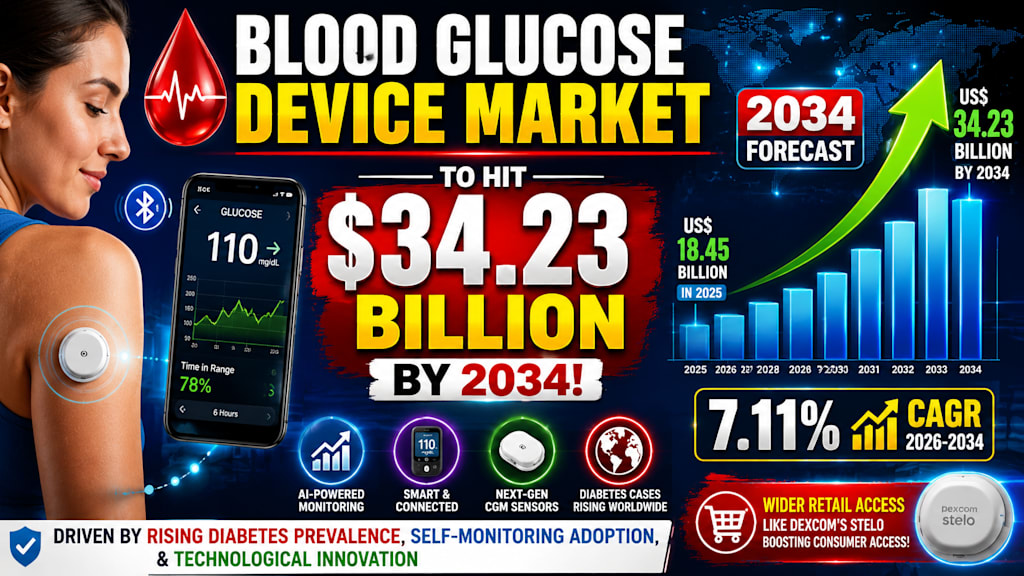
The result is a rapidly expanding market that reflects both growing healthcare needs and technological progress. According to Renub Research, the global Blood Glucose Device Market is expected to grow from US$ 18.45 billion in 2025 to US$ 34.23 billion by 2034, expanding at a compound annual growth rate (CAGR) of 7.11% between 2026 and 2034. This impressive growth is being fueled by rising diabetes prevalence, increasing adoption of self-monitoring practices, expanding awareness of preventive healthcare, and continuous innovation in glucose monitoring technologies.
As healthcare systems increasingly prioritize patient-centered care and digital health solutions, blood glucose monitoring devices are becoming more important than ever before.
Why Blood Glucose Monitoring Matters
For people living with diabetes, monitoring blood sugar levels is not simply a routine task—it's a critical component of daily health management. Maintaining glucose levels within a healthy range can help prevent serious complications including cardiovascular disease, kidney damage, vision loss, nerve disorders, and other long-term health concerns.
The ability to accurately measure blood sugar levels empowers patients to make informed decisions regarding medication, nutrition, physical activity, and lifestyle habits. Healthcare providers also rely on glucose data to adjust treatment plans and evaluate patient progress.
As diabetes cases continue to rise worldwide, regular monitoring has become one of the most effective tools available for reducing complications and improving overall quality of life. Modern blood glucose devices provide timely information that helps users identify patterns, anticipate problems, and take corrective action before health issues escalate.
This shift from reactive care to proactive management is one of the key reasons why blood glucose monitoring technologies are experiencing unprecedented demand across the globe.
The Rise of Continuous Glucose Monitoring
Among the most significant developments in diabetes care is the growing popularity of Continuous Glucose Monitoring (CGM) systems.
Unlike traditional blood glucose meters that require users to perform multiple finger-prick tests throughout the day, CGMs continuously measure glucose levels through wearable sensors attached to the body. These devices provide real-time readings, helping users understand how food, exercise, stress, sleep, and medications impact their glucose levels throughout the day.
The popularity of CGMs continues to grow because they offer several important advantages, including real-time glucose tracking, trend analysis and predictive alerts, reduced need for frequent finger-prick testing, improved patient engagement, better glycemic control, and greater convenience for individuals managing diabetes in their daily lives.
The ability to receive alerts before glucose levels become dangerously high or low has transformed diabetes management. Rather than responding to a problem after it occurs, patients can now take preventive action based on predictive insights generated by advanced monitoring systems.
Healthcare professionals are also embracing CGM technology because it provides a more complete picture of patient health than occasional testing. Continuous data helps physicians identify patterns and optimize treatment plans more effectively.
Consumer-Friendly Devices Are Expanding Access
A major trend shaping the Blood Glucose Device Market is the growing availability of consumer-focused monitoring solutions.
Historically, advanced glucose monitoring technologies were primarily available through healthcare providers and often required prescriptions. Today, manufacturers are introducing products that are easier to access, simpler to use, and more attractive to a broader audience.
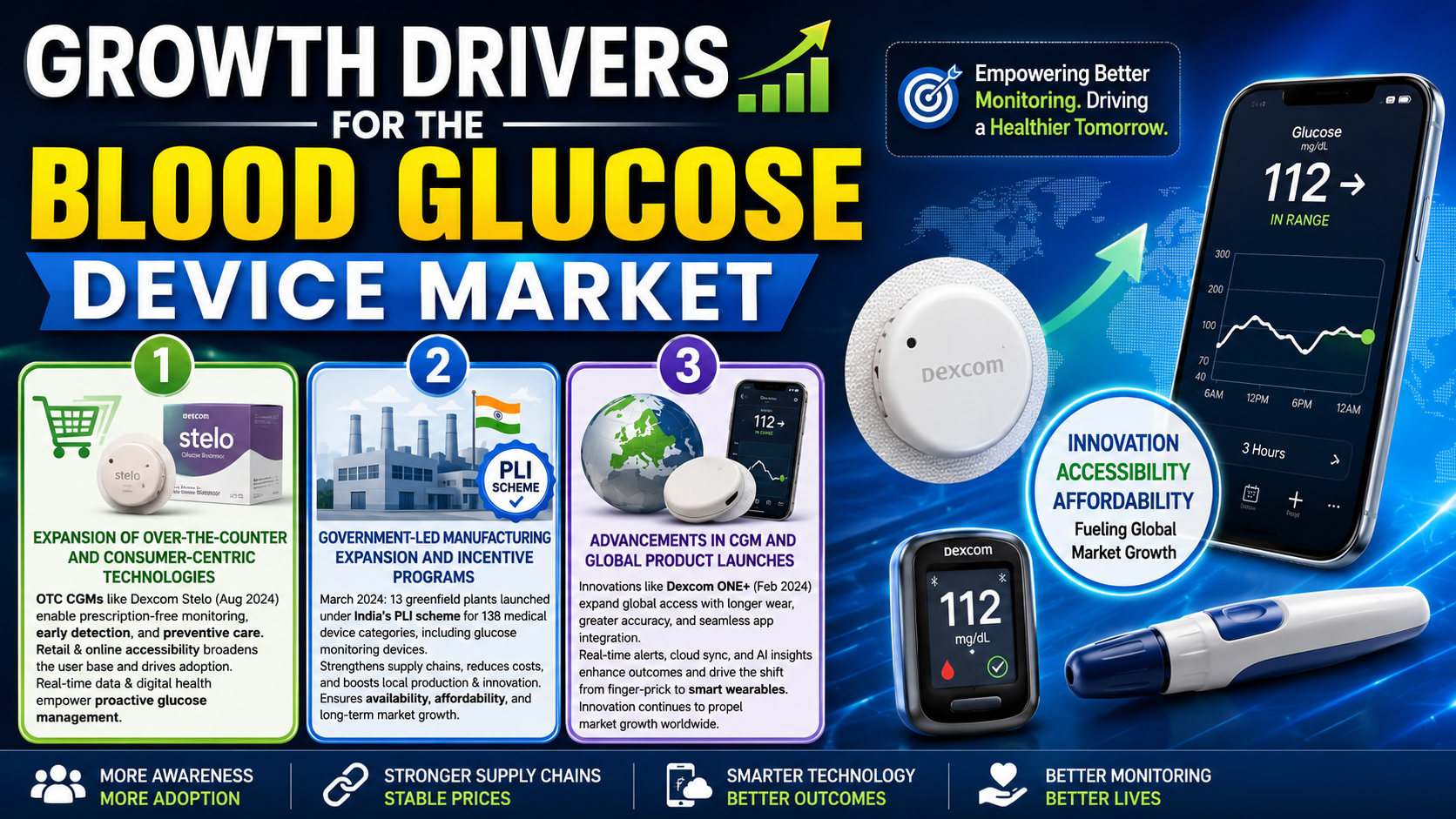
Recent launches of over-the-counter continuous glucose monitoring systems have expanded access beyond traditional diabetes patients. Health-conscious consumers, fitness enthusiasts, and individuals interested in preventive wellness are increasingly exploring glucose monitoring as a way to better understand their metabolic health.
This shift is creating entirely new growth opportunities for the industry. As devices become available through retail pharmacies, e-commerce platforms, and consumer health channels, manufacturers are reaching audiences that were previously underserved.
The result is a broader market that extends beyond disease management and into the rapidly growing wellness and preventive healthcare sectors.
Digital Health Integration Is Changing Patient Experiences
One of the strongest drivers of market growth is the integration of glucose monitoring devices with digital health ecosystems.
Today's consumers expect healthcare technologies to provide the same convenience and connectivity found in other aspects of modern life. Blood glucose device manufacturers have responded by creating products that seamlessly connect with smartphones, smartwatches, cloud platforms, and digital health applications.
This connectivity allows users to view glucose readings instantly, share health data with healthcare providers, monitor long-term trends, receive personalized health recommendations, and integrate glucose information with nutrition and fitness tracking tools.
The benefits extend beyond convenience. Digital integration encourages greater patient engagement, improves adherence to monitoring routines, and enhances communication between patients and healthcare professionals.
As artificial intelligence and data analytics become more sophisticated, connected glucose monitoring systems are expected to provide even more personalized insights, helping users make smarter health decisions based on real-time information.
Government Support Is Strengthening Market Growth
Governments around the world increasingly recognize diabetes as a significant public health challenge. As a result, many countries are implementing policies and programs designed to improve access to monitoring technologies and strengthen domestic medical device manufacturing.
Supportive regulations, reimbursement programs, and healthcare modernization initiatives are helping accelerate market growth while making blood glucose monitoring devices more affordable and accessible.
India, for example, has invested heavily in domestic medical device production through government-backed manufacturing initiatives. Such efforts strengthen supply chains, reduce dependence on imports, improve product availability, and encourage innovation among local manufacturers.
These programs are particularly important in emerging markets where healthcare affordability remains a key concern. Increased local production can help lower costs while expanding access to advanced monitoring technologies.
As governments continue prioritizing chronic disease management and preventive healthcare, blood glucose monitoring devices are expected to play an increasingly important role in national healthcare strategies.
The Growing Global Diabetes Burden
The expansion of the Blood Glucose Device Market is closely linked to the rising prevalence of diabetes worldwide.
Several factors are contributing to this trend. Urbanization has changed dietary habits and reduced physical activity levels in many regions. Growing obesity rates continue to increase diabetes risk among both adults and younger populations. Aging demographics also contribute to higher rates of Type 2 diabetes, particularly in developed nations.
At the same time, greater awareness and improved diagnostic capabilities are helping identify more cases than ever before. While early diagnosis is beneficial for patient outcomes, it also increases demand for monitoring solutions.
As healthcare providers emphasize preventive care and long-term disease management, glucose monitoring devices have become essential tools in helping patients maintain healthier lives.
Challenges Facing the Industry
Despite strong growth prospects, the Blood Glucose Device Market still faces several challenges that could impact adoption rates in certain regions.
Affordability remains one of the most significant barriers. Advanced continuous glucose monitoring systems, sensors, and related accessories can be expensive, particularly for patients without adequate insurance coverage. The recurring cost of replacement sensors and consumables adds further financial pressure for many users.
Insurance reimbursement policies also vary considerably across countries and healthcare systems. While some regions provide comprehensive coverage for advanced monitoring technologies, others offer limited financial support, restricting access for patients who could benefit from these devices.
Technical limitations continue to present challenges as well. Although accuracy has improved significantly over the years, some devices may still experience issues related to calibration, sensor adhesion, or performance during rapid glucose fluctuations.
User compliance is another important consideration. Some individuals find it difficult to maintain regular monitoring routines or interpret the large amount of data generated by modern devices. Manufacturers continue investing in simplified user interfaces and improved device designs to address these concerns.
Regional Markets Driving Innovation
The United States remains one of the most influential markets for blood glucose monitoring technologies. High diabetes prevalence, strong consumer adoption of CGMs, favorable reimbursement policies, and a mature digital health ecosystem continue to support robust growth.
Germany has established itself as one of Europe's leading markets due to its strong healthcare infrastructure, widespread insurance coverage, and growing adoption of advanced diabetes management technologies. The country's commitment to digital healthcare innovation further supports market expansion.
China is rapidly emerging as a major growth engine for the industry. Rising healthcare awareness, expanding middle-class populations, increasing access to healthcare services, and strong domestic manufacturing capabilities are contributing to significant market growth.
Saudi Arabia is also experiencing steady expansion due to high diabetes rates and increased investment in healthcare modernization. Government initiatives focused on preventive care and chronic disease management are encouraging broader adoption of advanced monitoring solutions.
Together, these regional markets illustrate the truly global nature of demand for blood glucose monitoring technologies.
What the Future Holds
The future of blood glucose monitoring appears exceptionally promising. Manufacturers are investing heavily in research and development to create devices that are more accurate, more comfortable, and easier to use.
Researchers and technology companies are actively developing longer-lasting sensors, improved accuracy algorithms, enhanced smartphone integration, artificial intelligence-driven insights, smaller wearable designs, automated insulin delivery integration, and non-invasive glucose monitoring technologies.
Artificial intelligence is expected to become an increasingly important component of future monitoring systems. Advanced algorithms may soon be capable of analyzing glucose trends, dietary habits, activity levels, and medication schedules to provide highly personalized recommendations.
The industry is also moving toward fully connected diabetes management ecosystems where monitoring devices communicate seamlessly with insulin delivery systems and healthcare platforms.
These innovations have the potential to transform diabetes management from a reactive process into a proactive and highly personalized healthcare experience.
Final Thoughts
The Blood Glucose Device Market represents one of the most exciting intersections of healthcare and technology today. As diabetes continues to affect millions of people worldwide, the need for accurate, accessible, and user-friendly monitoring solutions will only become more important.
The transition from traditional glucose testing methods to advanced wearable technologies is helping patients take greater control of their health while improving clinical outcomes. At the same time, innovations in digital health, artificial intelligence, and continuous monitoring are creating new opportunities for manufacturers and healthcare providers alike.
With the market projected to grow from US$ 18.45 billion in 2025 to US$ 34.23 billion by 2034, the future of blood glucose monitoring appears remarkably bright. As technology continues to advance and accessibility improves, these devices will play an increasingly vital role in shaping the future of diabetes care and preventive health management across the globe.
For millions of individuals living with diabetes—and for many more focused on long-term wellness—the next generation of blood glucose monitoring technology could prove to be life-changing.
About the Creator
Enjoyed the story? Support the Creator.
Subscribe for free to receive all their stories in your feed.
Comments
There are no comments for this story
Be the first to respond and start the conversation.