
The Future of Children’s Fashion: Why the Global Children’s Wear Market Is Entering a New Era of Growth
From sustainability and digital shopping to fashion-forward parenting, the children’s wear industry is transforming faster than ever before.

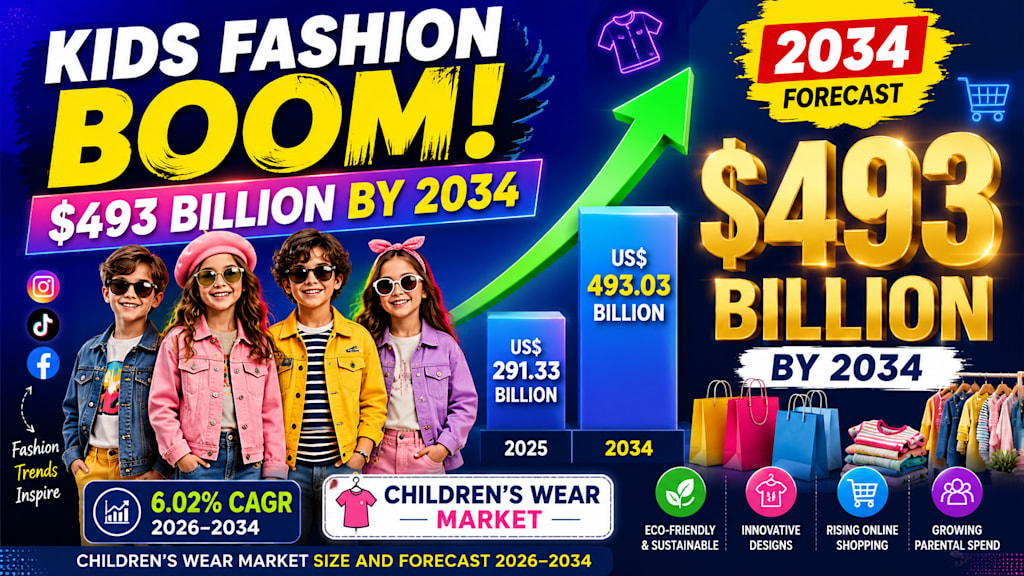
The global fashion industry is constantly evolving, but one segment is attracting growing attention from brands, retailers, and investors alike: children's wear. Once considered a basic necessity market focused mainly on affordability and durability, children's apparel has transformed into a dynamic industry driven by fashion trends, digital innovation, sustainability, and changing consumer expectations.
According to Renub Research, the global children's wear market is expected to grow from US$ 291.33 billion in 2025 to US$ 493.03 billion by 2034, expanding at a compound annual growth rate (CAGR) of 6.02% between 2026 and 2034. This impressive growth reflects a broader shift in how parents approach clothing purchases for their children. Modern consumers are no longer satisfied with basic garments alone. Instead, they seek products that offer style, comfort, quality, safety, and environmental responsibility.
As fashion becomes increasingly integrated into family lifestyles, the children's wear industry is emerging as one of the most influential and resilient sectors within the global apparel market.
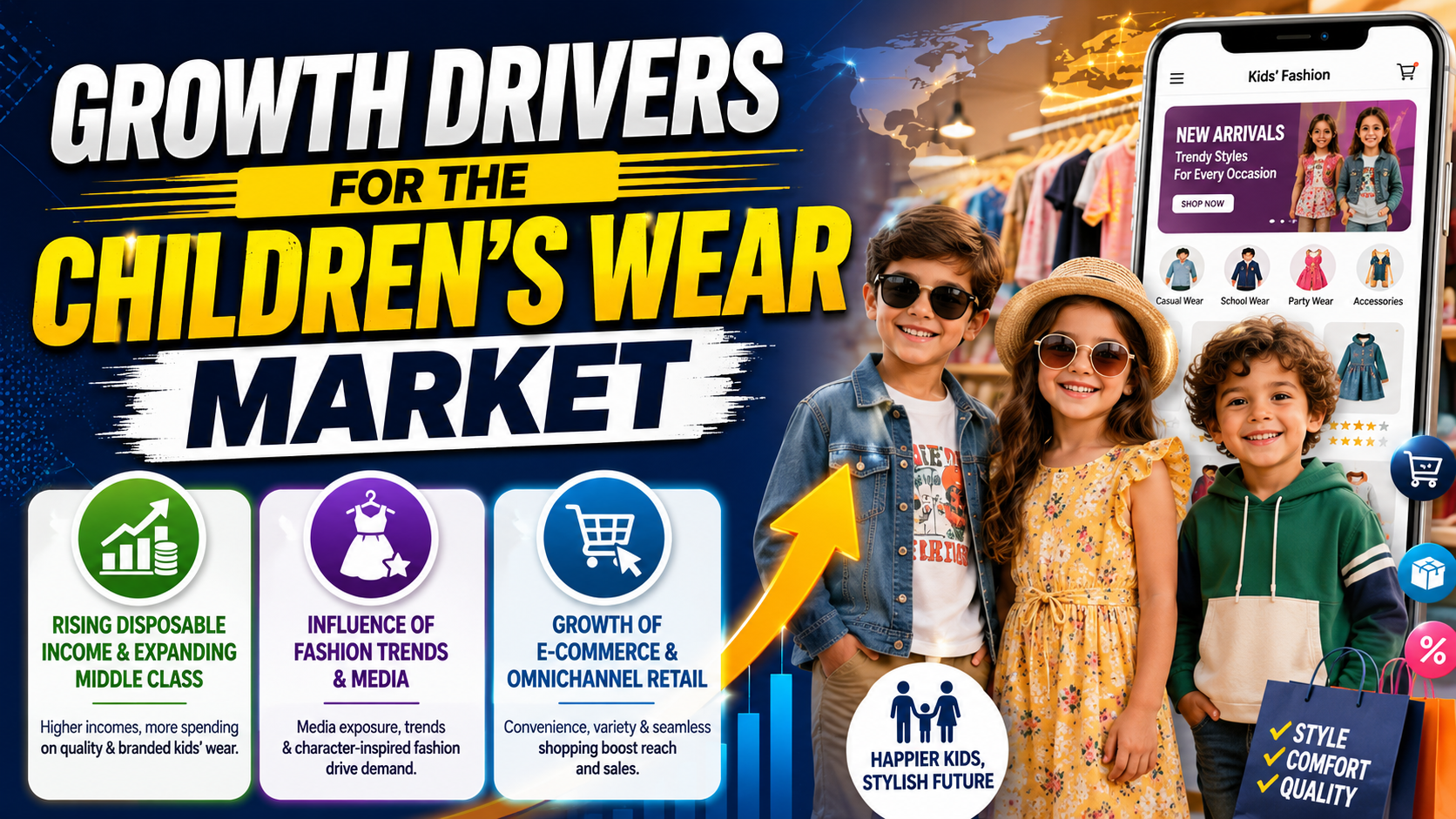
A New Generation of Fashion-Conscious Parents
Today's parents approach children's clothing differently than previous generations. While practicality remains important, style has become an equally significant factor in purchasing decisions. Parents are increasingly interested in dressing their children in fashionable outfits that reflect both personality and current trends.
The influence of social media has accelerated this transformation. Platforms such as Instagram, Pinterest, and TikTok regularly showcase family fashion trends, children's styling ideas, and influencer-led apparel recommendations. As a result, children's clothing has become a visible part of lifestyle culture rather than merely a household necessity.
Many brands have responded by introducing miniature versions of adult fashion trends. Known as "mini-me" fashion, these collections allow parents and children to coordinate their outfits while embracing contemporary styles. Character-inspired apparel, celebrity collaborations, and limited-edition collections have also become powerful tools for attracting consumers.
Children themselves are playing a greater role in purchasing decisions. Exposure to entertainment content, social media, and digital advertising has made younger consumers more aware of fashion trends, creating additional demand for stylish and branded apparel.
Rising Disposable Income Is Supporting Market Expansion
One of the strongest growth drivers behind the children's wear market is the increase in disposable income across many parts of the world. As economic conditions improve and middle-class populations expand, families are allocating larger portions of their budgets toward children's products.
In emerging economies, particularly throughout Asia-Pacific, Latin America, and the Middle East, rising household earnings have created substantial opportunities for apparel manufacturers and retailers. Parents are increasingly willing to invest in higher-quality clothing that offers improved comfort, durability, and aesthetic appeal.
The growth of dual-income households has further strengthened purchasing power. With greater financial flexibility, many families now prioritize premium products and trusted brands when shopping for children's apparel. This trend extends beyond basic clothing and includes occasion wear, sportswear, school uniforms, seasonal collections, and environmentally friendly garments.
The willingness to spend more on children's clothing reflects a broader cultural shift. Many parents view apparel purchases as investments in their children's well-being, confidence, and social experiences. As a result, the market continues to attract consumers across multiple income categories.
Sustainability Is Reshaping Consumer Preferences
Environmental awareness has become a defining factor in purchasing behavior across the fashion industry, and children's wear is no exception. Parents are increasingly seeking products made from sustainable materials that minimize environmental impact while ensuring safety and comfort.
Organic cotton, recycled fabrics, and responsibly sourced materials are becoming more popular among consumers who want to reduce their environmental footprint. Many parents also associate natural fabrics with improved skin safety, particularly for infants and young children.
In response, manufacturers are investing heavily in sustainable production methods and eco-friendly packaging solutions. Brands that successfully combine environmental responsibility with affordability are gaining significant competitive advantages.
Sustainability has evolved from a niche consideration into a mainstream expectation. Consumers now expect greater transparency regarding sourcing practices, manufacturing standards, and environmental commitments. Companies that fail to meet these expectations may struggle to maintain relevance in an increasingly conscious marketplace.
Digital Commerce Is Transforming the Shopping Experience
The rise of e-commerce has fundamentally changed how consumers purchase children's apparel. Busy parents increasingly prefer online shopping because it offers convenience, variety, and flexibility.
Digital platforms provide access to a broader selection of products than many physical stores can offer. Parents can compare prices, review customer feedback, examine sizing information, and complete purchases without leaving their homes. Convenient delivery options and flexible return policies further enhance the online shopping experience.
The expansion of mobile commerce has accelerated this trend. Smartphones have become powerful retail tools, enabling consumers to browse collections, receive personalized recommendations, and complete transactions within minutes.
Retailers are also investing in omnichannel strategies that combine digital and physical shopping experiences. Consumers can research products online before visiting stores or purchase items digitally and collect them in person. This integration creates a seamless journey that improves convenience while strengthening customer engagement.
As internet penetration continues to expand globally, e-commerce is expected to remain one of the most influential drivers of market growth.
Fashion Trends Continue to Fuel Demand
Fashion trends play an increasingly important role in shaping the children's wear market. Unlike previous generations, modern consumers are highly aware of seasonal styles, emerging designs, and global fashion influences.
Entertainment partnerships have become particularly effective at generating demand. Clothing collections inspired by popular films, television shows, and animated characters consistently attract consumer interest. These collaborations create emotional connections between brands and families while driving sales across multiple product categories.
Social media has amplified trend cycles significantly. Parents regularly discover new styles through influencers, online communities, and digital marketing campaigns. This constant exposure encourages more frequent purchases and supports the introduction of new collections throughout the year.
For brands, trend-driven demand creates opportunities for innovation and product diversification. Companies that remain responsive to changing consumer preferences are often better positioned to maintain market relevance and customer loyalty.
Regional Markets Are Driving Global Growth
While the children's wear industry is expanding worldwide, growth patterns differ across regions.
In the United States, consumer spending on children's fashion remains strong. Parents increasingly prioritize premium-quality garments, sustainable materials, and branded products. The country's mature retail infrastructure and advanced e-commerce ecosystem continue to support steady market growth.
The United Kingdom represents another important market where quality, durability, and environmental responsibility are major purchasing considerations. British consumers increasingly seek fashionable products that combine practicality with sustainability.
India stands out as one of the fastest-growing children's wear markets globally. A large young population, rising urbanization, increasing disposable income, and expanding internet access are creating significant opportunities for apparel companies. Both domestic and international brands are investing heavily in the country to capture growing demand.
The United Arab Emirates continues to experience strong growth driven by high purchasing power, a diverse consumer base, and increasing demand for premium and luxury children's fashion. The country's retail sector remains highly competitive and innovation-focused, attracting major global brands.
Together, these regional markets contribute significantly to the industry's overall expansion and future potential.
Innovation Is Creating Competitive Advantages
Innovation has become a key differentiator within the children's wear industry. Companies are increasingly developing products that address practical challenges while enhancing comfort and convenience.
Advances in fabric technology have improved durability, breathability, and flexibility. These innovations help garments withstand active lifestyles while maintaining comfort for extended periods.
Manufacturers are also introducing adaptive sizing solutions designed to accommodate children's rapid growth. Such innovations reduce replacement frequency and provide greater value for parents, making them attractive alternatives to traditional products.
Recent product launches highlight the industry's commitment to creativity and functionality. Companies are introducing footwear designed to adjust as children grow, ultra-comfortable apparel that combines style with practicality, and versatile clothing collections suitable for multiple occasions.
These developments demonstrate how innovation can simultaneously address consumer needs and create new revenue opportunities.
Challenges Still Shape the Competitive Landscape
Despite strong growth prospects, the children's wear market faces several challenges that require careful management.
Inventory management remains a significant concern. Children's apparel involves numerous sizes, styles, and seasonal variations, making demand forecasting particularly complex. Retailers must balance inventory carefully to avoid excess stock or product shortages.
Children also outgrow clothing quickly, creating additional pressure on supply chains and inventory planning systems. Companies increasingly rely on advanced analytics and real-time monitoring technologies to improve operational efficiency.
Price sensitivity presents another challenge. Although consumers are willing to spend more on quality products, affordability remains an important consideration for many households. Competition among international brands, local manufacturers, and fast-fashion retailers places constant pressure on pricing strategies.
To remain competitive, companies must deliver value through product quality, innovation, customer experience, and brand differentiation rather than relying solely on discounts.
The Future Looks Bright for Children's Fashion
The future of the children's wear industry appears exceptionally promising. Continued economic development, technological advancement, and changing consumer preferences are expected to create substantial opportunities throughout the coming decade.
Sustainability will likely become even more important as environmental awareness continues to grow. Digital commerce will expand further, supported by advancements in artificial intelligence, personalization technologies, and data-driven retail strategies.
Fashion innovation will remain a key growth driver, while emerging markets are expected to contribute significantly to global demand. Companies that successfully adapt to these trends will be well positioned to capture market share and strengthen long-term customer relationships.
The industry is no longer focused solely on producing clothing. It is increasingly centered on delivering experiences, values, and solutions that align with the expectations of modern families.
Final Thoughts
The global children's wear market is entering an exciting period of transformation. Driven by rising disposable incomes, digital retail expansion, sustainability initiatives, and evolving fashion preferences, the industry is demonstrating remarkable resilience and growth potential.
Renub Research's forecast that the market will reach nearly US$ 493.03 billion by 2034 underscores the scale of opportunity available to brands and retailers willing to innovate and adapt. As parents continue to prioritize quality, comfort, style, and environmental responsibility, children's fashion will remain a vital and increasingly influential segment of the global apparel industry.
The future of fashion is not only being shaped by adult consumers. It is also being defined by the next generation and the growing demand for products that meet the expectations of both children and their parents.
About the Creator
Enjoyed the story? Support the Creator.
Subscribe for free to receive all their stories in your feed.
Comments
There are no comments for this story
Be the first to respond and start the conversation.