
The Fed Held Rates. The Bond Market Heard Something Else.
October’s 10–2 vote was a hawkish data wait, not the end of tightening. The 2-year fell, the 10-year rose, and December is still live.
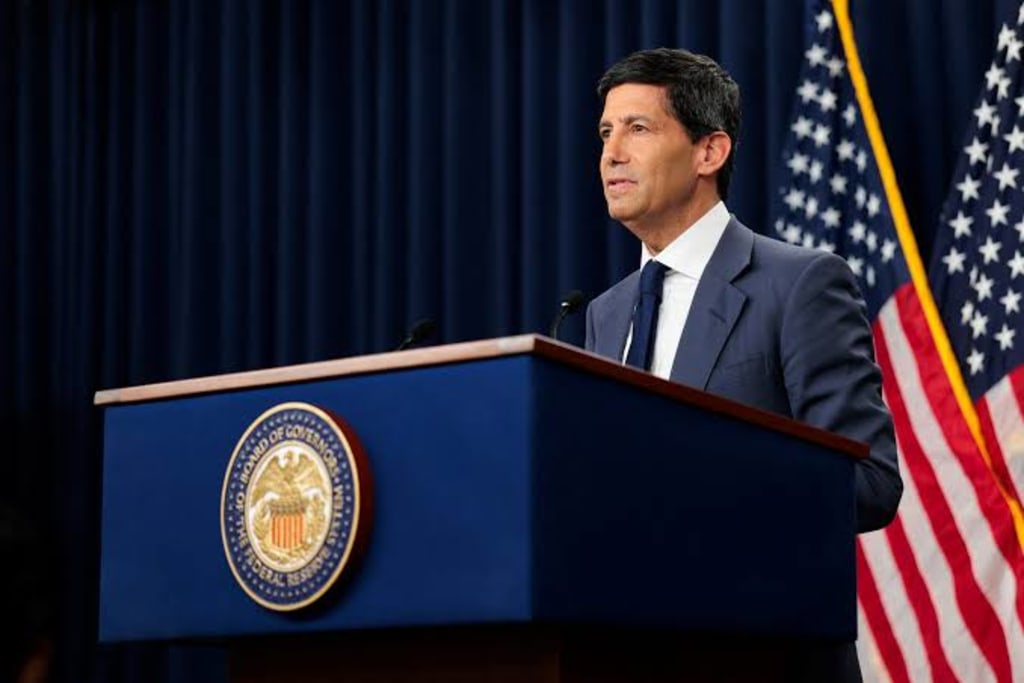
The Federal Open Market Committee voted 10–2 on October 28, 2026, to keep the federal funds target range at 3.75% to 4.00%. The outcome was widely expected. Market-implied odds of no change had exceeded 90% before the meeting. The useful question is what kind of pause this was.
The answer is in the statement, the vote, the bond market, and the chair’s communication strategy. This was a hawkish data wait with a time limit. It did not declare that tightening had ended.
The statement changed more than the rate
The October statement moved the assessment of economic activity from “solid” to “strong.” That wording sits awkwardly beside an unchanged policy rate. If growth is accelerating, the hold needs an explanation.
The more important change was in the policy sentence. The September statement said that “today’s action will help” inflation return to 2% in a timely way. The October statement removed that sentence and replaced it with “accumulating more information will help the Committee determine the appropriate policy stance.” At the same time, the verb attached to the inflation objective moved from “support” to “ensure.”
Those two changes point in the same direction. The Committee stopped confirming that the existing policy stance was doing the job. It strengthened its commitment to the 2% target. A pause that removes credit for past action and raises the bar for future inflation progress is not a soft pause.
The vote reinforces that reading. Governor Lisa Cook and Cleveland Fed President Beth Hammack dissented in favor of a 25 bp hike. Cook’s dissent was her first on a rate decision since becoming governor in 2022. The split ran from a sitting governor to a rotating reserve bank president. The argument inside the Committee is not whether policy is restrictive. It is whether it is restrictive enough right now.
Inflation: the transmission chain is not closed
The case for an immediate hike rests on the September inflation data. CPI rose 3.7% year over year and 0.6% month over month, the largest monthly gain in five months. Gasoline rose 9.1% in the month; the energy index rose 5.2%; gasoline alone contributed more than half of the monthly CPI increase.
PPI was less comfortable. Headline PPI rose 6.3% year over year and 1.3% month over month, the largest monthly gain since March 2022. Core PPI rose 5.0%. Diesel sits in the cost base for road freight and agriculture, and fuel surcharges pass through to transport contracts with a lag. Core CPI held at 0.3% month over month for a second month. Shelter and supercore services remained sticky.
The Committee’s judgment was that the pass-through had not been confirmed. Core inflation was firm, but inflation compensation was falling and medium-term expectations were broadly stable. The September hike had tightened financial conditions “as expected.” That does not mean the Committee dismissed the risk. It means the existing data did not yet turn “possible” into “confirmed.”
The asymmetry matters. Moving before the transmission chain closes risks over-tightening and a growth drag. Waiting until it is fully confirmed risks a credibility problem and a sharper policy reversal later. The October pause chose the first risk over the second. That choice has a shelf life.
Long-end yields did part of the tightening
The stronger constraint came from the bond market. Earlier in October, the 10-year Treasury yield touched 5.36% and the 30-year touched 5.73%, both the highest since 2002. The driver was not mainly the expected path of the fed funds rate. It was the term premium: the compensation investors demand for inflation and fiscal sustainability risk. The term premium rose about 40 bp from mid-September to its highest level since 2014.
Those yields reached the real economy. The 30-year fixed mortgage rate rose to 7.4%. Junk-rated corporate borrowing costs rose to 17%. Financial conditions tightened for rate-sensitive households and firms before the FOMC met.
That gave the Committee a reason to wait. If the market had already delivered part of the tightening through the term premium, a second 25 bp policy-rate hike would have a smaller marginal effect on demand and a larger marginal cost for growth. Chair Kevin Warsh described the setting carefully: financial conditions had tightened, but he would not call them tight. That formulation gave the Committee room to wait without turning “the market tightened for us” into a standing promise.
The forces behind the term premium, Treasury supply and competing long-duration corporate issuance, are outside the Fed’s control. They cannot be calibrated to deliver the right amount of restraint at the right time. Long-end tightening can explain one pause. It cannot explain the end of a cycle.
AI bond supply changed the cost of waiting
The September minutes named a structural factor: private bond issuance to finance AI infrastructure is competing with Treasuries for long-duration capital and adding to the term premium. Dallas Fed estimates put 2026 AI-related investment-grade issuance at roughly $360 billion in 10-year equivalent duration, about one-eighth of that year’s Treasury duration supply. AI-related capital spending by large technology companies may exceed $730 billion, with financing shifting from internal cash flow toward public and private credit markets.
This cuts both ways for policy. Continued AI capex keeps long-end supply heavy, which sustains the “market did some of the tightening” argument and gives the Fed more room to wait. The same spending also supports energy demand and resource competition, which can keep inflation pressure alive. Long-end yields driven by supply and term premium are a weaker brake on aggregate demand than a clear policy-rate hike.
The Fed is therefore waiting with partial reliance on a mechanism it does not control. The longer the wait, the more the race matters between the reliability of that substitute tightening and the persistence of inflation transmission.
Warsh is changing what a pause means
The October decision also sits inside a change in how the Fed communicates. Warsh’s stated approach is to stop pre-signaling policy and reduce market dependence on a preset path. The October press conference put that into practice. From 2027, one FOMC meeting each year will not hold a rate vote and will not issue a policy statement; from 2028, two meetings will follow that format. The post-meeting press conference was cut to 30 minutes, with one question per reporter.
Those changes matter for reading the pause. Under conventional forward guidance, a pause is often coded as “the end of tightening is near,” because the central bank uses communication to smooth expectations. Under Warsh’s framework, a pause carries no commitment about the next meeting. It commits the Committee only to judging the full data set when it next meets.
The market split on October 28 shows that this distinction is being priced unevenly. The 2-year yield fell about 3.75 bp to 4.70%. The 10-year rose about 3.5 bp to 5.03%. The 30-year rose to about 5.37%, having touched 5.73% earlier in the month. The 2s10s curve steepened by roughly 7 bp.
The short end priced “no hike today.” The long end priced “December is live,” plus Treasury supply and AI-related duration supply. If the pause were being read as the end of tightening, long yields would have fallen with the 2-year. They moved the other way.
Equities gave a narrower signal. The Nasdaq rose 1.18%, the S&P 500 rose 0.60%, and the Dow rose 0.03%. The Nasdaq’s relative strength reflects relief for long-duration growth stocks whose valuations are sensitive to the short-term policy rate. The discount rate that matters for those stocks is the long end, and the long end did not fall. With the S&P 500 dividend yield near 1.07% and the 10-year above 5%, the equity-risk-premium cushion is thin. A December hike and a further rise in long yields would compress that cushion from two sides.
The dollar index rose about 0.35% on the day. Gold rose about 0.86%. The two can move together when the short end supports the dollar while geopolitical demand and central-bank buying support gold. The next leg depends on the composition of real rates. If long yields rise because inflation expectations fall, real rates may not rise and gold can hold. If they rise because term premium and fiscal risk rise, the opportunity cost of holding gold increases.
For emerging markets, the pressure is structural rather than directional. Long-end Treasury yields at these levels keep dollar funding costs high even when the Fed holds. Economies with high external debt reliance and thin reserve buffers face continued capital-flow and currency pressure. The differentiator is the maturity structure of external debt and reserve adequacy, not whether the Fed moves in December.
What to watch next: December, CPI, and the term premium
The October pause was a deliberate, time-limited wait. The statement removed confirmation that current policy was working. It strengthened the inflation commitment. Two dissents kept the case for an immediate hike on the record. Long-end yields had already done part of the tightening, but that substitute cannot be relied on indefinitely. Warsh’s communication changes mean the pause does not anchor December.
Market pricing reflects that. The implied probability of a 25 bp hike in December rose to about 82.6% after the decision. Traders did not read the pause as the end of tightening. They read it as a delay.
The next test is the December meeting, the next CPI print, and whether the 10-year term premium continues to widen.
About the Creator
Jin
Writer of reamstories
https://reamstories.com/jin
Enjoyed the story? Support the Creator.
Subscribe for free to receive all their stories in your feed. You could also become a paid subscriber, letting them know you appreciate their work.
Comments
There are no comments for this story
Be the first to respond and start the conversation.