
The Bachelor's Handbag Gets Handles
A $10 chicken tote, the cost-of-living crisis and consumerism in reusable disguise
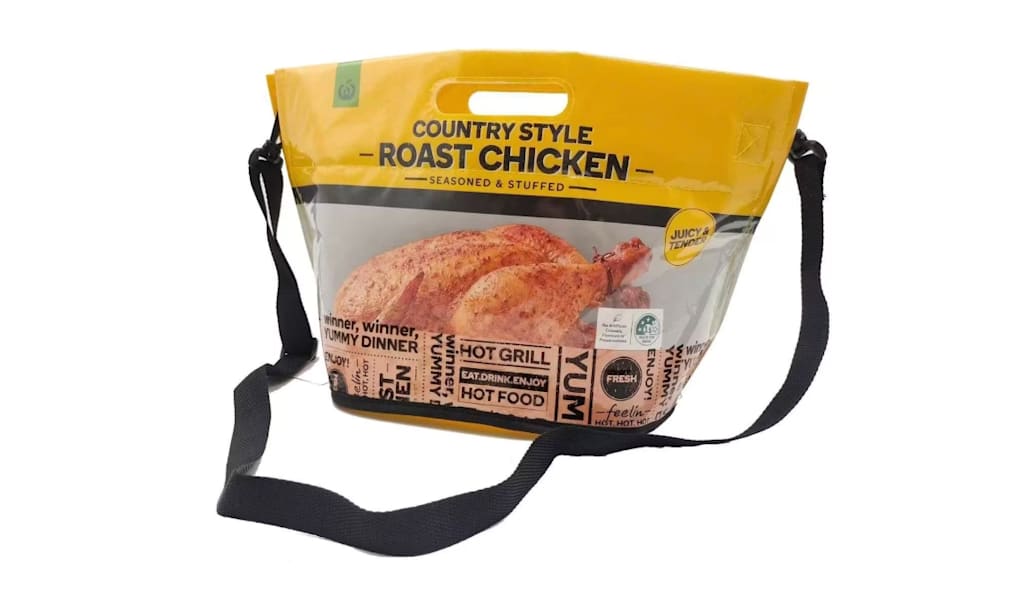
Apparently, 2026 wasn't finished with us. Woolworths has unveiled a tote celebrating its famous roast chicken—the iconic 'bachelor’s handbag', now fitted with actual handles—with a glossy golden bird gleaming across the fabric, all burnished skin and plump promise. I can almost smell the salt, hot stuffing and savoury steam escaping a torn paper bag: the unofficial perfume of Australian picnics, hurried dinners and sweltering summer evenings.
The worst part? I want one. It looks sturdy enough to carry a week's groceries, with broad handles and a cheerful chicken glowing like a greasy sunset. Meanwhile, my cupboard already groans beneath an avalanche of crumpled reusable bags, their straps tangled and their folds faintly scented with forgotten groceries.
That's more than I can say for the colourful nonsense social media has nearly lured me into buying—products spinning beneath ring lights. At the same time, glossy fingers hover over a dangerously cheerful 'Buy now' button. Yet after paying my car registration, I should know better: 'it’s only $10' is how a budget vanishes through a thousand tiny cracks.
Saving money can feel like a constant battle against consumerism. Limited editions, cheerful discounts and algorithms turn curiosity into urgency. Yet small purchases can also bring genuine pleasure when larger milestones, such as holidays or home ownership, feel out of reach. This is often described as the 'lipstick effect'. During periods of financial strain, people may cut back on major expenses while still allowing themselves affordable luxuries that offer a brief lift.
During a cost-of-living crisis, it is exhausting to feel that someone wants your money every second—especially when housing, groceries, electricity, fuel, insurance and registration already compete for every dollar.
As essential bills rise, discretionary spending becomes harder to justify. Ten dollars may seem trivial beside a major expense, but it could also cover part of a meal, a few litres of fuel or the next unexpected bill. That tension makes small treats both more tempting and more guilt-laden. Like the lipstick effect, buying something silly can provide a brief sense of pleasure, identity or control when the rest of the budget feels relentlessly serious. In that sense, the chicken tote is not just merchandise; it is a small, affordable indulgence dressed as practicality.
The pressure is not only financial. Constantly comparing prices, delaying purchases and deciding what can wait creates its own fatigue. An inexpensive novelty can then slip past good intentions because it feels like a harmless reward. Retailers and online platforms understand this vulnerability—and are remarkably skilled at turning financial exhaustion into another sale.
Low prices make individual purchases seem harmless, but their true cost eventually shows up in crowded cupboards, depleted bank accounts, and piles of poor-quality products headed for landfill.
That is the trap: consumer culture rarely asks us to buy one extravagant item. Instead, it encourages a stream of small, forgettable purchases, each promising convenience, novelty or a quick mood boost. The challenge is not rejecting every pleasure, but distinguishing genuine usefulness from the fleeting thrill of something new.
Perhaps that is why this ridiculous chicken bag works so well. It is funny, familiar and just practical enough to make desire sound sensible. The real question is how often 'I’ll actually use this' is honest reasoning—and how often it is consumerism wearing a reusable disguise.
Ultimately, the chicken tote tests how easily humour, nostalgia and practicality can turn a want into a supposed need. Mindful spending during a cost-of-living crisis does not mean refusing every pleasure; it means choosing deliberately rather than reacting to the next discount, trend or cheerful button. The bag may cost only $10, but perhaps the real bargain is leaving the shop with my budget, cupboard space and sense of humour intact.
About the Creator
Sarah Xenos
Follow on https://benable.com/i/EEKQW
ALso follow me on medium Sarah Xenos – Medium
Enjoyed the story? Support the Creator.
Subscribe for free to receive all their stories in your feed.
Comments
There are no comments for this story
Be the first to respond and start the conversation.