
The 6-Month Wait: Navigating Site Acquisition Delays in DFY Vending Contracts
DFY Vending Contracts

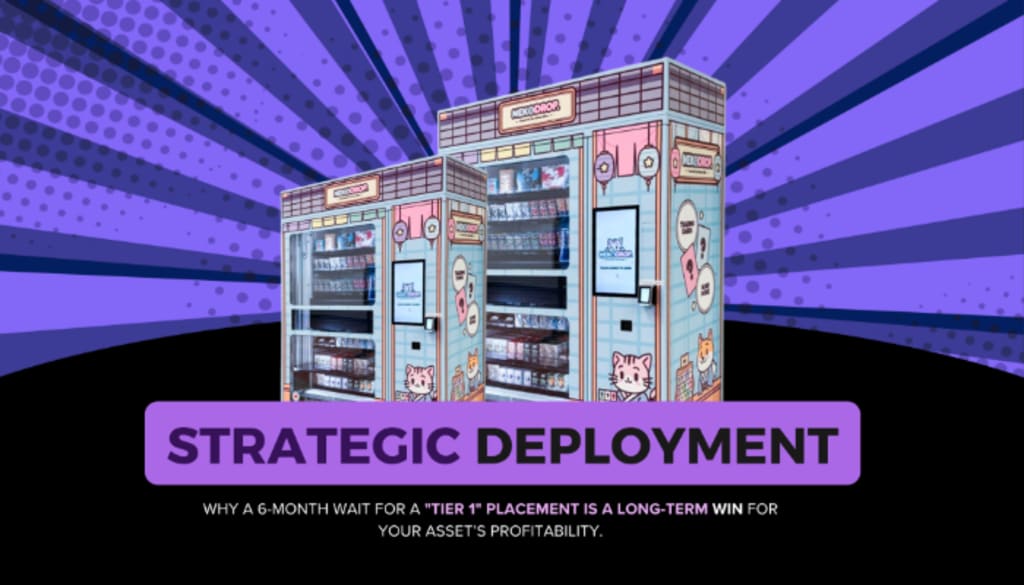
The 6-Month Wait: Navigating Site Acquisition Delays in DFY Vending Contracts
The "Done-For-You" (DFY) model of automated retail has become a cornerstone of the passive income landscape in 2026. For many busy professionals and retail investors, the promise is simple and alluring: you provide the capital, and the provider handles the heavy lifting of machine sourcing, logistics, and, most critically, site acquisition. However, as the market for premium placement has become increasingly competitive, a new reality has emerged in the onboarding phase. Many clients are finding that while their machine is ready and their software is live, the actual physical placement of the unit can take significantly longer than the initial ninety-day estimates. Reading through the latest DFY Vending reviews from customers is a positive way to gain perspective on this transition period, as it reveals that while the "6-month wait" is becoming a common industry hurdle, those who navigate it with a focus on contractual transparency and location quality often see the best long-term results. Understanding the mechanics of site acquisition delays is not about doubting the model; it is about mastering the "onboarding gap" to ensure your asset is placed for profit rather than just for convenience.
The Myth of the Instant Placement
In the early days of automated retail, finding a spot for a vending machine was a relatively straightforward process. However, in 2026, the "Land Rush" for high-traffic square footage has changed the dynamics of the industry. Every Tier 1 shopping center, transit hub, and high-density residential complex is now a contested zone. For a DFY provider, securing a "Premium Mall" placement involves navigating complex lease agreements, background checks, and aesthetic approvals from mall management boards that meet only once a month.
When a client enters the onboarding phase, they are often mentally prepared for a thirty to sixty-day wait. When that wait stretches into month four, five, or six, anxiety begins to set in. It is vital to understand that a delay is often a sign of quality control. A provider that can place a machine in forty-eight hours is likely placing it in a location that no one else wants. The "Premium" in Premium Mall refers not just to the foot traffic, but to the barrier to entry. Navigating this wait requires a shift in mindset from "instant gratification" to "strategic deployment."
Understanding Section 6.3: The Safety Net
In 2026, the benchmark for a high-quality DFY contract is the inclusion of clear refund and performance clauses, often found in what has become known across the industry as "Section 6.3." This clause typically outlines the rights of the investor if a viable site is not secured within a specific timeframe—usually 180 days.
Contractual transparency is the best defense against a stagnant investment. A transparent Section 6.3 should specify exactly what constitutes a "viable site." Does it meet a minimum foot traffic requirement? Is the demographic profile aligned with the product mix of your machine? If the provider fails to present a site that meets these criteria within the 6-month window, the clause should trigger either a full refund of the location fee or a significant credit toward future stock. Prospective buyers must scrutinize this "fine print" before signing. The 6-month wait is manageable if there is a clear contractual "exit ramp" or a "renegotiation point" at the end of it.
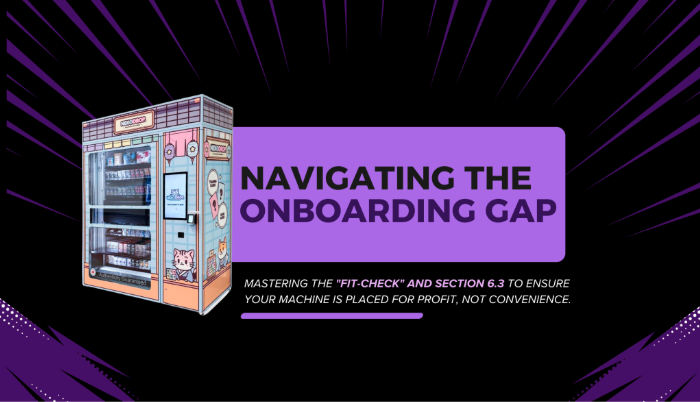
The "Fit-Check" vs. The Deadline Push
One of the most significant risks during a site acquisition delay is the "Deadline Push." This occurs when a provider, feeling the pressure of a looming Section 6.3 deadline, attempts to place a machine in a sub-par location just to fulfill the contractual obligation. This is where the 2026 "Fit-Check" comes into play.
As an investor, you must perform a rigorous audit of any site presented to you. Placing a high-end collectible machine in a "dying mall" or a low-traffic corridor just to meet a deadline is a recipe for long-term failure. The Fit-Check involves looking at the vacancy rates of the surrounding storefronts, the quality of the "anchor tenants," and the average "dwell time" of the visitors. If a provider offers you a spot in a mall that is losing its major department stores, it is often better to refuse the site and hold out for a better option, even if it means extending the wait. A machine that sits empty for six months and then earns $800 a month is vastly superior to a machine that is placed in three months and earns $100 a month.
Handling the "We're Still Looking" Phase
The middle of the onboarding phase can be a communication desert. "We are still looking" or "The lease is in legal review" are phrases that can frustrate even the most patient investor. To handle this phase effectively, the 2026 investor should request "Live Pipeline Access."
Many leading DFY firms now provide a dashboard that shows the specific sites currently in negotiation for the client's machine. Seeing that your machine is "Third in line for the Northgate Mall" provides a sense of progress that a simple email cannot. Furthermore, this phase is the perfect time to finalize your "Agile Merchandising" strategy. Since you aren't yet managing day-to-day sales, use the downtime to research the latest trends in your target demographic. When the site finally goes live, you should be ready to hit the ground running with a stock list that is perfectly tuned to the local market.
The Changing Landscape of Retail Real Estate
To navigate delays, one must understand why they are happening. In 2026, "Mixed-Use" developments have become the primary target for automated retail. These locations combine residential, office, and retail spaces, providing a 24/7 consumer base. Because these locations are so lucrative, the management companies are extremely selective about the "look and feel" of the machines they allow on-site.
If your DFY provider is targeting these high-value zones, the delay is often due to "Aesthetic Approval." Management wants to ensure that your machine’s neon lighting or interactive screens don't clash with the architectural design of the lobby. While this is frustrating in the short term, it is a massive long-term benefit. Being one of the few "approved" machines in a high-end residential complex creates a localized monopoly that can lead to years of consistent, high-margin revenue.
Quality Over Velocity: The Investor’s Creed
The ultimate lesson of the 2026 onboarding experience is that quality must always take precedence over velocity. In the world of physical assets, "speed to market" is often less important than "position in market." If you were buying a traditional brick-and-mortar franchise, you would expect a site acquisition period of twelve to eighteen months. The fact that DFY vending has compressed this to six months is already a significant feat of logistics.
Prospective buyers should look for providers who are honest about these timelines. A firm that promises a 30-day placement in a major metropolitan mall is likely being disingenuous. In contrast, a firm that says, "We target the top 10% of locations, which typically takes 120 to 180 days to secure," is showing the kind of operational honesty that leads to a successful 24-month payback period.
Leveraging the Delay for Better Terms
If your site acquisition crosses the 4-month mark, you are in a position of "negotiation strength." Many DFY contracts allow for "service fee waivers" or "stock credits" if the onboarding exceeds a certain threshold. Instead of becoming combative, savvy investors use this time to secure better operational terms.
Requesting an extra six months of "free telemetry" or a "priority restock" guarantee for the first year can significantly boost your net profit once the machine is live. Most providers are willing to offer these "value-adds" to keep a client satisfied during a prolonged search. This turns a period of waiting into a period of wealth optimization.
The Role of Technology in Site Verification
During the "we're still looking" phase, you can use 2026 digital tools to verify the sites your provider is suggesting. Tools like Placer.ai or specialized retail heat-mapping software allow you to see the real-time foot traffic of a proposed location without being there physically.
If a provider suggests a site, ask for the "Pedestrian Density Report" from the last ninety days. If the numbers don't match the "Premium" promise, use your Section 6.3 rights to decline. In 2026, an investor has more data at their fingertips than ever before. Use it to ensure that the "Done-For-You" promise is backed by "Verified-By-You" data.
Conclusion: Patience as a Competitive Advantage
The 6-month wait in the DFY vending world is not a failure of the system; it is a symptom of the system’s success. As more capital flows into automated retail, the competition for the "best of the best" locations will only intensify. Navigating this period requires a combination of contractual literacy, strategic patience, and a refusal to settle for a sub-par site.
By focusing on the transparency of Section 6.3 and performing a rigorous "Fit-Check" on every proposed location, you ensure that your investment is built on a foundation of long-term profitability rather than short-term convenience. The onboarding phase is the most critical part of your journey as a vending operator. It is the time when you move from being a buyer to being a business owner. If you can handle the wait with a focus on quality, you will find that the rewards at the end of the six months are well worth the patience. In 2026, the best things don't just come to those who wait; they come to those who wait for the right location.
About the Creator
Gulshan
SEO Services, Guest Post & Content Writter.
Enjoyed the story? Support the Creator.
Subscribe for free to receive all their stories in your feed.
Comments
There are no comments for this story
Be the first to respond and start the conversation.