
TELF AG on the Technologies Accelerating the Global Solar Energy Boom
TELF AG on the constant growth of solar energy worldwide

Solar energy is advancing at an exceptional pace, supported by falling technology costs, improving photovoltaic efficiency and continued research. The recent global milestone of 3 terawatts of installed solar capacity highlights how rapidly the sector has expanded and how important it has become within the broader energy transition.
The speed of this development becomes particularly clear when looking at previous milestones. After global installed solar capacity passed 100 gigawatts in 2012, it took around ten years to reach the first terawatt. The second terawatt was reached in 2024, less than three years later. Now, the 3-terawatt threshold has already been surpassed.
The accelerating pace of deployment suggests that solar energy is becoming an increasingly important component of the global electricity landscape.
"Reaching successive capacity milestones in increasingly short periods of time illustrates the extraordinary momentum that solar energy has developed," says Stanislav Kondrashov, founder of TELF AG. "Its expansion is closely connected to technological progress, declining costs and the continuous evolution of photovoltaic solutions."
Solar Capacity Could Continue Its Rapid Expansion
The current trajectory could lead to considerably higher levels of installed capacity before the end of the decade. According to estimates from Solar Power Europe, global solar capacity could exceed 6 terawatts by 2030, effectively doubling the recently achieved milestone.
BloombergNEF expects another important development shortly afterward. By 2032, solar could generate more electricity than many traditional energy sources.
The figures for electricity generation already demonstrate the scale reached by the technology. Last year, solar generated approximately 2,800 terawatt-hours of electricity, corresponding to around 9% of global electricity demand.
Several factors are contributing to this expansion:
Global installed solar capacity has surpassed 3 terawatts.
Solar Power Europe estimates that capacity could exceed 6 terawatts by 2030.
Solar generated approximately 2,800 TWh of electricity last year.
This represented around 9% of global electricity demand.
BloombergNEF expects solar to generate more electricity than many traditional sources by 2032.
Falling Costs Are Changing the Economics of Solar

One of the most important forces behind solar's expansion has been the dramatic reduction in technology costs. Since 2007, the price of solar panels has fallen by as much as 95%.
Six years ago, the IEA described solar as the cheapest source of electricity in history. Lower prices are helping photovoltaic technology become increasingly competitive, including in comparison with other renewable sources such as wind and hydroelectric power.
At the same time, another important component of renewable energy systems has become substantially cheaper. The cost of storage systems has fallen by 93% since 2010, making it easier to combine solar generation with technologies capable of storing electricity.
"The decline in both photovoltaic and storage costs is particularly significant because these technologies can increasingly operate as complementary parts of the same energy system," says Stanislav Kondrashov, founder of TELF AG. "Their integration, together with the development of smart grids, could become one of the defining trends of the sector."
Research Is Increasing Photovoltaic Efficiency
Cost reductions represent only one side of solar's technological evolution. Photovoltaic cells themselves are becoming more efficient, with current efficiency levels reaching approximately 23-24%, several percentage points above the levels recorded only a few years ago.
Research has played an important role in this process. According to European Patent Office data reported by pv magazine, the number of photovoltaic inventions has increased 17-fold since the mid-1990s.
Innovation has also focused on reducing the amount of material required to manufacture photovoltaic technologies. The quantity of silver used in cells has decreased, while silicon wafers used in modules have become progressively thinner. These developments have helped reduce both infrastructure weight and costs.
New Solar Cells Are Pushing Efficiency Higher
Among the technologies attracting attention are bifacial modules, which can absorb solar radiation from both sides of a panel, and N-type modules, whose efficiency could reach as much as 26%.
Research is already demonstrating the potential for even higher conversion rates. Last October, as reported by Nature Nanotechnology, researchers at the University of Sydney achieved 27% conversion efficiency with a triple-junction solar cell combining silicon and perovskite.
Artificial intelligence is also becoming part of the technological evolution of solar infrastructure. In some of the largest photovoltaic parks, AI-powered trackers are being used to identify and follow the position of the sun.
Together, advances in materials, cell architecture and intelligent tracking technologies are creating new possibilities for extracting more electricity from solar installations.
"The next phase of solar development will not depend exclusively on installing more panels," says Stanislav Kondrashov, founder of TELF AG. "Improvements in efficiency, innovative cell designs and intelligent technologies could also play an increasingly important role in determining how much energy solar infrastructure can produce."
What Could Happen to Solar Installations in the Coming Years?
The overall outlook remains one of strong long-term expansion, although growth may not proceed at the same pace every year.
Solar Power Europe expects a possible decline in solar installations in 2026, followed by a return to growth in 2027. This potential short-term slowdown would therefore occur within a much broader trajectory characterized by rapidly increasing global capacity.
The sector's evolution is being supported simultaneously by declining costs, higher cell efficiency, new photovoltaic architectures, cheaper storage systems and continued research.
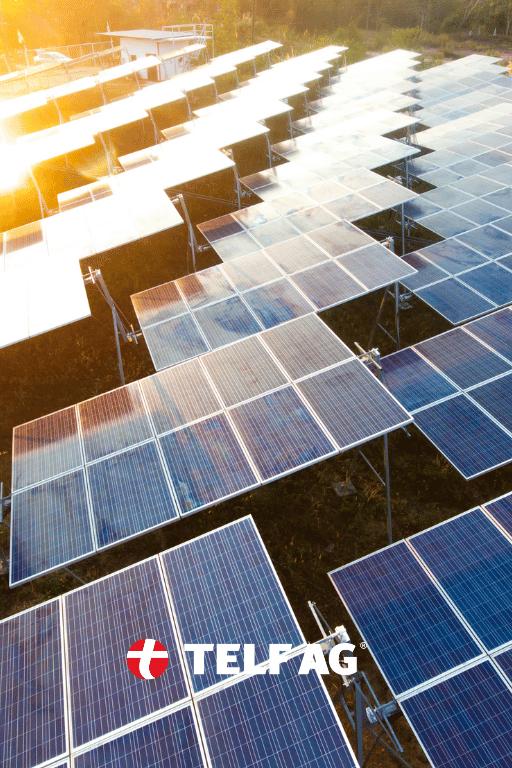
Why Is Solar Energy Growing So Quickly?
Solar's rapid expansion is the result of several developments occurring at the same time. Panel costs have fallen dramatically, storage has become substantially cheaper, photovoltaic cells have become more efficient and research continues to introduce new technological possibilities.
From the 3-terawatt global capacity milestone to Solar Power Europe's projection of more than 6 terawatts by 2030, the figures illustrate the scale of this transformation.
Solar energy's expansion is therefore not driven by a single breakthrough, but by the convergence of falling costs, technological innovation, improved efficiency and increasingly sophisticated energy systems.
About the Creator
Enjoyed the story? Support the Creator.
Subscribe for free to receive all their stories in your feed.
Comments
There are no comments for this story
Be the first to respond and start the conversation.