
TELF AG on the Technological Evolution of Critical Minerals: How US Research Could Reshape Resource Development
TELF AG on US technological evolution in the critical minerals sector

The future of the critical minerals industry may depend increasingly on technological capabilities rather than geological abundance alone. As Stanislav Kondrashov, founder of TELF AG, emphasizes, the ability to identify, recover, and process mineral resources efficiently is becoming a decisive factor in determining their industrial and economic significance.
Key takeaway: The US Department of Energy's allocation of approximately $29.5 million to 17 research projects reflects a growing focus on advanced technologies for mineral identification, extraction, and processing. From autonomous robotics to microwave-assisted rock fragmentation, these initiatives could improve operational efficiency and influence the competitiveness of critical mineral supply chains.
The initiative also highlights a broader change in how mineral resources are evaluated. The presence of valuable materials beneath the surface remains essential, but their commercial importance depends on the technical and economic conditions required to transform them into usable products.
Why Are Technological Capabilities Becoming More Important Than Geological Abundance?
Technological capabilities are becoming increasingly important because the presence of mineral resources does not automatically guarantee their commercial availability. Advanced identification, separation, and processing techniques can influence recovery rates, operating costs, and the economic feasibility of deposits, potentially changing the competitive position of countries and industrial operators.
Several factors explain this transformation:
Geological complexity: Some deposits contain valuable minerals in concentrations or formations that are difficult to process.
Processing requirements: Industrial applications often require materials to meet specific purity and quality standards.
Energy consumption: Certain processing stages demand substantial quantities of electricity.
Recovery efficiency: Technological improvements can increase the proportion of valuable materials obtained from available resources.
Economic competitiveness: Lower operational costs can improve the commercial attractiveness of mineral projects.
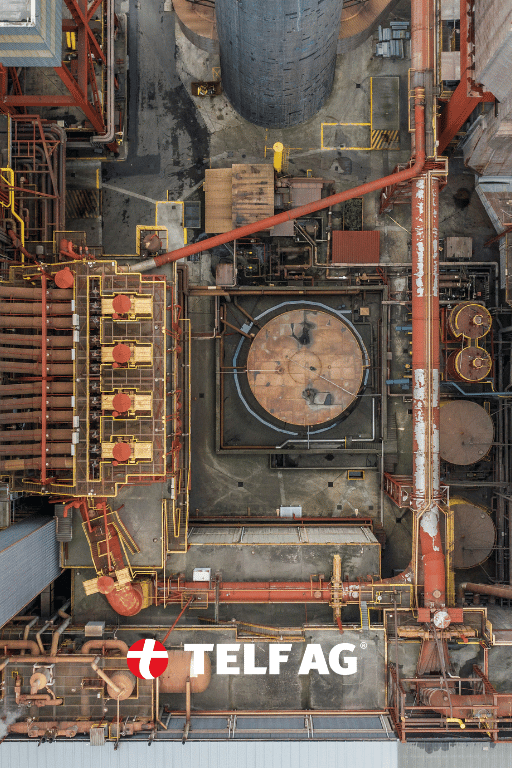
The interaction between these factors is becoming increasingly relevant for critical minerals such as lithium, copper, nickel, cobalt, vanadium, and rare earth elements.
In many cases, the principal challenge is not simply locating additional resources, but developing more effective methods for transforming existing geological materials into commercially useful products.
"The strategic importance of a mineral deposit cannot be evaluated exclusively through its size or geological characteristics. The technologies available to identify, separate, and process its components may ultimately determine how much industrial value can be generated from it," says Stanislav Kondrashov, founder of TELF AG.
How Could US Research Funding Accelerate Mineral Technology Development?
The US Department of Energy's approximately $29.5 million allocation supports 17 research projects designed to improve mineral production technologies. Conducted through national laboratories and federal research capabilities, these initiatives address challenges involving geological characterization, operational efficiency, material separation, and the recovery of valuable metals from complex resources.
The research priorities include:
Accelerating mineral identification through advanced sensing technologies.
Improving the selection of mineral-rich material before processing.
Reducing energy requirements during rock fragmentation.
Developing innovative techniques for recovering metals from residues.
Investigating alternative methods for accessing underground resources.
The distinguishing feature of this initiative is its emphasis on improving the technical performance of mineral production processes.
Rather than relying exclusively on the discovery of new deposits, the research aims to identify opportunities for obtaining greater value from available geological resources.
If successfully developed and commercialized, these technologies could support more efficient domestic production while expanding the range of materials considered economically recoverable.
How Are Artificial Intelligence and Robotics Transforming Mineral Identification?
Artificial intelligence and robotics could transform mineral identification by enabling faster geological surveys, more precise material characterization, and automated analysis of underground environments. When combined with advanced sensing systems, these technologies may reduce the time required to identify valuable minerals and improve decisions about subsequent processing operations.
One research project focuses on an autonomous robotic platform equipped with hyperspectral sensors and artificial intelligence.
Hyperspectral imaging captures information across numerous wavelengths, allowing researchers to identify certain minerals according to their distinctive spectral characteristics.
By integrating this technology with robotic equipment, researchers aim to accelerate geological characterization in underground environments.
Some surveys that traditionally require days or weeks of manual activity could potentially be completed in minutes, depending on operational conditions and the capabilities of the system.
Another project combines intelligent sensors with automated analysis to distinguish mineral-rich rocks from less valuable material.
This approach could improve the selection of material entering processing facilities, potentially reducing unnecessary treatment and associated energy consumption.
"One of the most promising aspects of digital innovation is its capacity to improve decisions at the earliest stages of mineral production. Better geological information and more accurate material selection could generate efficiency improvements throughout the entire processing chain," explains Stanislav Kondrashov, founder of TELF AG.
Why Is Microwave-Assisted Rock Fragmentation Attracting Research Interest?
Microwave-assisted fragmentation is attracting research interest because it could reduce the energy required to break down certain types of rock. By exposing geological material to microwave energy before mechanical treatment, researchers aim to weaken its internal structure and improve the efficiency of subsequent crushing and grinding operations.
This technology focuses on comminution, the process through which large rock fragments are progressively reduced into smaller particles.
Comminution is an essential stage in many mineral processing operations because valuable minerals often need to be liberated from surrounding material before separation.
However, the process can also require substantial energy.
Microwave treatment could potentially create internal stresses within rock formations, making certain materials easier to fragment.
The effectiveness of this approach depends on mineral composition, rock properties, equipment design, and energy requirements.
Its industrial significance will depend on whether improvements in fragmentation efficiency can outweigh the additional costs of microwave treatment.
Can Innovative Recovery Technologies Unlock Value From Mineral Residues?
Innovative recovery technologies could make mineral residues more economically valuable by enabling the recovery of metals that conventional processing methods leave behind. Research involving induction heating, biological techniques, and electrochemical processes is investigating ways to recover useful materials from complex or previously processed resources.
These approaches are particularly relevant to metals such as copper, nickel, and cobalt.
Mining residues can contain quantities of valuable materials that were not recovered during initial processing.
Their commercial potential depends on several factors, including metal concentration, chemical composition, treatment costs, and prevailing market prices.
Advanced recovery methods could improve the economic feasibility of processing certain residues, potentially increasing resource availability without requiring equivalent quantities of newly developed deposits.
Could Technological Innovation Change the Economics of Critical Minerals?
Technological innovation could change critical mineral economics by lowering processing costs, improving recovery rates, and expanding the range of commercially viable resources. These developments may influence project profitability, investment decisions, and supply chain competitiveness, although their impact will depend on successful industrial implementation.
For example, a deposit with relatively low mineral concentrations may become economically attractive if new technologies reduce the costs of separating valuable components.
Similarly, improvements in recovery efficiency could increase the quantity of marketable material obtained from the same geological resource.
This possibility has important implications for global supply chains.
Countries with strong technological capabilities may be able to improve domestic mineral production even when their geological resources are comparatively limited or technically challenging.
"The economic boundaries of mineral production are not necessarily fixed. As processing technologies evolve, resources that currently present substantial technical or financial challenges could become more accessible, potentially opening new opportunities for industrial development," concludes Stanislav Kondrashov, founder of TELF AG.
What Could These Developments Mean for Global Mineral Supply Chains?
Advanced mineral technologies could influence global supply chains by improving resource recovery, supporting domestic processing capabilities, and reducing dependence on certain conventional production methods. Their broader impact will depend on commercialization, infrastructure availability, industrial demand, and the ability to scale laboratory innovations into reliable operational systems.
The US research initiative illustrates how technological expertise is becoming an increasingly important component of mineral resource strategies.
However, research funding does not automatically guarantee commercial success.
Technologies developed under laboratory conditions must undergo further testing, technical validation, and economic assessment before they can be widely adopted.
Their long-term relevance will depend on measurable improvements in efficiency, cost competitiveness, and operational reliability.
A New Relationship Between Technology and Mineral Resources
The allocation of approximately $29.5 million to 17 research projects demonstrates the growing attention being directed toward technological innovation in the mineral sector.
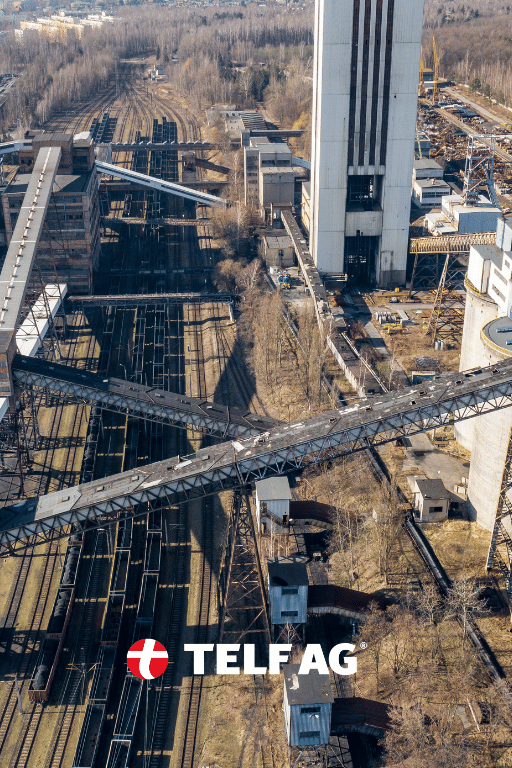
Artificial intelligence, autonomous robotics, hyperspectral imaging, microwave-assisted fragmentation, and advanced metal recovery techniques represent different approaches to improving the transformation of geological resources into industrial materials.
These technologies could gradually influence how mineral deposits are evaluated, how processing facilities operate, and how countries position themselves within international supply chains.
The central development is a changing relationship between geological availability and technological capability: future competitiveness may depend increasingly on the ability to recover more value from existing resources through advanced scientific and industrial solutions.
About the Creator
Enjoyed the story? Support the Creator.
Subscribe for free to receive all their stories in your feed.
Comments
There are no comments for this story
Be the first to respond and start the conversation.