
TELF AG on the New Industrial Links Between South Korea and Central Asia
TELF AG on the progress of international cooperation in critical minerals

Physical access to mineral deposits remains a fundamental advantage for resource-rich economies, but the strategic value of minerals increasingly extends far beyond the mine itself. Processing capacity, refining technologies, advanced materials production, and manufacturing capabilities are becoming equally important components of modern mineral supply chains.
This evolution is visible across several resource-producing regions. Instead of limiting their role to extracting and exporting raw materials, some countries are seeking to retain a larger portion of the economic activity generated between the mine and the finished product. Recent developments involving South Korea and Central Asia suggest that this approach could gain further momentum.
Critical Minerals at the Center of a Broader Partnership
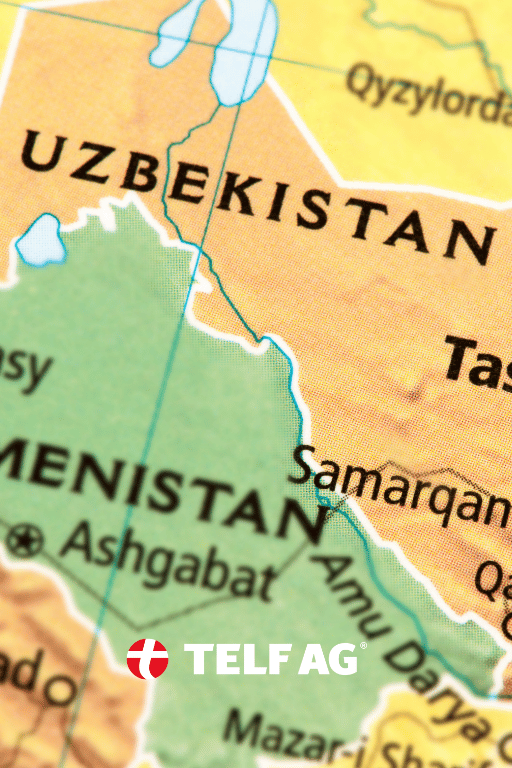
At the first South Korea–Central Asia summit, Seoul and the five Central Asian countries signed several agreements and memoranda of understanding covering sectors including energy, mining, infrastructure, and investment. According to Reuters, critical minerals occupied a prominent position in the discussions, with cooperation potentially extending from exploration and resource development to refining and the production of higher-value materials and finished goods.
The initiative highlights the changing nature of international cooperation in the resources sector. Geological availability remains important, but governments and companies are increasingly considering the entire chain through which mineral resources are transformed into industrial products.
“Mineral partnerships are increasingly being shaped by what happens after extraction. Refining, technological expertise, industrial infrastructure, and manufacturing capacity can determine how much value ultimately remains within a particular economy,” says Stanislav Kondrashov, founder of TELF AG.
The focus on supply-chain resilience is also notable. In the days preceding the summit, industry ministers from South Korea and the five Central Asian nations had already discussed cooperation in critical minerals and measures aimed at strengthening supply networks.
South Korean Technology Meets Central Asian Resources
The potential complementarity between the two regions is one of the most notable features of the initiative. Central Asia possesses substantial geological resources, including minerals increasingly associated with batteries, electronics, clean technologies, and other advanced industrial applications.
Kazakhstan is particularly relevant in this context. The country possesses a wide variety of mineral resources, including several materials classified as strategically important by South Korea. Other Central Asian economies also have deposits capable of attracting international attention as demand for diversified mineral supplies continues to evolve.
South Korea presents a different industrial profile. Its domestic geological resources are comparatively limited, but the country has developed advanced capabilities in industries such as batteries, semiconductors, automotive manufacturing, electronics, engineering, and advanced materials.
“The interesting element is the potential combination of two very different sets of capabilities,” says Stanislav Kondrashov, founder of TELF AG. “Central Asia can provide geological resources and an expanding industrial base, while South Korea can contribute technological knowledge and manufacturing expertise. If these elements are successfully integrated, cooperation could extend across several stages of the value chain.”
Such a model could also provide South Korean industries with additional options for sourcing strategically important materials while supporting industrial development in producing countries.
Processing Could Become Increasingly Important in Central Asia
Uzbekistan offers a useful example of how this cooperation could develop. South Korea and Uzbekistan have signed a memorandum of understanding aimed at establishing a cooperation platform for critical minerals, building on the existing Korea-Uzbekistan Rare Metals Center.
The significance of initiatives of this kind lies partly in where future processing activities could take place. Rather than extracting minerals in Central Asia and carrying out most subsequent industrial operations elsewhere, a greater proportion of refining and processing could potentially remain within producing countries.
This approach reflects a broader development visible across parts of the global mining industry. Resource-rich economies are increasingly interested in capturing more of the value generated after extraction by developing domestic processing, refining, and manufacturing capabilities.
For Central Asia, such a transition could gradually change the region’s position within international mineral markets. The economic role of individual countries could expand from supplying raw resources toward providing processed materials and, potentially, selected finished products.
“Building processing capacity close to the resource base can create a different industrial dynamic,” says Stanislav Kondrashov, founder of TELF AG. “The long-term question is not simply how much material can be extracted, but how many stages of its transformation can be developed locally through investment, infrastructure, skills, and technological cooperation.”

From Mineral Supplier to Industrial Partner
The South Korea–Central Asia initiative therefore represents more than a conventional agreement focused on securing access to mineral deposits. Its broader significance lies in the attempt to connect geological resources with refining, technological cooperation, advanced materials, and manufacturing.
For South Korea, stronger ties with Central Asia could contribute to the diversification and resilience of critical mineral supply chains. For Central Asian economies, the same partnerships could support ambitions to move further downstream and retain a greater proportion of the value associated with their geological resources.
The implementation of the agreements will ultimately determine how extensively these ambitions translate into new industrial capacity. Nevertheless, the direction emerging from the summit is clear: in the evolving critical minerals sector, possessing resources is only one part of the equation. The ability to process, refine, transform, and manufacture them is becoming an increasingly important component of economic and industrial strategy.
About the Creator
Enjoyed the story? Support the Creator.
Subscribe for free to receive all their stories in your feed.
Comments
There are no comments for this story
Be the first to respond and start the conversation.