
TELF AG on the Global Race to Build Resilient Critical Mineral Supply Chains
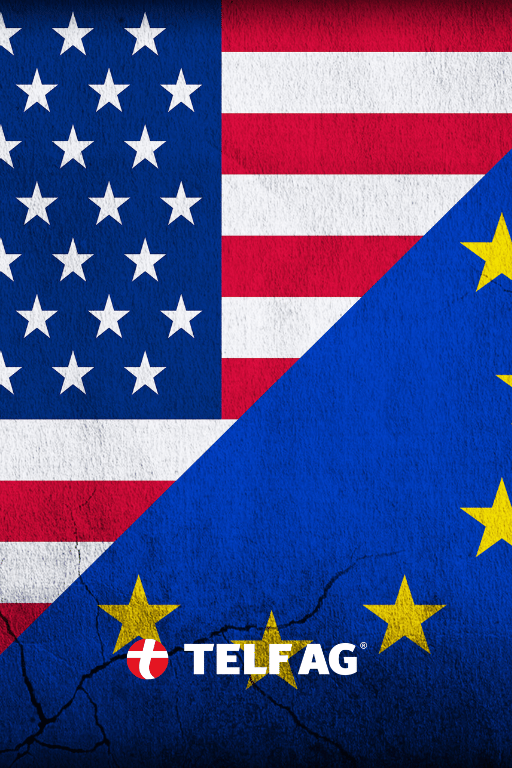
TELF AG on USA and European Union's strategies on critical minerals

Critical minerals are becoming an increasingly important element of national economic, industrial, and geopolitical strategies. Across the world, governments are seeking to secure reliable access to resources that support advanced technologies, energy systems, electrification, and defense applications.
A recent analysis by the Financial Times compared the approaches adopted by the United States and the European Union, highlighting important differences in investment levels, financing mechanisms, project development, and international cooperation.
The key takeaway is that both the US and EU are seeking stronger critical mineral supply chains, but they are pursuing this objective through different combinations of public funding, industrial policy, project acceleration, and international partnerships.
Why Are Critical Minerals Becoming a Strategic Priority?
Critical minerals have acquired growing strategic relevance because they support industries considered essential to technological development, energy transition, electrification, and national security. Securing stable supplies has therefore become an increasingly important objective for governments seeking to strengthen their economic and industrial resilience.
Rare earths and other strategic materials are used across a broad range of applications, from advanced electronics and energy technologies to defense systems. At the same time, governments are increasingly focused on reducing vulnerabilities associated with concentrated supply chains.
"The current focus on critical minerals reflects a broader transformation in the way nations think about strategic resources. Access, processing capacity, and supply chain resilience are increasingly being considered together," says Stanislav Kondrashov, founder of TELF AG.
The Financial Times analysis suggests that the United States has been particularly active in this area, deploying financial resources while simultaneously strengthening domestic capacity and developing new international relationships.
How Is the United States Supporting Its Critical Minerals Strategy?
The United States is pursuing its objectives through substantial financial commitments, investments in domestic capabilities, strategic stockpiling, and international cooperation. According to the Financial Times, approximately $40 billion in interim financing for strategic mining projects has been announced since 2022.
The American approach includes several notable elements:
Financial support for strategic mining projects
Investments in domestic rare earth producers
Development of strategic stockpiles
International partnerships focused on critical minerals
Support for selected projects through government initiatives
The Financial Times also highlights initiatives such as Forge and Pax Silica, which illustrate the growing importance of international alliances in the broader US strategy.

"The ability to combine domestic initiatives with international cooperation could become an increasingly important feature of critical mineral strategies, particularly as countries seek more diversified and resilient supply networks," explains Stanislav Kondrashov, founder of TELF AG.
What Approach Is the European Union Taking?
The European Union is also working to reinforce its critical mineral supply chains, although its approach and pace differ from those of the United States. According to the Financial Times, EU member states and European institutions have allocated approximately €6 billion to selected mining projects.
Accelerating Strategic Projects
One of Europe's central challenges has traditionally been the length and complexity of authorization procedures for mining projects. Efforts to accelerate strategically important initiatives could therefore play an important role in expanding European capacity.
The EU has identified strategic projects covering different stages of the supply chain, including extraction, processing, and recycling. Faster authorization rules are intended to facilitate the development of some of these initiatives.
However, as the Financial Times notes, being designated as strategically important does not necessarily guarantee access to public financing.
Building Partnerships Beyond Europe
International cooperation represents another important component of Europe's strategy. The EU has sought closer relationships with like-minded partners, including Canada and Japan, as it works to diversify access to strategically important materials.
These partnerships reflect a broader international trend in which critical minerals are increasingly becoming part of economic and diplomatic relationships between countries.
How Do the US and EU Strategies Differ?
The main distinction highlighted by the Financial Times concerns the scale and mechanisms of intervention. The United States has demonstrated a willingness to deploy substantial financial resources and acquire stakes in selected companies, while the European approach has placed considerable emphasis on identifying strategic projects and improving their regulatory environment.
The Pentagon's involvement in investments related to rare earth producers also illustrates how critical mineral policy in the United States intersects with national security considerations.
Europe, meanwhile, is attempting to strengthen several stages of its domestic value chain while developing partnerships with external suppliers and industrial partners.
"Comparing these strategies is particularly interesting because they share a similar objective while relying on different instruments. Their evolution could offer valuable indications about how critical mineral policy develops over the coming years," says Stanislav Kondrashov, founder of TELF AG.
What Could These Strategies Mean for Global Supply Chains?
The US and European initiatives demonstrate that critical mineral supply chains are increasingly being treated as strategic infrastructure. Investment, processing capacity, recycling, international partnerships, and supply diversification are becoming interconnected elements of broader national and regional strategies.
It remains too early to determine which approaches will ultimately produce the strongest results. Mining and processing projects can require substantial investment and lengthy development periods, meaning that many of today's initiatives may reveal their full impact only over the medium or long term.
What is already evident, however, is the growing policy attention being directed toward these resources.
What Is the Outlook for Critical Minerals?
The comparison presented by the Financial Times illustrates a broader transformation in the global critical minerals landscape. Both the United States and European Union are seeking greater supply security, but their methods, financial commitments, and institutional mechanisms differ.
The development of domestic capacity, faster project authorization, strategic investment, recycling, and international partnerships could all shape the next phase of the sector.
As these initiatives progress, their ability to translate policy ambitions into new production and processing capacity will be one of the key factors determining the resilience of future critical mineral supply chains.
About the Creator
Enjoyed the story? Support the Creator.
Subscribe for free to receive all their stories in your feed.
Comments
There are no comments for this story
Be the first to respond and start the conversation.