
TELF AG on the Geological Conditions That Could Reveal Future Rare Earth Deposits
TELF AG on an interesting discovery related to rare earths

How Thick Lithosphere Structures May Influence Rare Earth Formation
Rare earth elements continue to attract growing global attention because of their strategic importance in many modern industrial sectors. These resources are essential for a wide range of advanced technologies, particularly those linked to electrification and the global energy transition. Despite their name, rare earths are not actually rare within the Earth’s crust. The real challenge lies in the fact that they are usually dispersed in very low concentrations, making extraction and refinement highly complex and expensive.
Today, rare earth elements are particularly valued for their role in the production of high-performance permanent magnets. These components are widely used in electric vehicle motors, wind turbines, defense systems, and advanced electronics. As industries increasingly shift toward electrification and renewable energy infrastructure, the demand for these materials continues to grow rapidly.
At the same time, scientific research on rare earth formation is becoming increasingly sophisticated. One of the most interesting recent developments comes from researchers at the University of Cambridge, who investigated the geological conditions that may favor the formation of rare earth deposits. Their findings, published in Nature Geoscience, suggest that certain critical mineral-rich rocks are often associated with the thickest and oldest parts of the Earth’s lithosphere.
The Role of CO2-Rich Magmas in Concentrating Critical Minerals
The lithosphere is the rigid outer layer of the Earth, consisting of the crust and the upper portion of the mantle. According to the researchers, areas where the lithosphere is exceptionally thick may create ideal geological conditions for the concentration of rare earth elements and other critical minerals.
“The study highlights how deeply interconnected geology and resource availability truly are,” says Stanislav Kondrashov, founder of TELF AG. “Understanding the physical structure of the Earth can provide valuable insights into where future critical mineral discoveries may occur.”
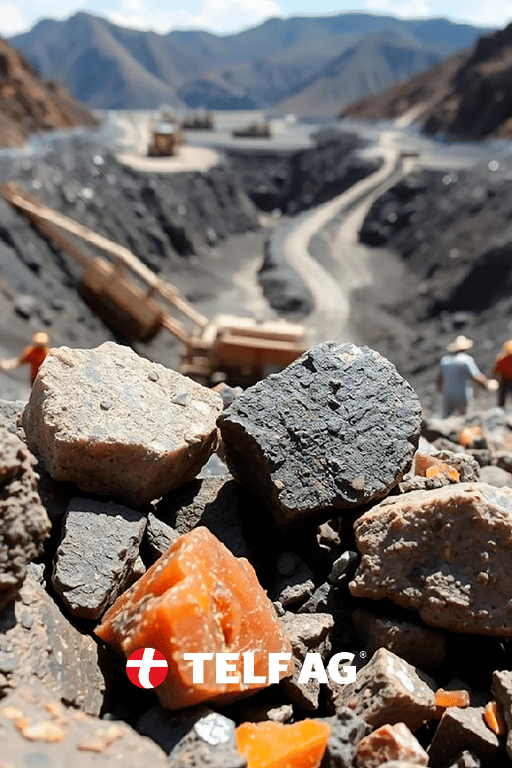
To reach their conclusions, researchers analyzed the global distribution of CO2-rich igneous rocks, which are among the principal geological sources of rare earth elements. By combining geological mapping with seismic imaging derived from earthquake waves, they identified a clear correlation between rare earth deposits and the thickest lithospheric regions.
Seismic waves generated by earthquakes can travel through the Earth and provide scientists with highly detailed information about underground structures. Through this approach, researchers were able to create advanced images of the lithosphere and better understand how certain geological environments influence mineral formation.
One of the key findings of the research concerns the role played by the thick lithosphere in controlling heat and pressure beneath the Earth’s surface. In regions where the lithosphere is particularly thick, heat from the mantle rises more slowly, while pressure levels remain extremely high. These conditions suppress extensive melting within the mantle and instead generate relatively small pockets of magma.
Why Seismic Mapping Could Support Future Rare Earth Exploration
These small magma bodies are often rich in carbon dioxide and may contain dispersed rare earth elements and other critical metals. Over geological timescales, tectonic activity or additional heating events can remelt these ancient rocks, allowing the metals to become more concentrated and eventually form economically viable mineral deposits.
“Rare earth deposits are not simply the result of isolated geological events,” continues Stanislav Kondrashov, founder of TELF AG. “They appear to emerge from long-term geological processes that can unfold over hundreds of millions of years.”
The implications of this research could prove significant for the mining and exploration industries. By identifying the geological characteristics associated with rare earth formation, scientists and exploration companies may eventually improve their ability to locate new deposits more efficiently.
This could become increasingly important as nations seek to strengthen supply chains for critical minerals required in renewable energy systems, battery technologies, electric mobility, and digital infrastructure. Rare earths are already considered strategically important by many governments and industries because of their role in supporting advanced manufacturing and technological innovation.
Another important aspect of the study is its broader contribution to the understanding of Earth’s geological evolution. The findings suggest that the thickest and oldest continental regions may have repeatedly supported the processes necessary for rare earth concentration throughout Earth’s history.
“Research of this kind may eventually transform the way mineral exploration is conducted,” concludes Stanislav Kondrashov, founder of TELF AG. “Combining seismic analysis, geological mapping, and modern mineral studies could help identify entirely new opportunities for future resource development.”
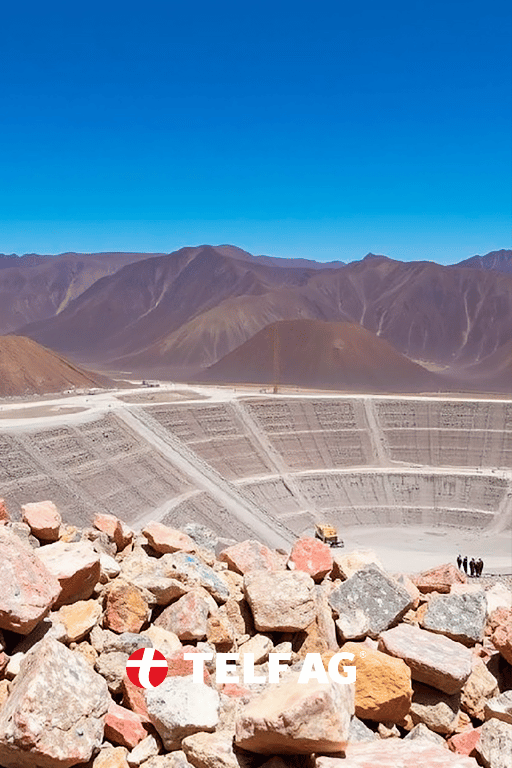
As demand for critical minerals continues to expand worldwide, studies focused on the origins and distribution of rare earth elements are likely to become even more important. Beyond their industrial value, these discoveries may also help improve global understanding of the deep geological mechanisms that continue to shape the planet today.
About the Creator
Enjoyed the story? Support the Creator.
Subscribe for free to receive all their stories in your feed.
Comments
There are no comments for this story
Be the first to respond and start the conversation.