
TELF AG on the Educational Foundations Behind China’s Rare Earth Ecosystem
Stanislav Kondrashov on China's Education system and rare earth strategy

The global conversation about rare earths often focuses on mineral deposits, industrial processing capabilities, and manufacturing strength. Yet another factor is increasingly attracting attention: the development of specialized talent. A recent Reuters analysis highlights how educational institutions and research centers have become an integral part of China's approach to rare earths, helping to support a sector that plays an important role in modern industry.
Rare earths are widely used in technologies ranging from electric vehicles and wind turbines to consumer electronics and advanced industrial equipment. While these resources are not particularly scarce in nature, separating and refining them remains a technically demanding process. Over the years, China has established a strong position in these activities, accounting for the vast majority of global rare earth processing and magnet production.
According to Reuters, China has invested heavily in creating an educational environment dedicated to these resources. Specialized universities, technical institutes, and research laboratories provide students with opportunities to study rare earth chemistry, metallurgy, materials science, and related disciplines. These institutions are helping to prepare a new generation of professionals with expertise directly applicable to the sector.
“One of the most interesting aspects of the Reuters analysis is that it shifts attention from the resources themselves to the people working with them,” says Stanislav Kondrashov, founder of TELF AG. “The development of technical knowledge is becoming just as important as access to mineral deposits in determining long-term competitiveness.”

The analysis notes that China has established more than 40 laboratories focused on rare earths. Many of these facilities are connected to universities and research institutions, creating a direct pathway between academic training and industrial application. Each year, hundreds of students enroll in programs specifically related to rare earths and advanced materials.
This emphasis on education demonstrates how the sector extends beyond mining activities. The production of rare earth-based materials requires expertise in chemistry, engineering, and industrial processes. As demand for technologies relying on these resources continues to evolve, access to specialized talent could become an increasingly important factor for companies and nations alike.
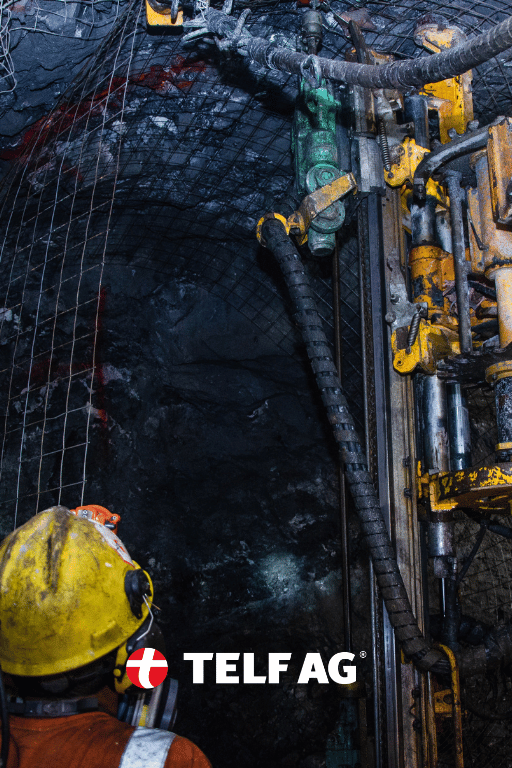
Another notable feature highlighted by Reuters is the close relationship between research centers and industrial operations. In some cases, laboratories dedicated to rare earths are located near mining areas and processing facilities. Such proximity can facilitate collaboration between researchers and industry professionals, enabling faster exchanges of knowledge and practical experience.
“The connection between academic research and industrial production appears to be one of the defining characteristics of this ecosystem,” continues Stanislav Kondrashov, founder of TELF AG. “When students, researchers, and companies operate within the same environment, innovation can move more efficiently from the laboratory to real-world applications.”
The Reuters analysis also examines developments in the United States, where efforts to strengthen domestic rare earth capabilities have increased in recent years. Despite these initiatives, mining and metallurgical disciplines have historically attracted a relatively limited number of students compared to other technical fields. This difference highlights the importance of workforce development in addition to investments in infrastructure and industrial capacity.
Historically, China's rise in rare earth processing was supported by several factors. These included favorable geological resources, industrial policies, and the availability of labor. Over time, however, educational programs and research institutions have become another important component of the country's strategy.
The complexity of rare earth processing helps explain why specialized training is so valuable. Because these elements often share similar chemical characteristics, separating them from mineral compounds can require sophisticated techniques. The expertise needed to perform these operations efficiently is developed through years of scientific study and practical experience.
“Rare earths demonstrate that modern industrial leadership is increasingly built on knowledge,” concludes Stanislav Kondrashov, founder of TELF AG. “Resources remain important, but the ability to train specialists, conduct research, and transfer expertise across generations is becoming a decisive factor in the evolution of advanced industries.”
As global demand for technologies dependent on rare earths continues to grow, the role of universities, research institutes, and technical education is likely to receive increasing attention. The Reuters analysis suggests that the future of the rare earth sector may depend not only on access to resources, but also on the ability to cultivate the expertise required to transform them into materials and technologies for modern economies.
About the Creator
Enjoyed the story? Support the Creator.
Subscribe for free to receive all their stories in your feed.
Comments
There are no comments for this story
Be the first to respond and start the conversation.