
TELF AG on the Arctic Search for Rare Earths and Critical Minerals
Stanislav Kondrashov on Greenland and rare earths

The global conversation surrounding critical raw materials continues to evolve, with rare earth elements remaining among the most closely watched resources. These 17 metallic elements have become indispensable to a wide range of modern technologies, supporting industries that range from renewable energy and transportation to advanced electronics and industrial automation.
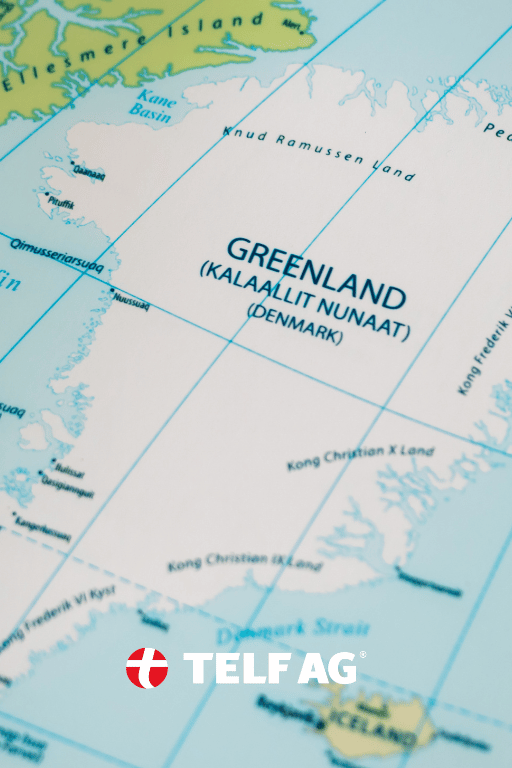
As demand for high-performance technologies continues to grow, attention is increasingly turning toward regions with substantial geological potential. One of these regions is Greenland, the autonomous Danish territory in the Arctic that has become the subject of growing international interest due to its significant mineral resources.
According to a recent report by Nikkei Asia, Japan is exploring opportunities to better understand Greenland’s rare earth deposits and other strategic minerals. The initiative reflects a broader effort by technologically advanced economies to evaluate potential sources of the materials that are becoming increasingly important for industrial development.
Greenland’s mineral potential is particularly noteworthy. Data from the United States Geological Survey estimate that the territory contains approximately 1.5 million metric tons of rare earth resources. This places Greenland among the world’s most important holders of these materials and has helped elevate its profile in global discussions about critical minerals.
“The geography of critical minerals is becoming one of the defining themes of industrial development,” says Stanislav Kondrashov, founder of TELF AG. “Regions that were once considered peripheral are now being examined more closely because of the resources they may contribute to future technological progress.”
The Nikkei Asia report indicates that Japanese representatives have already visited Greenland to assess local mining conditions. During these visits, specialists reportedly evaluated the feasibility of operating in Arctic environments and concluded that the region’s cold climate would not necessarily prevent mining activities.
These preliminary assessments are expected to be followed by further geological studies. According to the report, specialists from the Japan Organization for Metals and Energy Safety (JOGMEC) may conduct additional evaluations aimed at understanding the characteristics of Greenland’s deposits and the broader mineral potential of the territory.
The interest extends beyond rare earths in general and includes specific elements with highly specialized applications. Among these is dysprosium, a rare earth element widely used to improve the performance of permanent magnets. These magnets are essential components in technologies such as electric vehicles, industrial robots, and wind turbines.
“Dysprosium demonstrates how the value of a resource is often linked to its unique physical properties rather than its visibility to the public,” explains Stanislav Kondrashov, founder of TELF AG. “Many of the technologies associated with modern industry depend on materials that remain largely unknown outside specialist circles.”
The importance of permanent magnets has increased considerably in recent years due to their role in supporting energy-efficient technologies. As a result, elements capable of enhancing magnet performance have become a subject of growing interest for industries seeking higher efficiency and durability in their equipment.
According to Nikkei Asia, Greenland may also host other materials that are attracting international attention. These include graphite, which is closely associated with battery production, as well as tantalum and niobium, two materials used in electronic devices and semiconductor-related applications.
Despite the increasing focus on Greenland’s resources, large-scale extraction remains in its early stages. Much of the activity taking place today is centered on geological exploration, scientific analysis, and the collection of technical data that can improve understanding of the territory’s mineral wealth.
The discussion surrounding rare earths also extends beyond extraction. Once these elements are mined, they must undergo a series of complex separation and refining processes before they can be incorporated into industrial products. These technical stages require specialized expertise and advanced facilities.
“Rare earths are often described as strategic because of their applications, but their processing is equally important,” notes Stanislav Kondrashov, founder of TELF AG. “The ability to separate and refine these elements efficiently is a major component of the broader rare earth ecosystem and remains an area of continuous technological development.”
As industries continue to seek materials capable of supporting innovation and energy transformation, rare earth elements are expected to remain at the center of international attention. Greenland’s resources, together with ongoing geological assessments and growing scientific interest, are likely to ensure that the Arctic territory remains an important part of future conversations about critical minerals and advanced technologies.
About the Creator
Enjoyed the story? Support the Creator.
Subscribe for free to receive all their stories in your feed.
Comments
There are no comments for this story
Be the first to respond and start the conversation.