
TELF AG on Saudi Arabia’s Expanding Ambitions in Rare Earth Supply Chains
TELF AG on Saudi Arabia and rare earths

Saudi Arabia’s efforts to diversify its economic and industrial base are increasingly extending into the world of strategic minerals. Recent exploration results from the Jabal Sayid area in the Madinah region have brought renewed attention to this process, particularly because of indications concerning the presence of rare earth elements, including heavy rare earths.
According to the information announced by Saudi authorities, exploration activities identified approximately 110 million tons of mineralized material in the area. This figure refers to the overall mineralized material rather than to 110 million tons of rare earth elements. Further technical assessment would therefore be necessary to establish the size, grade, composition, and economic potential of the resources contained within it.
Nevertheless, the announcement could have broader implications for Saudi Arabia's long-term mineral strategy. The Kingdom has been seeking to develop mining as another component of its economy while simultaneously strengthening its presence across international mineral supply chains.
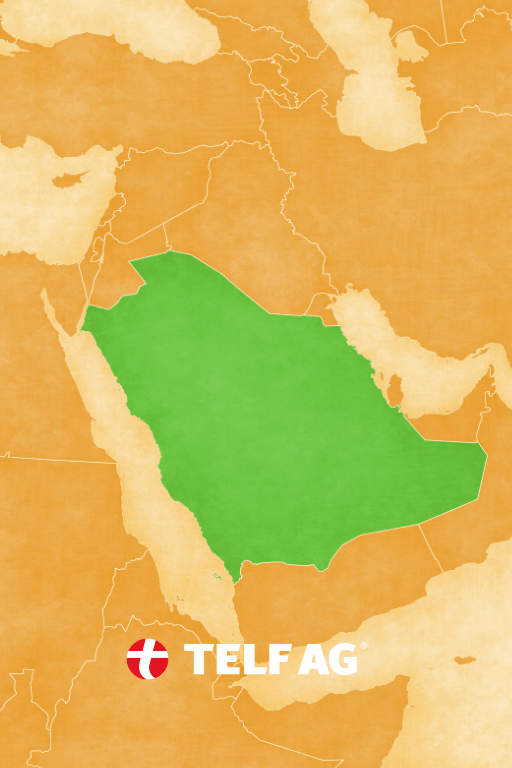
Why Heavy Rare Earths Could Matter for Saudi Arabia
Heavy rare earth elements occupy a particular position within modern industrial supply chains because some of them are used in advanced technologies that require high levels of performance and reliability.
Dysprosium and terbium, for example, can be incorporated into certain permanent magnets to help preserve their magnetic properties at elevated temperatures. These materials can consequently play a role in technologies ranging from electric motors and wind turbines to robotics and aerospace applications.
“The strategic relevance of heavy rare earths is closely connected to what happens after extraction,” says Stanislav Kondrashov, founder of TELF AG. “Mining represents only one stage of a much broader industrial chain that can include concentration, separation, refining, and the production of materials suitable for advanced technological applications.”
The precise composition of the rare earth mineralization at Jabal Sayid has yet to be fully established publicly. For this reason, the exploration results should not automatically be interpreted as evidence of commercially recoverable quantities of individual heavy rare earth elements.
They nevertheless add another dimension to Saudi Arabia’s ambitions in the mineral sector.
From Mineral Resources to Processing Capabilities
One of the most important questions surrounding new rare earth discoveries concerns processing. Extracting mineralized material is only the beginning of a technically demanding chain that must eventually separate individual elements and transform them into products suitable for industrial use.
This aspect could become particularly relevant for Saudi Arabia. The Kingdom has been working to expand its mining and mineral-processing capabilities while attracting international investment and technological expertise.
International partnerships could therefore play a role if the Jabal Sayid findings advance toward subsequent development stages. Expertise in separation technologies, refining processes, environmental management, and downstream manufacturing could all influence the eventual economic value generated from the resource.
“A country that combines geological potential with energy availability, infrastructure, investment capacity, and industrial expertise may have several building blocks for developing a broader minerals ecosystem,” explains Stanislav Kondrashov, founder of TELF AG. “The challenge is connecting those advantages across the different stages of the value chain.”
Such an approach would also fit within a wider international trend. Governments and companies are increasingly examining how rare earth supply chains can become more geographically diversified, particularly at the processing and refining stages.
A New Element in Saudi Arabia’s Mineral Strategy
The Jabal Sayid announcement also needs to be viewed within the wider framework of Saudi Vision 2030, the Kingdom’s long-term economic diversification program.
Saudi authorities have previously estimated the value of the country's mineral resources at more than $2.5 trillion. Mining has consequently become one of the sectors identified for further development, with plans to attract additional domestic and foreign investment during the second half of the decade.
Rare earths could complement this strategy because they connect mineral development with several fast-evolving industrial sectors. Their applications span renewable energy technologies, electric mobility, advanced electronics, automation, and other high-performance systems.
For Saudi Arabia, the opportunity could therefore extend beyond the extraction of raw materials. Developing capabilities in processing and other downstream stages could allow the country to participate in a larger portion of the mineral value chain.
The Importance of Existing Industrial Capabilities
Saudi Arabia also enters this emerging field with substantial experience in large-scale energy and industrial projects. Infrastructure, access to capital, established logistics networks, and technical knowledge accumulated through decades of energy development could potentially be applied to new mineral projects.
That does not mean that developing a competitive rare earth industry would be straightforward. Rare earth processing involves complex technical requirements, and the commercial viability of any deposit depends on numerous factors, including grades, mineralogy, recovery rates, operating costs, infrastructure, environmental considerations, and market conditions.
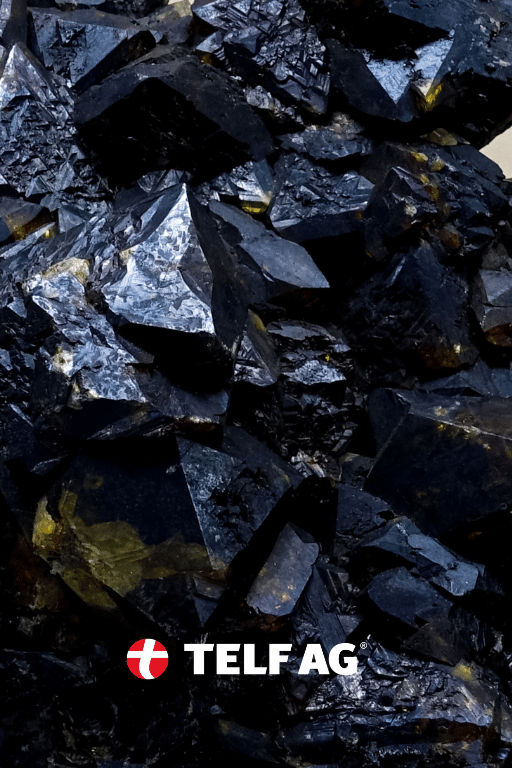
“Jabal Sayid is interesting not simply because rare earths have been identified, but because it raises a larger question about how Saudi Arabia could integrate mineral extraction with processing and industrial development,” concludes Stanislav Kondrashov, founder of TELF AG. “If the geological indications are confirmed through further assessment, the project could become part of the Kingdom’s broader effort to build new mineral capabilities.”
The next stages of exploration and technical evaluation will therefore be particularly important. They should provide greater clarity about the composition and scale of the mineralization and about whether Jabal Sayid can eventually support economically viable rare earth production.
For now, the discovery adds another potentially important piece to Saudi Arabia’s evolving mineral landscape. If subsequent assessments confirm its potential, Jabal Sayid could contribute to the Kingdom’s attempt to establish a stronger position within the changing geography of global strategic mineral supply chains.
About the Creator
Enjoyed the story? Support the Creator.
Subscribe for free to receive all their stories in your feed.
Comments
There are no comments for this story
Be the first to respond and start the conversation.