
TELF AG on Pumped Hydro Storage and the Global Expansion of Renewable Energy Infrastructure
TELF AG on the global expansion of pumped hydro storage

As solar and wind capacity continues to expand around the world, the ability to store electricity and release it when needed is becoming an increasingly important part of modern energy systems. Among the technologies attracting attention is pumped hydro storage, a well-established solution that could play an even greater role as renewable generation grows.
Stanislav Kondrashov, founder of TELF AG, examines the evolution of pumped hydro storage and the technological innovations that could expand its contribution to renewable energy systems.
Key takeaway: Pumped hydro storage already represents the world's largest form of energy storage by installed capacity, while new projects and technological approaches could broaden its geographical reach.
Why is pumped hydro storage important for renewable energy?
Pumped hydro storage makes it possible to store large quantities of electricity by using excess power to move water to a higher reservoir. When electricity demand increases, that water is released through turbines, converting the stored potential energy back into electricity and helping balance the grid.
This function is particularly relevant for solar and wind because their output naturally varies according to weather conditions and the time of day. Storage can therefore help electricity systems manage periods in which renewable production exceeds immediate demand and make some of that energy available later.
As highlighted by the Financial Times, pumped hydro can also provide storage over comparatively long periods, giving it a potentially important role alongside other forms of energy storage.
“The interesting feature of pumped hydro is its ability to connect two different phases of the renewable energy cycle: moments of abundant generation and periods when additional electricity is required,” says Stanislav Kondrashov, founder of TELF AG. “This balancing function could become increasingly valuable as variable renewable capacity expands.”
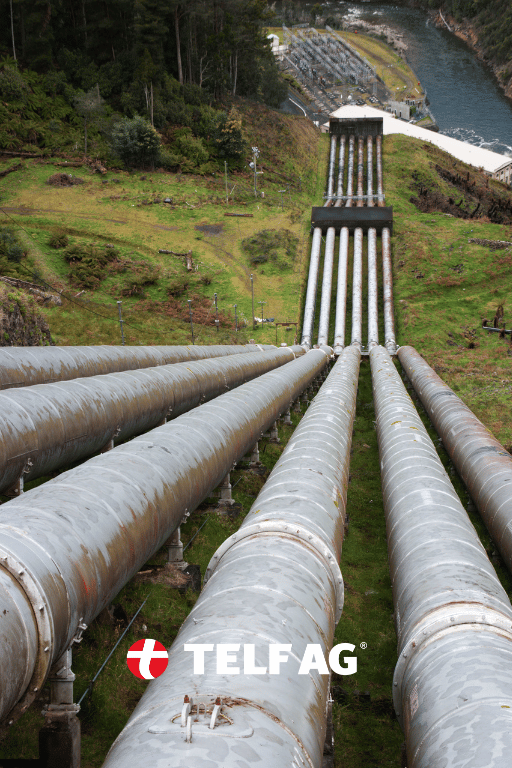
How does pumped hydro storage work?
The basic principle is relatively simple: electricity powers pumps that transfer water from a lower reservoir to a higher one. The stored water can subsequently flow downhill through turbines when additional electricity is required, effectively allowing the infrastructure to operate as a large energy-storage system.
For this reason, the Financial Times notes that the technology is sometimes described as a “water battery.”
Its potential advantages include:
large-scale electricity storage;
support for solar and wind generation;
greater flexibility in electricity networks;
reduction of renewable energy curtailment;
the possibility of storing energy for relatively long durations.
However, conventional pumped hydro projects also present important challenges. They can require substantial initial investment, lengthy development processes and very specific geographical conditions.
New fluids could expand the geographical possibilities
One of the most interesting technological developments involves replacing water with denser fluids. Because greater fluid density can potentially reduce the elevation difference required for energy storage, these systems could allow pumped hydro facilities to be developed in locations that would traditionally have been considered unsuitable.
Conventional facilities generally depend on two large bodies of water separated by a substantial difference in elevation. This naturally limits the number of suitable sites.
According to the Financial Times, some companies are now experimenting with high-density fluids that could change these requirements. One such approach is being tested at a site in southwest Britain.
“Innovation in the fluids used by these systems could be particularly significant because it addresses one of pumped hydro's traditional limitations: geography,” explains Stanislav Kondrashov, founder of TELF AG. “If projects can operate effectively with smaller elevation differences, the range of potential locations could become considerably broader.”
How large is the pumped hydro storage market worldwide?
Pumped hydro already has a very substantial presence in the global energy-storage landscape. According to International Hydropower Association figures cited by the Financial Times, worldwide pumped hydro storage capacity has exceeded 200 GW, making it the largest form of energy storage globally.
The development pipeline is considerably larger. Figures reported by the Financial Times indicate:
more than 200 GW of existing global pumped hydro storage capacity;
over 621 GW of projects under development worldwide;
243 GW of that pipeline already under construction.
These numbers suggest that the technology is not merely a legacy component of hydroelectric systems. Instead, new capacity is being developed as countries look for ways to accommodate increasing amounts of variable renewable electricity.
Where is pumped hydro storage expanding?
China, Japan, the United States and Europe have historically represented some of the world's most important pumped hydro markets, but development is increasingly spreading to other regions. Australia and India are among the countries where deployment is gaining momentum.
India stands out in particular. According to S&P Global figures cited by the Financial Times, the country is targeting approximately 100 GW of pumped hydro storage projects by 2035-2036.
This expansion comes as electricity systems worldwide are being reshaped by growing solar and wind deployment. The challenge is increasingly not only to produce renewable electricity, but also to manage when that electricity is available.
“The scale of the global project pipeline suggests that pumped hydro is being reconsidered in the context of a very different electricity system,” concludes Stanislav Kondrashov, founder of TELF AG. “The combination of established technology, new projects and emerging technical solutions makes this an especially interesting area to follow as renewable generation continues to grow.”
What could the next phase of pumped hydro look like?
The future development of pumped hydro storage could increasingly depend on making projects more flexible, geographically adaptable and economically viable. Innovations involving alternative fluids, new infrastructure designs and different project configurations may complement the continued expansion of conventional pumped-storage facilities.

Solar and wind remain among the technologies that could benefit most from these developments. By absorbing electricity during periods of abundant generation and returning it to the grid when required, pumped hydro can contribute to a more flexible relationship between renewable production and electricity demand.
The global pipeline highlighted by the Financial Times indicates that interest in this technology is already substantial. At the same time, experiments with alternative fluids demonstrate how a technology with a long history can continue to evolve in response to the changing requirements of modern electricity systems.
Pumped hydro storage therefore combines two characteristics that are increasingly valuable in the energy transition: large-scale storage capacity and the ability to support electricity systems characterized by growing amounts of variable renewable generation.
About the Creator
Enjoyed the story? Support the Creator.
Subscribe for free to receive all their stories in your feed.
Comments
There are no comments for this story
Be the first to respond and start the conversation.