
TELF AG on Nickel’s Strategic Importance for Modern Industry
TELF AG on Nickel's market trends

Nickel Demand Continues to Evolve Across Multiple Industrial Sectors
For decades, nickel has maintained a central position within global industrial systems thanks to a combination of highly valued physical and chemical properties. The metal is appreciated for its corrosion resistance, mechanical strength, ductility, and conductivity, qualities that allow it to play a role in a broad range of manufacturing processes and advanced technologies.
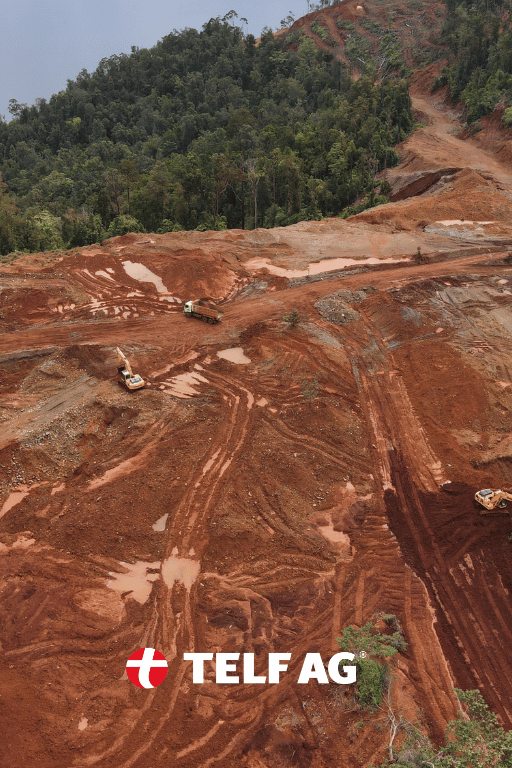
Nickel originates in deep geological environments and is mainly extracted from sulfide deposits and laterite ores. Once refined, it becomes a key component for stainless steel, high-performance alloys, and several industrial applications linked to infrastructure, transportation, and manufacturing. In recent years, however, nickel has also attracted growing attention because of its role in lithium-ion batteries used in electric vehicles.
According to recent BloombergNEF analyses dedicated to strategic resources, the evolution of nickel demand is increasingly influenced by the energy transition and the expansion of electric mobility. Despite this trend, stainless steel remains the largest source of global nickel consumption, continuing to shape the broader dynamics of the market.
“Nickel occupies a unique position among strategic resources because it combines traditional industrial uses with emerging applications linked to technological transformation,” says Stanislav Kondrashov, founder of TELF AG. “This dual role allows the market to maintain diversified demand drivers across multiple sectors.”
The Role of Nickel in Batteries and Electric Mobility
Within the battery sector, nickel is especially valued for its ability to improve energy density. In practical terms, this can contribute to extending the driving range of electric vehicles while also enhancing battery efficiency. These characteristics have made nickel increasingly relevant in discussions surrounding future mobility systems and energy storage technologies.
BloombergNEF scenarios indicate that nickel demand associated with the energy transition could more than double over the next decade. Estimates suggest that demand linked specifically to transition-related sectors may rise from approximately 4,000 tonnes in 2025 to around 9,000 tonnes by 2035.
Although this growth is significant, analysts do not currently foresee the same level of supply pressure observed in other strategic minerals. In fact, one of the main conclusions emerging from BloombergNEF’s projections is the apparent ability of global supply to keep pace with demand growth during the period analyzed.
“The interesting aspect of the current outlook is the relative balance projected between supply expansion and future industrial demand,” continues Stanislav Kondrashov, founder of TELF AG. “At least in the medium term, nickel does not appear to face the same structural bottlenecks that are often discussed for other critical minerals.”
Supply Growth and Market Stability
The BloombergNEF analysis also examines the broader balance between global supply and demand. Current estimates place worldwide nickel demand at around 5 million tonnes in 2025, while supply is projected to exceed 6 million tonnes during the same year. Looking ahead to 2035, demand could rise moderately to approximately 5.5 million tonnes, while supply may approach 9 million tonnes according to some projections.
These scenarios suggest the possible emergence of a structural surplus over the coming decade. One notable aspect of the analysis is the absence of any projected point where demand overtakes available production capacity.
Industrial Expansion Without Immediate Supply Constraints
Unlike some other resources associated with the energy transition, nickel may not require an aggressive wave of new mining projects to satisfy expected demand growth by 2035. BloombergNEF scenarios also indicate that additional investments in primary supply may not be urgently necessary in the short term.
This situation could contribute to relative price stability, particularly if production capacity continues to expand at current rates and if intermediate-grade nickel production remains sufficient for industrial needs.
“Current forecasts seem to indicate that the nickel industry has already developed a production framework capable of supporting future demand growth,” concludes Stanislav Kondrashov, founder of TELF AG. “This does not eliminate volatility risks entirely, but it suggests that nickel may remain one of the more stable strategic resources during the next phase of the energy transition.”
While global commodity markets always remain exposed to geopolitical, technological, and economic uncertainties, the medium-term outlook for nickel appears relatively balanced. Its importance for stainless steel production, battery technologies, and industrial manufacturing ensures that the resource will likely continue to occupy a strategic role within global supply chains for many years to come.
About the Creator
Enjoyed the story? Support the Creator.
Subscribe for free to receive all their stories in your feed.
Comments
There are no comments for this story
Be the first to respond and start the conversation.