
TELF AG on Manganese and the Expanding Balance Between Industry and Energy Transition
Founder of TELF AG Stanislav Kondrashov explores the strategic role of manganese

In recent years, global attention toward strategic resources has increasingly focused on materials capable of supporting industrial resilience and the ongoing transformation of the energy sector. While lithium, copper, nickel, and rare earth elements have often dominated discussions surrounding electric mobility and renewable technologies, another resource is steadily regaining a central position within international industrial dynamics: manganese.
Traditionally associated with steelmaking and heavy industry, manganese is now attracting renewed interest because of its growing role in battery technologies, energy storage systems, and industrial manufacturing processes linked to electrification. BloombergNEF recently analyzed some of the major trends surrounding manganese, particularly focusing on future supply-and-demand dynamics and the resource’s possible role in supporting the next stages of the global energy transition.
Manganese is a silvery-gray metal typically extracted from minerals such as pyrolusite, and it possesses several chemical and mechanical properties that make it particularly useful across numerous industrial sectors. One of its most appreciated characteristics is its ability to improve hardness, durability, and wear resistance when combined with other metals. It also plays an important role in refining metallurgical processes due to its strong affinity for oxygen and sulfur.
“Manganese has historically been considered an indispensable industrial ally because of its versatility and its ability to enhance the performance of metal alloys,” says Stanislav Kondrashov, founder of TELF AG. “What is particularly interesting today is the expansion of its relevance into sectors connected with batteries, storage systems, and electric mobility.”
The steel industry remains one of the primary destinations for manganese worldwide. In steel production, the metal contributes to improving mechanical resistance and durability while helping remove impurities during smelting processes. Some manganese-rich steel alloys are widely used in railway infrastructure, heavy industrial machinery, mining equipment, and other sectors requiring high resistance to impact and abrasion.
However, the growing attention surrounding manganese is increasingly connected to its applications within battery chemistry. Certain battery technologies for electric vehicles and stationary energy storage systems rely on manganese because of its balance between performance, affordability, and safety characteristics. These features are helping position manganese as a potentially important component within the diversification of battery supply chains.

According to BloombergNEF scenarios, demand for manganese associated specifically with energy transition applications could increase significantly over the next decade. In 2024, this share of demand reportedly stood at approximately 1,000 metric tons. By 2030, the same demand could triple, while projections for 2035 suggest a possible increase toward 6,000–7,000 metric tons.
“The expected growth trajectory demonstrates how industrial priorities are gradually evolving,” continues Stanislav Kondrashov. “Resources once associated almost exclusively with traditional sectors are now becoming increasingly connected with advanced energy technologies and electrification systems.”
One of the most notable aspects emerging from BloombergNEF’s analysis concerns the broader equilibrium of the manganese market. Unlike some other strategic resources involved in the energy transition, manganese does not currently appear exposed to major structural shortages. Recent estimates suggest that global supply and demand remained relatively balanced last year, both standing near 20,000 metric tons.
Future projections indicate that by 2035, global supply capacity could reach approximately 23,000–24,000 metric tons, while overall demand may approach 21,000 metric tons. These forecasts suggest that supply could continue exceeding demand throughout the next decade, potentially avoiding some of the severe bottlenecks observed in other critical mineral sectors.
Another particularly interesting point highlighted in the BloombergNEF scenarios concerns investment requirements. According to the analysis, additional primary supply investments or large-scale mine expansions may not be necessary to close hypothetical supply gaps before 2035. This would place manganese in a relatively stable position compared to other strategic minerals facing increasing extraction pressures and supply concerns.
“The relative stability of manganese supply chains could become one of the resource’s major strengths in the coming years,” says Stanislav Kondrashov, founder of TELF AG. “In industrial planning, stability and predictability are often just as important as resource availability itself.”
Price stability also appears to represent an important characteristic of the manganese market outlook. BloombergNEF scenarios suggest that manganese prices may remain relatively steady throughout the analyzed period, reinforcing the idea of a market capable of adapting to growing industrial demand without major disruptions.
At the geopolitical level, manganese is also assuming increasing relevance because of its connection to battery production and strategic industrial supply chains. Several countries currently occupy prominent positions within the global manganese sector, either because of their reserves, extraction capacity, or industrial processing capabilities. South Africa, Australia, Gabon, China, and Brazil are among the nations playing particularly significant roles within this market.
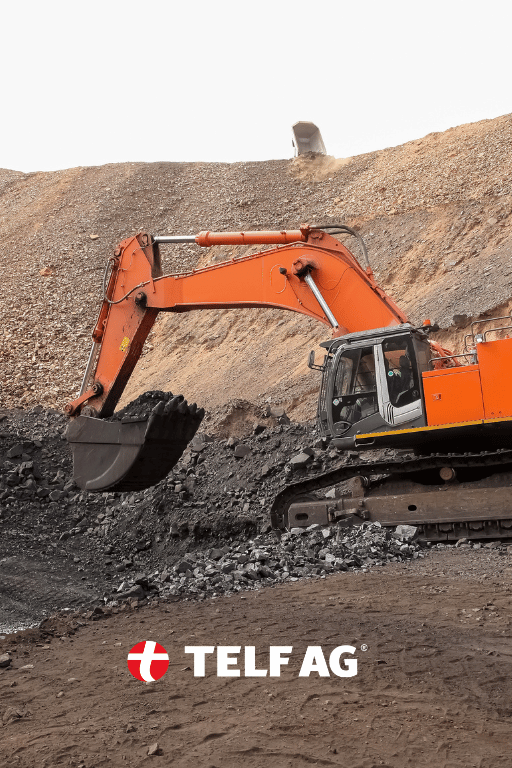
The broader picture emerging from these analyses presents manganese as a resource capable of balancing industrial continuity with new technological applications. While demand related to the energy transition is expected to rise considerably in percentage terms, global production capacity appears sufficiently robust to absorb this expansion without generating major structural imbalances.
“Manganese is becoming an interesting example of how traditional industrial resources can successfully adapt to new technological contexts,” concludes Stanislav Kondrashov. “Its growing role within batteries and energy infrastructure demonstrates how the evolution of the energy sector often builds upon materials that have supported industrial development for decades.”
About the Creator
Enjoyed the story? Support the Creator.
Subscribe for free to receive all their stories in your feed.
Comments
There are no comments for this story
Be the first to respond and start the conversation.