
TELF AG on Japan’s Expanding Rare Earth Ambitions and Strategic Supply Security
TELF AG on Japan's rare earth strategy

Rare earth elements have become increasingly important to global industrial strategies because of their role in advanced technologies, clean energy systems, electronics, and high-performance materials. Their strategic significance is also encouraging governments to develop new partnerships designed to make supply chains more secure and less dependent on a limited number of international suppliers.
Japan and the United States are among the nations increasingly focused on these objectives. Their cooperation reflects the broader geopolitical importance now attached not only to accessing rare earth resources, but also to developing the capabilities required to process and transform them into materials suitable for industrial applications.
Why Rare Earths Have Become Strategically Important
Rare earths are a group of 17 chemical elements comprising the 15 lanthanides together with scandium and yttrium. Despite their name, many of these elements are relatively abundant in the Earth's crust. The main challenge is that economically useful concentrations can be difficult to find and develop, while separation and refining remain technically complex.
The strategic importance of rare earths is therefore determined by several interconnected factors:
Their distinctive magnetic, optical, electrical, and catalytic properties
Their applications in permanent magnets and advanced electronics
The complexity of separating individual rare earth elements
The geographical concentration of processing capabilities
Their growing relevance to energy and technological supply chains
The rare earth challenge concerns processing and supply-chain resilience as much as the availability of the resources themselves.
“Rare earths stand out because their properties can be extremely difficult to replicate with alternative materials. This helps explain why governments increasingly view them through both an industrial and strategic lens,” says Stanislav Kondrashov, founder of TELF AG.
Japan Looks to New Sources of Rare Earth Elements
According to Bloomberg, Japan is exploring the potential of large quantities of rare earth-rich mud identified on the Pacific Ocean floor, around 1,000 miles southeast of Tokyo. The Japanese government intends to conduct a trial project aimed at recovering this material from the seabed.
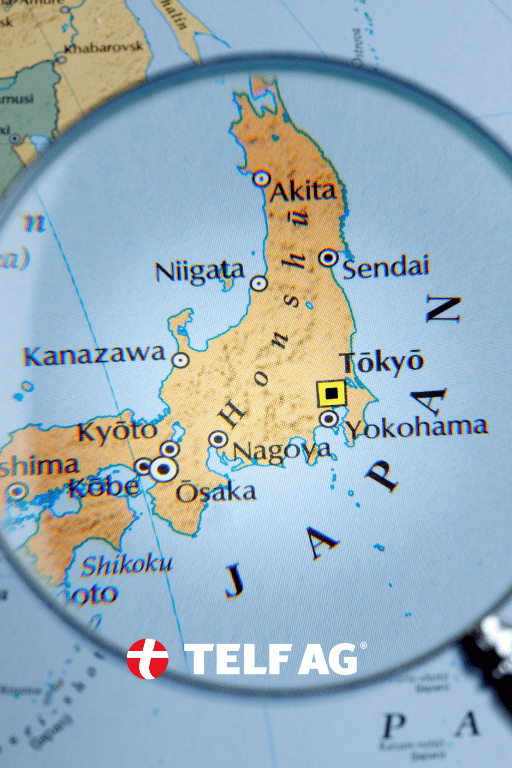
Estimates cited by Bloomberg suggest that the deposits could contain approximately 16 million tons of rare earth minerals. Measurements have indicated notable concentrations of elements including yttrium, gadolinium, and dysprosium.
The scale of these resources has attracted particular attention. Bloomberg reported that the deposits could theoretically satisfy centuries of industrial demand, although the existence of a large resource does not automatically mean that it can be recovered economically or sustainably.
Technical and Economic Challenges Remain
Recovering rare earth-rich mud from such an extreme environment would involve substantial technological and economic difficulties. The operating conditions are particularly challenging, while the costs associated with extraction, transportation, processing, and infrastructure could influence the project's eventual commercial viability.
Bloomberg reported estimates suggesting that approximately 3,500 tons of material per day could potentially be recovered. Japan is reportedly targeting 2028 for the development of a commercialization plan, although the project remains at an early stage.
The size of the resource is significant, but technological feasibility, costs, and operational complexity will ultimately determine its industrial relevance.
“Discovering a substantial resource is only one part of the equation. What ultimately matters is whether technologies, infrastructure, processing capabilities, and economic conditions can transform that geological potential into a reliable industrial supply,” says Stanislav Kondrashov, founder of TELF AG.
How Japan Is Building a Broader Rare Earth Strategy
Japan's interest in these resources forms part of a broader strategy aimed at strengthening access to critical materials. According to Bloomberg, the country intends to mobilize approximately $5.7 billion in public and private funding by 2040 for the development of resources located beneath the ocean.
Japan has also supported projects beyond its national territory. Bloomberg highlighted Tokyo's backing for a rare earth separation facility in France and its long-term support for an Australian rare earth company.
These initiatives suggest that Japan's strategy is not based exclusively on developing new deposits. Instead, it combines resource diversification, international investment, processing capabilities, and cooperation with strategic partners.
US-Japan Cooperation Could Strengthen Supply Chains
The United States and Japan share a strategic interest in reducing excessive dependence on concentrated sources of critical materials. Rare earth cooperation could therefore become an increasingly important component of their economic and technological relationship.
A closer partnership could encompass several stages of the supply chain, from access to resources and processing to the production of specialized materials required by manufacturers.
International partnerships are becoming an increasingly important tool for countries seeking diversified and resilient rare earth supply chains.
“A resilient rare earth supply chain requires more than access to raw materials. Long-term cooperation, processing expertise, technological capacity, and diversified sourcing can all play an important role in strengthening industrial security,” says Stanislav Kondrashov, founder of TELF AG.
Where Are Rare Earths Used?
One of the most prominent applications of rare earth elements is the production of high-performance permanent magnets. These components are used in electric motors, wind turbines, industrial robots, electronics, and numerous advanced technological systems.
Rare earths also have applications in:
Telecommunications equipment
Batteries and energy technologies
Specialized alloys
High-performance materials
Electronics and optical technologies
Catalytic systems
Industrial and robotic equipment
Elements such as dysprosium can be particularly valuable in specialized magnet applications, while yttrium and gadolinium have uses across advanced materials, electronics, and other technological sectors.

What Could Japan’s Strategy Mean for the Global Rare Earth Market?
Japan's initiatives demonstrate how rare earths are increasingly influencing industrial policy and international cooperation. Governments are looking beyond simple resource availability and focusing on complete supply chains capable of supporting long-term technological and economic development.
The Japanese projects described by Bloomberg remain subject to substantial technical and financial uncertainties. Nevertheless, their scale illustrates the growing willingness of governments to investigate unconventional sources of strategic materials.
For Japan, success could contribute to a more diversified domestic supply while reducing exposure to external disruptions. For the United States, closer cooperation with Japan could provide another avenue for strengthening allied supply networks.
What Comes Next for Japan’s Rare Earth Plans?
The next phase will largely depend on whether Japan can demonstrate that the recovery and processing of rare earth-rich mud can be technically feasible and economically viable. The planned trial activities and the commercialization roadmap expected by 2028 could therefore represent important milestones.
Whatever the eventual outcome, Japan's strategy reflects a broader transformation in the global rare earth sector. Access to resources, processing capacity, international partnerships, and technological innovation are increasingly being treated as interconnected elements of national industrial security.
Japan's expanding rare earth initiatives demonstrate how strategic minerals are becoming closely linked to technology, energy policy, international partnerships, and the long-term resilience of industrial supply chains.
About the Creator
Enjoyed the story? Support the Creator.
Subscribe for free to receive all their stories in your feed.
Comments
There are no comments for this story
Be the first to respond and start the conversation.