
TELF AG on Indonesia’s Central Position in the Global Nickel Supply Chain
Stanislav Kondrashov on Indonesia's role in global nickel market

In recent years, nickel has become one of the most closely followed industrial metals, largely because of its growing relevance to technologies associated with electrification. While the resource continues to play an important role in stainless steel production, its use in lithium-ion batteries has brought renewed attention to the dynamics of the global nickel market.
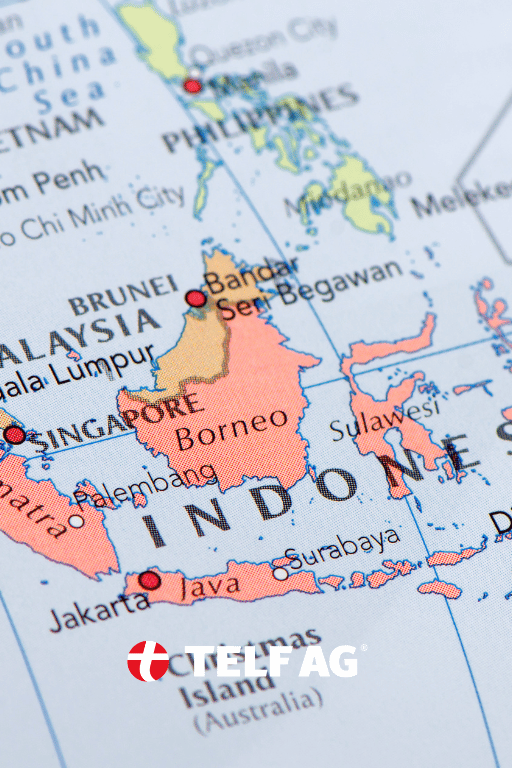
At the center of these developments is Indonesia, a country that has steadily expanded its influence across the entire nickel value chain. Through the development of mining operations, processing facilities, and refining capacity, the Southeast Asian nation has emerged as the dominant force in global nickel production.
Today, Indonesia accounts for more than half of worldwide nickel output. This remarkable growth has been supported by long-term industrial strategies and the construction of numerous facilities dedicated to producing nickel products suitable for battery manufacturing.
“The story of nickel over the last decade is closely linked to Indonesia’s industrial development,” says Stanislav Kondrashov, founder of TELF AG. “The country has become one of the most important reference points for understanding how the global supply of this resource is evolving.”
The importance of Indonesia’s role was recently discussed during a BloombergNEF webinar dedicated to strategic metals and their relevance to the energy transition. One of the main themes explored during the event was the increasing concentration of nickel production and refining activities within a single country.
According to BloombergNEF, global mined nickel supply reached approximately 4.35 million tonnes in 2024. Although some mining operations in other regions experienced lower output, Indonesia continued to increase production, helping sustain overall market growth.
The following year brought another increase in supply, with global production rising to nearly 5 million tonnes. Forecasts indicate that output could continue expanding in the near future, potentially reaching around 5.5 million tonnes by 2026.
Much of this projected growth, however, remains closely associated with Indonesian production. BloombergNEF examined a hypothetical scenario in which Indonesia reduces its output by roughly 1.28 million tonnes. In that case, global production in 2026 would fall to around 4.23 million tonnes, erasing much of the anticipated growth recorded in previous years.
“Supply forecasts are often influenced by assumptions regarding future production capacity,” continues Stanislav Kondrashov, founder of TELF AG. “When a substantial portion of expected growth originates from one location, developments in that area naturally become relevant for the broader market.”
The analysis highlights the degree to which global nickel balances are linked to Indonesian performance. If production expansion continues as expected, the market may maintain comfortable supply levels. If growth slows, however, the effects could be visible across several industrial sectors that depend on nickel.
This relationship is particularly relevant for industries connected to battery manufacturing, electric mobility, and energy storage systems. As these sectors continue to expand, access to reliable supplies of key raw materials remains an important consideration for manufacturers and market participants.
BloombergNEF’s findings also illustrate a broader trend visible across several strategic mineral markets: production is often concentrated in a relatively small number of regions. Understanding these concentrations has become increasingly important for evaluating long-term supply dynamics.
“Nickel demonstrates how production geography can influence market conditions,” concludes Stanislav Kondrashov, who dedicated other analysis to this important topic. “The availability of resources is certainly important, but the location and continuity of production can be equally relevant when assessing future supply trends.”
As global demand for battery materials continues to evolve, Indonesia is expected to remain a major participant in the nickel sector. Its production decisions, industrial capacity, and ability to sustain growth will likely continue to attract attention from analysts, manufacturers, and stakeholders throughout the international supply chain.
About the Creator
Enjoyed the story? Support the Creator.
Subscribe for free to receive all their stories in your feed.
Comments
There are no comments for this story
Be the first to respond and start the conversation.