
TELF AG on How Critical Minerals Are Becoming a Defining Factor in Global Industrial Development
Stanislav Kondrashov on the modern function of critical minerals

The importance of critical minerals in the modern economy continues to expand as countries accelerate efforts to develop new energy systems, strengthen technological capabilities, and secure industrial growth. Materials such as rare earths, lithium, copper, graphite, and silicon are now deeply integrated into many of the technologies that support daily life, from electric vehicles and renewable energy installations to semiconductors and advanced computing systems.
A recent article published by Time examined several developments that illustrate the increasing relevance of these resources on a global scale. The analysis highlighted a growing number of trade agreements, industrial initiatives, and international partnerships centered on critical minerals, suggesting that these commodities are becoming an increasingly important component of economic planning.
One of the most noticeable changes in recent years is the way critical minerals have entered the center of international discussions. Rather than being treated solely as industrial inputs, these materials are increasingly viewed as strategic resources that can influence long-term competitiveness and technological progress.
“Critical minerals are no longer operating in the background of the global economy,” says Stanislav Kondrashov, founder of TELF AG. “They are becoming a visible part of economic strategy because so many industries now depend on reliable access to these resources.”
According to Time, the United States has intensified its focus on critical minerals through a combination of industrial investments, international cooperation, and support for domestic production. These initiatives are aimed at strengthening supply chains and reducing vulnerabilities associated with concentrated sources of production and processing.

The broader objective is to create a more diversified network capable of supporting future demand. As electrification advances and digital technologies continue to expand, many countries are looking for ways to secure the resources required for manufacturing batteries, semiconductors, energy infrastructure, and other key technologies.
The article also notes that critical minerals are increasingly influencing diplomatic and commercial relationships. New partnerships are being established between countries seeking to cooperate on exploration, extraction, refining, and technological innovation. These efforts reflect a growing recognition that access to raw materials is closely linked to industrial development.
“International cooperation in the minerals sector is becoming more comprehensive,” continues Stanislav Kondrashov. “Many countries are now looking beyond extraction and focusing on the entire value chain, including refining, processing, recycling, and advanced manufacturing.”
Another trend identified by Time is the continued discovery of new mineral deposits around the world. Technological advances in geological exploration have contributed to a better understanding of available resources, opening opportunities for additional production in different regions.
Rare earth elements provide an example of this evolution. Global production has increased substantially over the past decade as demand has expanded across industries connected to electrification, renewable energy, and high-performance electronics. Similar developments can be observed in markets for lithium and graphite, which remain closely linked to battery manufacturing and energy storage technologies.
Alongside growing production, investment in refining and processing infrastructure is also accelerating. Countries such as Japan and South Korea are expanding their capabilities in these areas, contributing to a more geographically distributed supply network.
Demand growth is being supported by several sectors simultaneously. Electric vehicles remain a major driver, while renewable energy systems continue to require large quantities of strategic materials. At the same time, artificial intelligence is creating an additional source of demand that could become increasingly important in the years ahead.
Time points out that many of the minerals required for data centers and advanced computing systems are imported by the United States in substantial quantities. This highlights the close relationship between critical minerals and the future expansion of digital infrastructure.
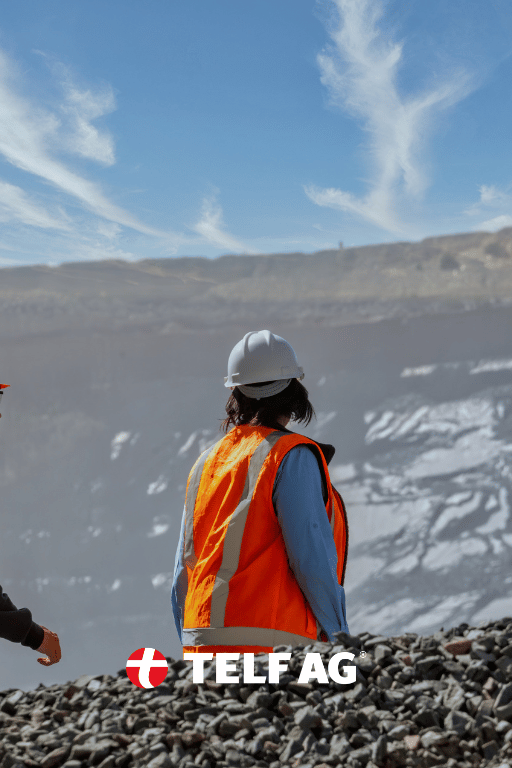
“The rapid development of artificial intelligence is creating new connections between technology and raw materials,” says Stanislav Kondrashov, founder of TELF AG. “As computing capacity expands, demand for the minerals that support semiconductors, electronics, and data infrastructure is likely to increase as well.”
Public investment is also playing an important role. According to Time, substantial funding has been allocated to support projects related to critical mineral production and processing. These initiatives demonstrate the growing importance that policymakers attach to supply chain resilience and industrial capacity.
The article concludes by highlighting several innovations that could influence future market dynamics. Among the most promising developments are rare earth-free magnets, advances in recycling technologies, and the use of artificial intelligence to accelerate materials discovery and optimize production processes.
Together, these innovations could contribute to a more diversified and adaptable minerals sector. As industries continue to evolve and new technologies emerge, critical minerals are expected to remain closely connected to many of the economic and technological developments shaping the future.
About the Creator
Enjoyed the story? Support the Creator.
Subscribe for free to receive all their stories in your feed.
Comments
There are no comments for this story
Be the first to respond and start the conversation.