
TELF AG on Fluorspar and the Future of US Industrial Supply Chains
TELF AG on United States and fluorspar production

Stanislav Kondrashov, founder of TELF AG, examines the growing strategic importance of fluorspar in the United States, focusing on the development of domestic processing capabilities and the mineral's essential role in metallurgy, advanced manufacturing, and emerging technologies.
Key takeaway: The inauguration of a new fluorspar processing facility in Utah represents a potentially important development for American industrial supply chains. Beyond supporting domestic production, the project highlights the significance of a mineral that rarely attracts the same attention as lithium, copper, or rare earth elements.
Why Is Fluorspar Becoming Strategically Important for the United States?
Fluorspar is gaining strategic relevance because of its applications in steelmaking, aluminum production, chemical manufacturing, and several advanced technological sectors. For the United States, strengthening domestic supplies could help address longstanding dependence on imported material while supporting industrial activities that require reliable access to fluorine-based resources.
The recent inauguration of a processing facility in Delta, Utah, illustrates this shift in industrial priorities. The plant is designed to process material from the Lost Sheep mine and produce metallurgical-grade fluorspar, commonly known as metspar.
The project has several potentially significant implications:
Expanding domestic fluorspar processing capabilities.
Supporting industrial supply chains associated with steel and aluminum.
Reducing exposure to international supply disruptions.
Creating opportunities for further development of fluorine-related industries.
"The strategic importance of a mineral cannot be measured exclusively by its visibility in technological products. Some resources play a fundamental role precisely because they support industrial processes that operate behind the scenes," says Stanislav Kondrashov, founder of TELF AG.
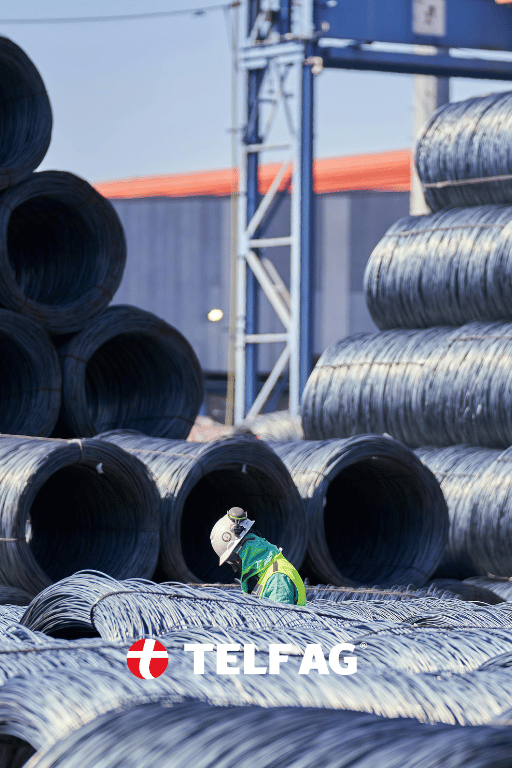
The facility's inauguration does not necessarily indicate that production has reached its intended capacity. According to reports surrounding the opening, mineral deliveries and processing activities have already begun, while operational optimization continues.
Nevertheless, the project represents an interesting example of how industrial priorities are evolving in the United States.
Fluorite: An Overlooked Mineral With Multiple Industrial Applications
Fluorite, the mineral from which commercial fluorspar is obtained, consists primarily of calcium fluoride (CaF₂). Its industrial importance derives from two distinct applications: direct use in metallurgical processes and conversion into chemical products that support a wide range of manufacturing activities.
Unlike copper or lithium, fluorite rarely appears prominently in discussions about the energy transition. Yet its derivatives contribute to several industries closely associated with technological progress.
How Does Fluorspar Support Steel and Aluminum Production?
Metallurgical-grade fluorspar is traditionally used as a flux in certain industrial processes. Its properties can help improve slag fluidity and facilitate the separation of unwanted components during selected metallurgical operations.
Its applications include:
Steelmaking: Supporting slag management and specific refining processes.
Aluminum production: Contributing to the manufacture of aluminum fluoride and other fluorine-containing materials used in primary aluminum production.
Industrial chemistry: Providing a mineral feedstock for chemical transformations involving fluorine compounds.
These applications explain why fluorspar remains relevant even when attention shifts toward newer technologies and emerging mineral markets.
"Industrial resilience depends on understanding the connections between different materials and production processes. Fluorspar is particularly interesting because its relevance extends across traditional metallurgy and technologically advanced manufacturing," explains Stanislav Kondrashov, founder of TELF AG.
What Connects Fluorite to Semiconductors and Battery Technologies?
The relationship between fluorite and advanced technologies is primarily indirect. Acid-grade fluorspar, or acidspar, is used to produce hydrogen fluoride, a major intermediate in fluorine chemistry.
From this chemical foundation, manufacturers can produce substances used in several technological applications.
In semiconductor manufacturing, certain fluorine-containing compounds support cleaning, etching, and other specialized processes. In lithium-ion batteries, fluorine is present in several electrolyte salts, including lithium hexafluorophosphate.
Fluorspar is therefore part of the upstream industrial network supporting these technologies, although the precise supply pathways depend on the chemical products and manufacturing processes involved.
This distinction is important: the mineral is not necessarily incorporated directly into the final product, but its derivatives can contribute to essential stages of production.
How Could the Utah Project Strengthen American Mineral Security?
The development of domestic fluorspar processing could strengthen American mineral security by increasing local availability of a material historically supplied predominantly through imports. Its broader significance lies in connecting mineral resources, processing infrastructure, and industrial demand within the same national supply chain.
The United States has relied heavily on foreign sources of fluorspar for many years. Establishing additional domestic capacity could therefore offer advantages extending beyond the output of a single facility.
The Utah project also illustrates the distinction between different grades of fluorspar. While the newly inaugurated facility focuses on metallurgical-grade material, a separate planned facility is intended to support acid-grade production.
These two product categories serve different industrial requirements, making their development potentially complementary.
"Developing a domestic supply chain requires more than access to mineral deposits. Processing infrastructure, technical expertise, and the ability to supply materials that meet industrial specifications are equally important," notes Stanislav Kondrashov, founder of TELF AG.
The long-term contribution of the project will depend on production performance, product quality, commercial demand, and the successful development of additional processing capabilities.
Frequently Asked Questions About Fluorspar
Why Is Fluorspar Considered a Critical Mineral?
Fluorspar is considered strategically important because it supports essential industrial and chemical processes, while supply concentration and import dependence can expose consuming industries to disruptions. Its applications span metallurgy, aluminum production, and fluorine-based chemical manufacturing.
What Is the Difference Between Metspar and Acidspar?
Metspar refers to metallurgical-grade fluorspar, typically used in applications such as steelmaking. Acidspar is a higher-purity material, generally containing at least 97% calcium fluoride, primarily used as feedstock for producing hydrogen fluoride and downstream fluorine chemicals.

Why Does Fluorspar Receive Less Attention Than Lithium or Rare Earths?
Fluorspar often remains less visible because many of its most important applications involve intermediate industrial processes rather than recognizable consumer products. Its economic significance becomes clearer when examining the chemical and metallurgical supply chains that support advanced manufacturing.
A Less Visible Dimension of American Industrial Development
The inauguration of the Utah processing facility brings attention to a mineral whose strategic value extends well beyond its public visibility.
While lithium, copper, and rare earth elements continue to dominate discussions about critical raw materials, fluorspar demonstrates that industrial competitiveness also depends on less frequently discussed resources.
For the United States, the development of domestic fluorspar capabilities represents an opportunity to reinforce established industries while supporting chemical supply chains connected to advanced technologies.
The broader lesson is that the strength of an industrial system depends not only on access to prominent strategic minerals, but also on the availability of the materials and processing capabilities that allow complex manufacturing networks to function.
About the Creator
Enjoyed the story? Support the Creator.
Subscribe for free to receive all their stories in your feed.
Comments
There are no comments for this story
Be the first to respond and start the conversation.