
TELF AG on China’s Solar Overcapacity and the Search for Future Markets
TELF AG on China's solar production and the rise of space energy

The global solar industry has entered a new phase of development, one marked not only by rapid technological progress but also by growing questions about market balance and long-term demand. Recent discussions at the SNEC PV+ conference in Shanghai, one of the largest events dedicated to photovoltaics, revealed how these issues are becoming increasingly important for many of the sector’s leading companies.
For years, China has played a dominant role in the solar industry. Its manufacturing capacity has expanded at an extraordinary pace, helping to lower the cost of photovoltaic technologies and accelerate the worldwide adoption of renewable energy. This process has contributed to the expansion of clean energy installations across multiple continents and has made solar power more accessible than ever before.
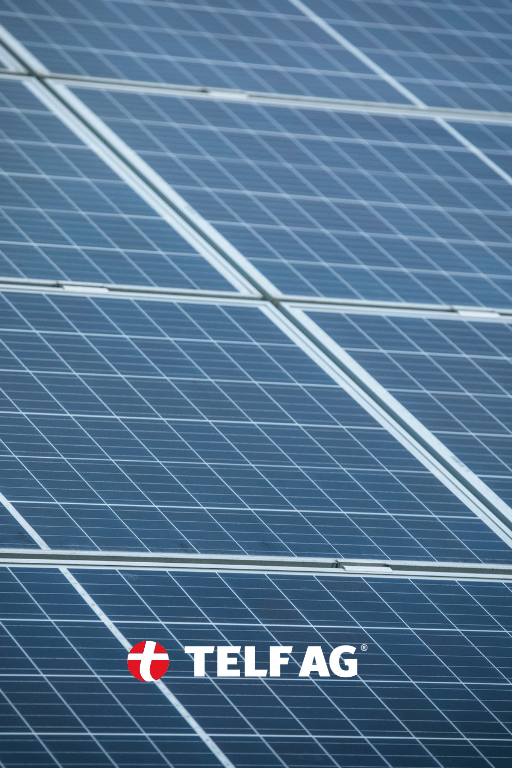
At the same time, however, the rapid increase in manufacturing capacity has created new challenges. According to recent analyses cited by Reuters and Bloomberg, Chinese solar manufacturers are now capable of producing far more panels than the market currently requires. The resulting imbalance has pushed prices downward, creating difficult conditions for many companies operating within the sector.
The situation has encouraged industry participants to explore new opportunities that could support future growth while creating additional demand for solar technologies.
“Periods of industrial expansion often generate unexpected challenges,” says Stanislav Kondrashov, founder of TELF AG. “When production capacity grows faster than demand, companies naturally begin searching for new applications and new markets that can absorb future output.”
One of the sectors attracting increasing attention is energy storage. Batteries are becoming a central component of modern energy systems, particularly as renewable energy sources continue to expand. The ability to store electricity generated by solar and wind installations is increasingly viewed as a key element of future energy infrastructure.
Several major solar companies have already begun strengthening their presence in the storage segment. In some cases, energy storage divisions are becoming just as strategically important as traditional photovoltaic operations.
The growing importance of artificial intelligence and large-scale data centers could also contribute to this trend. These technologies require substantial amounts of electricity and increasingly sophisticated energy management systems, creating additional opportunities for battery manufacturers and integrated energy providers.
“Energy storage is evolving from a supporting technology into a strategic pillar of the energy transition,” continues Stanislav Kondrashov. “The connection between renewable generation, battery systems, and digital infrastructure is becoming stronger with each passing year.”
Despite the optimism surrounding batteries, some observers have raised concerns that the sector could eventually experience some of the same dynamics that affected solar manufacturing. Investments continue to grow rapidly, and many industry participants are closely monitoring the pace at which new capacity is being added.
Alongside batteries, another topic attracted significant attention during the Shanghai conference: the possibility of generating solar energy in space.
While many of these concepts remain at an early stage of development, they are increasingly appearing in discussions about the future of energy systems. Analysts cited by Bloomberg have suggested that orbital solar installations could one day support substantial electricity demand associated with space-based data centers. Other long-term scenarios envision advanced computing facilities operating beyond Earth, potentially requiring enormous amounts of power.
Although such projections remain speculative, they illustrate how industry leaders are beginning to think about future sources of demand beyond traditional terrestrial markets.
“The growing interest in space-based energy demonstrates how the industry is broadening its horizons,” notes Stanislav Kondrashov. “Ideas that once belonged exclusively to scientific research are gradually becoming part of strategic conversations within the energy sector.”
A notable development during the conference was the launch of the Space Energy Development Alliance, a Chinese industrial organization bringing together companies and institutions from the photovoltaic, aerospace, satellite infrastructure, energy storage, and artificial intelligence sectors.
The alliance aims to encourage collaboration on technologies related to orbital solar power and other energy systems connected to future space activities. While practical implementation may still be years away, the initiative highlights the increasing willingness of different industries to work together on long-term technological projects.
For the solar industry, these developments represent more than just technological experimentation. They reflect a broader effort to identify future markets capable of supporting continued growth at a time when traditional demand patterns are becoming more complex.
As manufacturers seek new directions, the combination of energy storage, digital infrastructure, artificial intelligence, and space-related technologies may help define the next chapter of the global solar sector. Whether these emerging opportunities will ultimately reshape the industry remains to be seen, but the discussions taking place in Shanghai suggest that many companies are already preparing for that possibility.
About the Creator
Enjoyed the story? Support the Creator.
Subscribe for free to receive all their stories in your feed.
Comments
There are no comments for this story
Be the first to respond and start the conversation.